Before you even step foot in a dealership or start browsing online listings, let's get one thing straight: buying an ATV isn't about picking a cool color or the biggest engine. It’s about matching the machine to the adventure you have in mind. Figuring this out first is the most crucial step you'll take, and it will save you from a world of buyer's remorse down the road.
This is where you need to be honest with yourself. Get this part wrong, and you'll end up with a high-strung sport quad that's useless for hauling firewood, or a heavy utility machine that feels like a tank on tight, winding trails. The process is similar to buying a boat or an RV—the right choice depends entirely on how you plan to use it.
So, what's the plan? What are you actually going to do with this thing?
Close your eyes and picture it. Are you hauling gear to a deer stand deep in the woods? Tearing up forest service roads with your buddies? Or maybe you're looking for a safe way to get your kids hooked on the outdoors. Just like choosing between a fishing boat and a pontoon, each of these scenarios points to a very different kind of four-wheeler.
Taking the time to build this vision will give you a clear purpose when you start shopping. You won’t be swayed by a flashy design or a slick sales pitch because you’ll know exactly what you need.
The Three Main Flavors of ATVs
Most machines you'll see fall into one of three buckets. Knowing the difference is the foundation of a smart purchase.
- Utility ATVs: These are the pickup trucks of the off-road world. Built tough, they come standard with things like cargo racks and tow hitches. They're the go-to for landowners, hunters, and anyone who needs a machine that works as hard as it plays.
- Sport ATVs: Think light, fast, and agile. These are built purely for recreation—blasting through dunes, carving up trails, and maybe even hitting a local track. If your goal is an adrenaline rush, this is your category.
- Youth ATVs: These are all about getting the next generation started safely. They're smaller, less powerful, and packed with safety features like throttle limiters. They provide a controlled environment for kids to learn the ropes.
Once you know the type of ATV you need, it's time to drill down into the specs. The two big ones are engine size and the drivetrain.
Engine size, measured in cubic centimeters (cc), is a pretty direct measure of power. If you're just starting out, something in the 250cc to 400cc range is perfect. It's enough power to have fun without being intimidating. For heavy-duty work or more experienced riders who want more punch, you’ll probably be looking at 500cc engines and up.
Then you have to decide between two-wheel drive (2WD) and four-wheel drive (4WD).
A 2WD ATV is lighter and feels a bit more nimble, which can be great for casual riding on flat, predictable trails. But if you know you'll be facing deep mud, steep, rocky hills, or snowy conditions, the incredible traction of a 4WD system is an absolute must-have.
Ultimately, this is about being realistic about your skills and your terrain. It's always better to have a little more capability in your back pocket than to be miles from the truck, stuck, and wishing you’d made a different choice. Do this homework now, and the ATV you buy will feel less like a purchase and more like a trusted partner for whatever you throw at it.
So, you’re ready to pull the trigger on an ATV. Awesome. But first, you've got a classic dilemma to solve: do you go for a brand-new machine right off the showroom floor or a pre-loved rig with a few miles under its belt?
This is probably the biggest decision you'll make in the buying process, much like deciding between a new RV with the latest features or a well-maintained used boat. There’s no right or wrong answer, but one path is definitely going to be a better fit for your wallet, your mechanical confidence, and how much risk you’re willing to take.
The powersports world is massive. The global ATV market recently saw over 783,000 units fly off the shelves, and North America is the undisputed king of the trail, making up about 54% of all sales. That means you’ve got a ton of options, whether you’re buying new or diving into the used market. You can read more about these ATV industry trends and opportunities on linchpinseo.com.
There's something special about buying a new ATV. You get that "zero hours on the clock" peace of mind, the latest tech, and, most importantly, a full factory warranty. If something decides to break in that first year, it’s a problem for the manufacturer, not your bank account.
This is a massive plus, especially if you’re a first-timer who isn't keen on diagnosing a weird engine noise. Dealerships also roll out some pretty sweet financing deals on new models, which can make that bigger price tag a lot easier to swallow.
Of course, that security isn't free. A new four-wheeler costs more upfront and, just like a new car, takes its biggest depreciation hit in the first year or two.
Going the used route can be a brilliant move if you're looking for maximum bang for your buck. You can often snag a more powerful, better-equipped ATV for the price of an entry-level new one. Essentially, you're letting the first owner take that initial depreciation hit for you.
The catch? You have to do your homework. A well-maintained used machine from a trusted brand like Polaris or Can-Am can give you years of trouble-free fun. The challenge is spotting the hidden gems and avoiding the money pits that someone else is trying to offload.
A private sale will almost always get you the best price, but it’s also where you carry the most risk. Buying from a reputable dealer might cost you a bit more, but you often get a machine that’s been inspected and have someone to hold accountable if things go south right away.
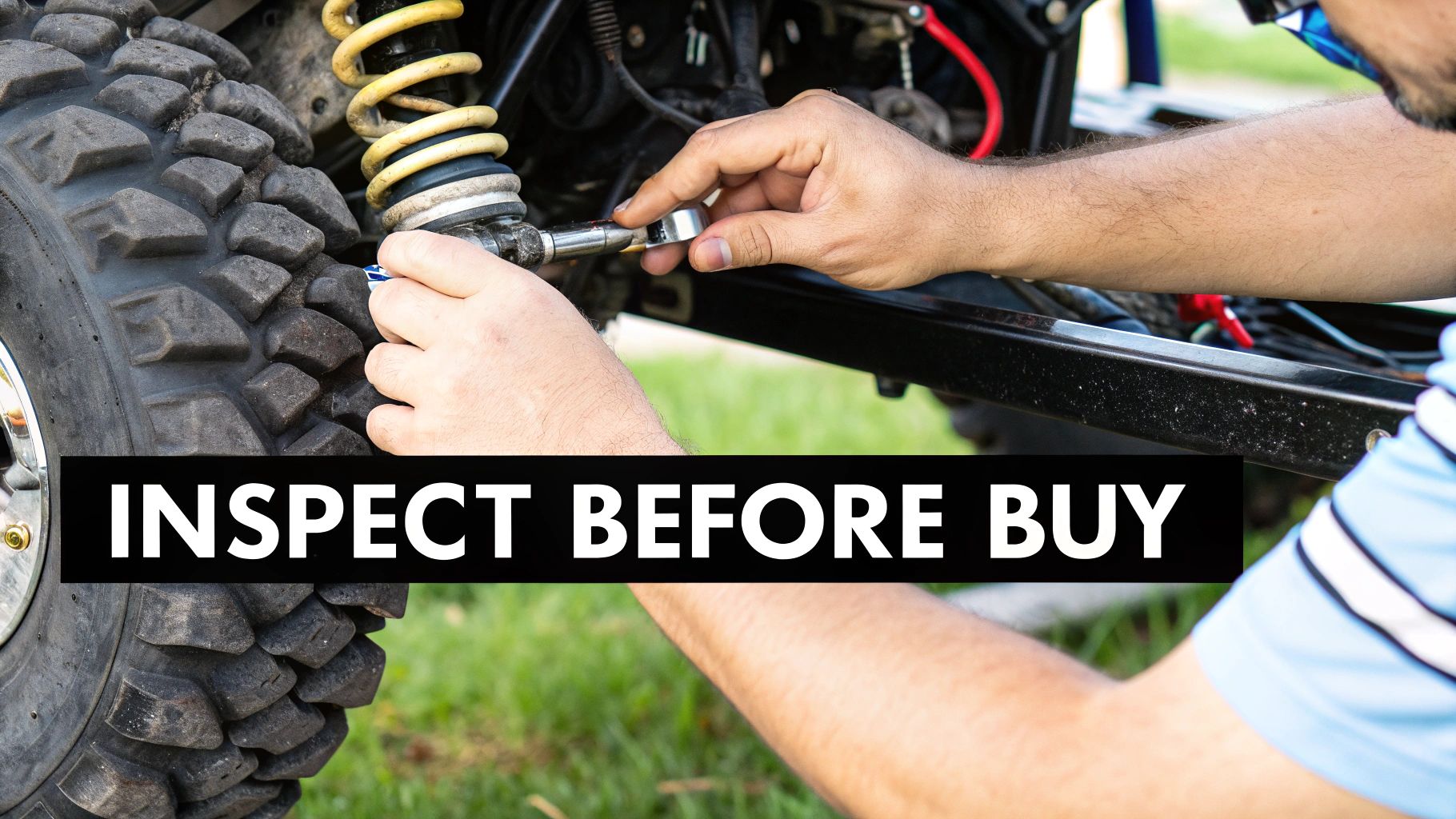
Before you even think about handing over cash for a used quad, you need to put on your detective hat. A thorough inspection is your best defense against buying a lemon. Get your hands dirty and don't be shy about it.
Here’s what I always look for:
- Frame Integrity: Get down and look for cracks, bends, or fresh paint that looks out of place. A quick paint job can easily hide a history of hard hits.
- Tires & Wheels: Are the tires worn evenly? If not, you could be looking at alignment issues. Give the rims a once-over for any dents or cracks.
- Fluids Tell a Story: Pull the dipstick. Is the oil jet black and gritty? Check the coolant—is it clean? Dirty fluids are a red flag for poor maintenance.
- Brakes & Suspension: Grab the brake levers; they should feel solid, not spongy. Push down hard on the fenders and watch the shocks. They should compress and rebound smoothly, not bounce like a pogo stick.
- The All-Important Cold Start: This is non-negotiable. Always insist on hearing the engine start when it's completely cold. A warm engine can mask a multitude of sins, especially hard-starting problems.
Whether you decide on a new or used ATV, a little bit of due diligence goes a long way. It’s the difference between buying endless adventure and buying a constant headache.
It’s easy to get excited about the sticker price, but smart buyers know that’s just the starting line. Figuring out how to buy an ATV that fits your life means looking at the total cost of ownership. Getting this right from the start is the difference between years of fun and a machine that becomes a financial headache.
The global market for ATVs and UTVs is huge, valued at around $11.79 billion. This translates to a massive range of options for riders. You can find basic, entry-level models for around $5,000, while high-performance or specialized utility quads can easily top $15,000. If you want to dive deeper into the numbers, you can explore detailed powersports market trends on researchandmarkets.com.
To get a real-world feel for pricing, check out this comparison of average MSRPs from a few of the biggest names in the game.
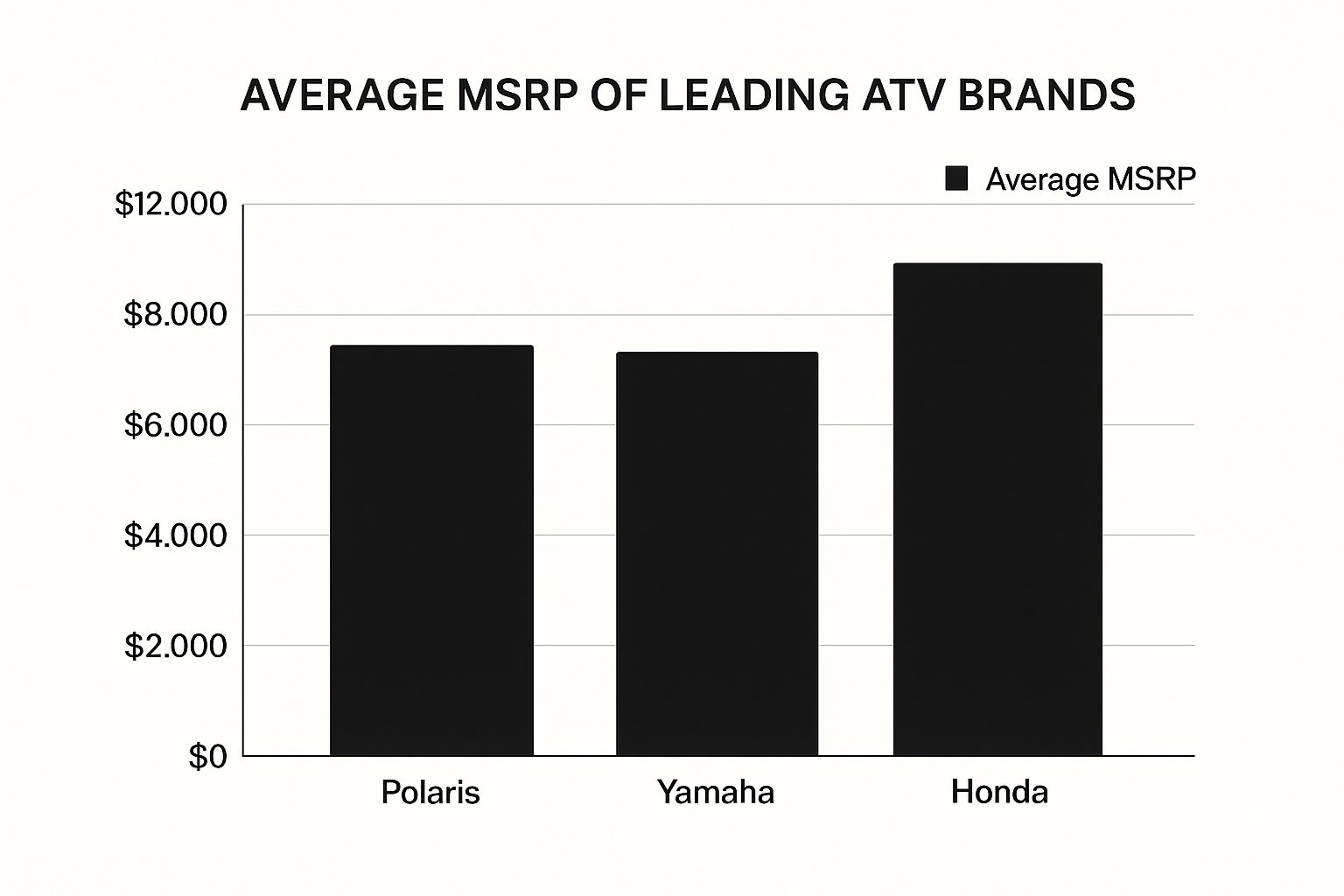
You can see right away how brand, features, and engine size cause prices to vary, even for machines that seem similar on the surface.
Before you get attached to a specific model, you need to calculate the real "out-the-door" price. The MSRP is rarely what you actually pay, as dealerships add a few standard costs.
- Sales Tax: This can add a significant chunk to your total, and it changes depending on where you live.
- Dealer Fees: Look out for freight charges (getting the ATV from the factory to the lot) and prep fees (assembly and initial inspection).
- Registration and Titling: Just like a car, your state requires you to register the vehicle, and they charge fees for it.
Then there’s the gear. A good helmet isn't optional—it's a must. You'll also want to budget for gloves, goggles, and proper riding boots. If your ATV is a workhorse, you might be adding a winch or a plow, and those costs need to be part of your initial budget, not an afterthought.
Got your total upfront cost? Great. Now, how are you going to pay for it? Paying cash is obviously the most straightforward path, but financing is a common route for many riders.
Pro Tip: Dealership financing is convenient, but don't stop there. Get a pre-approval from your own bank or a local credit union before you even walk into the dealership. Having that second offer in your back pocket gives you serious leverage when it's time to negotiate. Your credit score is the key here—it will largely determine the interest rate you get.
The expenses don't stop once you've signed the papers and loaded the ATV onto your trailer. To truly budget for ownership, you have to account for the costs that will pop up month after month, year after year.
Here's a look at what those first-year costs might look like beyond the price of the machine itself.
This table breaks down the potential first-year costs associated with buying and owning a new mid-range ATV to help buyers budget effectively beyond the initial purchase price.
| Expense Category |
Estimated Cost Range |
| Safety Gear (Helmet, etc.) |
$300 - $800+ |
| Insurance (Annual) |
$200 - $600 |
| Registration & Titling |
$50 - $150 |
| Routine Maintenance |
$150 - $400 |
| Fuel (Varies by use) |
$200 - $500+ |
| Unexpected Repairs Fund |
$100 - $300 |
These numbers are just estimates, of course. Your costs for things like insurance and fuel will depend heavily on your specific situation and how often you ride. Still, this gives you a much more realistic picture of what to expect financially. Factoring these ongoing expenses into your monthly budget from day one is the key to stress-free ownership.
You can read all the reviews and stare at spec sheets for days, but nothing beats actually throwing a leg over the machine. Now for the fun part: the test ride. This is where the theoretical becomes real and you find out if the ATV you’ve been eyeing is actually the one for you.
Think of this as more than just a quick spin around the lot. It's your one shot to see how the ATV truly feels and behaves. Is the seat comfortable for more than five minutes? Are the handlebars and controls within easy reach without stretching? These are the make-or-break questions you can only answer from the saddle.
From the moment you turn the key, start paying attention. The engine should kick over easily and settle into a nice, steady idle. As you get moving, try to put the machine through its paces in a way that mimics how you'll actually use it.
- Feel the Power: How does the throttle feel in your hand? A good machine will have a smooth, predictable power delivery. You don’t want something that’s jumpy or difficult to manage, especially on technical trails.
- Check the Brakes: Find a safe spot to give the brakes a good squeeze. They should bite down firmly and bring you to a stop without any weird pulling or screeching noises. Mushy brakes are a definite no-go.
- Listen for Problems: While riding at a slow speed, turn the handlebars all the way from one side to the other. Any strange clicks, clunks, or pops could be a sign of steering or suspension problems you don't want to inherit.
A test ride is your best diagnostic tool. Strange noises, vibrations, or an uncomfortable riding position are all major red flags that are easy to overlook online but impossible to ignore once you're on the machine.
Alright, you’ve found "the one." Now it’s time to talk money. Walk in with confidence. You’ve already done your homework on pricing and know what your budget is, which is your biggest advantage.
Start by making a reasonable offer based on the market value you researched. Don't be afraid to stick to your number. If the deal just isn't right, be prepared to walk away. Sometimes, dealerships have more wiggle room on accessories, service plans, or those infamous prep fees than on the sticker price itself. If you're buying from a private seller, showing up with cash in hand can give you serious bargaining power.
Before you sign on the dotted line, pump the brakes and read everything. It’s easy to get caught up in the excitement and just skim the documents, but this is where you need to be sharpest.
Carefully go over the bill of sale. Make sure the Vehicle Identification Number (VIN), sale price, and any extras you negotiated are all listed correctly. For a new ATV, give the warranty information a thorough read so you know exactly what’s covered. Most importantly, look at the final itemized price. Question every single fee you don't understand. Taking an extra ten minutes here can save you a massive headache later and ensure you ride off with nothing but a smile.
Essential Gear and Post-Purchase Planning
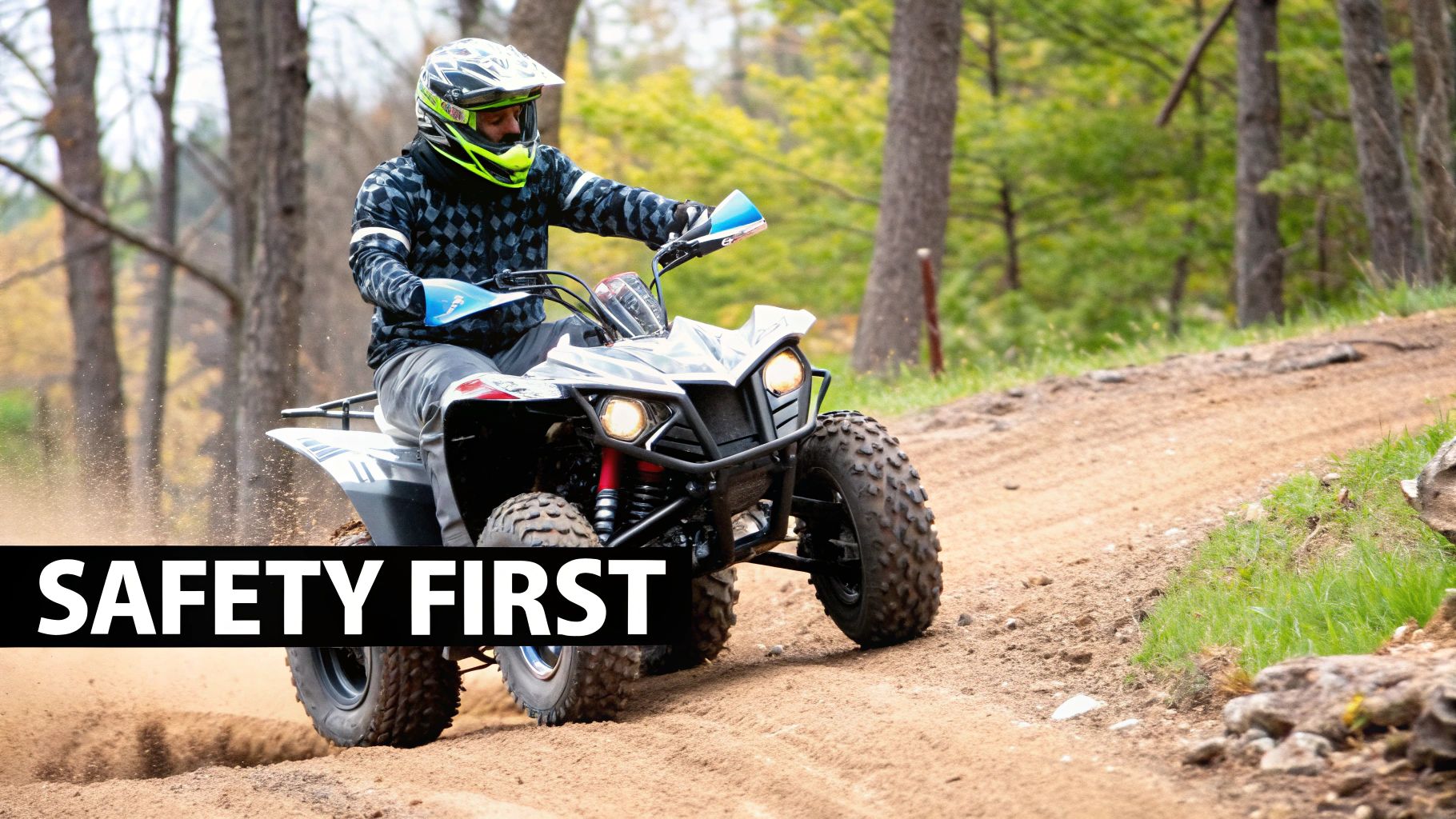
Getting the keys to your new ATV is an incredible feeling, but your work isn't quite done. The real adventure is just beginning, and that means shifting your focus from buying the machine to riding it safely and responsibly. A little planning right now will set you up for years of fun and prevent a whole lot of future headaches.
Think about it this way: you wouldn't take a boat out without life jackets or head out in an RV without checking the tires. Off-roading is no different. Your first stop after signing the paperwork should be to pick up some high-quality protective gear.
Your riding gear is your personal insurance policy out on the trail. It’s what stands between you and everything from flying rocks to an unexpected tumble. Getting muddy is half the fun, but staying safe is always the top priority.
Here’s the absolute minimum you should have before your first ride:
- A Certified Helmet: This is, without a doubt, the most important piece of gear you'll ever buy. Don't cheap out. Look for a helmet that's DOT or Snell-certified and fits snugly without being painfully tight.
- Eye Protection: Sunglasses just don't cut it. A good pair of goggles is essential to keep dust, mud, and low-hanging branches out of your eyes. They create a seal that glasses can't match.
- Durable Gloves: A solid pair of riding gloves will save your hands from blisters, improve your grip, and offer some protection if you fall.
- Over-the-Ankle Boots: You need sturdy boots with excellent ankle support. They protect your feet from rocks and debris and give you a solid footing when you're off the machine.
Just like prepping a boat or camper for its first trip of the season, a pre-ride check on your ATV is a habit that pays off. Taking five minutes before every ride to inspect your machine can prevent a breakdown miles from anywhere.
Alright, you've got the gear. Now it's time to handle the less exciting, but totally necessary, parts of ownership. First up, get your new quad registered and titled with your state's DMV or equivalent agency. This is mandatory and makes your machine legal for the trails.
Next, you absolutely have to learn the local laws. The rules for where you can ride can change drastically from one county to the next. Do some digging online to find local public trail systems, off-highway vehicle (OHV) parks, and any rules about riding on public lands. Don't just assume you can ride anywhere.
Finally, get into the habit of basic maintenance. A quick check before each ride is all it takes.
Here's a simple pre-ride checklist for any new owner:
- Check tire pressure and look for any damage.
- Verify fluid levels, especially oil and coolant.
- Test your brakes and throttle to make sure they feel right.
Following these simple steps will keep your ATV running strong and help ensure every ride is a safe one.
It’s completely normal to have a few last-minute questions swirling around as you get ready to pull the trigger on a new ATV. Getting these final details sorted is what turns a nervous buyer into a confident owner, ready for that first epic ride. Let’s clear up some of the most common things people ask.
Getting these answers straight ensures you’re not just buying a machine; you're stepping into the ownership experience fully prepared.
If you’re hunting for a deal, timing your purchase can make a huge difference. You'll almost always find the best prices during the late fall and winter months. Once the prime riding season wraps up, dealerships get serious about clearing out last year's models to make space for the new inventory. That’s your cue to find some significant discounts.
Another pro tip? Shopping at the end of the month or financial quarter can pay off. Sales teams are often hustling to hit their quotas and might be more willing to negotiate. On the flip side, if you want the absolute latest tech and the biggest selection, spring and summer are your best bet. That’s when the showrooms are packed with the newest models.
What Should I Really Budget for Insurance and Maintenance?
The sticker price is just the beginning, so it's smart to think about the long-term costs. For insurance, you can generally expect to pay somewhere between $300 to $800 annually. Of course, this can swing quite a bit depending on your state, driving record, the value of your ATV, and how much coverage you want.
When it comes to maintenance, setting aside $500 to $1,000 per year for a new machine is a solid plan. This will easily cover your essential upkeep like oil changes, new filters, and routine inspections.
Keep in mind that older, used ATVs might need a little more TLC and a bigger budget for those just-in-case repairs. Factoring these ongoing costs in from the start is the secret to a stress-free life on the trails.
This one trips a lot of people up, but it’s actually pretty simple. The difference boils down to how you sit and how you steer.
- An ATV (All-Terrain Vehicle) is what you probably picture first. You straddle the seat and use handlebars to steer, just like a motorcycle. They’re built for one rider (sometimes two) and are incredibly agile, which makes them perfect for tight, technical trails.
- A UTV (Utility Task Vehicle) is also called a Side-by-Side. Think of it more like a small, off-road car. It has a steering wheel, foot pedals, and bucket or bench seats for two to six people.
UTVs are generally bigger, built for hauling gear or carrying passengers, and are fantastic for utility work. ATVs, on the other hand, deliver a much more active, solo riding experience. It all comes down to what you see yourself doing with it.
At SearchShop.com, we’re all about making the vehicle buying process better for everyone. Whether you're looking for an ATV, RV, or boat, our tools can help. You can use our platform to compare prices, check out reviews, look into pricing history, and browse thousands of new and used vehicle listings to find the perfect machine for your next adventure. Find your next ATV on SearchShop.com.