By Searchshop Editorial Team18 min readSeptember 23, 2025Updated January 2, 2026
Some links in this article are affiliate links. If you buy through them, Searchshop may earn a commission at no extra cost to you. Learn how this works.
The 2026 Alliance Paradigm 395DS is built for people who do more than weekend camp. It’s a true double‑suite, two‑bath fifth wheel with a loft above the rear suite, a residential galley, and big‑rig capacities that support longer stays. Couples can work remotely without stepping on each other, multigenerational families gain privacy…
Alliance leans into owner feedback and it shows in the daily‑use details—motion‑lit pantry, desk‑friendly dinette, enclosed/heated underbelly, and serviceable utility routing. In this research guide we’ll break down specs, construction, livability, climate control, towing math, safety and warranty, pricing and value, maintenance strategies, brand comparisons, community insights, and real‑world scenarios. We close…
Key Specifications
Length: 42′ 6″
Height: 13′ 5.5″ (incl. 2nd A/C)
Dry Weight: 15,278 lbs
GVWR: 18,000 lbs
Hitch (Pin) Weight: 3,179 lbs
Fresh / Gray / Black: 98 / 159 / 106 gal
Slides: 4
Sleeping Capacity: Up to 8 (two suites + loft)
Refrigerator: 19 cu ft residential 12V
Furnace: 40,000 BTU
Exterior & Construction
Paradigm’s shell pairs laminated aluminum framing with high‑gloss fiberglass and a painted front cap. A walkable roof membrane keeps maintenance straightforward, and the enclosed, heated underbelly supports shoulder‑season travel. Exterior storage is wide and well‑lit, while dual awnings expand outdoor living space. The centralized utility bay simplifies winterization and valve access. Popular…
📷 Image: Exterior three‑quarter profile of the 395DS
Inspect the common stress points at delivery—cap‑to‑roof seams, slide top seals, awning brackets, and ladder mounts. None of these are glamorous, but they are what keep water out and trim aligned.
👉 Pro Tip: Water‑test slide seals during PDI while a partner checks inside for drips. Early tweaks save headaches down the road.
Floorplan & Living Area
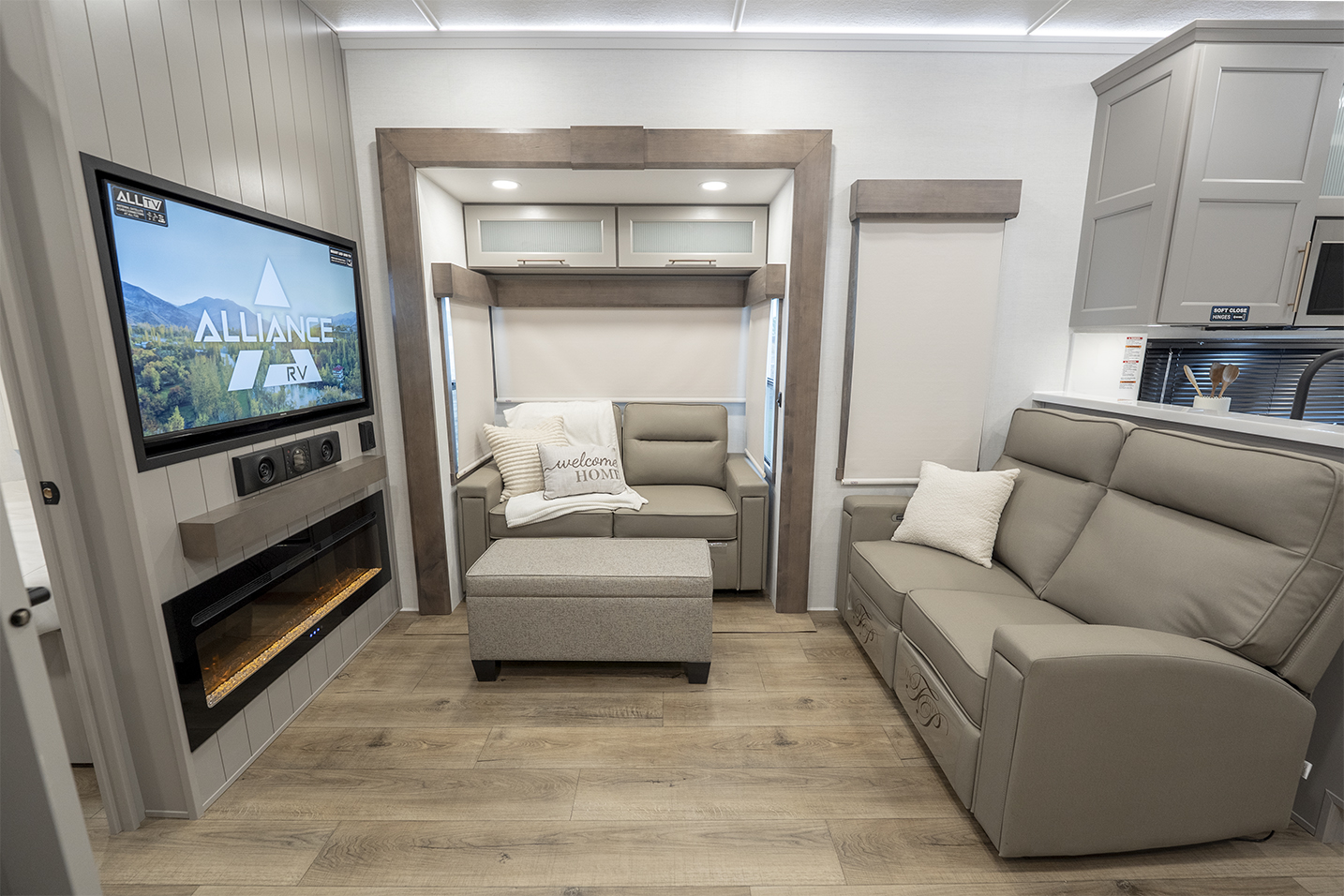
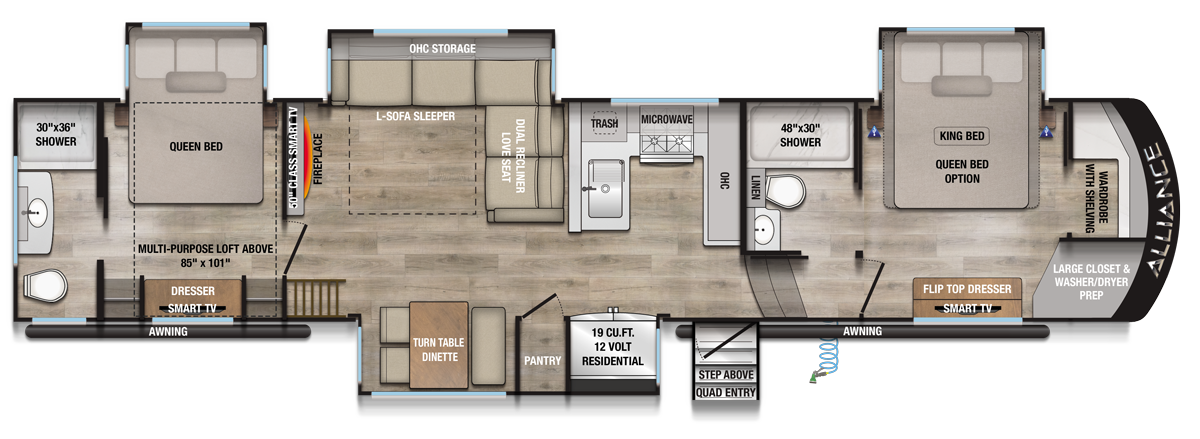
Opposing slides open a bright lounge with a sofa sleeper facing an entertainment wall and fireplace, flanked by dual recliners. Large windows on both sides bring in light and views. The swivel dinette doubles as a compact desk, letting one person work while another cooks or relaxes. With bedrooms at opposite ends,…
📷 Image: Lounge with entertainment wall and fireplace
Daily flow feels residential: the hallway never pinches, the traffic path to both baths stays open, and the loft can be used as a reading nook or storage without interrupting the main space. If you plan to work on the road, measure the chair clearance at the dinette and confirm you have reach to outlets.
Kitchen
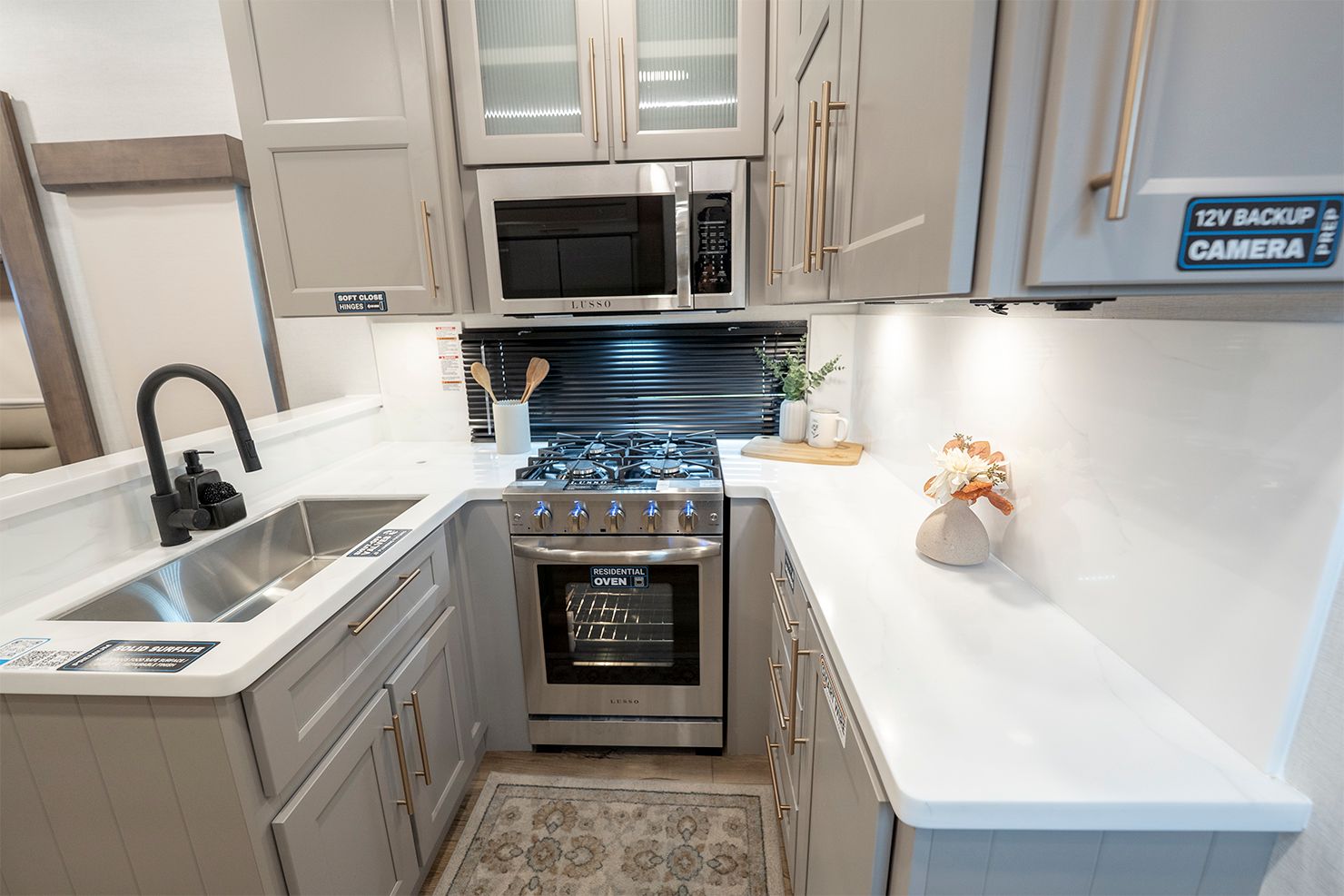
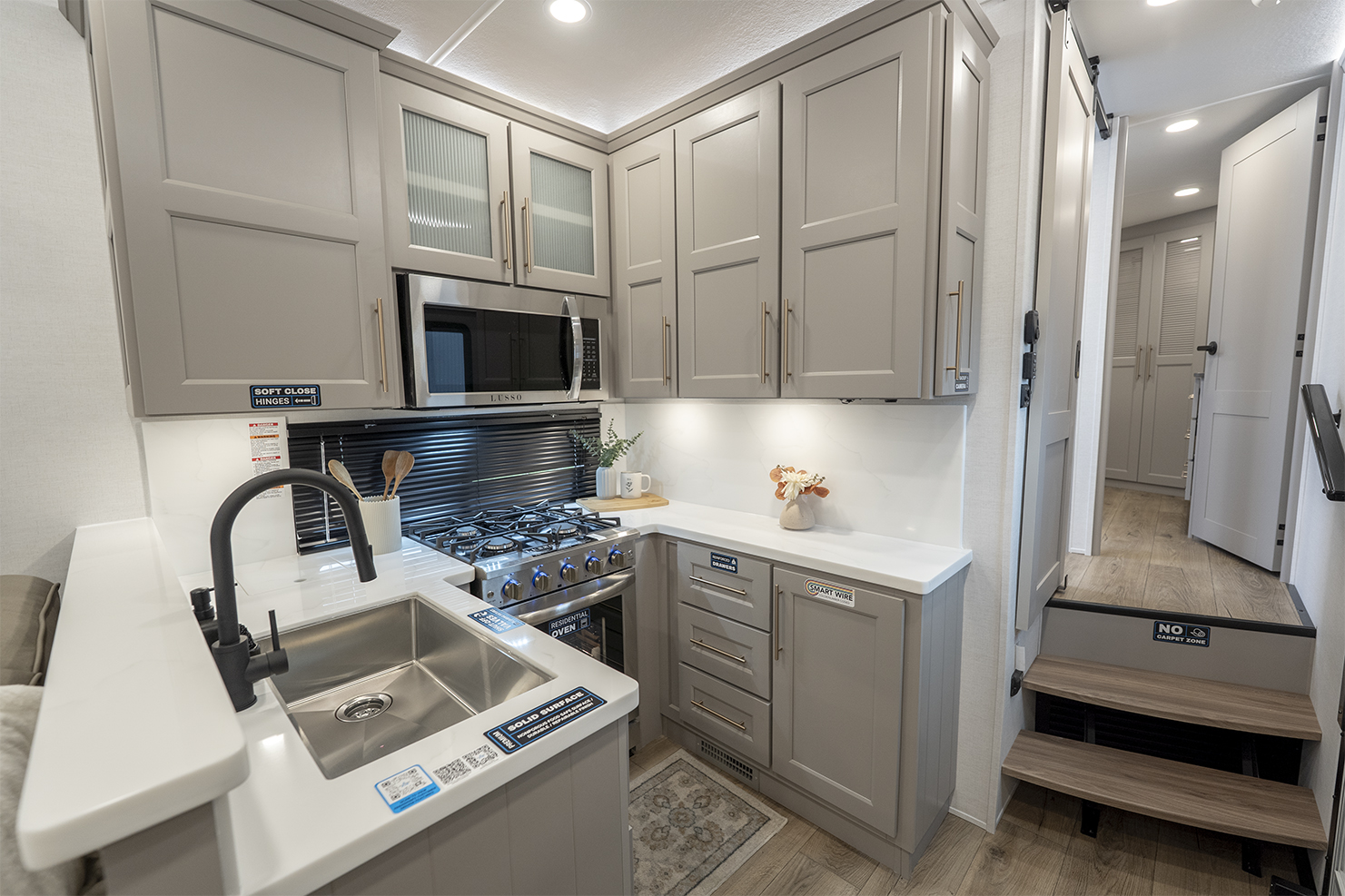
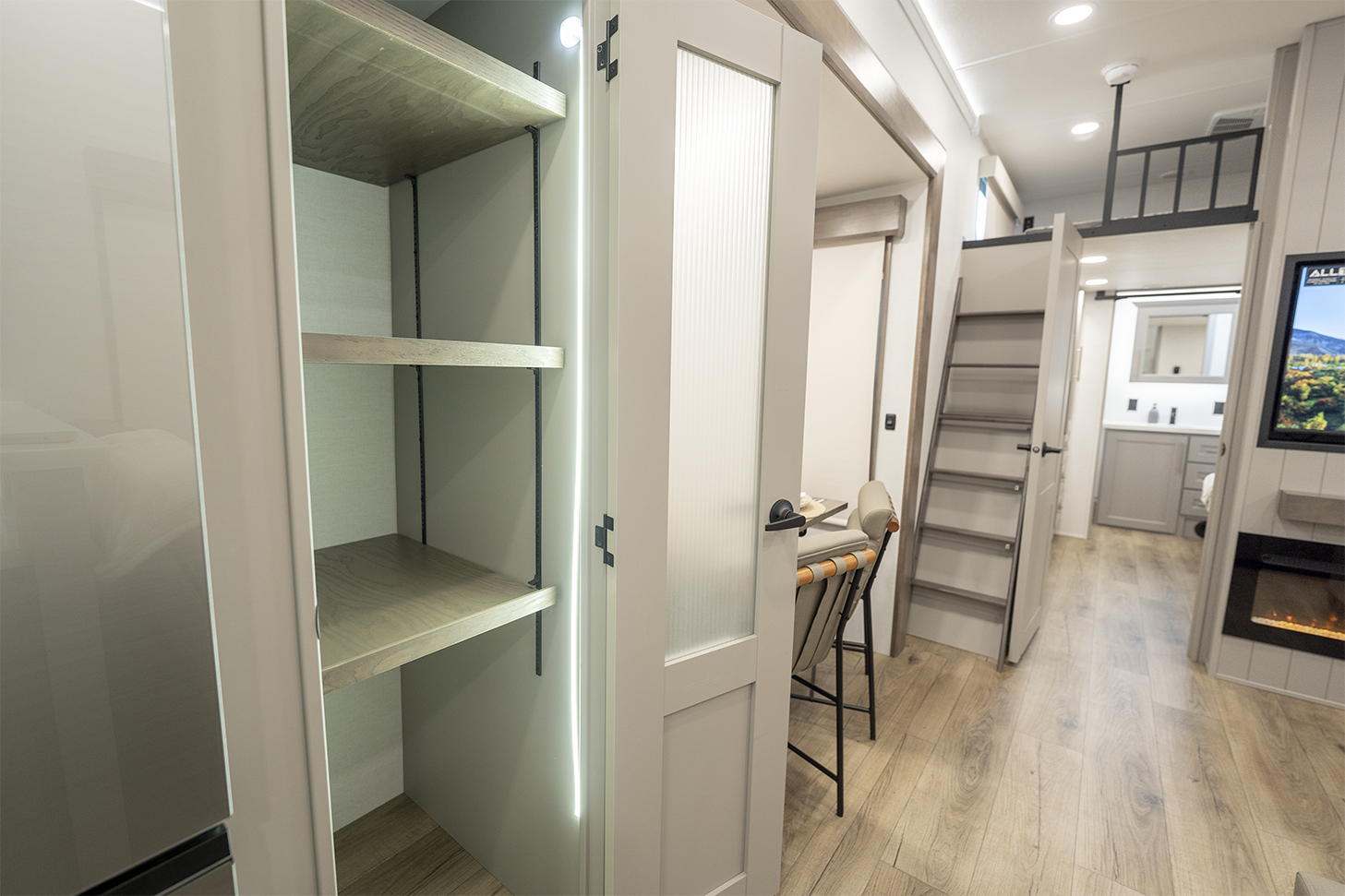
The U‑shaped galley brings a 19‑cu‑ft 12‑volt residential refrigerator, four‑burner cooktop, residential oven, solid‑surface counters, and an undermount sink. Storage is excellent for a mid‑coach kitchen: tall pantry with motion lighting, deep drawers for full‑size pots, and a trash location that doesn’t interrupt the cook’s workflow. Venting is strong, and there’s still…
📷 Image: Kitchen with U‑shaped counters and residential appliances
Bring your largest baking sheet when you shop to confirm oven fit, and map where the coffee maker will live—tiny layout choices add up over months.
👉 Pro Tip: Add a sink‑bridging cutting board and silicone drawer liners. They expand prep space and stop rattles on travel days.
Walk‑Through Bath
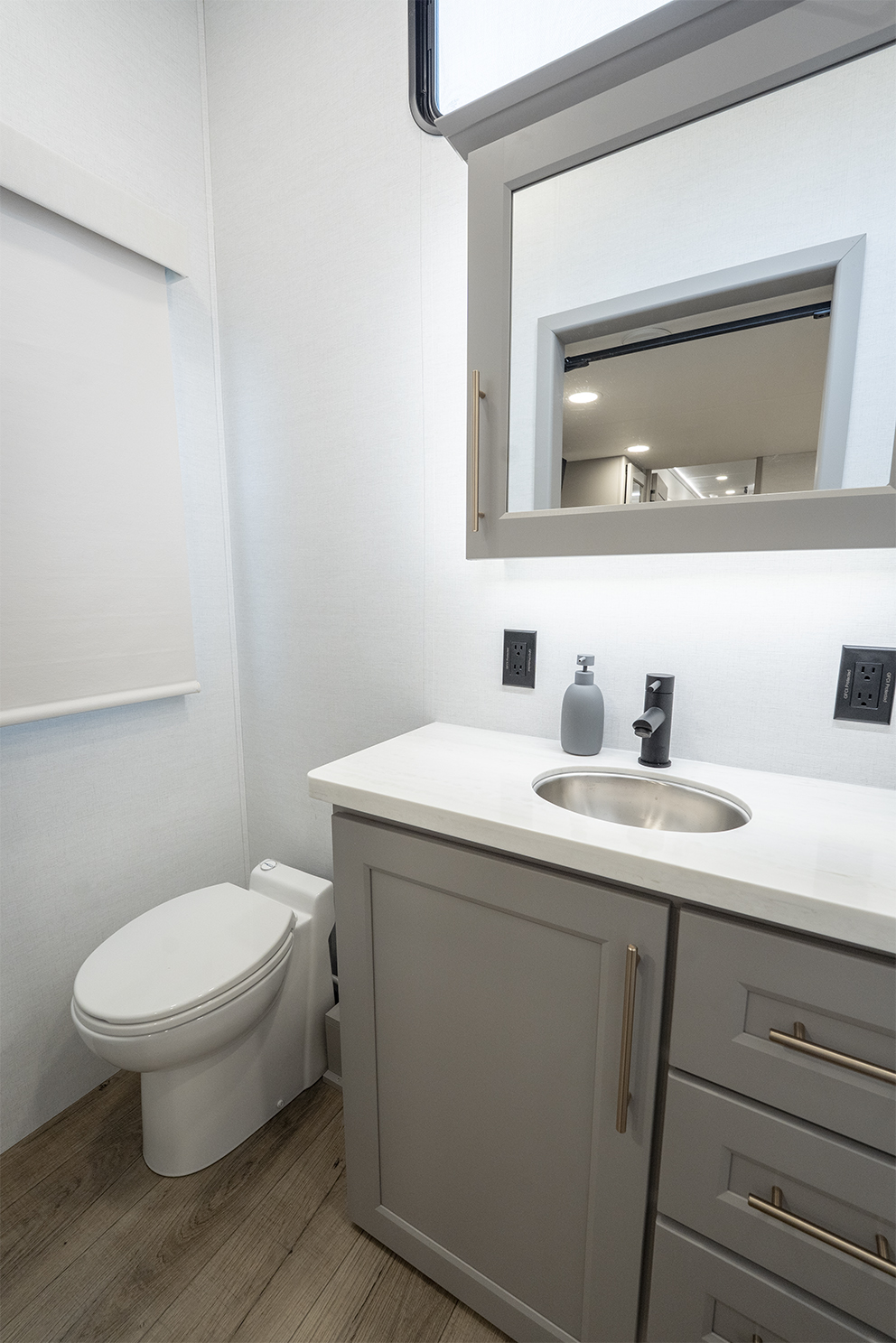
Both suites have their own full bathrooms—no schedule battles. Up front, expect a large rectangular shower (around 48″×30″), full vanity, and good lighting that avoids mirror shadows. In the rear suite, a 30″×36″ shower keeps parity for guests or family. Vent fans move humidity quickly, and storage is adequate for daily toiletries and spare linens.
📷 Image: Front bath vanity and shower enclosure
Check door latches, shower pan slope, and access panels during your walkthrough. Fixing a slow drain early is easier than tearing into cabinetry after a season.
Bedroom
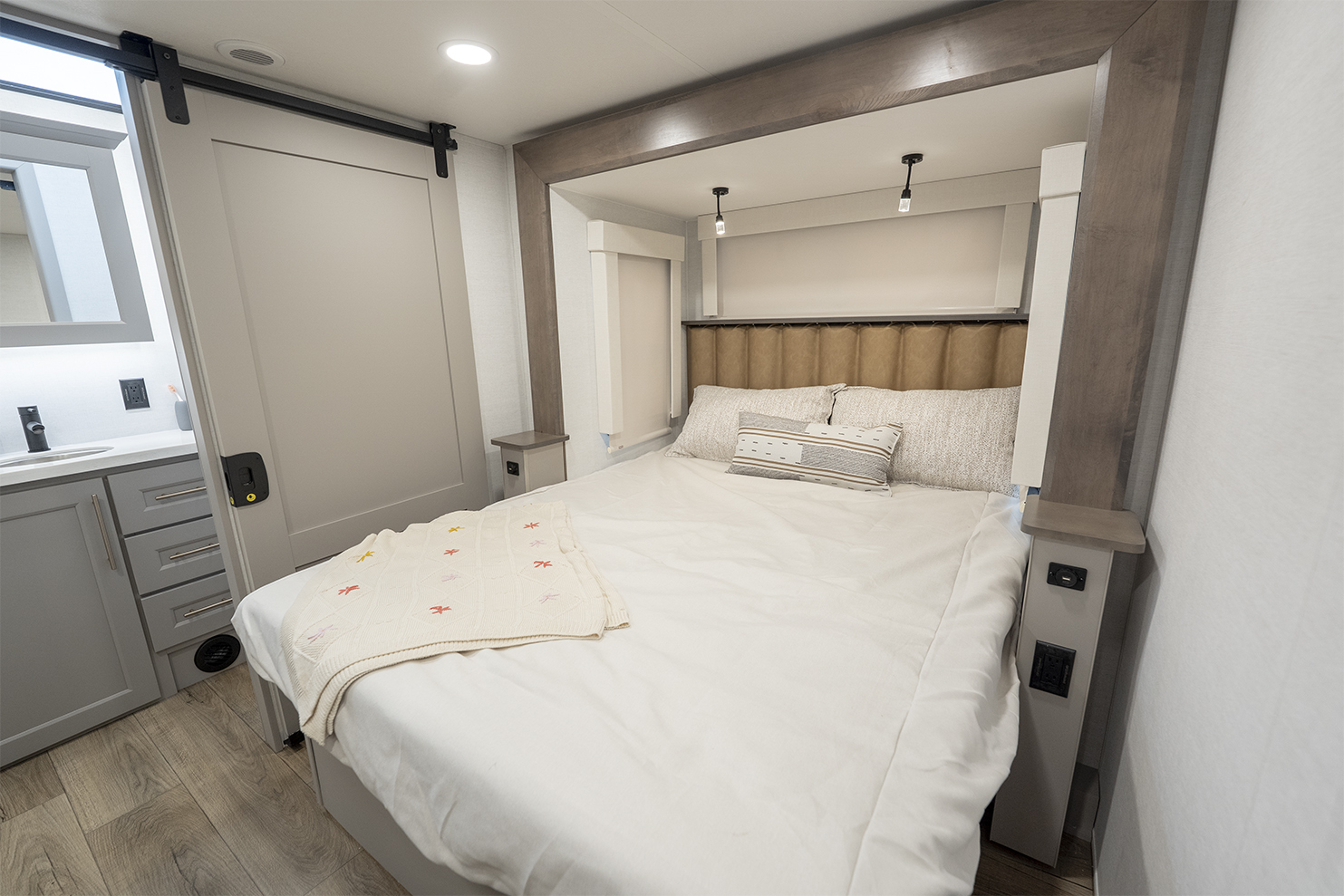
The front owner’s suite centers on a king bed (queen optional) with nightstands, power/USB, and walk‑around space. A flip‑top dresser hides cable clutter and makes a tidy charging station. Washer/dryer prep in the forward closet keeps laundry manageable on long trips. The rear suite mirrors privacy with its own bath, closet space,…
📷 Image: King bed and sliding door to bath
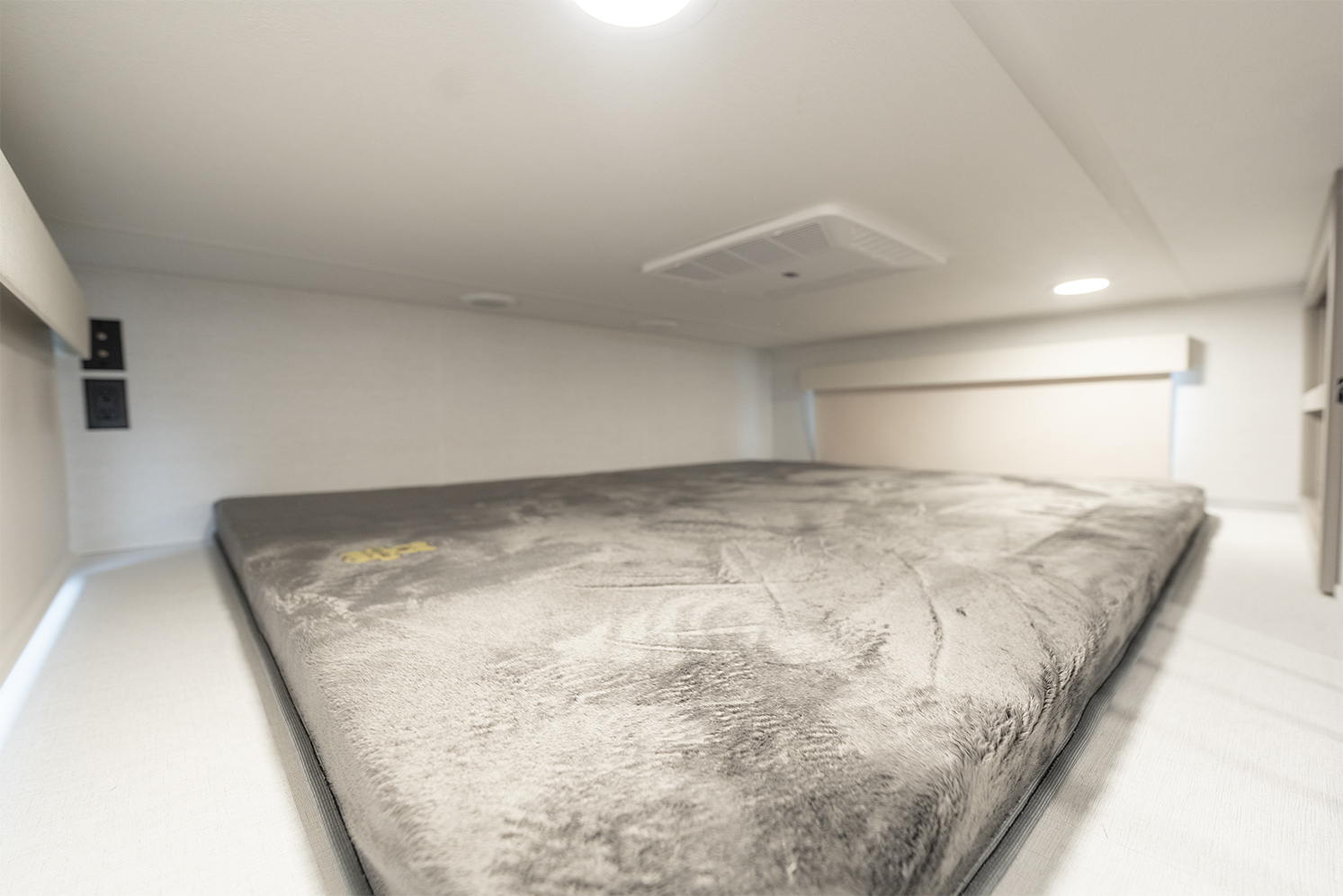
Above the rear suite, the loft is perfect for kids, teens, or seasonal storage like soft bins and duffels.
👉 Pro Tip: If the loft will be used nightly, add a cut‑to‑fit foam topper and a compact 12‑volt fan—warm air pools up high.
Climate Control & Seasonal Use
Shop RVs For Sale
Browse current rvs from dealers near you — updated daily.
Multiple A/C units and a 40,000‑BTU furnace cover hot and cold extremes when paired with the enclosed, heated underbelly and optional dual‑pane windows. In winter, skirting and smart venting reduce furnace cycles and moisture. In summer, shade the curb side, use reflective window inserts, and keep A/C filters clean. Big…
👉 Pro Tip: Use a small dehumidifier and crack a roof vent in cold weather—controlling interior moisture protects cabinetry and soft goods.
Technology & Connectivity
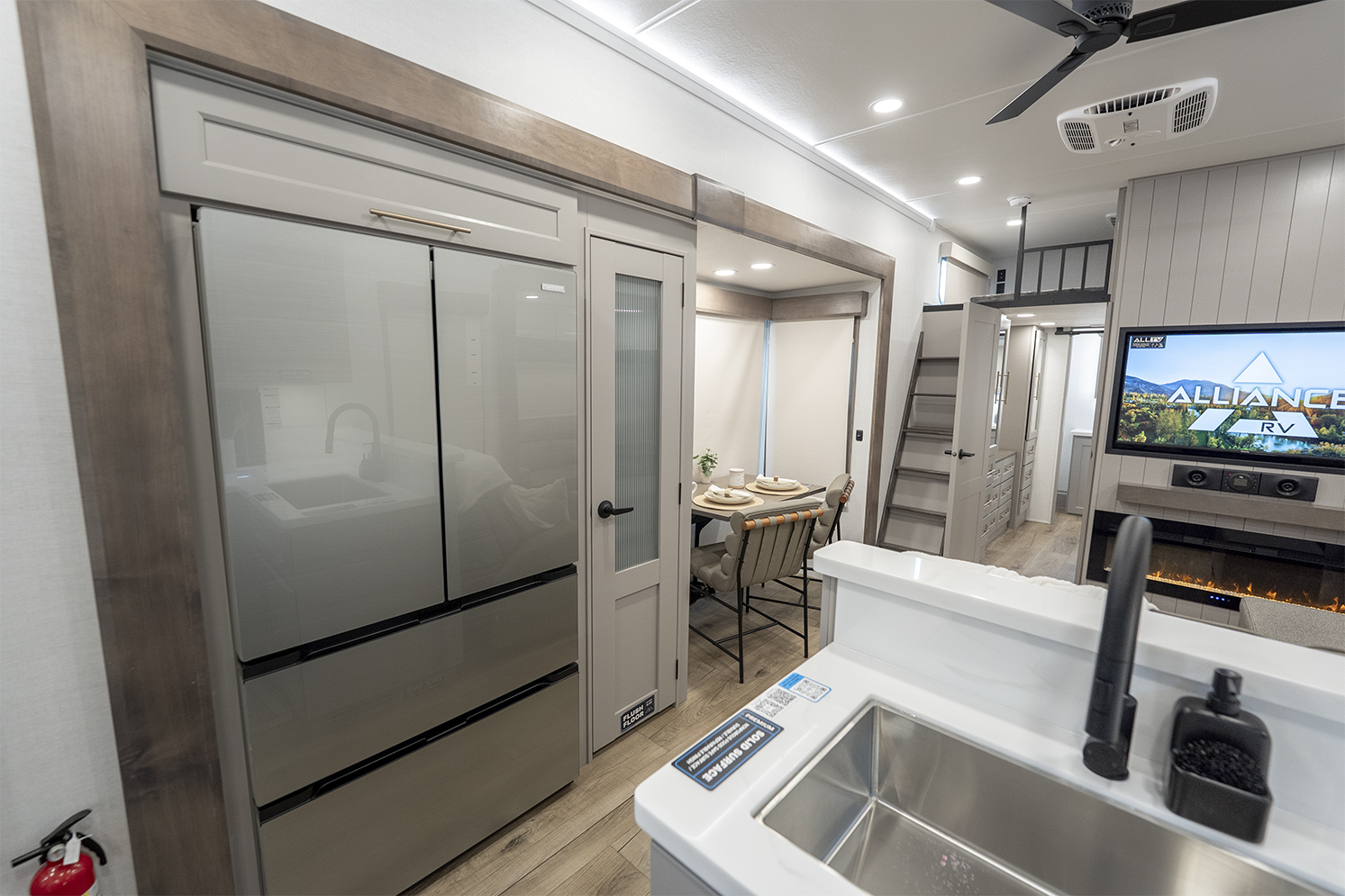
Smart TVs, a sound system paired with the fireplace, and plentiful USB‑A/USB‑C ports handle entertainment and charging. The coach is friendly to aftermarket connectivity: many owners add a low‑profile cellular router for 5G and a satellite internet dish for remote work reliability. The centralized control panel keeps HVAC, tank levels, and lighting…
📷 Image: Refrigerator wall with sightline toward dinette and loft
👉 Pro Tip: Label new cable runs and keep a wiring sketch in your binder—service visits are faster and resale buyers appreciate clean work.
Towing, Weights & Match
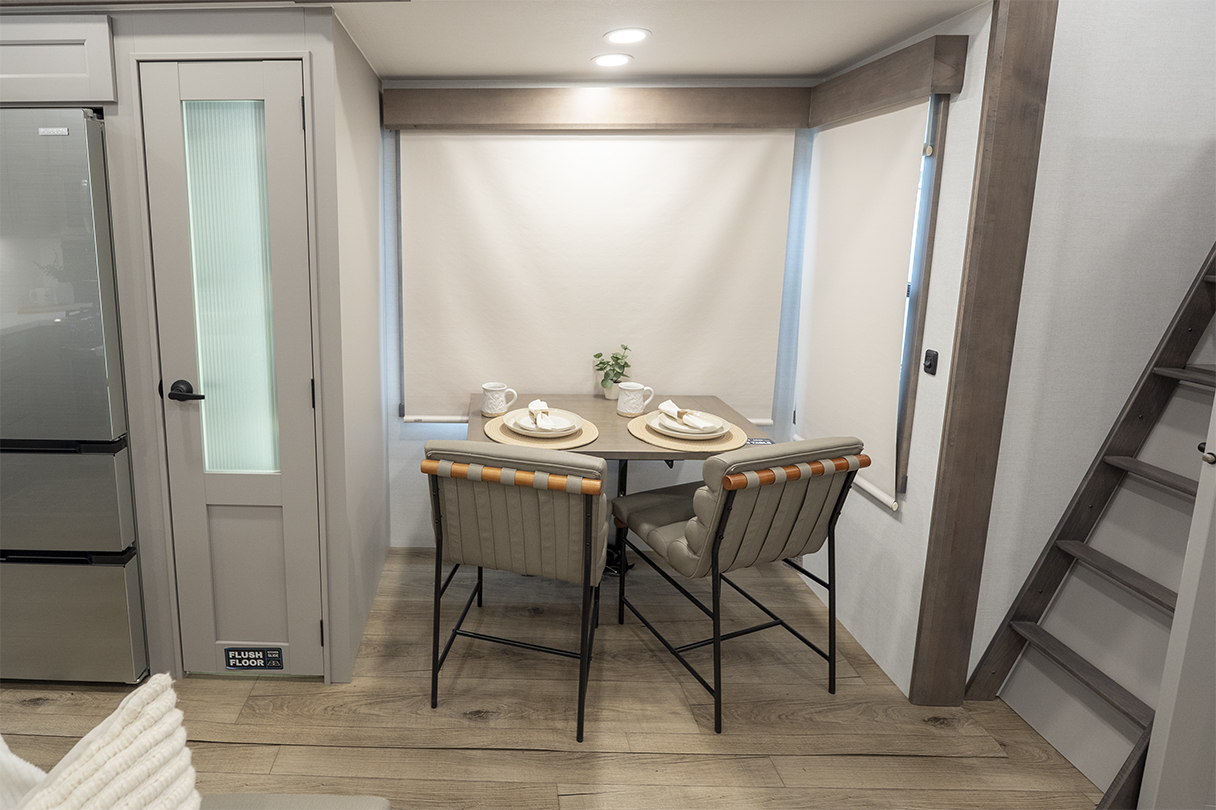
Listed figures: 15,278‑lb dry weight, 18,000‑lb GVWR, and about 3,179‑lb pin. Camp‑ready weights approach GVWR once you add water, tools, and toys; that pin weight pushes your truck’s available payload after hitch, passengers, and fuel. A properly equipped one‑ton diesel (SRW or dually) is a common, stress‑free match for mountain grades, heat,…
📷 Image: Swivel dinette/desk that doubles as a work nook
Towing Table
Specification
Value
Dry Weight
15,278 lbs
GVWR
18,000 lbs
Pin (Hitch) Weight
3,179 lbs
Recommended Truck Class
3/4‑ton or 1‑ton HD diesel with adequate payload & GCWR
Safety Margin
Target 20–25% above calculated needs
👉 Pro Tip: Weigh the combination loaded for travel—including pets—then set tire pressures and brake controller by the numbers.
Safety & Warranty
Expect sturdy quad steps, extensive LED lighting, and color‑coded wiring that eases service. Dual‑pane windows (option) improve weather and noise control. Alliance typically backs the coach with a one‑year limited base warranty plus a three‑year limited structural warranty; appliances carry their own manufacturer coverage. Keep a clean maintenance log and address small issues early so warranty visits are…
👉 Pro Tip: Build a seasonal checklist: roof seams, slide wipers, GFCI tests, LP leak checks, brake controller tests, and extinguisher inspection.
Pricing & Value
MSRP generally starts in the low $130Ks before options. Real‑world pricing varies by inventory and packages like dual‑pane windows, generator/solar, and paint. For financing, compare banks, credit unions, and RV‑specialty lenders; 20–30% down is common, and terms range 10–20 years. Budget for insurance, storage,…
Resale strength tracks condition and documentation. Double‑suite appeal is broad, and buyers pay more for units with clean roof lines, fresh slide seals, tidy battery compartments, and professional‑grade wiring.
Cons: Heavy and long; requires a serious tow rig; multiple slides add maintenance; loft can run warm; premium cost when fully optioned.
Competitive Comparisons
Against rivals like DRV, Redwood, Jayco North Point, and Keystone Montana, the Paradigm 395DS competes on livability and an owner‑influenced design ethos. DRV/Redwood can out‑luxury it with bespoke materials—at higher prices and weights. Montana and North Point hit lower price points but often need option bundles to match Paradigm’s appliance…
📷 Image: Pantry with motion lighting and adjustable shelves
👉 Pro Tip: Compare “as‑equipped” units on the lot—not brochure bases. Inverter size, battery chemistry, and window type change ownership more than a spec sheet suggests.
Maintenance & Ownership Tips
Quarterly roof and slide inspections stop small leaks before they start. Clean and condition seals, check around roof penetrations, and touch up with compatible sealant. Keep A/C filters clean, torque‑check lug nuts after service, and lubricate steps and jacks per the manual. If storing in freezing climates, winterize fully—even with…
High‑value upgrades in year one include surge protection/EMS, soft‑start kits for A/C units, a balanced solar‑plus‑lithium system with a smart shunt, and organizer solutions that prevent drawer and door wear. Small habits—like wiping seals and venting moisture—pay off at resale.
👉 Pro Tip: Weigh at a CAT scale when packed. Keep heavy gear low and near the axles, and record axle‑by‑axle numbers in your maintenance log.
Real‑World Scenarios
Weekenders: Setup takes longer than a small trailer, but the payoff is condo‑like space once camped. The loft becomes a kid fort or a bin bay for soft gear.
Seasonal Travelers: Dual suites and generous tanks make shoulder seasons easy; add skirting and dual‑pane windows for deeper winter, and manage moisture with a small dehumidifier.
Full‑Timers: Two real suites reduce “trip fatigue.” Laundry prep, organized storage, and a desk‑friendly dinette keep routines sane over months on the road.
Boondockers: Pair the 12‑volt fridge with solar/lithium, conserve water with Navy showers, and plan dumps—big gray/black capacities extend stays off‑grid.
Retirees & Hosts: Welcome family without losing privacy; the rear suite keeps night‑owl guests comfortable while the front suite stays quiet.
Owner Community & Feedback
Alliance’s owner community is active and responsive. Factory reps and experienced owners share fixes and upgrades, which shortens the learning curve for new buyers. On the 395DS specifically, owners praise the double‑suite livability, pantry capacity, and storage balance. Watch‑items are slide‑seal care…
📷 Image: Loft sleeping/storage area above the rear suite
👉 Pro Tip: Join an owner group before purchase and ask about local dealer service. A strong service network matters as much as a great floorplan.
FAQs
What warranty coverage does Alliance provide on the Paradigm 395DS?Alliance typically includes a one‑year limited base warranty that covers defects in materials and workmanship under normal use, plus a three‑year limited structural warranty covering major load‑bearing elements such as the roof, walls, and floor. Appliances and electronics—refrigerator, microwave, televisions, fireplace, A/C units—carry their own manufacturer warranties, which may have different terms and service centers. To get the most from any warranty, document everything from day one. Keep dated photos of roof and slide‑seal inspections, save receipts for maintenance items, and log dealer or mobile‑tech visits. During your pre‑delivery inspection, note even minor issues on a punch list and schedule repairs promptly; warranty windows go fast. If you plan electrical upgrades like solar and lithium batteries, use clean, professional installs so service centers aren’t tempted to blame modifications for unrelated problems. Finally, register appliances online to simplify parts lookups and claim processing later.
How should I approach financing a large fifth wheel like the 395DS?Treat this like financing a durable asset: shop rates across banks, credit unions, and RV‑specialty lenders; then run total cost of ownership including taxes, registration, insurance, storage, fuel, tires, and expected upgrades. Many buyers target 20–30% down to keep payments comfortable and reduce the risk of negative equity during the first years of depreciation. Loan terms from 10–20 years are common; longer terms lower the payment but increase total interest paid. Ask lenders about prepayment penalties and how they handle principal‑only payments. If you’ll add solar, lithium, or a generator, compare factory/dealer packages with third‑party installs; bundled financing is convenient, but outside installers may deliver better components and wiring for the money. Keep an emergency fund—big rigs occasionally demand attention, and trips are more fun when surprise bills don’t derail plans.
Which upgrades deliver the best comfort and resale value on the 395DS?Owners consistently praise a short list: dual‑pane windows for thermal comfort and noise control; a balanced solar‑plus‑lithium system (600–1200W panels, 400–800Ah lithium, and a quality inverter/charger); soft‑start modules on A/C units to run cooling on smaller generators or marginal shore power; slide toppers to keep debris off seals; and a surge protector/EMS to protect electronics. Inside, a foam mattress topper, soft‑close drawer upgrades, and under‑cabinet lighting improve daily living. For resale, buyers notice clean electrical work and tidy battery compartments. If you’re unsure where to start, prioritize comfort and protection first (windows, EMS, toppers), then add autonomy (solar/lithium), and round out with conveniences (lighting, organizers) that keep the rig quiet, efficient, and easy to live with for years.
Is the loft practical for adults, and how can I make it more comfortable?For short stays, yes. Ceiling height is limited and heat rises, so comfort hinges on airflow and bedding. Add a custom‑cut foam or latex topper and use breathable linens to avoid heat buildup. A compact 12‑volt fan aimed toward the main cabin moves air quietly. For lighting, a motion‑sensing puck on a dimmer works well at night; adhesive cable channels keep cords tidy. Storage cubes along the low sidewall turn dead space into organization for clothes, board games, or linens. If adults will sleep up there regularly, rotate sleepers so people aren’t climbing down the ladder nightly, and add a small organizer pouch near the pillow for glasses and phones. Finally, test emergency egress during your walkthrough; you’ll rarely need it, but knowing how to exit safely brings peace of mind.
How much storage does the Paradigm 395DS realistically offer for full‑timers?Quite a lot—if you organize. The front closet with washer/dryer prep swallows hanging clothes and seasonal bins; under‑bed space handles bulky bedding; and the flip‑top dresser tames cable clutter to create a tidy charging area. In the kitchen, a tall pantry with adjustable shelves and deep drawers fits weeks of dry goods and full‑size cookware. Overheads run throughout the lounge, and the exterior pass‑through accepts rolling totes for tools and hoses. The loft becomes a climate‑moderated attic for soft gear. The trick is distribution—keep heavy items low and near the axles; use soft bins for odd‑shaped items; and label everything if multiple people pack. A quarterly purge keeps weight in check and prevents the “we might need this someday” creep that plagues long‑term travel.
What truck do I really need to tow the 395DS safely?Start with the sticker, not a brochure: payload, rear axle rating, and GCWR on your truck’s door jamb determine the real margin. With a listed pin around 3,200 pounds and an 18,000‑lb GVWR, many shoppers land on a properly equipped one‑ton diesel—single‑rear‑wheel for lighter builds, dually for maximum margin and crosswind stability. After passengers, hitch, fuel, and tools, payload evaporates quickly. Weigh your combination at a certified CAT scale when fully loaded, then set tire pressures and brake controller settings by the numbers. If you travel in mountains or desert heat, reserve a 20–25% safety margin for both power and braking; the goal isn’t just “can it move,” but “can it stop and stay cool.” Match your hitch to frame rating and verify bed clearance with the front cap at full lock before leaving the lot.
How capable is the 395DS for boondocking?The 12‑volt residential refrigerator and large tank capacities provide a good foundation for off‑grid camping. To make it comfortable and quiet, plan a balanced system: 600–1200W of roof solar paired with 400–800Ah of lithium batteries, a 3,000‑watt inverter/charger to support kitchen loads, and a smart shunt for accurate state‑of‑charge. Water discipline extends stays—Navy showers, dish‑basin reuse, and a quick‑connect at the sink reduce consumption without feeling spartan. For winter boondocking, consider skirting and dual‑pane windows to keep the furnace efficient; in summer, reflective window covers and awning shade ease A/C cycles. Ground clearance handles gravel and mild washboards; save serious ruts for smaller rigs. The result is fewer generator hours, better sleep, and quieter sites.
What are common first‑year fixes, and how do I stay ahead of them?As with any complex RV, the first season is about dialing things in. Expect to adjust a couple of cabinet doors, snug PEX fittings under sinks, lubricate slide seals, and re‑seat a drawer slide or two. Many owners replace the factory mattress early and add soft‑close hardware to high‑traffic drawers. Create a quarterly inspection ritual: roof seams, slide wipers, awning mounts, and jack wiring. Keep a small spares kit—fuses, PEX clips, butyl tape, Dicor, bulbs, and a multimeter—and log every issue with dates and photos. Address punch‑list items during warranty windows so you’re not chasing them in peak season. If you add electrical upgrades, label every new cable and keep a wiring diagram; clean installs prevent finger‑pointing during service and improve resale later.
How does the 395DS compare to a motorhome for long trips or full‑timing?A fifth wheel plus a capable truck gives you a flexible two‑piece system. Once camped, your tow vehicle is free for errands and sightseeing; maintenance can be simpler because the drivetrain is separate from the living quarters; and insurance/registration can pencil out favorably. Motorhomes shine for travel‑day convenience, roadside access to the living area, and the air‑ride comfort of diesel pushers. Storage strategies differ too—motorhomes have basement bays, while the 395DS spreads storage between pass‑through, wardrobes, and the loft. If you prioritize stationary comfort, hosting, and the ability to leave camp set up, the 395DS is compelling. If your style is daily repositioning with minimal setup/tear‑down, a motorhome may fit better. Many full‑timers choose based on the kind of travel days they enjoy, not just the nights.
What should I plan for storage or off‑season prep?If the rig will sit for months, deep‑clean interior surfaces, empty and sanitize tanks, and run a dehumidifier for a day before closing up. Charge lithium batteries and either disconnect them or leave them on a smart charger with a storage profile. Treat generator fuel, crack roof vents slightly, and cover A/C units and tires from UV. In freezing climates, blow out lines or pump RV antifreeze per the manual; consider breathable coverings for vent hoods. Store on plywood pads or leveling blocks to protect tires on soft ground. Leave desiccant in wardrobes and the pantry, prop the fridge doors, and log a “return to service” checklist so spring startup is quick and drama‑free.
Floorplan
📷 Image: Overhead layout with two suites and loft
The overhead render shows how the kitchen and lounge connect both suites with short walks to either bath. Opposing slides open the lounge, and the loft sits above the rear suite for sleeping or soft‑bin storage.
The 2026 Alliance Paradigm 395DS earns its keep with two private suites, a useful loft, and a residential kitchen that feels like home on day one and day one‑hundred. It asks for a serious tow rig and consistent maintenance, but rewards you with apartment‑like livability and true hosting flexibility. If your camping life looks like people plus time—guests, teens, remote work, or seasonal stays—this layout solves real problems that competing floorplans gloss over.
👉 Pro Tip: Buy the right truck once, then invest in moisture control and slide‑seal care early. Those three choices define long‑term comfort and value.
SE
Written by
Searchshop Editorial Team
Vehicle research & buying-guide team
The Searchshop editorial team researches and writes buying guides, model reviews, and category roundups across RVs, boats, motorcycles, ATVs, autos, and snowmobiles. We combine hands-on product research, live dealer inventory data, and manufacturer specifications to help buyers make confident decisions.
Reviewed by Searchshop Review Board — credentialed industry professionals.