
Let's get one thing straight right from the start: there’s no such thing as the single best travel trailer. The best option is always going to be the one that fits your life—your truck, your family, your travel plans, and your wallet. It's a lot like buying a good pair of hiking boots. The most expensive pair isn't automatically the best; the best pair is the one that fits your feet perfectly for the trails you plan to hike.
Finding Your Perfect Travel Trailer Match
Diving into the world of travel trailers can feel like jumping into the deep end. With what seems like a million different brands, layouts, and gizmos, it's easy to feel a little lost. The trick is to stop looking for the "best" trailer on the market and start searching for the one that’s best for you. This guide is your compass, here to help you figure out the right questions to ask so you can make a choice you’ll be happy with for years to come.
Think about it—a travel trailer is a huge investment, not just in money, but in your lifestyle. A solo adventurer who spends weekends chasing sunsets in remote spots has completely different needs than a family of five embarking on a massive cross-country summer road trip. What’s perfect for one would be a disaster for the other.
Start with Your Non-Negotiables
Before you even dream about interior colors or fancy features, you’ve got to nail down your absolute must-haves. These are the big-picture items that will instantly cut through the noise and filter out all the trailers that just won't work for you.
Get a handle on these four things first:
-
Tow Vehicle Capacity: This is non-negotiable and the most important safety check. You absolutely must know how much your vehicle can safely tow before you look at a single trailer.
-
Number of Sleepers: How big is your crew? Bunkhouse models are a lifesaver for families with kids, while trailers designed for couples often have more open living space.
-
Travel Style: Are you a "weekend warrior" who sticks to campgrounds with full hookups, or are you planning to disappear off-grid for weeks at a time?
-
Budget: Figure out what you can realistically spend. Remember to account for the trailer itself, plus insurance, maintenance, and all the gear you'll need to get started.
The most common mistake I see first-time buyers make is falling in love with a floor plan before they even know if their truck can tow it. Always, always, always start with your tow capacity. It’s the foundation for a safe and stress-free RV experience.
Getting these fundamentals sorted out first makes everything else so much easier. It takes that overwhelming, endless list of options and shrinks it down to a handful of trailers that could actually be "the one." Once you have that solid base, you can get to the fun stuff—like picking layouts, amenities, and finishes—knowing you’re already on the right track to finding a travel trailer that truly feels like your home on wheels.
Decoding the Different Types of Travel Trailers
Trying to pick a travel trailer without knowing the different types is like walking into a hardware store and asking for "a tool" when you don't know what you need to fix. Each style of trailer is built with a specific kind of trip and traveler in mind. Getting a handle on these categories is the first real step to figuring out what the "best" travel trailer is for you.
Think of it like getting to know the players on a team—each has a unique skill set and is best suited for a particular role in your adventures.
This image really captures the feeling of freedom that all these trailers, big or small, are meant to provide.
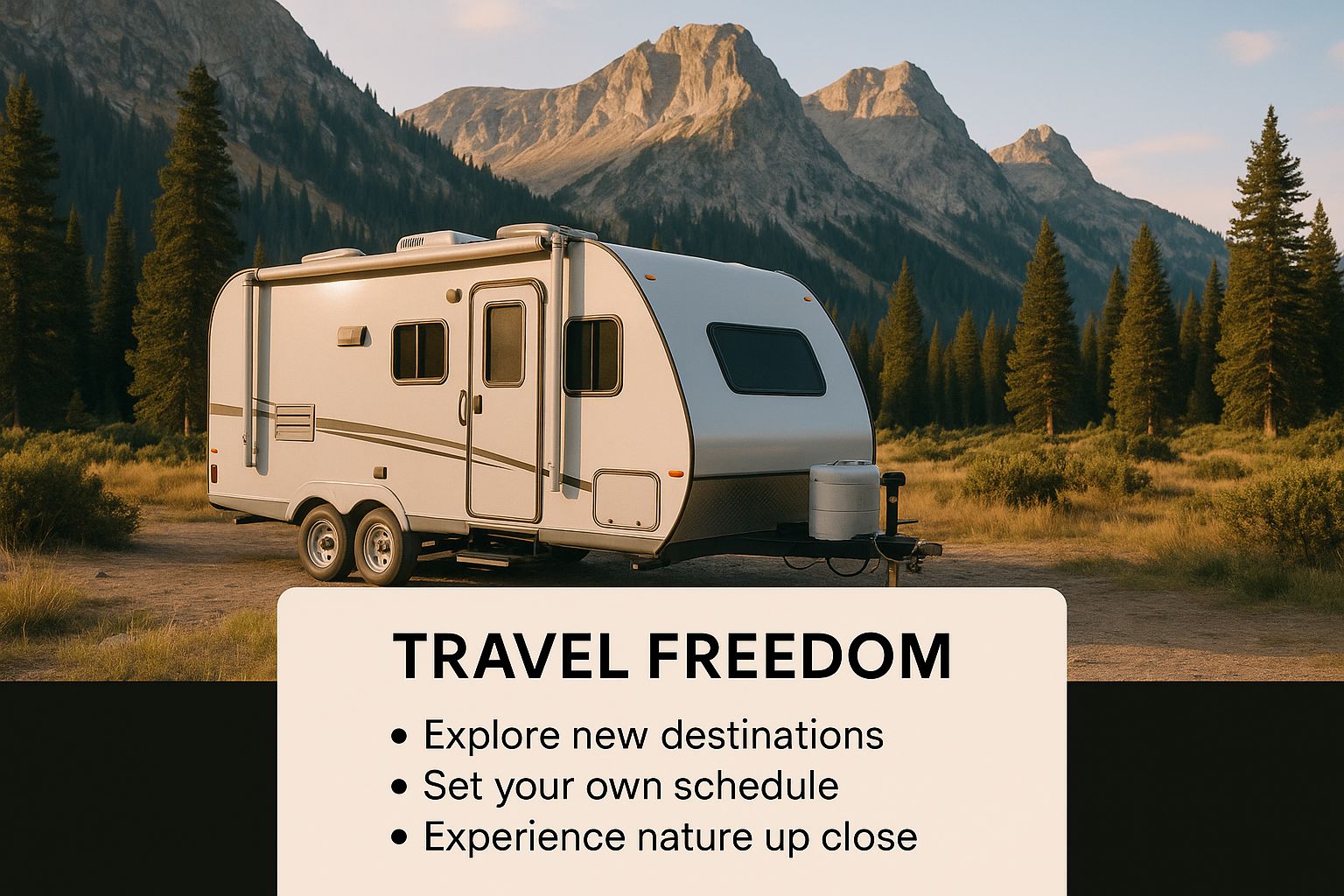
At the end of the day, the goal is to find the right rig to park in a spot just like this, turning your daydreams of adventure into a real-life plan.
The Compact Explorers
On the smaller end of the spectrum, you’ll find trailers designed for pure mobility and zero fuss. These are perfect for solo adventurers, couples, or anyone who'd rather have agility on the road than tons of indoor space. Best of all, they're the easiest to tow—many can be pulled by a smaller SUV or even some cars.
-
Teardrop Trailers: These are the ultralights of the RV world. They’re tiny, aerodynamic, and completely minimalist, usually just offering a cozy sleeping cabin and a kitchen galley that opens up at the back. They are the go-to choice for weekend warriors who live outside.
-
Pop-Up Campers: A pop-up is a cool hybrid, mixing the feel of a tent with the foundation of a trailer. Its collapsible design makes it incredibly light and a breeze to store in a garage, but you do have to set it up and tear it down at every campsite. They also offer less insulation than a hard-sided camper.
These smaller options are all about prioritizing the journey over luxurious living, which makes them a fantastic and affordable way to dive into the RV lifestyle.
The Traditional Travelers
This is the category most people immediately picture when they hear the term "travel trailer." These rigs are the jack-of-all-trades, offering a massive variety of sizes and floor plans that strike a perfect balance between comfort, space, and towability.
These classic trailers, along with their bigger fifth-wheel cousins, are really the heart and soul of the industry. The market is booming, with its global value projected to climb from USD 15.1 billion in 2025 to a whopping USD 21.3 billion by 2035. This isn't just one type of buyer, either; it's everyone from families on summer vacation to serious adventurers looking for off-grid rigs. You can explore more market trends and insights if you're curious about where the industry is heading.
These models connect to a standard ball hitch on your tow vehicle, so they work with a huge range of trucks and large SUVs. Inside, you get a fully enclosed living space with all the amenities you’d expect: kitchens, bathrooms, and real beds.
For a lot of first-time buyers, the traditional travel trailer is the sweet spot. It feels like a genuine home away from home without the intimidating size or specialized towing gear you need for the really big rigs.
The Heavy Hitters
For those who refuse to compromise on space and luxury, the big boys of the trailer world deliver an experience that feels more like a small apartment than a camper. They demand powerful trucks and a bit more skill to maneuver, but the payoff is an incredible amount of interior room and high-end features.
-
Fifth-Wheel Trailers: These are the largest towable RVs you can buy. They connect to a special hitch mounted inside the truck bed, which gives them far better stability and a smoother ride. Their split-level design creates a home-like separation between the living area and the raised master bedroom.
-
Toy Haulers: A toy hauler is a hybrid RV that features a dedicated garage in the back for your "toys"—think ATVs, motorcycles, or kayaks. The brilliant part is that the garage often converts into extra living or sleeping space once you unload your gear, making them incredibly versatile for action-packed trips.
Deciding between these categories really boils down to what you prioritize on your travels. Do you just need a simple basecamp, a do-it-all family camper, or a rolling mansion for long-term living?
To make it a little easier, here's a quick look at how the main types of travel trailers stack up against each other.
Travel Trailer Types at a Glance
|
Trailer Type |
Typical Length |
Avg. Dry Weight |
Sleeps |
Best For |
|---|---|---|---|---|
|
Teardrop |
8' - 14' |
500 - 3,000 lbs |
1-2 |
Solo or couple weekend trips |
|
Pop-Up Camper |
10' - 25' |
1,500 - 4,000 lbs |
2-6 |
Budget-conscious families, easy storage |
|
Travel Trailer |
15' - 35' Shop RVs For SaleBrowse current rvs from dealers near you — updated daily. |
3,000 - 9,000 lbs |
2-10 |
Versatility for couples and families |
|
Fifth-Wheel |
25' - 45' |
8,000 - 20,000 lbs |
2-8 |
Full-time living, luxury travel |
|
Toy Hauler |
20' - 45' |
7,000 - 18,000 lbs |
2-8 |
Hauling gear like ATVs or bikes |
This table should give you a solid starting point for narrowing down the field. Once you know which category fits your lifestyle, you can start digging into specific models and floor plans.
Matching Your Trailer to Your Tow Vehicle
Before you start picturing yourself relaxing under the awning of a brand-new travel trailer, we need to talk about the single most important decision you'll make. It’s the one thing that’s absolutely non-negotiable: making sure your vehicle can safely tow your trailer. This isn't just about whether your truck can get the trailer moving; it's about being in complete control on steep grades, in heavy crosswinds, and when you have to slam on the brakes.
Think of it as a dance partner. Your tow vehicle leads, and the trailer follows. If the follower is too big and heavy for the leader, the dance becomes a dangerous, clumsy mess. Getting this pairing right is the bedrock of every safe and stress-free road trip you’ll ever take.
Understanding the Language of Weight
The world of towing has its own set of acronyms, but don't get spooked. You only need to know a few key terms to make a smart, confident choice. You can find most of these numbers on a sticker inside your vehicle's driver-side door jamb.
-
Dry Weight (or UVW): This is the trailer's weight straight from the factory. It’s a baseline number that includes standard equipment but nothing else—no water, no propane, no gear. You will never tow a trailer at its dry weight.
-
Cargo Carrying Capacity (CCC): This is the maximum weight of everything you can load into the trailer. That includes water (which is heavy, at 8.3 pounds per gallon), propane tanks, batteries, your clothes, food, and all your camping equipment.
-
Gross Vehicle Weight Rating (GVWR): Here’s the big one. This is the absolute maximum your fully loaded trailer can weigh, period. It’s the dry weight plus the cargo capacity. You must never, ever exceed this number.
-
Towing Capacity: This is the maximum weight your vehicle manufacturer says you can pull, based on its engine, frame, and other components.
The most common mistake I see new buyers make is fixating on the dry weight. A trailer with a 4,500-pound dry weight can easily top 6,000 pounds once you fill the water tanks and pack for a family vacation.
Putting It All Together for Safety
So, how do you use these numbers? Simple: you give yourself a safety buffer. The golden rule in towing is to make sure your trailer's GVWR is no more than 80% of your vehicle's maximum towing capacity. That 20% cushion isn't just for show; it's for real-world driving. It’s for climbing a mountain pass without overheating your engine or for keeping control when a semi-truck blows past you.
Let’s run the numbers for a common scenario. Say your mid-size SUV has a maximum towing capacity of 7,000 pounds.
- 80% of 7,000 pounds = 5,600 pounds
That’s your magic number. You should only be looking at trailers with a GVWR of 5,600 pounds or less. Starting your search here instantly weeds out trailers that are too heavy and saves you from making a very dangerous mistake.
Never trust a salesperson who tells you, "Oh, your truck will be fine." Always verify the numbers yourself. Your family's safety depends on this calculation, and it's your responsibility as the driver to get it right.
There’s one more piece to this puzzle: tongue weight. This is the downward force the trailer’s hitch puts on your vehicle. It needs to be just right—between 10% and 15% of the trailer's total loaded weight. Too little tongue weight, and you'll get terrifying trailer sway. Too much, and you'll overload your vehicle's rear axle, which messes with your steering and braking.
Once you get a handle on these concepts, you shift from guessing to knowing. This knowledge empowers you to find a travel trailer that’s not just a great fit for your vacation plans, but a safe and steady partner for your tow vehicle, no matter where the road takes you.
Choosing a Floor Plan That Fits Your Lifestyle
Alright, you’ve waded through the technical stuff—towing capacity, trailer types, all the nuts and bolts. Now for the fun part: figuring out how you’ll actually live in your new rig. The floor plan is the heart and soul of any travel trailer. It’s what makes it feel like home, and it dictates the rhythm of your life on the road, from that first cup of coffee in the morning to where you kick off your muddy hiking boots.
Don't just look at a floor plan as a static blueprint. Think of it as the stage where your adventures will unfold. A layout that feels open and airy for a couple might feel like a crowded traffic jam for a family of four. The trick is to mentally walk through your daily routines. Imagine yourself inside the space. Where will the kids toss their backpacks? Is there enough counter space to actually chop vegetables for dinner? Can two people squeeze past each other in the kitchen without a major collision?
Popular Layouts and Who They're For
The travel trailer market has absolutely exploded in recent years. It seems like manufacturers are constantly coming up with new, innovative layouts to meet the needs of every kind of camper out there. This boom is part of a bigger trend, with the global travel trailer and camper market valued at around USD 105.81 billion in 2024 and expected to hit USD 115.41 billion by 2025. You can discover more about the rapid market vitality and its trends to see how brands are racing to keep up.
For you, this innovation means more choices than ever. Here are a few of the most common setups you'll come across:
-
Rear Living: These models are all about comfort. They put a big, cozy living area at the back of the trailer, often with huge windows to take in the view, a plush sofa, and maybe even some theater-style recliners. Perfect for couples who love to kick back, relax, and entertain.
-
Front Bedroom: This is the classic, time-tested layout. You get a private main bedroom at the front of the trailer, with the living space in the middle and the kitchen and bathroom toward the back. It’s a solid, versatile option that works great for couples and small families alike.
-
Bunkhouse Models: If you've got kids, this one's a game-changer. Bunkhouse floor plans dedicate a specific area—usually in the back or in a separate slide-out—just for bunk beds. It gives the kids their own zone and, more importantly, keeps their stuff from taking over the main living area.
Essential Amenities and Configurations
Beyond the big-picture layout, the little details in key areas can make or break your camping experience. You really need to pay attention to the kitchen, the bathroom, and the sleeping arrangements.
Kitchen setups can be anything from a simple two-burner stove to a full-on gourmet kitchen with an island. Be honest about how you cook on the road. Do you need a ton of prep space, or are you more of a microwave-and-grill kind of person? Some newer layouts, like the front kitchen in the Keystone Cougar 25FKD, are getting popular because they feel incredibly spacious and often have a great panoramic view out the front window.
One of the most critical decisions in smaller trailers is the wet bath vs. dry bath. A dry bath is what you're used to at home—it has a separate, dedicated shower stall. A wet bath, on the other hand, puts the toilet, sink, and shower all in one waterproof room. It saves a massive amount of space, but it also means you’ll be wiping everything down after every shower.
Smart Storage: A Place for Everything
Finally, and I can't stress this enough, do not underestimate the importance of storage. A trailer can look enormous on the dealer’s lot, but that space vanishes the second you start loading in your clothes, food, and gear. As you walk through a potential rig, open every cabinet and drawer. Be critical. Think about where everything you own is going to live.
Look for these kinds of smart storage solutions:
-
Pass-Through Storage: This is the big exterior compartment that runs the entire width of the trailer. It’s your garage for camp chairs, outdoor rugs, and the grill.
-
Pantry Space: A dedicated pantry, even a small one, is a lifesaver for keeping your kitchen organized and your food accessible.
-
Wardrobe and Cabinet Design: Are the closets deep enough to actually hang a shirt? Do the overhead cabinets have strong latches that will keep your plates from flying out on a bumpy road?
-
Hidden Compartments: Good designers get creative. Look for extra storage under the bed, inside the dinette benches, or even tucked away behind the TV.
Thinking through your storage needs from the start is the key to keeping your trailer a peaceful retreat instead of a cluttered mess. A well-designed floor plan with thoughtful storage is often the final piece of the puzzle in finding the perfect travel trailer for you.
Budgeting for Your Purchase: New vs. Used
Let's be honest: the "best" travel trailer is usually the best one you can comfortably afford. But figuring out what you can really afford goes way beyond the price tag you see at the dealership. The true cost of owning a travel trailer is a whole lot more than that initial number, and it’s these “hidden” costs that often trip up first-time buyers.
Think of the purchase price as just the cover charge to get into the club. To stay in the game, you need to account for everything else—the gear, the fees, the upkeep. Getting a handle on the full financial picture before you start shopping is the single best thing you can do to make a smart purchase.
The Total Cost of Ownership
So, what else are we talking about? Once you tow that trailer home, the spending doesn't stop. Forgetting to budget for these items can quickly turn your dream into a serious financial headache.
-
Insurance: Yep, just like your tow vehicle, the trailer needs its own policy. The cost can be all over the map depending on the trailer's value and the coverage you choose.
-
Storage: If you don't have a big driveway or a piece of land to park it on, you'll need to pay for storage. This can run anywhere from $50 to over $200 a month, especially if you want a covered or indoor spot to protect your investment.
-
Maintenance: Things break. Seals wear out. Brakes need checking. You absolutely have to stay on top of regular upkeep. I always recommend setting aside a few hundred dollars a year just for routine maintenance, plus a little extra for those inevitable surprise repairs.
-
Essential Gear: You can't just hook up and go. You'll need a good weight-distribution hitch, sewer hoses, a dedicated freshwater hose, wheel chocks, leveling blocks... the list goes on. This initial outfitting can easily tack on another $500 to $1,500 right out of the gate.
New Trailers: The Pros and Cons
There's nothing quite like buying brand new. You get the latest floor plans, shiny new appliances, and that famous "new RV" smell. But the biggest draw, by far, is the warranty. Knowing that for the first year or two, any major problems are the manufacturer's headache, not yours, offers incredible peace of mind.
Of course, that peace of mind comes with a hefty price tag. Just like a new car, a new travel trailer takes a massive depreciation hit the second it leaves the lot—we're talking a potential 20% loss in value instantly. You're paying a premium for that warranty and the privilege of being the first owner.
Used Trailers: Savings vs. Risks
This is where you can find some incredible deals. Buying a gently used trailer means the original owner took that huge depreciation hit for you. Your money goes so much further, often letting you step up to a bigger or better-equipped model than you could ever afford new.
The catch? It’s all on you. There's no warranty to fall back on, so any and all repairs come straight out of your pocket. The boogeyman of the used RV world is hidden water damage. It can be a nightmare to spot, a fortune to fix, and can sometimes mean the trailer is a total loss.
A thorough inspection is your only defense when buying used. If you're not confident in your ability to spot potential problems, hiring a certified RV inspector is one of the smartest investments you can make. It might cost a few hundred dollars, but it could save you thousands in the long run.
When you're looking at a used unit, become a detective. Get on the roof and check the seals. Poke around the corners and inside cabinets for any soft spots or discoloration. Use your nose—a musty smell is a major red flag. Test every single appliance. Run your hands along the exterior walls to feel for delamination (bubbles in the fiberglass). A methodical inspection is the key to finding a gem instead of someone else's lemon.
How to Judge a Trailer's Build Quality
It’s easy to get swept away by the shiny countertops and cool gadgets when you're shopping for a travel trailer. But the real mark of a great RV—the thing that determines whether it'll last for years of adventures or turn into a headache—is its build quality. To make a smart buy, you have to learn how to look past the surface-level flash.
Think of it like buying a house. A beautiful kitchen is great, but you’d never ignore the foundation, framing, or roof. It's the exact same principle with a travel trailer. The quality is in the parts you can't always see.
This focus on durability is a huge deal in the industry. The North American travel trailer market is already massive, estimated at USD 28.6 billion in 2025, and it's expected to almost double by 2035. Why? Because manufacturers are constantly adding features aimed at long-term performance. If you want to dive deeper, you can read more about how the travel trailer sector is evolving and see the latest trends.
The Bones of the Rig
A trailer’s frame and walls are its skeleton. They provide the strength to handle bumpy roads and the protection to keep the elements out. There are two main ways trailers are built, and each comes with its own set of pros and cons.
-
Stick-and-Tin Construction: This is the classic method. It uses a wood frame (the "sticks") covered with corrugated aluminum siding (the "tin"). These trailers are usually more affordable and simpler to repair if you get a dent. The downside is they can be heavier and are more vulnerable to water damage if the seals aren't kept in top shape.
-
Laminated Construction: This is the more modern approach. It involves bonding multiple layers together—typically an aluminum frame, foam insulation, and a smooth fiberglass exterior—to create a single, solid panel. The result is a lighter, stronger, and better-insulated trailer, but repairs can be trickier and more expensive.
A Buyer's Inspection Checklist
When you're walking the lot, it’s time to get hands-on. Don't be timid about poking, prodding, and opening things up.
A well-built trailer will show signs of care and precision everywhere you look. Sloppy sealant, misaligned cabinet doors, or flimsy drawer hardware are all red flags that suggest corners were cut during assembly.
Check the sealant around all the windows, doors, and anything mounted on the roof. The lines should be clean and even. Go inside and open every single cabinet and drawer. Do they feel solid? Or do they wobble in your hand? Look closely at how the interior wall panels and trim meet.
These little details say a lot about a manufacturer's standards. They're your best clues for telling a reliable rig apart from one that’s going to cause you problems down the road.
Still Have Questions? Let's Cover the Big Ones.
Diving into the world of travel trailers always brings up a few key questions, especially when you're just starting out. We get it. Let's tackle some of the most common things people ask, so you can feel confident in your search.
What Are the Best Brands of Travel Trailers?
This is the million-dollar question, isn't it? While everyone has their favorite, the truth is that the "best" brand really depends on what you need. That said, some names consistently pop up for a reason—they've built a reputation for quality, smart design, and happy owners.
You'll see these brands mentioned again and again:
-
Keystone: A giant in the industry, they make everything from the affordable Coleman line to the popular Cougar fifth wheels.
-
Forest River: Another huge manufacturer with an incredible variety of brands under its umbrella, like Salem, Grey Wolf, and Rockwood.
-
Jayco: These guys are famous for their solid construction and often boast one of the best warranties you can get.
-
Grand Design: A newer player that quickly earned a stellar reputation for high-end finishes and top-notch customer service.
-
Airstream: The iconic silver bullet. They're legendary for a reason—their aluminum trailers are built to last for generations.
Don't get too hung up on the nameplate at first. Focus on finding a floor plan that works for you, at a quality level you're comfortable with, and you'll find the right brand for your family.
How Long Does a Travel Trailer Last?
With a little love and attention, a travel trailer can be part of your family's adventures for a very long time. It’s not unusual for a well-cared-for trailer to last 10 to 20 years, and sometimes much longer.
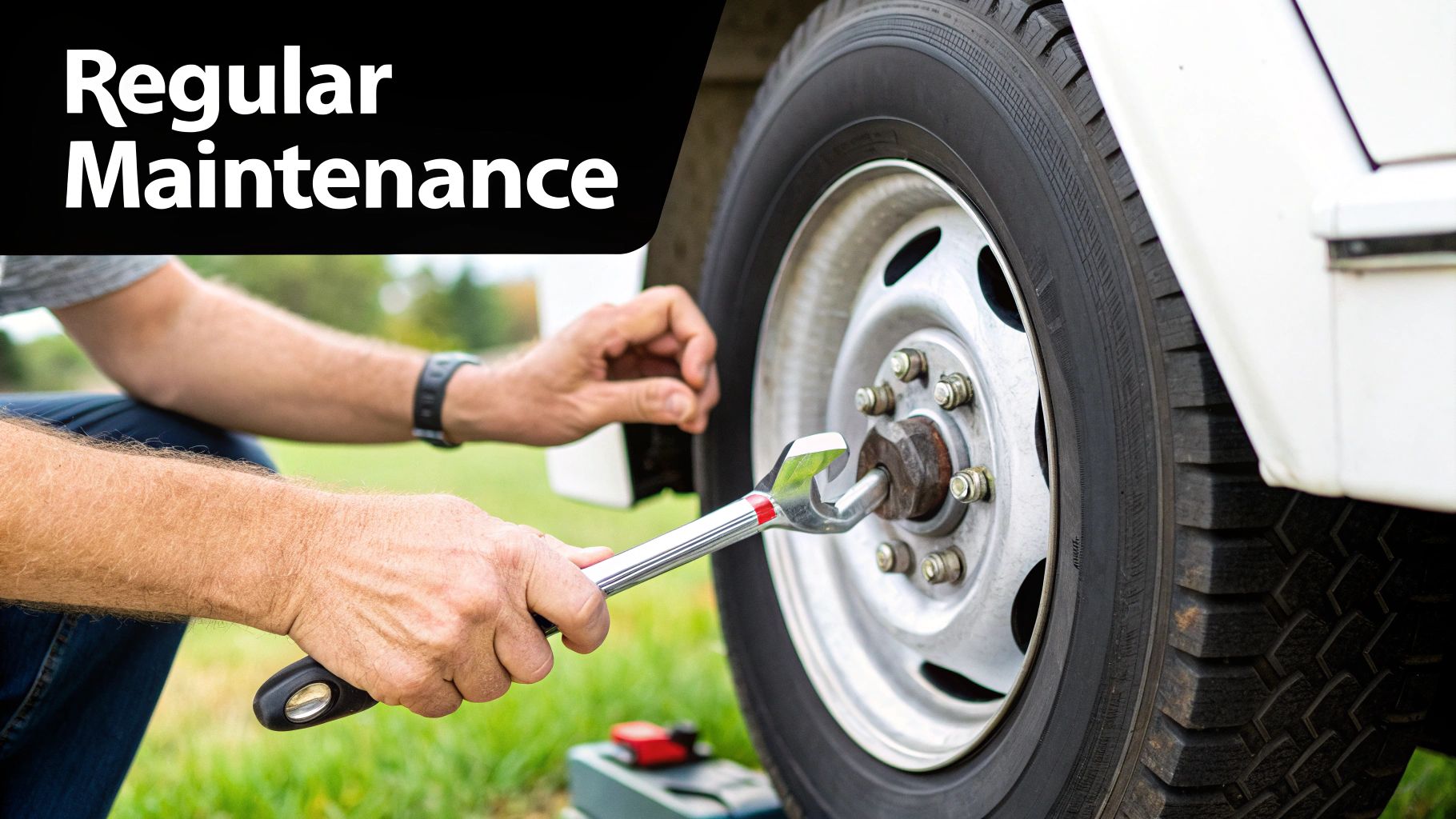
The secret to a long life? Proactive maintenance. It's that simple. If you do nothing else, inspect your roof seals twice a year, check your tire pressure before every trip, and fix any sign of a water leak immediately. That alone will add years to your RV's life.
What really kills a trailer is neglect. Letting the seals go bad is a surefire way to invite water damage—the number one enemy of any RV.
What Maintenance Is Required for a Travel Trailer?
Think of it like owning a small house on wheels. There are a few key things you need to stay on top of to keep it safe, reliable, and holding its value. It's not as scary as it sounds.