When it comes to buying a used car, RV, or boat, timing is everything. The single best time to get a deal is during the off-season, when most people aren't even thinking about buying. It's the same reason you can find a winter coat for a steal in the middle of July—prices plummet when demand dries up.
For recreational vehicles, this sweet spot is almost always in the fall and winter.
Your Quick Guide to the Best Buying Seasons
You can save a serious amount of cash just by understanding the market's natural rhythm. Buying a convertible in April is like trying to find a cheap surfboard in the peak of summer; you're competing with everyone else, and prices reflect that. The real trick is to start your search when the sellers outnumber the buyers.
This is especially true for recreational vehicles like RVs and boats. Once the first chill hits the air, many owners start dreading the cost of another year of storage fees and winter maintenance. That's when they decide to sell, flooding the market with inventory and giving you a ton of negotiating power.
It all boils down to a simple idea: Shop when sellers are eager and other buyers are at home. The off-season is the perfect recipe for a great deal—inventory is high, competition is low, and you're the one holding all the cards.
To help you pinpoint the best time to start looking, here’s a quick overview of the buying seasons for different vehicle types.
Best vs Worst Buying Seasons by Vehicle Type
This table gives you a bird's-eye view of when you'll have the most leverage as a buyer versus when you'll be paying a premium.
| Vehicle Type |
Best Time to Buy (Low Demand) |
Worst Time to Buy (High Demand) |
| RVs |
Late Fall & Winter |
Spring & Early Summer |
| Boats |
Fall & Winter |
Spring & Summer |
| Cars |
October - February |
March - August |
Ultimately, patience is your best friend. Waiting for the right season can easily save you thousands and help you find a much better vehicle for your money.
Why Fall and Winter Are Prime Buying Seasons
Ever tried buying holiday decorations in January? The moment the season ends, demand plummets, and retailers are desperate to clear the shelves. Shopping for a used RV, boat, or car follows a surprisingly similar pattern. The colder months, from late fall through winter, are a buyer's paradise where the market dynamics shift squarely into your court.
When the weather turns chilly, customer foot traffic at dealerships and marinas slows to a crawl. This puts pressure on both dealers and private sellers to make a deal. It's especially true for recreational vehicles; many RV and boat owners would rather sell than face the cost and hassle of another year of winterization and storage. This makes them highly motivated to sell before the first snowflake falls.
The Inventory Advantage
Another huge factor working in your favor is the annual model-year changeover. This applies to cars, but it's also relevant for the RV and boat industries. Dealers are in a hurry to clear out last year's models to make room for the shiny new ones arriving on the lot. This flood of trade-ins creates a surplus of used inventory, which means more choices and much stronger negotiating power for you.
This infographic lays out the typical ebb and flow of used car prices throughout the year, a pattern that is even more pronounced for seasonal vehicles like RVs and boats.
As you can see, the data consistently shows that prices tend to dip in the later months. Spring and summer, on the other hand, are a seller's market.
Timing Your Purchase for Maximum Savings
This isn't just a theory—the seasonal trend has a real impact on what you'll pay. The data points to late fall, specifically October and November, as the best time to buy a used car. For RVs and boats, this window extends even further into the winter. In fact, research shows that November and December see a significant dip in used vehicle prices right as dealer incentives start to ramp up. It’s the perfect storm for anyone looking to get the most for their money. You can dive deeper into these seasonal used car price trends from Edmunds.com.
Key Takeaway: Fewer buyers, sellers eager to avoid off-season costs, and dealerships clearing out old stock—this combination creates the perfect opportunity for you to land a fantastic deal.
Ultimately, by timing your shopping to line up with these market lulls, you gain a massive amount of leverage. Waiting for fall and winter is a strategic play that pays off with real savings and a better selection.
Navigating the Spring Surge in Used Vehicle Prices
If fall and winter are a buyer's market, spring is the complete opposite. It's like trying to book a beach house in July—as the weather gets warmer, the competition heats up and prices soar. For anyone looking to buy a used RV, boat, or car, this is usually the toughest and most expensive time of year.
This price jump is fueled by a perfect storm of circumstances that puts sellers firmly in the driver's seat. For starters, many people have just received their tax refunds, giving them a sudden chunk of cash for a down payment. At the same time, the nicer weather gets everyone dreaming of summer road trips and weekends on the lake, which sends demand for campers, boats, and cars through the roof.
Why You End Up Paying More
It's a simple case of supply and demand. When a flood of buyers enters the market, the available inventory quickly gets picked over, and prices naturally climb. This isn't just a hunch; the data backs it up.
Historically, April and early May are some of the worst months to purchase a used vehicle. Prices swell as eager buyers compete for the same limited selection of inventory. It's a fantastic time to be a seller, as both private sale prices and dealership trade-in values hit their annual peak. You can dig deeper into these seasonal trends over at CarEdge.com.
The spring market is a classic case of high demand meeting limited supply. When everyone wants to buy at the same time, sellers have little incentive to negotiate, leaving you to pay a premium for the convenience of buying in-season.
The Recreational Vehicle Rush
This seasonal price hike is even more pronounced when it comes to things like RVs and boats. The moment vacation season feels like it's just around the corner, these become incredibly hot commodities.
Many private sellers who might have considered listing their boat or RV during the colder months will deliberately hold off. They know they can wait for the spring rush and ask for a much higher price when demand is at its peak.
I know it feels counterintuitive to wait when you're excited to get out on the road or the water. But knowing how this seller's market works gives you the power to make a much smarter decision. By resisting the urge to buy during the spring frenzy, you can avoid overpaying and find yourself in a much better negotiating position just a few months down the line.
Special Timing for Used RV and Boat Deals
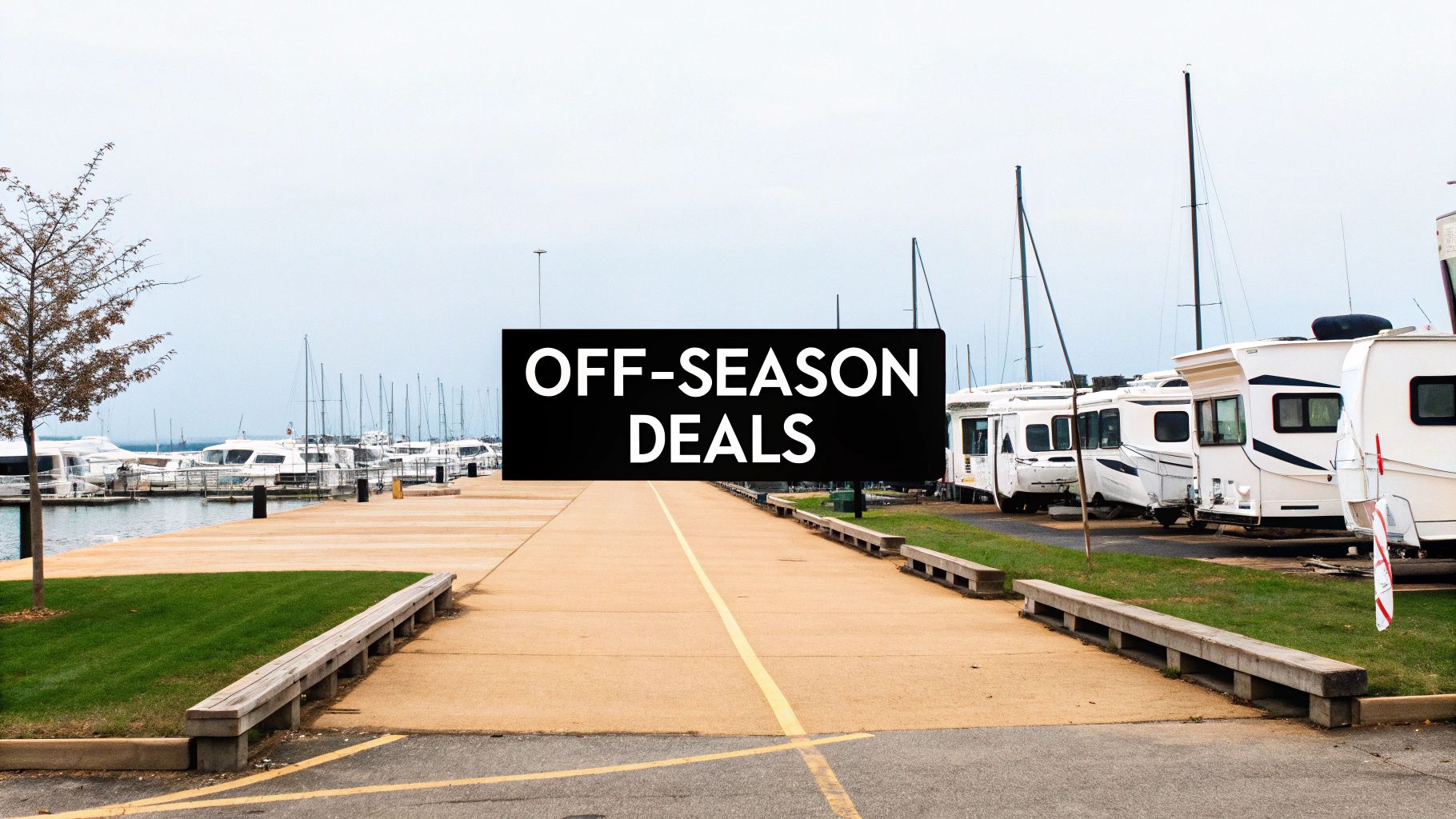
While the used car market has its own rhythm, the best time to find a deal on a used RV or boat is almost completely driven by the weather. For these recreational toys, seasonality is everything. The strategy is simple: start shopping when everyone else is packing theirs away for the winter.
Think of it like booking a spot at a popular campground. In June, it's packed with families, and every site costs top dollar. But fast forward to late October, and the place is a ghost town. The owners are desperate to fill those empty spots. That's your window of opportunity. As the camping season winds down, many RV owners are suddenly faced with the high cost of winter storage and maintenance, making them very motivated to sell.
Taking Advantage of the Off-Season Slump
This trend is even more dramatic for boats, especially in colder climates. Your prime buying season opens up in the fall and runs right through the winter months. Private sellers often decide they'd much rather take a lower offer now than deal with the headache and expense of winterization and storage. This flips the script, creating a buyer's market where you have all the leverage.
This seasonal pressure is your greatest advantage. The seller isn't just getting rid of a boat; they're trying to dodge a recurring bill for storage, shrink-wrapping, and upkeep that can easily run $1,000 or more for the off-season.
Smart Off-Season Negotiation Tactics
Shopping during this downtime gives you some unique negotiation angles that simply don't exist in the spring. Since you’re literally saving the seller from upcoming costs, you can get creative with your offers.
- Roll in the Storage: Propose a price where the seller agrees to cover the winter storage fees until spring.
- Ask for a Pre-Season Tune-Up: Negotiate for the seller to pay for the de-winterization and a full tune-up before you pick it up.
- Do a Deep Dive Inspection: Use the slow season to your benefit. A seller with no other buyers knocking on their door will be much more patient with a thorough, unhurried inspection.
Once you’ve locked in a fantastic deal on a used RV, it's worth investing in expert camper detailing services to get it looking like new. By timing your purchase just right, you not only get a great price but can also build extra value into the deal through savvy off-season negotiations.
Finding Deals Beyond Seasonal Trends
https://www.youtube.com/embed/SoErQfLkqjY
While the seasons give us a good roadmap, some of the best deals pop up based on the specific day you decide to shop. It's a lot like any retail business—a salesperson is a lot more relaxed on the first of the month than they are on the last day, when they're scrambling to hit their sales goals. The same exact dynamic plays out on the sales lot.
This is where you, the buyer, can gain a serious advantage. Sales teams live and die by their monthly, quarterly, and annual quotas. As those deadlines loom, a salesperson who is just one or two units away from a fat bonus check suddenly has a very good reason to work with you on price. Their sense of urgency can translate directly into savings for you.
Timing your visit for the last few days of the month—or even better, the end of a quarter—is one of the most powerful negotiation tools you have. A price that was a firm "no" on the 15th might get a surprising "yes" on the 30th.
Capitalizing on Quieter Days
Beyond hitting those end-of-month quotas, a few other timing tricks can give you an edge. Most people avoid vehicle shopping on major holidays, figuring the dealerships are mobbed or even closed. But holidays like Black Friday can be a goldmine for special promotions, as dealers jump on the bandwagon with their own sales events.
Here’s another great tip that most people miss: go shopping when the weather is miserable. A rainy Tuesday or a snowy Friday afternoon means far fewer people are kicking tires on the lot. This creates the perfect opening for you.
- You get their full attention: With fewer customers to juggle, the sales staff can focus entirely on you and your needs.
- They're eager for a sale: On a slow day, any potential deal is a big win for the dealership.
- The pressure is off: A quiet sales floor often leads to a more relaxed negotiation, which almost always works in your favor.
By layering these daily and monthly strategies over the broader seasonal trends, you’re not just hoping for a good deal—you’re actively creating opportunities to get the best possible price on your next vehicle.
Your Practical Used Vehicle Buying Checklist
Knowing when to buy is one thing, but turning that knowledge into a great deal requires a solid plan. Think of this checklist as your roadmap—a clear, simple strategy to keep you focused and confident from the moment you start looking to the second you drive away.
By following these steps, you’re not just showing up; you’re showing up prepared. You’ll be combining perfect timing with smart homework, which puts you in the driver’s seat during any negotiation. Each step builds on the last, giving you a structured approach to find the right RV, boat, or car without overpaying.
A well-timed purchase is only half the battle. The other half is being prepared. A confident buyer who has done their homework is a seller's biggest challenge and your greatest asset.
Your Step-by-Step Buying Guide
Ready to get started? Follow this sequence to make sure you cover all your bases before signing on the dotted line. This is how you find the right vehicle at the best possible price.
-
Define Your Needs and Budget: Before you even open a browser tab, figure out your non-negotiables. What type of vehicle do you need (RV, boat, car)? What features are must-haves? And most importantly, what's your firm, walk-away budget?
-
Research During the Off-Season: Start your window shopping in late summer or early fall. This is when the data shows prices starting to trend downward. For example, last October, the average used car price was around $25,512, which kicked off the seasonal dip. You can dig into more used car price trends from CarEdge to see these patterns for yourself.
-
Secure Pre-Approved Financing: This is a huge one. Walk into the dealership with financing already secured from your own bank or credit union. It shows you’re a serious buyer and takes away the dealer's ability to pad the interest rate.
-
Perform a Thorough Inspection: Never, ever skip the inspection. For an RV or boat, you need to be even more thorough—check for water damage, inspect seals and seams, make sure appliances work, and get the engine checked out. For a car, a test drive and a vehicle history report are key.
-
Time Your Visit: Plan your trip to the dealership for the end of the month or quarter. If you can swing a weekday, even better. This is crunch time for salespeople trying to hit their quotas, and they’re often far more willing to make a deal.
-
Negotiate from Strength: You've done the research. You know the market. Use that data to make a fair offer based on facts, not feelings. Don't be afraid to walk away if the numbers don't line up. Your power lies in your willingness to say "no, thanks."
-
Consider Long-Term Care: Once the keys are in your hand, think about upkeep. A little foresight goes a long way. For instance, researching essentials ahead of time, like selecting the best car battery charger, can help you protect your new investment from day one.
Your Top Used Vehicle Shopping Questions Answered
Diving into the used vehicle market always brings up a few questions. You know timing is key, but how does that play out in the real world? Let's tackle some of the most common things buyers wonder about when hunting for a deal on a used RV, boat, or car.
Does My Location Change When I Should Buy?
Absolutely. Your local climate can be a huge factor, especially when you're looking at something like an RV or boat.
National trends, like those big end-of-year sales, are pretty consistent everywhere. However, the "off-season" discount for a motorhome is going to be way steeper in a state with brutal winters than it is somewhere like Florida or Arizona where you can camp year-round.
For cars, the difference isn't as stark, but regional demand still matters. Your best bet is to do a little homework on your local market, but always start with the fall and winter months as your go-to for finding the best prices.
Should I Buy From a Private Seller or a Dealership?
This one really comes down to what you value most. Each has its pros and cons, and there's no single right answer.
- Dealerships: They offer a structured process, often with financing and warranties included. That peace of mind and convenience usually costs a bit more.
- Private Sellers: You can often find lower prices because they don't have a dealership's overhead. The trade-off? The sale is almost always "as-is," meaning no warranty, and you’re on your own with the paperwork.
The good news is that the best time to buy a used car, RV, or boat is the same for both. A private RV owner is just as eager to sell their rig before storage fees hit as a dealer is to clear out old inventory.
It doesn't matter who you're buying from. When you shop during a slow season, you automatically gain more negotiating power. A seller with fewer people knocking on their door is always more willing to talk price.
How Much Money Can I Actually Save By Waiting?
The savings can be pretty significant. It's not unrealistic to save 5-15%—sometimes even more—just by being smart about when you buy.
Think about it this way: on a $40,000 used RV, that's anywhere from $2,000 to $6,000 that stays in your bank account. The trick is to stack the odds in your favor. Shop in the off-season, aim for the end of the month, and walk in ready to negotiate with real market data.
Ready to put this advice to the test? At SearchShop.com, we give you the tools to check pricing history, see if a deal is a good one, and browse thousands of listings for cars, RVs, and boats. Find your next vehicle with confidence.