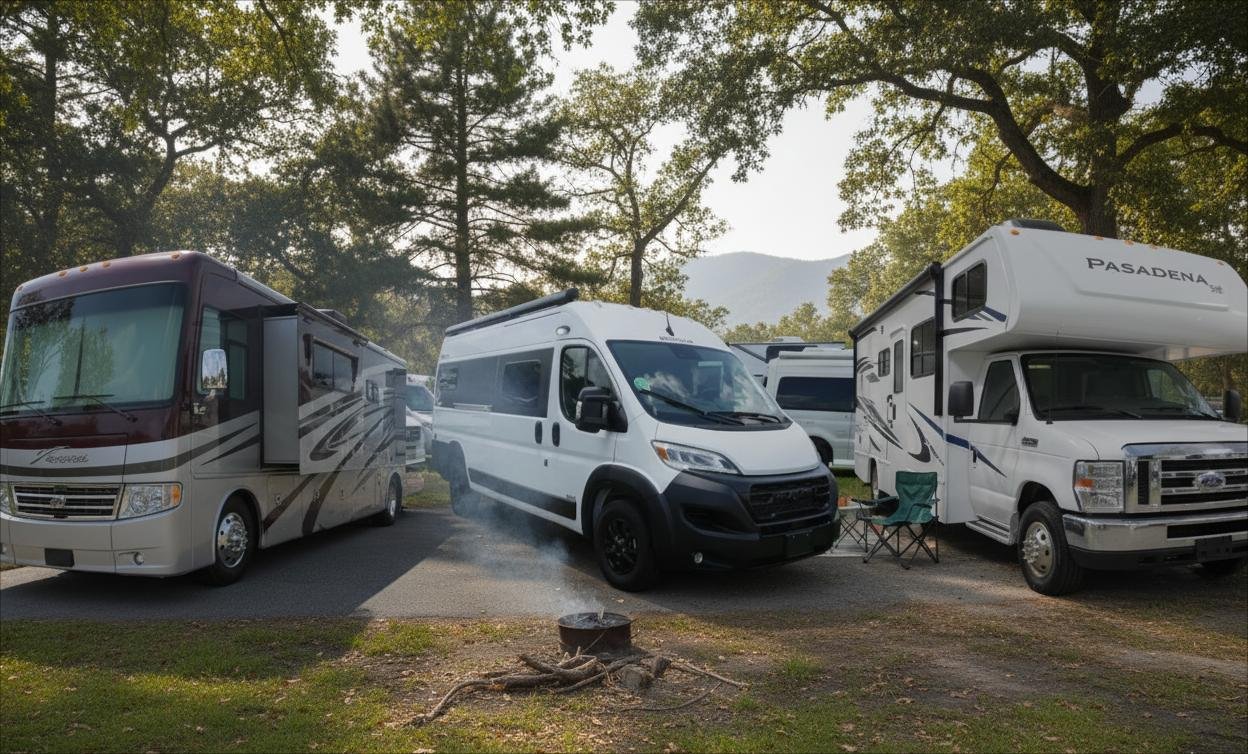
Buying a motorhome is your ticket to a life of freedom and adventure, but it’s not a decision to rush. The key is to have a clear plan before you even start looking at listings. You need to get honest about how you'll travel, understand the different rigs out there, and lock down a realistic budget. Doing this homework upfront saves you from getting overwhelmed and helps you find a motorhome that actually fits your life.
Your Motorhome Adventure Starts Now
Jumping into the world of motorhomes isn't just a purchase; it's an investment in a whole new lifestyle. Before you get dazzled by shiny new models and fancy floor plans, the very first step is to figure out what kind of RVer you plan to be.
Are you a weekend warrior, eager for quick getaways to local parks? Or are you dreaming of seasonal trips, heading south for the winter? Maybe you’re ready to go all-in, selling the house and hitting the road full-time. Your answer here is the single most important piece of the puzzle—it will guide every other decision.
Defining Your Travel Style
Think about it: a retired couple planning a multi-year, cross-country tour needs something completely different from a young family heading to the lake for summer vacation. Pinpointing how you’ll use the motorhome is the fastest way to narrow down your options.
A few things to consider:
-
How long are your trips? A weekend is a lot different than a six-month journey.
-
Who’s coming along? Just you? You and a partner? Kids? Don't forget the dog!
-
Where are you going? Will you stick to well-maintained campgrounds with full hookups, or is off-grid boondocking in the wilderness your goal?
An Introduction to Motorhome Classes
Motorhomes are generally sorted into three main classes. Getting a handle on these categories is crucial if you want to avoid a serious case of buyer's remorse down the road.
-
Class A: These are the big, bus-style motorhomes. They’re rolling luxury apartments, perfect for full-timers or big families who want maximum space and all the comforts of home.
-
Class C: You’ll recognize these by the distinct bunk or storage area over the cab. Built on a truck chassis, they offer a great middle ground between space and drivability, which is why they’re so popular with families and first-timers.
-
Class B: These are the nimble camper vans. As the smallest of the bunch, they’re ideal for solo travelers or couples who prioritize mobility and want to park just about anywhere a regular van can fit.
The right motorhome should feel like a natural extension of your home, not a constant compromise. Your goal is to match the rig's features to your travel dreams, so it supports your adventures instead of holding you back.
Must-Haves Versus Nice-to-Haves
Once you’ve got a clear picture of your travel style and the basic RV classes, it's time to make a list. This is the secret to staying focused and, more importantly, on budget. Divide your list into two columns: the absolute deal-breakers and the features that would be nice to have.
For someone working remotely, a dedicated desk space might be a must-have. For a family that loves cooking outside, an outdoor kitchen might be a nice-to-have. For extra security on your travels, you might also want to look into understanding vehicle GPS trackers for peace of mind. Getting this groundwork done now turns a massive, overwhelming process into an exciting, manageable hunt for your perfect rig.
Budgeting for the True Cost of Ownership
That shiny motorhome on the dealer's lot has a price tag, but that’s just the beginning of the story. The sticker price is only your opening bid. To really know what you’re getting into, you have to look at the true cost of ownership—all the expenses that pop up long after you’ve driven away. Getting these numbers straight from the get-go is the difference between a joyful new lifestyle and a financial headache.
You’re not alone in dreaming of the open road. The global motorhome market was valued at around USD 40.4 billion and is expected to hit USD 59.7 billion in the next few years. That’s a whole lot of people chasing freedom. A solid, realistic budget is your ticket to joining them without the stress.
Deconstructing the Upfront Costs
Your initial investment goes far beyond the negotiated purchase price. It’s easy to get swept up in the excitement of a new RV and overlook the immediate, one-time costs that can add thousands to your total. Being aware of these expenses upfront helps you plan smartly and avoid surprises later.
-
Sales Tax - This is often the largest add-on and varies significantly by state. For example, a 7% sales tax on a $90,000 motorhome adds another $6,300 to your out-the-door cost. Always check your local rates and factor them into your purchase plan.
-
Title and Registration Fees - Just like a car, your motorhome must be legally titled and registered before hitting the road. These state-mandated fees vary depending on location and vehicle weight but are essential for ownership transfer and legal operation.
-
Dealer Documentation and Preparation Fees - Commonly known as “doc fees” or “prep fees,” these cover the administrative and service costs associated with processing your paperwork, handling state filings, and preparing your motorhome for delivery, everything from detailing to system checks.
Mapping Out Ongoing Expenses
This is where reality really sets in for new owners. A motorhome isn't just a vehicle; it's a second home on wheels, and it comes with its own collection of bills. If you don't plan for these, your dream can quickly become a financial drain.
Your monthly or annual budget absolutely must account for these:
-
Insurance: RV insurance isn't your standard auto policy, and it often costs more. Expect to pay anywhere from $800 to over $2,500 a year. The final number depends on your rig’s value, your driving history, and how much coverage you want.
-
Fuel: Let's be honest, motorhomes are thirsty. A big Class A might only get 6-10 MPG. A smaller Class B van could get you 15-20 MPG. Picture this: a 1,000-mile trip in a Class C getting 10 MPG with gas at $3.50/gallon will set you back $350 in fuel alone.
-
Maintenance and Repairs: A good rule of thumb is to set aside 1-2% of the motorhome's value every year just for routine maintenance. On a $100,000 RV, that's $1,000-$2,000 for things like oil changes, tire rotations, and sealing the roof to prevent leaks. And that's before any unexpected repairs.
-
Storage: If you don't have space at home, you'll need to pay for storage. A basic outdoor lot might be $50/month, while a covered or climate-controlled spot could easily run you $250/month or more.
-
Campground Fees: Where you park for the night costs money. Fees can range from $30 for a simple state park spot to over $100 a night for a fancy RV resort with a pool and full hookups.
For a deeper dive into these figures, check out our guide on how much an RV really costs with essential budget tips. It's also worth your time to get a feel for the day-to-day costs by reading up on understanding the true cost of vanlife.
Choosing Your Perfect Motorhome Class and Layout
Okay, you've crunched the numbers and have a solid budget. Now for the fun part—finding the rig that truly fits your travel style. This is where your vision of life on the road starts to take shape, and it all comes down to two things: the motorhome class and its interior layout.
The options can seem endless at first, but don't get overwhelmed. The quickest way to narrow the field is by understanding the fundamental differences between the classes. Each one is built with a specific kind of traveler in mind, so it's not about which is "best," but which is best for you.
Decoding the Motorhome Classes
Think of each motorhome class as a different starting point for your adventures. A couple planning to spend six months exploring national parks has completely different needs than a family heading out for weekend trips to the coast.
-
Class A: These are the big ones, the kings of the road. Built on a bus-like chassis, they offer massive living areas and all the residential comforts you could want. They’re a dream for full-timers, but their sheer size can be a handful to drive and won't fit into every campsite.
-
Class C: You can always spot a Class C by the distinct sleeping or storage area that juts out over the driver's cab. Built on a truck chassis, they strike a fantastic balance between generous living space and easier handling, making them a go-to choice for families and first-timers.
-
Class B: Often called camper vans, these are the most nimble of the bunch. They drive like a large van, park almost anywhere, and offer unmatched freedom for spontaneous trips. You'll trade interior space for go-anywhere maneuverability, a trade many solo travelers and adventurous couples are happy to make.
To help you see how these different types fit into your budget, here's a side-by-side look.
Motorhome Class Comparison At a Glance
| Feature |
Class A (The Luxury Liner) |
Class B (The Camper Van) |
Class C (The Family Classic) |
| Best For |
Full-time living, long-term travel, luxury comfort |
Solo/couples, weekend trips, urban exploring, off-grid adventure |
Families, first-time owners, flexible travel |
| Size & Drivability |
Largest (25-45 ft), requires practice, limited access |
Smallest (17-23 ft), drives like a van, parks anywhere |
Mid-size (21-35 ft), easier to drive than a Class A |
| Living Space |
Expansive, multiple slide-outs, residential amenities |
Compact and efficient, multi-functional spaces |
Good balance of living and sleeping areas |
| Price Range |
$100,000 - $500,000+ |
$80,000 - $200,000+ |
$90,000 - $250,000+ |
| Fuel Economy |
7-10 MPG |
18-25 MPG |
10-15 MPG |
This table gives you a great starting point, but remember that price and features can vary widely within each class.
This infographic does a great job of showing how the purchase price is just one part of the financial picture. Don't forget to account for the ongoing costs.
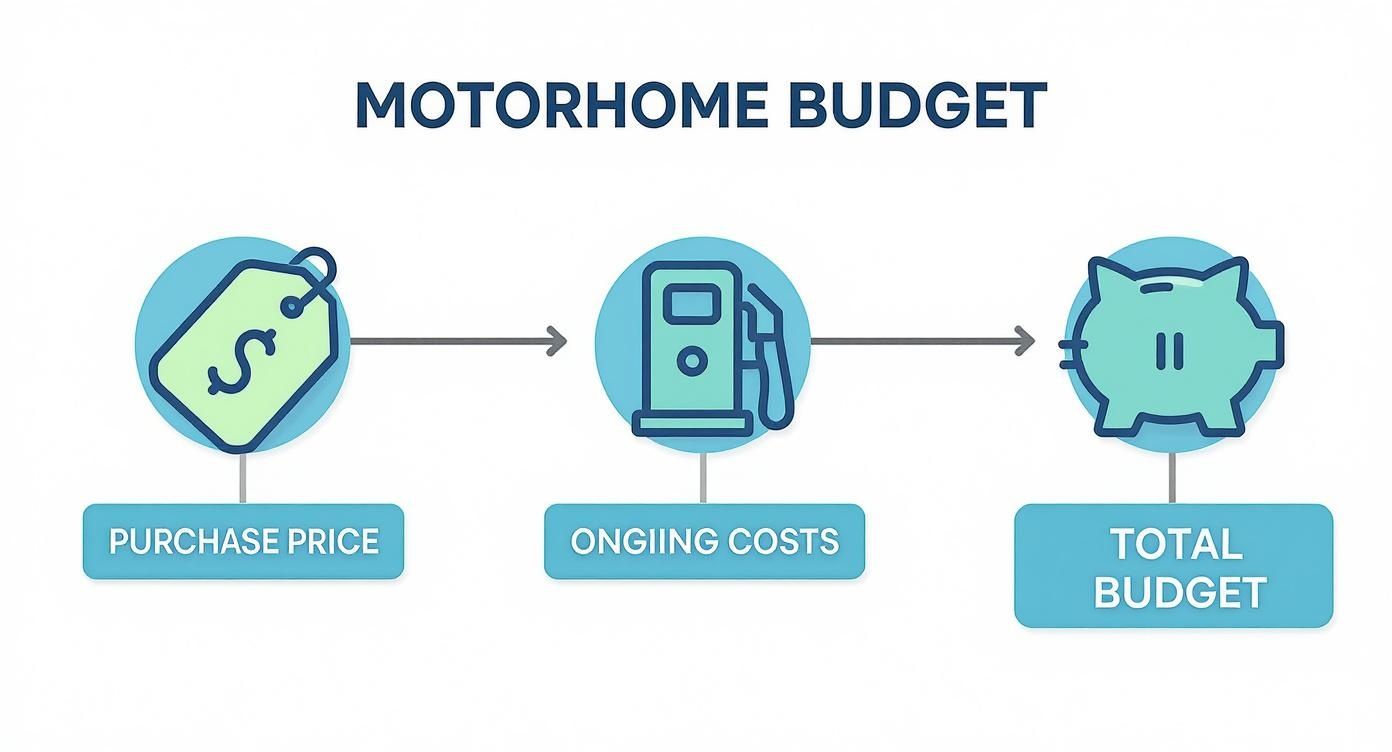
As you can see, fuel, insurance, and maintenance are real costs you need to plan for to make your RV ownership sustainable and stress-free.
Interestingly, the market is seeing a huge surge in a particular segment. In North America, where the motorhome market is valued at around USD 21.8 billion, Class B camper vans are the fastest-growing category. Their easy-driving nature is bringing a whole new generation into the RV lifestyle. For a deeper dive into the different types, our complete guide explaining RV classes for beginners is a must-read.
The Floor Plan is Everything
Once you've zeroed in on a class, it's time to get picky about the floor plan. This isn't just about aesthetics; the layout of your motorhome will make or break your daily life on the road. A great layout feels intuitive, while a bad one creates constant frustration.
When you step inside a potential motorhome, don't just look—live. Mentally walk through your daily routine. Where will you make coffee in the morning? Is there enough counter space to prepare a meal? Where will everyone sit if it’s raining outside?
This mental walkthrough is one of the most powerful tools you have. Imagine you and your travel partners actually using the space. Can two of you squeeze past each other in the kitchen? Is the bathroom big enough to use without feeling like a contortionist? And what about storage? Don't just count the cabinets—open them up and see if they’re actually practical for the gear you plan to bring.
Key Layout Considerations to Evaluate
As you tour different rigs, keep a running checklist of what works for your specific needs. What one person loves, you might hate.
Be sure to focus on these crucial areas:
-
Sleeping: How easy is it to get in and out of the main bed? If you need to convert a dinette into a bed every night, is it a quick process or a 10-minute chore? For families, check if the bunks are a realistic size for your kids.
-
Kitchen (Galley): Counter space is gold in an RV. Is there enough room to actually prep food? Think about the fridge size, the cooktop, and whether you're more of an oven or a convection microwave person.
-
Living/Dining: Can everyone sit comfortably at the dinette for a meal or a board game? Is there a separate sofa for kicking back? Some of the best designs use swiveling captain's chairs up front to create a surprisingly large living room when parked.
-
Bathroom: You’ll generally find two types. A dry bath has a separate shower stall, just like at home. A wet bath puts the toilet and sink inside a waterproof shower area to save space. It's a clever design, but not for everyone. Step into the shower—is there enough elbow room?
In the end, the right layout is the one that just feels right. Taking the time to really experience the interior space is the only way to find a motorhome you’ll be happy in for years of adventures.
You’ve done your homework, crunched the numbers, and found a motorhome that feels just right. It’s easy to get swept up in the excitement, but this next step is the one that really counts. A meticulous pre-purchase inspection is your best and only defense against a bad deal and a future full of headaches and surprise repair bills.
This isn't just for used rigs, either. Whether it’s a brand-new model fresh off the dealer lot or a well-loved unit from a private seller, an inspection is non-negotiable. Don’t let a shiny exterior and a spotless interior lull you into a false sense of security. It's time to put on your detective hat and dig in.
The Exterior Walk-Around
Your inspection should always start outside. This is where you get the first real clues about the motorhome's history and how it’s been cared for.
-
Frame & Chassis: Get down and look underneath. A little surface rust can be normal, but you're hunting for deep, flaky rust that could signal serious structural problems, especially on rigs that have spent time in snowy climates or near the coast.
-
Tires: Check the four-digit date code on every single tire (don't forget the spare!). RV tires usually "age out" long before their tread wears down. If a tire is more than six or seven years old, it’s a safety hazard and needs replacing—a fix that can easily set you back $2,000 to $4,000. Also, keep an eye out for any cracks in the sidewalls or uneven wear patterns.
-
Roof & Seals: This is probably the most critical part of the exterior check. You absolutely have to get on a ladder and walk the roof (if it’s safe to do so). Look for cracks, gaps, or any peeling sealant around every vent, skylight, A/C unit, and seam. Water is the mortal enemy of any RV.
Water damage is the silent killer of motorhomes. A tiny, undiscovered leak can quietly lead to thousands of dollars in repairs, rotting out walls, floors, and insulation from the inside out. Never, ever skip a thorough roof inspection.
It's also worth knowing what's happening in the broader market. RV manufacturers recently built about 333,733 units, but total registrations hit 356,518—a clear sign that demand is still strong. At the same time, overall registrations are down 6.9% from the year before. This kind of market shift can impact everything from availability to pricing, making a detailed inspection even more crucial to ensure you’re getting a solid value.
Testing Everything Inside
Once you step inside, your mission is simple: test every single button, switch, and appliance. Assume nothing works until you've proven it yourself. This is no time to be timid—be methodical and check it all.
You need to run every system through a complete cycle.
-
Plumbing: If you can, get the rig hooked up to a city water connection. Turn on every faucet (both hot and cold), flush the toilet several times, and run the shower. While the water is on, you need to be looking under sinks and around the base of the toilet for even the smallest drip.
-
Electrical: Test the electrical systems on both shore power (plugged into an outlet) and on the house batteries alone. Flip every single light switch, test every outlet (a cheap outlet tester is great for this), and run the microwave. Operate the slide-outs and any leveling jacks to make sure they move smoothly.
-
Generator: Fire up the generator and let it run for a good 15-20 minutes under load—running the air conditioner is a perfect way to do this. Listen for any weird noises, sputtering, or signs of a struggle.
-
Appliances: The fridge needs to be tested on both electric and propane modes. Turn on the furnace and the air conditioner. Light every burner on the stovetop and, if there’s an oven, make sure it fires up too.
The Hunt for Hidden Water Damage
I know we've talked about it already, but it's that important. Inside, you’re looking for the subtle clues that water has gotten in at some point.
Keep your eyes peeled for these red flags:
-
Stains: Look closely at the ceiling, especially around vents, skylights, and in the corners. Any faint brownish or yellowish discoloration is a bad sign.
-
Delamination: Stand back from the motorhome outside and look down the walls in the bright sunlight. See any bubbles, ripples, or waves in the fiberglass siding? That's delamination, and it's caused by water getting into the wall and separating the layers. It’s a huge, expensive repair.
-
Soft Spots: Walk the entire floor and deliberately press down with your feet, paying extra attention to the corners, the areas around slide-outs, and in the bathroom and kitchen. Any "spongy" or soft spot is a massive red flag for a rotted subfloor.
-
That Smell: Trust your nose. If you smell anything musty or moldy, it's a sign that moisture is trapped somewhere, even if you can't see it.
Going through an inspection this detailed can feel like a lot, but it’s an absolutely essential part of the process. For a fantastic resource to bring with you, grab our pre-purchase vehicle inspection checklist for your ultimate RV and boat guide.
When to Bring in a Pro
Feeling a little out of your element? That's perfectly okay. If you’re not the mechanical type or you're considering a high-dollar coach, hiring a certified RV inspector is one of the smartest moves you can make.
A professional inspector will spend hours combing through the motorhome, testing things you might not even know to look for. They can perform fluid analysis on the engine and generator, pressure-test the plumbing lines to find hidden leaks, and give you a completely unbiased, detailed report.
The cost—usually between $500 and $1,200—might feel like a lot upfront, but it could easily save you from a $20,000 nightmare. Plus, their report becomes an incredible negotiation tool if they uncover any issues.
Negotiating the Deal and Finalizing Your Purchase
You’ve found the one. After all the research, budgeting, and inspections, the right motorhome is finally within reach. Now comes the moment of truth, where you shift from just looking to actually buying.
Handling the negotiation and paperwork correctly is what ensures your adventure starts on the right foot. This isn’t about being confrontational; it’s about being prepared. Walking in with solid information is your best advantage, whether you’re at a massive dealership or standing in a private seller's driveway. Your goal is to land a fair price based on facts, not just gut feelings.
Arming Yourself with Market Knowledge
First things first: you need to figure out what the motorhome is actually worth. The seller's asking price is just their starting point, not a reflection of reality.
Turn to resources like NADAguides, the industry benchmark for valuing used RVs. It lets you dial in the value based on the exact model, year, mileage, and all those optional features.
At the same time, scour online marketplaces to see what similar models are selling for. And I mean selling for, not just what people are asking. This homework gives you a realistic price range and, more importantly, a factual basis for your offer. It's much harder for a seller to dismiss you when you can say, "I've seen three other 2022 models with similar mileage listed between $85,000 and $90,000."
The best negotiation is a conversation backed by facts. When your offer is grounded in market reality, it becomes a reasonable starting point for discussion, not just a lowball number plucked from thin air.
This approach takes the emotion out of it and turns the negotiation into a simple business transaction. The goal is for both you and the seller to walk away feeling good about the outcome.
Mastering the Art of the Offer
With your research complete, it's time to make your move. Whenever possible, make your first offer in person or over the phone—it’s a lot more personal and harder to ignore than a text or email.
Present your offer confidently but respectfully. Be ready to walk them through how you arrived at that number, using the market data you pulled together.
The seller will almost certainly come back with a counteroffer. That’s perfectly normal, so don't get discouraged. This is just part of the negotiation dance. Listen to their reasoning, stay calm, and don’t let your emotions take over. If you’re too far apart on price, you have to be willing to walk away. Honestly, your willingness to leave the deal on the table is your most powerful negotiating tool.
And remember, the price isn't the only thing you can negotiate. Especially at a dealership, think about other things you can ask for:
-
An extended warranty: This can be a lifesaver and provide real peace of mind, particularly with a used RV.
-
A "starter kit": See if they’ll throw in essentials like sewer hoses, water filters, and leveling blocks. It saves you a few hundred bucks right off the bat.
-
Dealer prep fees: These are often negotiable. Politely ask what they cover and if they can be reduced or waived entirely.
Navigating the Final Paperwork
Once you’ve shaken hands on a price, you’re in the home stretch. But this is where you need to slow down and focus. Rushing through the paperwork is how costly mistakes happen.
You'll be looking at a few critical documents. Go through every single one with a fine-toothed comb before you sign anything.
-
The Purchase Agreement: This is the legally binding contract. It should detail everything: the final price, all fees, any included accessories, and the delivery date. If the salesperson promised to fix that leaky faucet or replace a tire, make sure it’s written down right here. Verbal promises mean nothing once you drive off the lot.
-
The Title Transfer: The title is your proof of ownership. For a private sale, make sure the seller signs it over correctly and that it’s free of any liens. A dealership handles this for you, but you still need to double-check that all the names and vehicle information (especially the VIN) are 100% accurate.
-
Registration and Plates: You’ll need to get the motorhome registered in your name to drive it legally. Dealerships usually manage this process. If you’re buying from a private party, you’ll need to take the signed title down to your local DMV yourself.
Read the fine print on everything, especially financing documents and extended warranty policies. Make sure you understand the interest rates, the terms, and exactly what is—and isn't—covered.
After the last signature, they’ll hand you the keys. Congratulations—you’re officially a motorhome owner.
Got Questions? Let's Talk Through the Final Details
As you get closer to pulling the trigger, a few nagging questions always seem to surface. It's totally normal. You've navigated the big decisions, but it's often these last few details that can feel the most overwhelming. Let's clear up the common sticking points so you can move forward with confidence.
Think of this as your final gut-check. We'll walk through the questions that pop up for almost every first-time buyer, from decoding warranties to figuring out the smartest time of year to sign the papers.
New vs. Used: The Great Debate
This is probably the biggest fork in the road for any potential motorhome owner. A brand-spanking-new rig is a beautiful thing—it has that new-RV smell, the latest gadgets, and a factory warranty that lets you sleep at night. But that peace of mind comes at a steep price: depreciation. A new motorhome can shed 20-30% of its value in just the first couple of years.
On the other hand, a well-maintained used motorhome can be a fantastic value. The first owner absorbed that massive depreciation hit, and they've likely worked out all the little manufacturing kinks that new RVs are famous for. The catch? It's probably out of warranty, which makes getting a professional, top-to-bottom inspection an absolute must.
There's no magic answer here, just what's right for your situation. A new RV offers peace of mind. A used one offers better financial value. It all boils down to your budget and how comfortable you are with the possibility of future repairs.
What's the Real Deal with Warranties?
RV warranties can feel like a maze of fine print, but they're your main line of defense against surprise repair bills. With a new motorhome, you're not just getting one warranty—you're usually getting several.
-
The Chassis Warranty: This is for the "truck" part of your motorhome—the engine, transmission, and suspension. It comes directly from the chassis builder, like Ford or Mercedes-Benz.
-
The Coach Warranty: This covers the "house" part—everything from the slide-outs and plumbing to the cabinets and appliances. This one's from the motorhome manufacturer, like Winnebago or Thor.
-
Appliance Warranties: Don't be surprised if your fridge, microwave, or A/C unit has its own separate warranty from its specific maker.
If you're buying used, the dealer might offer an extended warranty, which is really more of a service contract. Read that contract very carefully. You need to know exactly what’s covered, what’s excluded, and what the deductible is before you even consider it.
Is There a "Best" Time of Year to Buy?
Absolutely. Timing your purchase can literally save you thousands of dollars. The RV world runs on seasons, and you can play that to your advantage.<