So, you're ready to buy a boat. It's a huge step—one that promises freedom, adventure, and a lifetime of memories out on the water. Whether you're a seasoned RV owner looking to expand your adventures from the road to the water or completely new to recreational vehicles, this guide is your seasoned first mate. We're here to help you navigate every part of the journey, from figuring out your budget to closing the deal.
Welcome aboard! The idea of buying your own boat can feel a little overwhelming at first, but it's really just a series of small, manageable steps. We've broken down the entire process into a simple roadmap to take you from an aspiring boater to a confident owner. Our goal is to give you the practical knowledge you need to make a smart choice that fits your budget and lifestyle. If this is your very first time, the First Time Buyer guide is another great resource to check out.
You're not alone in wanting to get out on the water. The global boats market was valued at a whopping $32.5 billion in 2023, and it's on track to nearly double by 2032. That's a lot of people discovering the joys of boating and RVing, and you're about to become a part of that growing community.
To kick things off, let’s look at the big picture. Your path to ownership really boils down to three key stages: setting a budget, choosing the right boat, and getting it properly inspected.
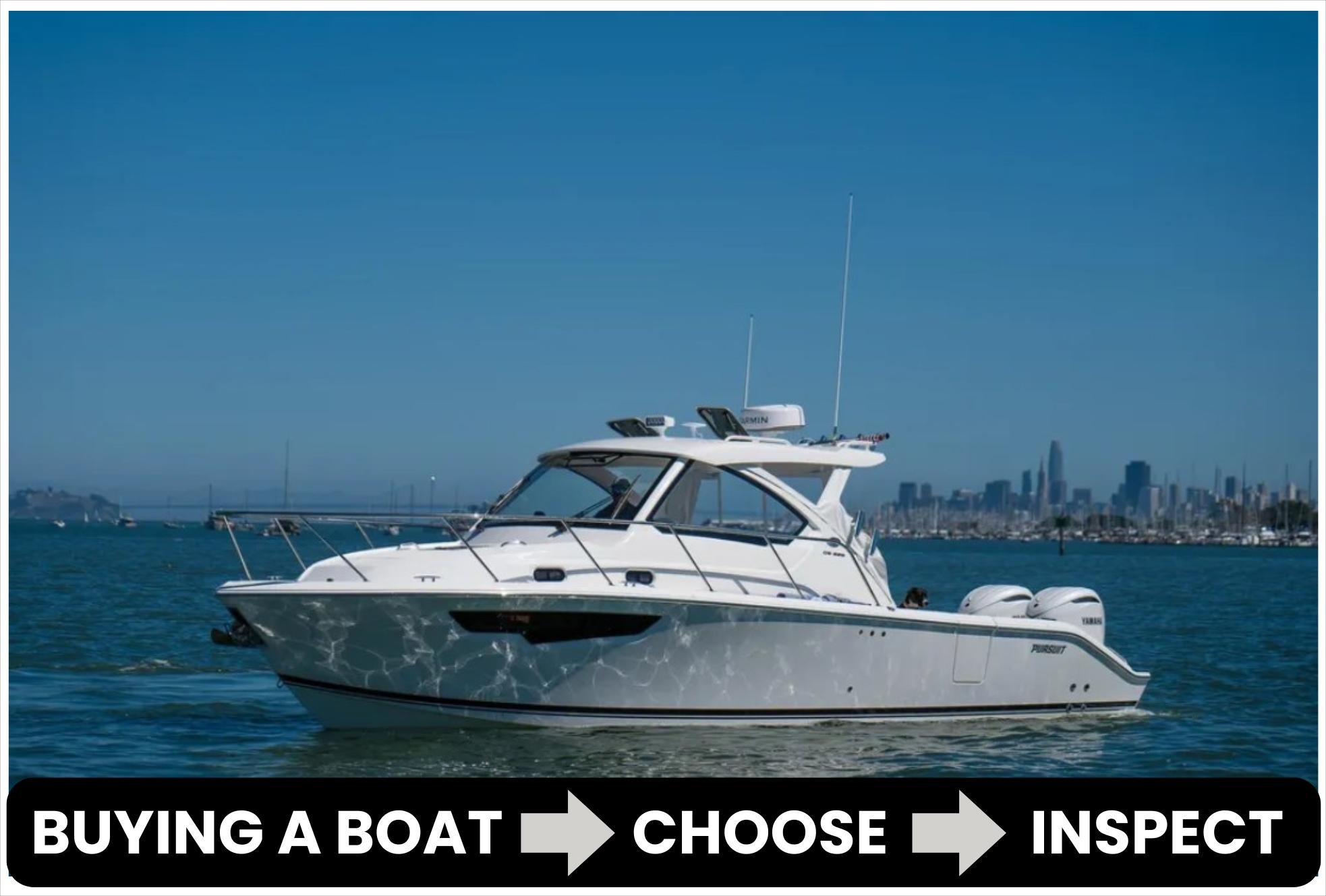
It’s a straightforward flow: a solid financial plan is your foundation, which then allows you to find the right boat and vet it carefully. In the sections that follow, we'll dive deep into each of these phases, giving you the tools and confidence to make it happen.
So, you're ready to buy a boat. Before you get lost in online listings and start picturing yourself at the helm, we need to talk about money. And I don't just mean the sticker price.
The initial purchase is just the first drop in the bucket. The real cost of boat ownership sneaks up on you with a whole bunch of ongoing expenses that can easily catch new owners off guard. Think of it like buying an RV or a house—you don't just pay the loan; you've got insurance, storage, maintenance, and surprise repairs to think about, too.
There’s a classic rule of thumb in the boating world that you should get familiar with: plan to spend about 10% of the boat’s purchase priceevery single year just to keep it running. If you buy a $50,000 boat, you should be ready for around $5,000 in annual costs for things like maintenance, storage, and fuel.
Sticking to this "10% rule" is the best way to keep your dream purchase from becoming a financial nightmare. Getting a handle on these "hidden" costs now lets you shop for a boat that truly fits your life and your bank account.
Let's pull back the curtain on those recurring expenses that make up your annual budget. Once the initial thrill of the purchase fades, these are the costs that stick around.
To give you a clearer picture, here's a rough breakdown of what you can expect to spend annually as a percentage of your boat's value.
| Expense Category |
Estimated Annual Cost Percentage of Boat Value |
| Insurance |
1% - 2% |
| Storage / Slip Fees |
2% - 5% |
| Routine Maintenance |
2% - 3% |
| Fuel & Consumables |
1% - 2% |
| Taxes & Registration |
1% |
| Total Estimated Annual Cost |
~10% |
This table helps visualize how that 10% figure breaks down. Of course, your actual costs will vary based on your boat, location, and how you use it, but this is a solid starting point for any new owner's budget.
Now, let's dive into what each of these categories really means.
-
Insurance: This is non-negotiable. Just like with a car or RV, you need insurance to protect your investment and cover liability. Policies can vary wildly depending on the boat's value, size, age, and where you plan to use it. You'll need to get comfortable with navigating boat insurance requirements to find the right coverage.
-
Storage or Slip Fees: Unless you have a huge driveway and a tolerant HOA, you'll be paying for storage. A wet slip at a marina keeps your boat in the water for easy access but costs a premium. A spot at a dry-stack facility is another option. Marina fees can run anywhere from a few hundred to thousands of dollars a year.
-
Routine Maintenance and Repairs: Boats demand attention. This bucket includes everything from annual engine servicing and winterization to replacing worn-out parts and scrubbing the hull. Keeping up with a maintenance schedule is the best way to prevent a small, cheap fix from turning into a massive, expensive headache.
-
Fuel: This one is a wild card. Your fuel bill is tied directly to how often you're out on the water and how thirsty your engine is. A lazy afternoon of cruising is one thing; a full day of towing skiers and tubers will burn through a tank of gas in a hurry.
-
Registration and Taxes: Welcome to the world of government fees. Just like your car or motorhome, your boat needs to be registered with the state every year. Many areas also hit you with annual property taxes on the vessel, so be sure to factor that into your planning.
Once you have a realistic budget, the fun can really start. Now you can look for a boat that matches both your wallet and your weekend plans.
For first-time buyers, it's smart to stick with popular, versatile models. These boats tend to offer a great mix of functionality and manageable ownership costs, making them a perfect gateway into the boating lifestyle.
The Takeaway: The best boat isn't the biggest or fastest one—it's the one that fits how you'll actually use it without blowing up your budget. Figure out if you're a fisherman, a family cruiser, or a watersports junkie first, and then find the boat that does it best.
Here are three tried-and-true boat types that are fantastic for anyone new to the water.
1. Pontoon Boats
Think of these as your floating living room. Pontoons are all about stability, comfort, and having a good time with a group. They’re unbeatable for casual cruises, anchoring out for a swim, or dropping a line on a calm lake.
-
Best For: Relaxing, entertaining, and family days on the water.
-
Average Cost (New): $25,000 - $60,000+
-
Maintenance: Generally on the lower end, thanks to simpler systems and reliable outboard engines.
2. Bowriders
If you need a do-it-all boat, the bowrider is your answer. With an open bow for extra seating, they are perfect for family outings, pulling a tube, or learning to waterski. Their V-shaped hulls can handle a bit of chop, opening up bigger lakes and coastal bays.
-
Best For: Watersports, day cruising, and all-around family fun.
-
Average Cost (New): $30,000 - $75,000+
-
Maintenance: Pretty standard stuff—engine servicing and keeping the hull clean are your main priorities.
3. Center Consoles
Built for the angler, a center console gives you 360-degree fishability because the helm is right in the middle. Their deep-V hulls are made to slice through rougher water, making them the go-to choice for serious fishing. Don't worry, though—modern ones often come with family-friendly perks like seating in the bow.
-
Best For: Fishing (from back bays to offshore), utility, and handling bigger water with confidence.
-
Average Cost (New): $40,000 - $100,000+
-
Maintenance: Can be a bit higher, as they often have more complex electronics and are built to withstand saltwater.
One of the first big questions you'll face is whether to buy a shiny new boat right off the showroom floor or a pre-owned vessel with a few sea stories already under its belt. This isn't just about price; it’s a decision that shapes everything from your budget and maintenance schedule to your overall experience on the water. Think of it like buying an RV or car—the appeal of that "new vehicle smell" versus the savvy value of a well-maintained used model.
A brand-new boat is tempting, no question. You get the latest and greatest in marine tech, modern designs, and a full manufacturer’s warranty that lets you sleep at night. Everything is perfect, from the untouched engine to the spotless upholstery. Plus, you often get to pick your own colors and options straight from the factory.
But all that perfection comes with a hefty price tag. New boats depreciate fast, losing a big chunk of their value in the first few years. That initial drop is the premium you pay for being the very first person at the helm.
For a lot of buyers, especially those who want to avoid surprises, going new is the only way to go. The peace of mind alone can be worth the extra cost.
-
Warranty Is King: This is the big one. If the engine quits or a major electronic system fails, you’re not on the hook for a massive, unexpected repair bill. The manufacturer has you covered.
-
Modern Bells and Whistles: New models are packed with the latest advancements—better hull designs, more fuel-efficient engines, and slick tech like state-of-the-art GPS and fishfinders.
-
A Clean Slate: You are the boat's entire history. There are no nagging worries about a previous owner's hidden problems, undisclosed accidents, or sketchy DIY repairs.
Buying a new boat means you know its entire story because you're writing it. Every hour on the engine is yours, and every scuff is part of your own adventure. That kind of confidence is something many first-time owners are happy to pay for.
On the other side of the dock, a used boat offers a ton of bang for your buck. For many people, it's the most practical way to get into boating without breaking the bank.
The biggest draw is the savings. The first owner already took the big depreciation hit, which means you can often afford a larger or better-equipped boat than you could if you were buying new. Someone else has also likely dealt with the little quirks and bugs that often pop up during a new boat's first season.
Of course, this path comes with its own set of challenges. A used boat is usually sold "as-is" with no warranty, so any mechanical problems are your financial responsibility. This makes a thorough inspection absolutely critical to avoid buying a floating money pit. It's also worth noting that market conditions can play a big role. For example, new powerboat sales recently saw a 7.3% dip over twelve months, which can sometimes push more inventory into the used market. You can dig deeper into recent powerboat market trends to see how economic shifts affect your options.
Sometimes, seeing it all laid out makes the decision clearer. Your choice really boils down to your budget, your stomach for risk, and how much you enjoy tinkering versus turning a key and going.
| Feature |
New Boat |
Used Boat |
| Initial Cost |
Higher |
Significantly Lower |
| Depreciation |
Steepest in first 1-3 years |
Slower, more stable value |
| Warranty |
Full manufacturer's warranty |
Typically none ("as-is") |
| Condition |
Perfect, pristine |
Varies; inspection is key |
| Technology |
Latest features and systems |
Potentially outdated |
| Maintenance Risk |
Low, covered by warranty |
Higher, owner's responsibility |
In the end, there's no single "right" answer. If you want to minimize risk, enjoy the latest tech, and have the security of a warranty, a new boat is probably your best bet. But if you want to get the most boat for your money and you're ready to do your homework with inspections and potential repairs, the used market is full of fantastic opportunities.
A boat gleaming under the sun at the dock can look perfect, but that shiny exterior can easily hide a host of expensive problems lurking just beneath the surface. You'd never buy a house or RV without a thorough inspection, right? The same logic absolutely applies here. This phase is your single best chance to uncover potential deal-breakers before you sign on the dotted line.
Think of this part of your buying a boat guide as the final exam for your prospective vessel. It’s where you separate the well-maintained gems from the neglected money pits. Honestly, skipping these steps is one of the biggest—and potentially costliest—mistakes a first-time buyer can make.
Before you get too attached, your first call should be to a qualified marine surveyor, especially if you're looking at a used boat. A surveyor is essentially a home inspector for the water, trained to conduct a detailed, unbiased evaluation of the vessel's condition from bow to stern.
This isn't just a friendly suggestion; it's practically a must-do. Most insurance companies and lenders won't even talk to you about a used boat without a recent survey from a certified professional. The crucial thing to remember is the surveyor works for you—not the seller or the broker. Their loyalty is to the facts, giving you a powerful, impartial report.
A professional survey can uncover issues that would cost thousands to fix down the road, from hidden hull damage to a failing engine. This investment is your best protection against buying someone else's problems.
A good surveyor has a trained eye and specialized tools to check critical areas you’d likely miss:
-
Hull Integrity: They'll hunt for blisters, delamination, cracks, or any signs of structural fatigue.
-
Engine and Propulsion: They'll run compression tests, check for corrosion, and look for tell-tale leaks.
-
Electrical and Plumbing Systems: They'll make sure everything is installed to safety standards and actually works.
-
Deck and Superstructure: They'll meticulously search for soft spots, a dead giveaway of rot in the boat's core.
While the surveyor handles the deep dive, you should always do your own initial walkthrough. This is your chance to spot any obvious red flags and decide if the boat is even worth the price of a professional survey. It’s simple: use your senses—look, touch, and even smell.
Start on the outside. Walk around the hull and look for major scratches, deep gouges, or spider-web-like cracks in the gelcoat. Check the hardware—are the cleats, railings, and latches solid and free of serious rust?
Next, climb aboard and do the "soft spot shuffle." Walk slowly and deliberately across every inch of the deck and cockpit floor. Any bounciness, sponginess, or flexing under your feet is a huge red flag. It means water has gotten into the core, and that's a massive, expensive repair.
Then, start opening things up. Pop open every hatch, locker, and compartment. Are there signs of leaks or water stains? A musty smell is a sure sign of mold or mildew. Grab a flashlight and poke your head into the engine compartment. Look for corrosion, frayed wires, or any fluid leaks. A seller with nothing to hide will be happy to let you look.
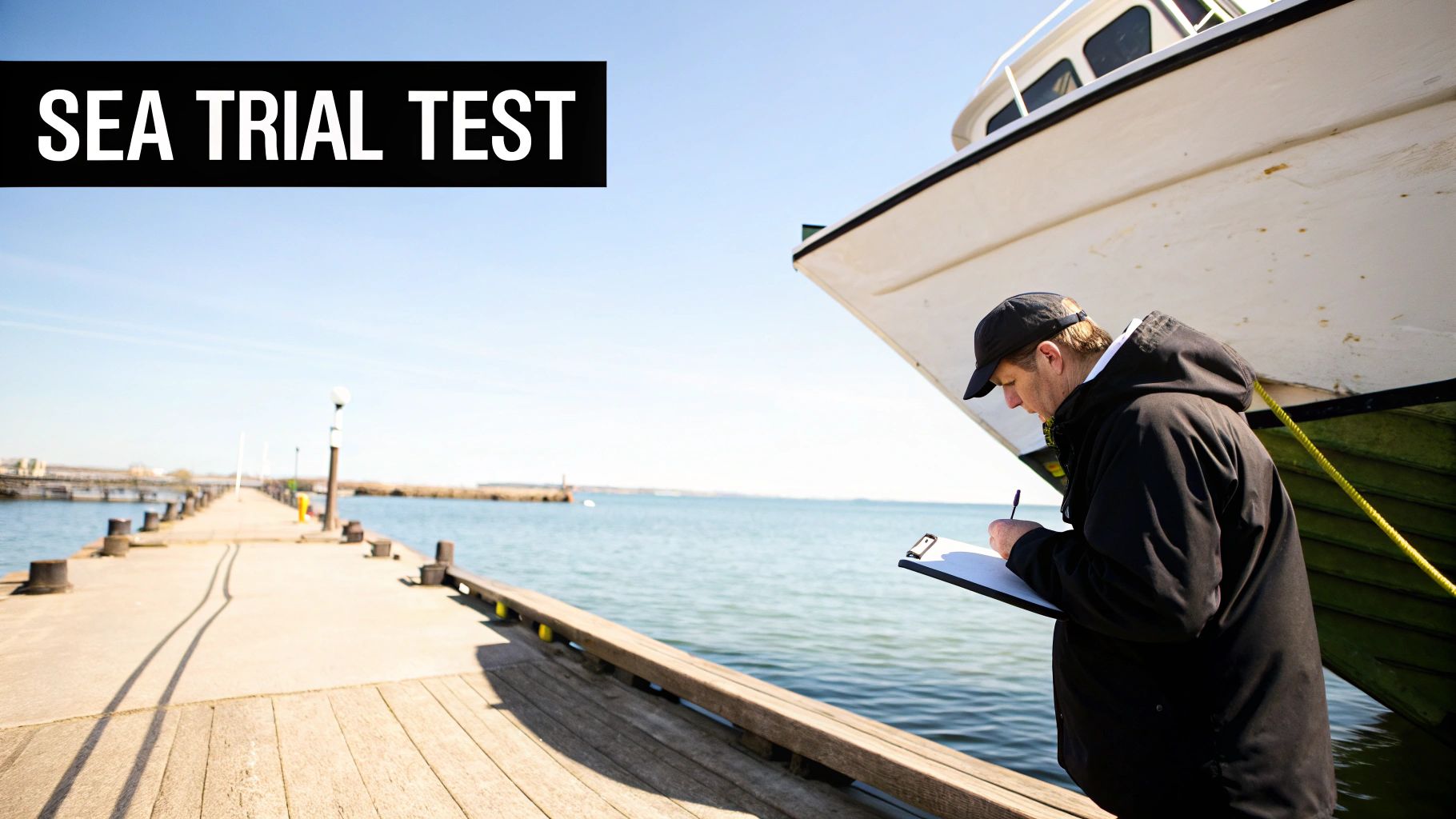
A boat might look fantastic tied to the dock, but it can tell a completely different story once you're on the water. The sea trial is the test drive, and it is absolutely non-negotiable. This is where you find out how the boat really performs.
Don't just be a passenger along for the ride—you need to be an active participant. The goal is to test every single system while the boat is actually working.
Here’s a quick checklist for the trial:
-
Engine Performance: How easily does the engine start? Is there excessive smoke? Run the boat through its full range of speeds, from a slow crawl to wide-open throttle. Listen for any weird noises, and feel for any hesitation or excessive vibration.
-
Handling and Steering: Get a feel for the helm. How does the boat turn? The steering should feel smooth and responsive, not stiff or sloppy. If possible, cross a few wakes to see how the boat handles chop.
-
Systems Check: While you're underway, start flipping switches. Turn on the GPS, the VHF radio, the bilge pumps, the navigation lights—everything. Make sure it all works when the engines are running and drawing power.
-
Gauges and Instruments: Keep your eyes glued to the engine gauges. Do they all work? Watch the temperature and oil pressure, especially at higher speeds, to ensure they stay in the normal range.
The sea trial, combined with the professional survey, gives you the complete, unvarnished picture. Armed with this knowledge, you can either walk away from a bad deal with confidence or make a fair, informed offer on a boat you know is ready for the water.
You’ve done the legwork. The surveyor’s report is in, the sea trial felt right, and you’ve found your boat. The hunt is over, but now it's time to turn that dream into a reality. This is where we tackle the final financial hurdles: lining up a loan and making an offer that actually works.
Unless you're paying with cash, your first move should be arranging your financing. Getting pre-approved for a boat loan before you start talking numbers is a game-changer. It shows the seller you’re serious and ready to act, giving you a massive advantage at the negotiating table.
Financing a recreational vehicle like a boat is a bit of a hybrid—think part car loan, part mortgage. The paperwork feels familiar, but the terms can be quite different. For instance, boat and RV loan terms can stretch out for 10 to 20 years, which is a lot longer than a typical auto loan and helps keep the monthly payments down.
You have a few solid options for securing a loan, and it’s smart to check out all of them to see who offers the best deal.
-
Banks and Credit Unions: A great first stop. Your own bank already has your financial picture, which can make the whole process smoother and faster.
-
Specialized Marine & RV Lenders: These folks are the specialists. They deal exclusively in recreational vehicle financing, so they often have more flexible terms and are more willing to finance older or unique models that a traditional bank might pass on.
-
Dealership Financing: Most dealerships offer in-house financing, making the process fast, easy, and hassle-free. Take advantage of this convenience while also exploring outside lenders to ensure you’re getting the best possible rate — smart shopping meets stress-free financing
Plan on making a down payment. Most lenders will want to see you put down 10% to 20% of the purchase price. They see this as you having some skin in the game, a sign that you're a committed and financially responsible buyer.
With your financing pre-approval tucked in your back pocket, you’re officially ready to talk turkey. Good negotiation isn’t about trying to steal the boat with a crazy lowball offer. It’s about landing on a fair price that reflects its true condition, current market value, and all the homework you’ve done.
The professional marine survey is your single best negotiating tool. Did the surveyor point out some minor issues, like old hoses that need replacing or a faulty gauge? Perfect. You can use the estimated cost of these repairs to justify a slightly lower offer.
Making an offer is a delicate dance. You want a good price, but you don't want to offend the seller and lose out on the perfect boat. Your approach will change slightly depending on whether you're buying from a private owner or a dealership.
Negotiating with a Private Seller:
Remember, a private seller often has an emotional connection to their boat. Start with an offer that’s polite and reasonable—below their asking price, but not insultingly so. Be ready to calmly walk them through your reasoning, pointing to specific findings in the survey report or comparable boats on the market.
Negotiating with a Dealership:
Dealerships work hard to offer fair, competitive pricing while ensuring customers get the best value and service. While there may be some flexibility in the sticker price, it’s important to remember that pricing reflects vehicle quality, service, and dealership support. Approach the process as a partnership, communicate openly about your budget and needs. Dealers often do their best to find a solution that works for both sides, sometimes even following up with additional options or incentives.
You’ve done the hard work. The inspection went well, the sea trial was a blast, and you've agreed on a price you're happy with. Now you're on the home stretch—it’s time to handle the paperwork and officially become a boat owner.
This final stage feels a bit like closing on a house or an RV, but thankfully with a much smaller pile of documents. The two pieces of paper that matter most are the Bill of Sale and the boat's title. Think of the Bill of Sale as the official receipt; it needs to have the boat’s Hull Identification Number (HIN), the agreed-upon price, and signatures from both you and the seller. The title is the proof of ownership, just like a car title, and it's what you'll use to register the boat in your name.
Before you hand over any cash, it's absolutely vital to make sure the boat is free of any liens. A lien means the seller still owes money on it, and you don't want that debt to become your problem. A quick title search with the right state agency or the U.S. Coast Guard will clear this up and give you the confidence that your new boat is truly all yours.
With the keys in your hand and the title signed over, the real fun begins. But those first few months are also a steep learning curve. Think of this as your new owner's starter pack—a checklist to get you going and help you build confidence for the years of adventure ahead.
-
Get Insured Immediately: Don't put this off. In fact, most marinas won't even let you pull into a slip without proof of insurance. A solid policy is non-negotiable—it protects your investment and covers you if an accident happens.
-
Find a Home for Your Boat: Where will your boat live? You’ll need to decide between a wet slip at a marina, a dry stack facility, or a trailer in your driveway. Whatever you choose, book it early. Marinas can have long waiting lists, especially as boating season ramps up.
-
Load Up on Safety Gear: Never leave the dock without the essentials. This means enough life jackets for everyone on board, a fire extinguisher, flares, a first-aid kit, and a good, reliable anchor.
-
Map Out Your Maintenance: Create a simple schedule for routine jobs like engine checks, oil changes, and regular wash-downs. Staying ahead of maintenance is the single best way to avoid expensive, unexpected repairs down the line.
Congratulations on joining the boating community! It’s an incredible lifestyle, and it’s growing fast. The leisure boat market is currently valued at $41.6 billion and is expected to surge to $65.9 billion by 2034. You can discover more insights on leisure boat market growth to see what’s driving this boom in marine recreation.
Ticking off these first few boxes makes the transition from buyer to owner smooth and stress-free. It’s all about setting a solid foundation for countless incredible days out on the water.
Alright, you're on the home stretch. You've found the boat, arranged the financing, and you can almost feel the wind in your hair. But this is usually when a few last-minute "what ifs" start to pop up. It's totally normal.
Let's tackle some of the most common questions we hear from people buying their first boat. Think of this as your final pre-launch briefing—the practical details that turn a good purchase into a great ownership experience.
How Much Should I Really Budget for Annual Maintenance?
Here's a rule of thumb that has served boaters well for decades: plan on spending 10% of your boat's purchase price each year on maintenance and running costs. So, for a $50,000 boat, you should have about $5,000 set aside annually.
That number might sound high at first, but it’s a realistic figure that prevents nasty surprises down the road. This fund covers everything from routine engine services and cleaning supplies to winterizing the boat and fixing the little things that inevitably break. Treat this guideline as gospel, and you'll be one of the smartest new owners on the water.
The "10% rule" isn't just a suggestion; it's the secret to stress-free boat ownership. It turns maintenance from an unexpected crisis into a predictable line item in your budget, so your boat is always ready when you are.
Getting the right insurance is non-negotiable, but it’s about more than just satisfying a marina's requirement. You need real protection. Start by getting quotes from your current insurance agent, but also make sure to contact companies that specialize in marine and RV insurance. The specialists often understand the nuances and can offer better, more specific coverage.
A solid policy will give you peace of mind by covering a few key areas:
-
Liability Coverage: This is your financial backstop if an accident causes injury to someone or damages their property. Don't skimp here.
-
Physical Damage: This covers your own boat. It pays for repairs if you're in a collision, hit a submerged object, or if it's damaged during a storm or stolen.
-
Specialized Protection: The best policies include extras like coverage for fuel spills (which can come with hefty cleanup fines), wreckage removal, and on-water towing.
This is a big one, and the answer de