Buying your first vehicle is a significant milestone, whether it's a car for your daily commute, an RV for cross-country adventures, or a boat for weekend getaways. The process can feel daunting, filled with complex financing options, confusing industry jargon, and high-pressure sales tactics that can leave even the most prepared person feeling uncertain. This guide is specifically designed to cut through that noise and serve as your definitive roadmap.
We will provide ten clear, actionable tips for first time car buyers, and these core principles apply just as effectively to purchasing your first RV or boat. Our goal is to empower you with the essential knowledge needed to navigate the entire buying journey with confidence. From establishing a realistic budget to understanding the total cost of ownership and mastering negotiation, each point is crafted to help you avoid common pitfalls. For many first-time buyers, considering pre-owned vehicles is a smart financial move. You may find additional insights by exploring specific guidance on buying a used car to complement the strategies discussed here.
This listicle will cover crucial steps like securing financing before you shop, conducting thorough vehicle research, and demystifying dealership practices. By following these steps, you can ensure you secure a vehicle that perfectly fits your lifestyle and budget without the accompanying stress and buyer's remorse. Let's get you ready to take the keys, hit the road, or launch into your next adventure.
One of the most powerful tips for first time car buyers is to walk into a dealership with your financing already secured. Obtaining a pre-approval from a bank, credit union, or trusted online lender transforms your position from a casual browser into a serious, empowered buyer with a concrete budget. This single step shifts the negotiation dynamic entirely in your favor.
Dealerships often present a "total package" that bundles the vehicle price with financing terms. By arriving with a pre-approved loan, you effectively separate these two transactions. This allows you to focus solely on negotiating the vehicle's "out-the-door" price, preventing the conversation from being muddled by monthly payment figures, which can obscure the true cost of the vehicle.
Securing financing beforehand provides a clear financial ceiling. If you're pre-approved for $80,000, you know instantly that a $95,000 motorhome is out of reach, preventing emotional decisions and overspending. This applies whether you're buying a car, a new RV for family trips, or a boat for weekend getaways. The principle remains the same: know your budget before you fall in love with a vehicle.
Key Insight: A pre-approval letter is like having cash in hand. It signals to the seller that you are a qualified buyer ready to make a purchase, often leading to a more streamlined and serious negotiation process.
Follow this simple process to get the best financing terms possible:
-
Check Your Credit: Before applying, review your credit report for any errors that could negatively impact your interest rate. Dispute any inaccuracies immediately.
-
Shop Around: Don't take the first offer. Compare rates from at least 3-5 different lenders, including your personal bank, local credit unions (which often have competitive rates), and reputable online lenders. To start the process, you will typically need to complete a credit application with each institution.
-
Negotiate Price First: At the dealership, always negotiate the vehicle’s price as if you are paying cash. Once you have a final, agreed-upon price, you can then reveal your pre-approved financing. You can still ask if their finance department can beat your rate, creating a win-win scenario where you are guaranteed the best possible terms.
Once your budget is set, the next critical step is to dive into detailed research. Thoroughly investigating specific makes and models is a foundational tip for first time car buyers that prevents impulse buys and ensures your final choice genuinely fits your needs. This research phase is about moving beyond looks and brand names to understand the core attributes of each vehicle.
By comparing reliability ratings, safety scores, and owner satisfaction reports, you can build a shortlist of contenders that are not only appealing but also smart, long-term investments. This due diligence empowers you to walk into a dealership with a clear idea of what you want, preventing you from being swayed by a salesperson's pitch for a less suitable option.
Proper research helps you identify the true cost of ownership, which extends far beyond the sticker price. This principle is even more critical when considering larger purchases like an RV or a boat, where maintenance and fuel costs can vary dramatically between models. For instance, comparing the towing capacity of a Class C motorhome like a Thor Chateau versus a larger Class A like a Tiffin Allegro, or understanding the fuel burn of a Yamaha center console versus a Sea Ray cruiser, is vital information that directly impacts your enjoyment and budget.
Key Insight: Don’t just shop for a vehicle; shop for a history. A model's track record for reliability, safety, and resale value is a far better predictor of your future satisfaction than its showroom shine.
Follow this process to identify the best vehicle for your needs:
-
Consult Expert Reviews: For cars, start with trusted sources like Consumer Reports and Edmunds. For RVs and boats, look to specialized publications like RV Life, Boating Magazine, and online forums where experienced owners share detailed feedback.
-
Cross-Reference Safety Ratings: For cars and RVs, check crash test results on the National Highway Traffic Safety Administration (NHTSA.gov) website. For boats, look for National Marine Manufacturers Association (NMMA) certification, which indicates adherence to safety standards.
-
Read Owner Reviews: Scour forums and owner review sections on various sites. Reading at least 10-15 reviews for a specific model year can reveal common issues—like water intrusion in an RV or delamination on a boat hull—that professional reviews might miss.
-
Create a Comparison List: Build a spreadsheet to compare your top 3-5 choices side-by-side. Track key specs like MPG (or GPH for boats), cargo/storage capacity, towing limits, and estimated annual maintenance costs to make an objective, data-driven decision.
A common mistake for first time car buyers is focusing solely on the sticker price. The true financial impact of owning a vehicle extends far beyond the initial purchase. Understanding the Total Cost of Ownership (TCO) means accounting for all expenses, including insurance, fuel, maintenance, registration, and depreciation, to get a realistic picture of long-term affordability.

A lower-priced vehicle with high maintenance needs or poor fuel economy can quickly become more expensive than a pricier, more reliable alternative. The ongoing costs associated with large recreational vehicles are a prime example. An RV requires expenses for campground fees, winterization, and storage, while a boat owner must budget for slip fees or marina costs, bottom painting, and engine servicing. These costs significantly affect your budget.
Calculating the TCO prevents financial surprises down the road. It shifts your perspective from "what can I afford to buy?" to "what can I afford to own?" For instance, a seemingly affordable older motorhome might have high annual maintenance costs. Similarly, a powerful wakeboard boat will have much higher fuel and insurance costs than a small fishing pontoon, fundamentally changing its affordability over a five-year period.
Key Insight: The cheapest vehicle to buy is rarely the cheapest vehicle to own. Factoring in TCO ensures you make a financially sound decision that fits your budget for years to come, not just on the day you buy.
Follow this simple process to accurately estimate the long-term cost of your target vehicle:
-
Get Insurance Quotes: Before you commit, contact your insurance agent for quotes on the specific models you are considering. Rates for RVs and boats can vary dramatically based on size, value, and usage.
-
Research Maintenance and Fuel Costs: Use online resources and owner forums to compare projected maintenance schedules and typical repair costs. For RVs, factor in generator servicing and seal maintenance. For boats, include engine winterization and hull cleaning.
-
Factor in Depreciation: All vehicles lose value over time, but some depreciate faster than others. Research the expected depreciation rate for your chosen model to understand its future resale value and the true cost of using it over your ownership period.
4. Check Vehicle History Report and Inspection Records
One of the most crucial tips for first time car buyers, especially when considering a pre-owned vehicle, is to never skip the due diligence of a thorough background check. A comprehensive vehicle history report acts as a biography of the car, RV, or boat you're considering, revealing critical information that isn't visible to the naked eye. This step protects you from purchasing a vehicle with hidden problems.

Think of it this way: you wouldn't buy a house without an inspection, and the same logic applies here. For a used boat, a marine survey can uncover a history of submersion or hull damage (osmosis). For an RV, a specialized inspection can reveal past water intrusion, delamination, or persistent electrical issues. These reports and inspections give you a clear picture of the vehicle's past and present condition.
Why a History Report is a Non-Negotiable
A clean-looking exterior can easily mask a history of major problems. A CarFax or AutoCheck report can expose red flags for cars and RVs, such as frame damage from a collision, a salvaged title from being declared a total loss, or a history of multiple owners in a very short time. Verifying this history is essential to avoid inheriting someone else’s expensive problems.
Key Insight: The Vehicle Identification Number (VIN) for cars and RVs, or the Hull Identification Number (HIN) for boats, is the key to unlocking a vehicle's entire past. Never consider a purchase without first obtaining this number and running a detailed history check.
Follow this process to ensure you know exactly what you are buying:
-
Request the VIN/HIN Early: Ask the seller for the Vehicle Identification Number (or Hull Identification Number for boats) before you even schedule a viewing. A hesitant seller is a major red flag.
-
Run a Report: For cars and RVs, use providers like CarFax or AutoCheck. For boats, a title search and history report can provide valuable information on liens or past registrations.
-
Get a Professional Inspection: This is not a substitute for a physical inspection. For any used vehicle, hire an independent expert. This means a trusted mechanic for a car, a certified RV inspector for a motorhome, or an accredited marine surveyor for a boat. This service can save you thousands by identifying current mechanical, structural, or water-related issues.
One of the most impactful tips for first time car buyers is understanding that the sticker price is almost never the final price. Strategic negotiation can save you thousands of dollars, as dealerships build significant profit margins into their listed prices and expect buyers to negotiate. By doing your homework, you can confidently make an informed offer rather than simply accepting what's on the window sticker.
Effective negotiation involves more than just haggling; it's about leveraging data and timing to your advantage. Researching the fair market value of the specific RV, boat, or car you want, understanding dealer incentives, and creating competition between sellers are all key components. This empowers you to discuss price based on facts, not just feelings, ensuring you secure a fair deal.
Negotiating the purchase price directly reduces the total amount you finance, which in turn lowers your monthly payments and the overall interest you pay. This is crucial whether you are buying your first car, a Class A motorhome for cross-country adventures, or a new fishing boat. A 10% reduction on a $60,000 RV, for example, is a $6,000 savings that significantly impacts your total cost of ownership.
Key Insight: The best negotiation position comes from being informed and unemotional. Be prepared to politely walk away if the dealership won't meet your well-researched, reasonable offer. This willingness is your most powerful tool.
Follow this process to negotiate the best possible price on your new vehicle:
-
Research the Fair Market Value: Before stepping into a dealership, use resources like NADA Guides for RVs and boats, or Kelley Blue Book (KBB) for cars, to determine the fair purchase price for your desired model in your area. This gives you a data-backed target price.
-
Negotiate Price First: Always focus on negotiating the vehicle's price independently from your trade-in, financing, or add-ons. Combining these can confuse the numbers and mask the true cost of the vehicle.
-
Create Competition: Get written price quotes from multiple dealerships for the exact same vehicle. You can then use the lowest offer as leverage to ask other dealers to beat it, ensuring you get the most competitive price available.
-
Leverage Timing: Shop near the end of the month, quarter, or year when sales teams are more motivated to meet quotas. For boats and RVs, shopping in the off-season (fall and winter) can also lead to more aggressive discounts.
Getting pre-approved for your auto loan is one of the best ways to stay in control during the dealership financing process. When you enter the Finance & Insurance (F&I) office, you’ll review your loan options and have the chance to explore add-ons that may enhance your ownership experience. By understanding this stage, you can make confident, well-informed choices that fit both your needs and your budget.
The F&I manager will present different financial products such as extended warranties, GAP insurance, and paint protection packages. While some of these options can add value, others might not be essential for your situation. The key is to evaluate each offer with a clear understanding of what it provides — ensuring you only invest in what truly benefits you.
Taking a few extra minutes to review your financing documents carefully can help you save thousands of dollars and ensure your purchase aligns with your financial goals. For instance, comparing quotes on warranties or GAP coverage can reveal significant savings. By staying focused and informed, you ensure every dollar you spend contributes to the long-term value of your vehicle.
Key Insight: The car-buying process doesn’t end once you’ve agreed on a vehicle price — your financing terms are just as important. Understanding how dealership financing works allows you to make confident, cost-effective decisions and drive away knowing you’ve made a smart investment.
Keep your guard up and follow these steps when you enter the finance office:
-
Lead with Your Pre-Approval: Bring your pre-approval letter to the dealership. It sets a benchmark for the loan terms you deserve and helps you recognize if the dealership’s offer is truly better.
-
Review Add-Ons with Intention: Take time to evaluate optional products. Ask for written details about coverage, compare prices, and only choose extras that provide real value to your ownership experience.
-
Double-Check Every Document: Before signing, review your purchase and financing paperwork line by line. Make sure the interest rate, loan term, and vehicle price match what you agreed upon. This step ensures full transparency and helps you avoid hidden costs.
Navigating the choice between a brand-new vehicle and a standard used one can be challenging. A Certified Pre-Owned (CPO) vehicle offers a compelling middle ground, combining the lower price of a used model with the peace of mind and quality assurance typically associated with buying new. This makes it an ideal option for many first time car buyers looking for maximum value and reliability.
A CPO vehicle isn't just any used vehicle. It’s a late-model, low-mileage vehicle that has undergone a rigorous, multi-point inspection dictated by the original manufacturer. These vehicles are then reconditioned and sold with a manufacturer-backed extended warranty, effectively bridging the gap between new and used by providing a safety net against unexpected repairs.
For a first-time buyer, the primary benefit of a CPO vehicle is confidence. Knowing your purchase has been thoroughly vetted and is backed by the manufacturer eliminates much of the guesswork and risk associated with buying a standard used vehicle. This principle applies across vehicle types, from a dependable car to a family-friendly CPO RV from a reputable dealer, which can offer similar warranty benefits and inspection standards. While less common, some boat brokerage programs also offer certified vessels.
Key Insight: CPO programs turn a used vehicle purchase into a more predictable and secure investment. You get a like-new experience, including roadside assistance and a detailed vehicle history report, without the steep depreciation hit of a brand-new model.
Follow these steps to ensure you find the best CPO vehicle for your needs:
-
Verify the Certification: Always confirm that the vehicle is certified by the manufacturer (e.g., Toyota Certified, Ford Blue Advantage) and not just a "dealership certified" program, which may offer less comprehensive coverage.
-
Review the Warranty: Scrutinize the CPO warranty details. Understand what is covered (powertrain, comprehensive), the duration, and any deductibles. For an RV, ensure it covers major appliances and slide-out mechanisms.
-
Compare to Non-CPO: Check the market price for a similar non-CPO used model. The CPO premium should be justified by the warranty length and inspection quality. Is the extra cost worth the added security for you?
-
Request All Paperwork: Ask for the full inspection report and the complete service history. Ensure all recalls have been addressed and documented. Even with a CPO badge, an independent pre-purchase inspection is still a wise final step for ultimate assurance.
Online research, reviews, and virtual tours can only tell you so much. One of the most essential tips for first time car buyers is to experience how a vehicle performs in the real world. A comprehensive test drive is your opportunity to evaluate comfort, handling, visibility, and overall feel, ensuring the vehicle meets your practical needs and personal preferences before you commit.
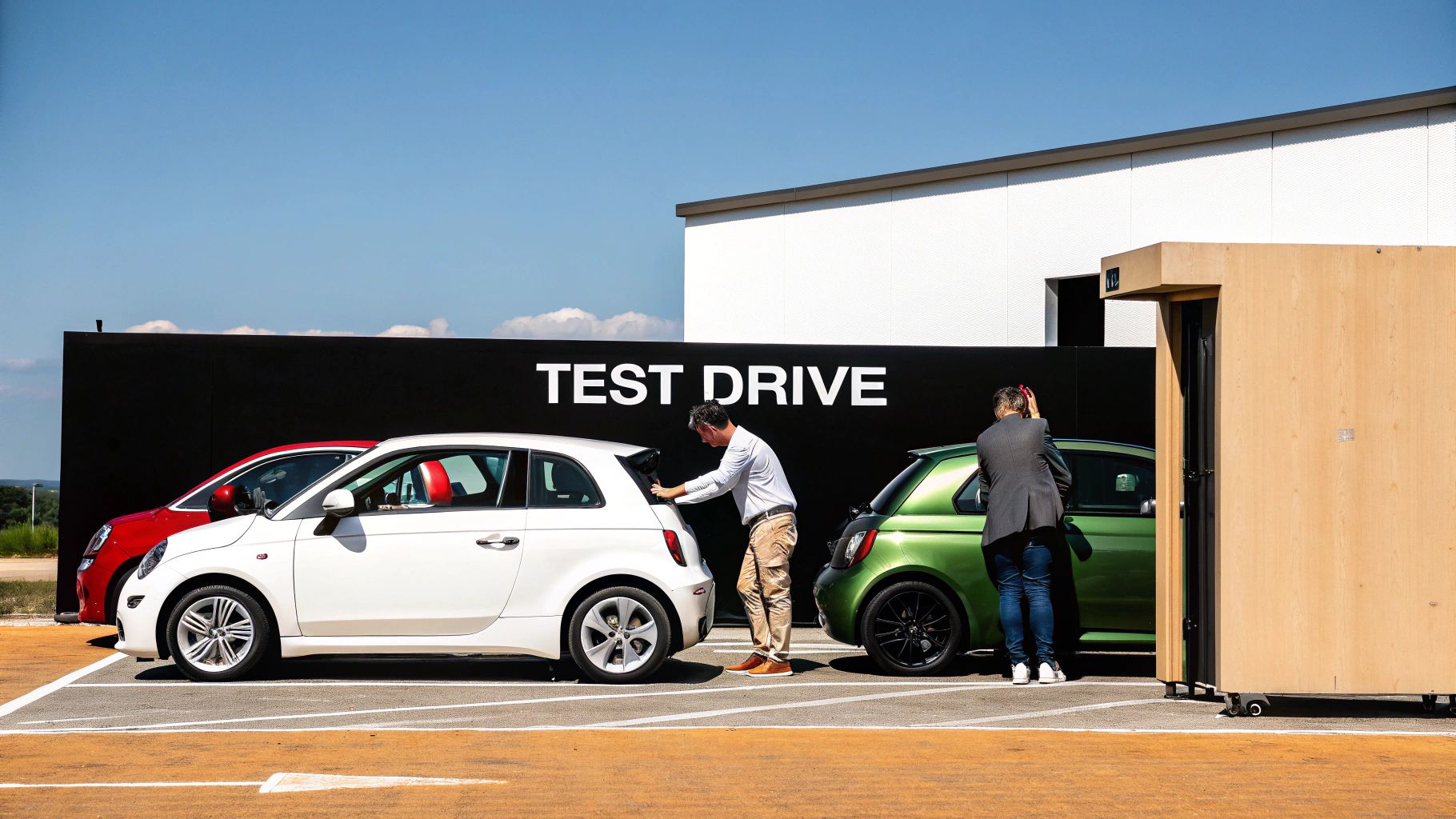
The goal is not just to drive one option, but to compare at least 3-5 different models in your chosen category. This process is crucial whether you're considering a car, an RV, or a boat. For an RV, a test drive reveals its road manners, turning radius, and interior rattles. For a boat, a "sea trial" is essential to understand how it handles chop, its stability at rest, and its true performance on the water.
A short loop around the dealership block is not enough. You need to simulate your daily and recreational usage. For a larger vehicle like an RV, this means testing its maneuverability in tighter spaces and its stability at highway speeds. For a boat, a sea trial should include slow-speed maneuvering and running at cruising speed in various water conditions. This hands-on evaluation helps you identify potential deal-breakers, like significant blind spots, an underpowered engine, or a layout that is impractical.
Key Insight: The test drive is where the "on-paper" specs meet reality. A vehicle that seems perfect in reviews might feel sluggish, noisy, or uncomfortable to you personally. Trust your own experience above all else.
Maximize your time behind the wheel by following a structured approach:
-
Simulate Your Life: Drive an RV on routes with hills and tight turns. Take a boat out on the type of water you'll frequent. Practice parking or docking to gauge visibility and maneuverability.
-
Test All Features: Don't just drive. Interact with the entire vehicle. For an RV, operate the slide-outs, test the appliances, and check the plumbing. For a boat, test the electronics, pumps, and trim tabs.
-
Bring a Co-Pilot: If you regularly travel with family or friends, bring them along. Their feedback on passenger comfort and space is invaluable, especially when evaluating larger vehicles like RVs or boats.
-
Listen and Feel: Turn off the radio and listen for any unusual noises from the engine, brakes, or suspension. Pay attention to how the vehicle handles, how it accelerates, and how responsive the controls feel.
9. Understand Warranty Coverage and Maintenance Plans
A crucial tip for first time car buyers is to look beyond the initial price tag and understand the long-term protection offered by the manufacturer's warranty. A comprehensive warranty provides peace of mind and can save you thousands in unexpected repair costs, making it a significant factor in the total cost of ownership. This coverage acts as a safety net for major mechanical failures.
When you purchase a new vehicle, it comes with several types of warranties. For cars and RVs, these can include a "bumper-to-bumper" warranty, a powertrain warranty, and specific warranties for components. For boats, you'll typically have separate warranties for the hull and the engine. Understanding the duration and scope of this coverage is essential.
Different manufacturers offer vastly different warranty packages, which can be a deciding factor between two similar vehicles. This difference is especially critical when purchasing high-value assets like a new RV or boat, where repair costs for engines, slide-out mechanisms, generators, or marine electronics can be substantial. A strong warranty package reflects the manufacturer’s confidence in their product.
Key Insight: A strong warranty not only protects your wallet but also reflects the manufacturer's confidence in their product's reliability. It is a direct indicator of quality and long-term value.
Use this checklist to ensure you have a complete picture of your coverage:
-
Compare Across Brands: Before settling on a vehicle, compare the warranty terms. For RVs, look at both the chassis warranty (e.g., Ford, Mercedes) and the coach warranty (e.g., Winnebago, Jayco). For boats, compare hull warranties and engine warranties (e.g., Mercury, Yamaha).
-
Read the Fine Print: Request the full warranty documentation and carefully review what is and isn't covered. Exclusions often include wear-and-tear items like tires, brakes, and batteries.
-
Check Transferability: If you plan to sell the vehicle in the future, ask if the warranty is transferable to the next owner. A transferable warranty can significantly boost resale value, especially for RVs and boats.
-
Keep Meticulous Records: To ensure any future claims are honored, keep detailed records of all scheduled maintenance performed, whether at the dealership or an independent shop. This is non-negotiable proof that you have properly cared for the vehicle.
One of the easiest traps for first-time car buyers is "feature creep," the gradual addition of expensive options and packages that seem appealing in the showroom but add little long-term value. Dealerships excel at upselling, but a strategic focus on your actual needs over wants can save you thousands and prevent you from paying for technology you’ll rarely use.
This principle is about distinguishing between genuine needs and fleeting desires. A state-of-the-art navigation system might seem essential, but your smartphone already provides superior mapping for free. This logic is even more important for RVs and boats. Do you really need the outdoor kitchen and second bathroom on the RV, or the high-end wakeboard tower and stereo system on the boat? By thoughtfully prioritizing features before you shop, you can control your budget and avoid impulse decisions.
Every added feature inflates the vehicle's price, monthly payment, and often, insurance costs. For example, opting for a full-body paint package on an RV can add over $10,000 to the price tag. Similarly, high-end fishing electronics on a boat can add thousands but may be unnecessary for a casual angler. These expensive add-ons rarely hold their value at resale compared to the core quality of the vehicle itself.
Key Insight: Future buyers often prioritize practicality and reliability over luxury add-ons. Over-customizing with niche features can sometimes make your vehicle harder to resell, as standard features have broader appeal.
Follow this process to ensure you only pay for what you truly need:
-
Create a "Must-Have" List: Before visiting a dealership, write down your non-negotiable features. For an RV, this might be a certain floor plan or sleeping capacity. For a boat, it could be hull design or engine horsepower. Prioritize these over cosmetic upgrades.
-
Question Package Deals: Salespeople often bundle a desirable feature with several others you don't want. Ask if you can get your must-have item as a standalone option. Be prepared to walk away if they insist on a bloated package.
-
Just Say No to Dealership Add-Ons: Firmly decline high-profit add-ons offered in the finance office, such as paint protection, fabric sealant, and VIN etching. These services are almost always overpriced and can be purchased for far less elsewhere if needed.
| Strategy |
Complexity 🔄 |
Resource Requirements ⚡ |
Expected Outcomes ⭐ |
Ideal Use Cases 💡 |
Key Advantages 📊< |