Finding the best motorhomes for full time living isn't about a single "best" model. It’s about finding the right rig for your specific adventure, your budget, and how you plan to live on the road. The perfect choice for a solo RVer working remotely looks completely different from what a family of four needs to comfortably explore the country.
Before you get lost in fancy floor plans and shiny features, the first step is to get a handle on the main categories.
Jumping into the world of full-time RVing is exciting, but the sheer volume of options can be paralyzing. The good news is that it all gets much simpler once you realize motorhomes are neatly sorted into three main classes: Class A, Class B, and Class C. Each one is built with a different kind of traveler in mind.
Think of it like house hunting. A Class A is the sprawling luxury home, a Class B is the nimble city loft, and a Class C is the practical, family-friendly suburban house. Each one excels at something different. Figuring out which "neighborhood" fits your style is the most important decision you'll make.
This table gives you a quick rundown of the three motorhome classes, helping you see where you might fit in.
| Motorhome Class |
Best For |
Typical Size |
Living Space |
Driving Ease |
| Class A |
Long-term stationary living, luxury, large families |
26–45 feet |
Maximum, residential feel |
Challenging, requires practice (bus-like) |
| Class B |
Solo travelers, couples, ultimate mobility, stealth |
17–24 feet |
Compact, multi-functional |
Easiest, drives like a large van |
| Class C |
Families, couples, a balance of space & mobility |
21–35 feet |
Good, often has a cab-over bed |
Moderate, drives like a large moving truck |
As you can see, there's a clear trade-off between size, space, and how easy they are to get around in. This is the core dilemma every full-timer has to solve for themselves.
This quick visual breaks down the three main types of motorhomes for full time living.
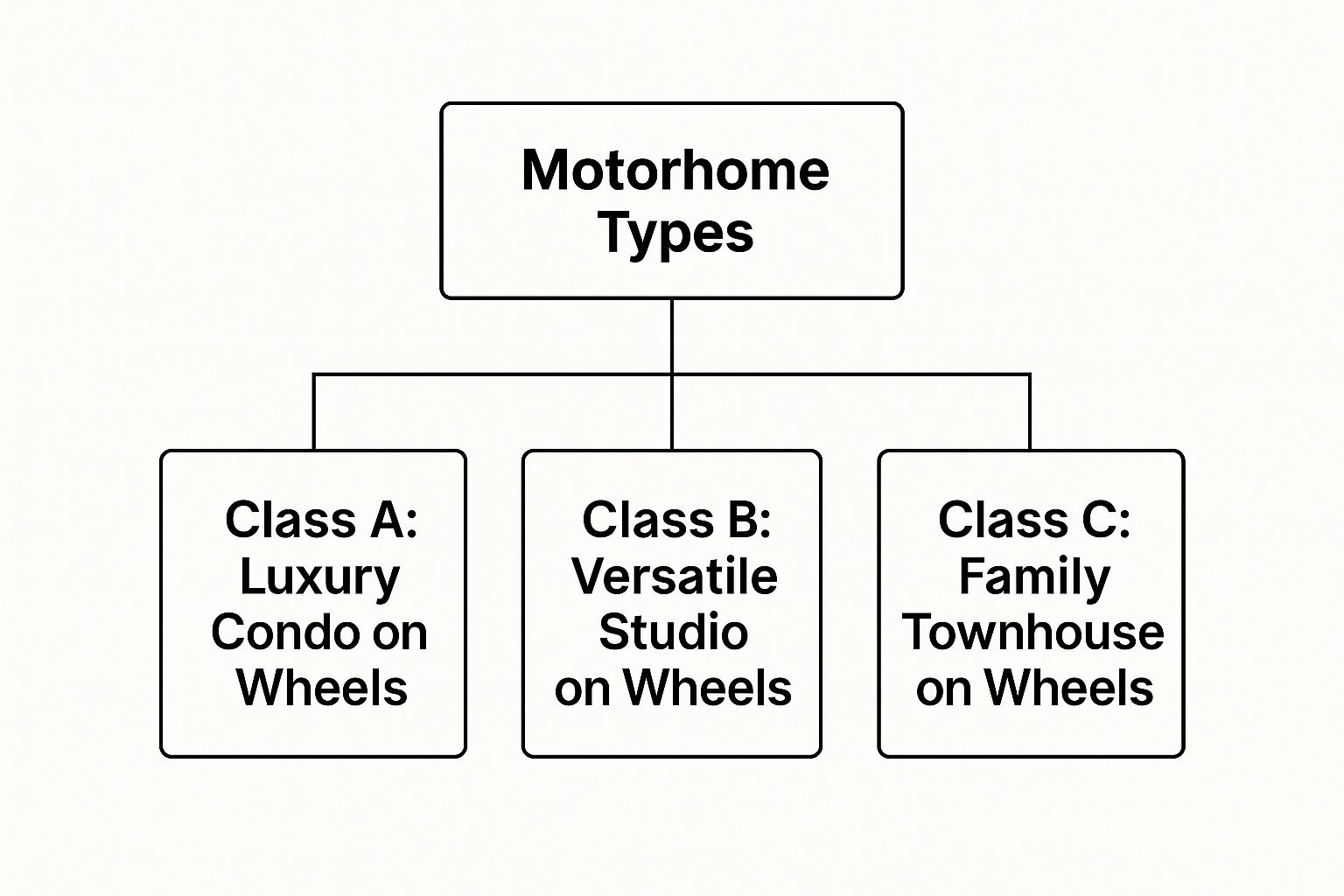
The diagram really shows how each class provides a different mix of size and utility. You've got the massive, bus-like Class A on one end and the agile, van-sized Class B on the other, with the Class C sitting right in the middle. Your travel plans will naturally pull you toward one of these three.
The number one mistake new full-timers make is picking an RV that doesn't match how they actually want to travel. That huge, luxurious Class A might look like the dream, but it becomes a nightmare if your goal is to navigate winding mountain passes or squeeze into rustic state park campsites. Its size is its biggest weakness.
On the flip side, a compact Class B offers incredible freedom. You can park it almost anywhere! But if you get stuck somewhere for a week of non-stop rain, that small space can start to feel really small.
It all comes down to being brutally honest about your priorities. Ask yourself:
- Space vs. Mobility: Do I crave residential comfort, or do I need the freedom to go anywhere and park with ease?
- Budget: What can I realistically afford for the RV itself, plus insurance, fuel, and the inevitable repairs?
- Travel Style: Will I be planting myself in one spot for months at a time, or am I constantly on the move?
Answering these questions upfront is the bedrock of a good decision. It stops you from getting distracted by bells and whistles that don't actually help you live the life you're chasing.
In the end, this is a deeply personal choice. Before you even step onto a dealer's lot, you have to know what RV is right for you by understanding what you gain—and what you give up—with each type. This bit of homework will save you a world of headache and help you find a home on wheels that truly fits your adventure.
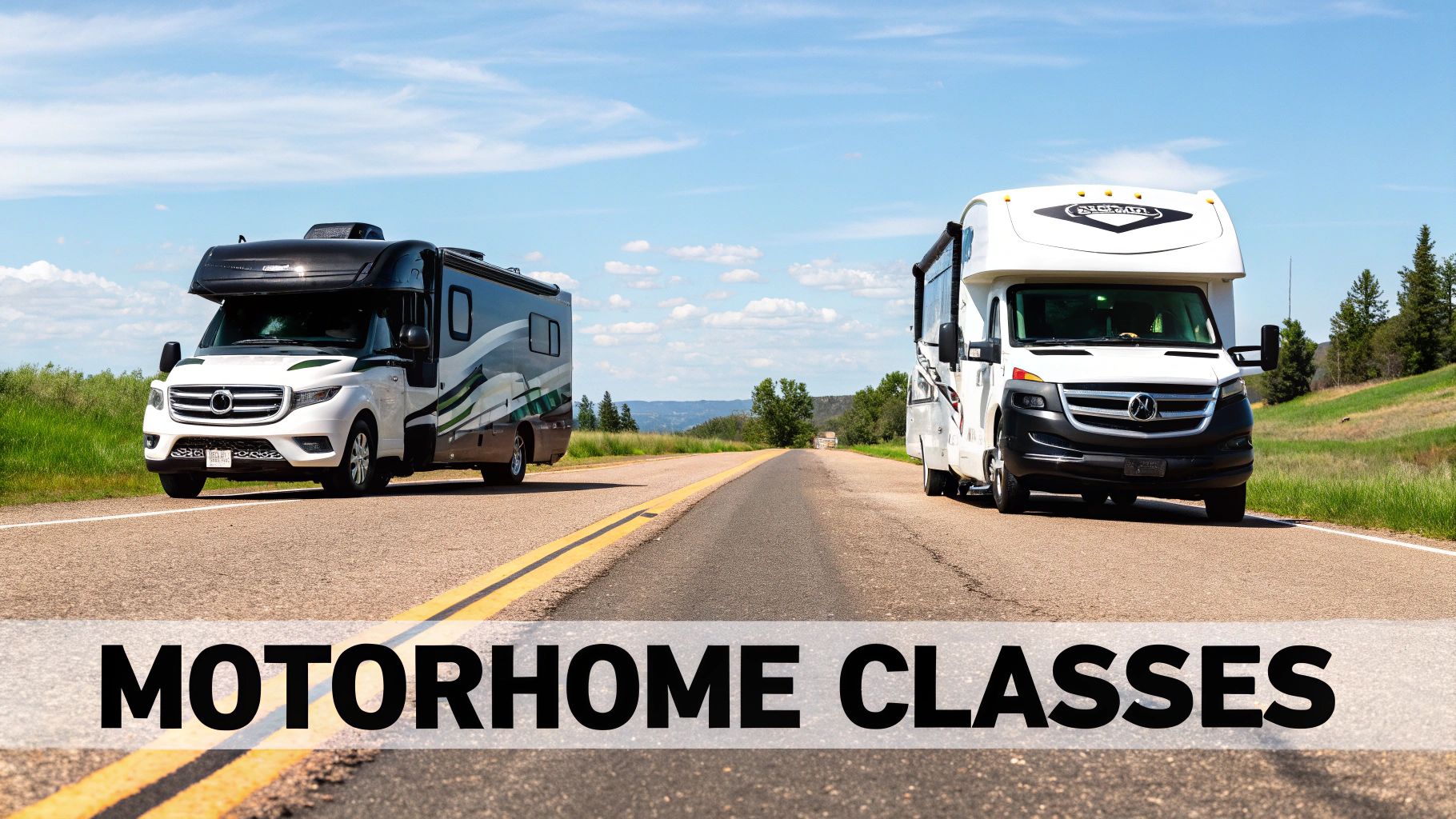
Before you can find the best motorhomes for full time living, you've got to get a handle on the three main classes. Each one has its own distinct personality and offers a completely different experience on the road. This isn't just about picking a vehicle; it’s about choosing the very foundation of your new mobile life.
Think of it like this: a Class A is your rolling luxury condo, a Class B is a nimble studio apartment, and a Class C is the practical, family-friendly townhouse. Each comes with its own set of strengths and compromises, and we're about to break down exactly what you get—and what you give up—with each one.
Class A motorhomes are the biggest and baddest rigs out there. Built on a heavy-duty commercial bus or truck chassis, these giants range from 26 to 45 feet and deliver an incredible amount of living space. We're talking residential-sized appliances, multiple slide-outs creating massive rooms, and huge storage bays underneath.
That cavernous interior is the number one reason full-timers flock to them. You get clearly defined living and sleeping areas, real counter space in the kitchen, and often even a washer and dryer. It’s the closest you’ll get to a traditional sticks-and-bricks home, which is perfect if you plan on staying put for long stretches.
But all that size comes at a cost. Piloting a Class A feels more like driving a city bus; it takes practice and a healthy dose of confidence. They’re also thirsty, with fuel economy typically hovering around a painful 6-10 MPG. Their sheer height and length can also lock you out of many national parks, scenic winding roads, and older campgrounds that just weren't built for rigs this big.
On the complete opposite end of the scale is the Class B, which most people know as a camper van. These are built on a standard van chassis and are by far the smallest and most maneuverable option, usually measuring between 17 and 24 feet. Their compact size is their superpower.
A Class B drives just like a large van. You can navigate tight city streets, pull into a regular parking spot, and venture down those tempting backroads that bigger RVs can only dream of. This agility gives you the ultimate freedom to follow your curiosity anywhere. They also sip fuel, with many getting 18-25 MPG.
The trade-off, as you'd expect, is space. The interior is a clever, multi-use zone where your living room, kitchen, and bedroom all occupy the same footprint. Storage is at a premium, and a "wet bath"—where the toilet and shower share the same small space—is pretty much standard. To get the full picture on all the RV types, you can explore our in-depth guide that explains RV classes for beginners.
A Class B is perfect for the minimalist who values adventure and mobility over a ton of living space. It’s built for seeing the world, not just parking in it.
Class C motorhomes hit that sweet spot right between the massive Class A and the compact Class B. You can always spot them by the signature sleeping or storage area that juts out over the cab. Built on a truck chassis, they typically range from 21 to 35 feet long.
This design gives you a lot more breathing room than a camper van, with separate areas for sleeping, cooking, and relaxing. Many have slide-outs to expand the living space even further, making them a comfortable choice for couples or small families. Driving a Class C is a lot like handling a large moving truck—definitely more manageable than a Class A, but it still requires you to be mindful on the road.
This quick comparison should help you see how they stack up:
| Feature |
Class A (The Condo) |
Class C (The Townhouse) |
Class B (The Studio) |
| Primary Pro |
Maximum living space & luxury |
Balanced space and drivability |
Go-anywhere mobility & simplicity |
| Primary Con |
Difficult to drive, limited access |
Moderate fuel economy, still large |
Very limited interior space |
| Ideal Full-Timer |
Stationary dwellers, large families |
Adventurous families, couples |
Solo travelers, nimble adventurers |
At the end of the day, picking your class boils down to one simple question: What matters most to you? If you're chasing that residential comfort and don't plan on moving around constantly, the Class A is your fortress. If you want the absolute freedom to explore every nook and cranny, the Class B is your ticket to adventure. And if you need a comfortable home base that’s still up for an excursion, the Class C is a fantastic compromise.
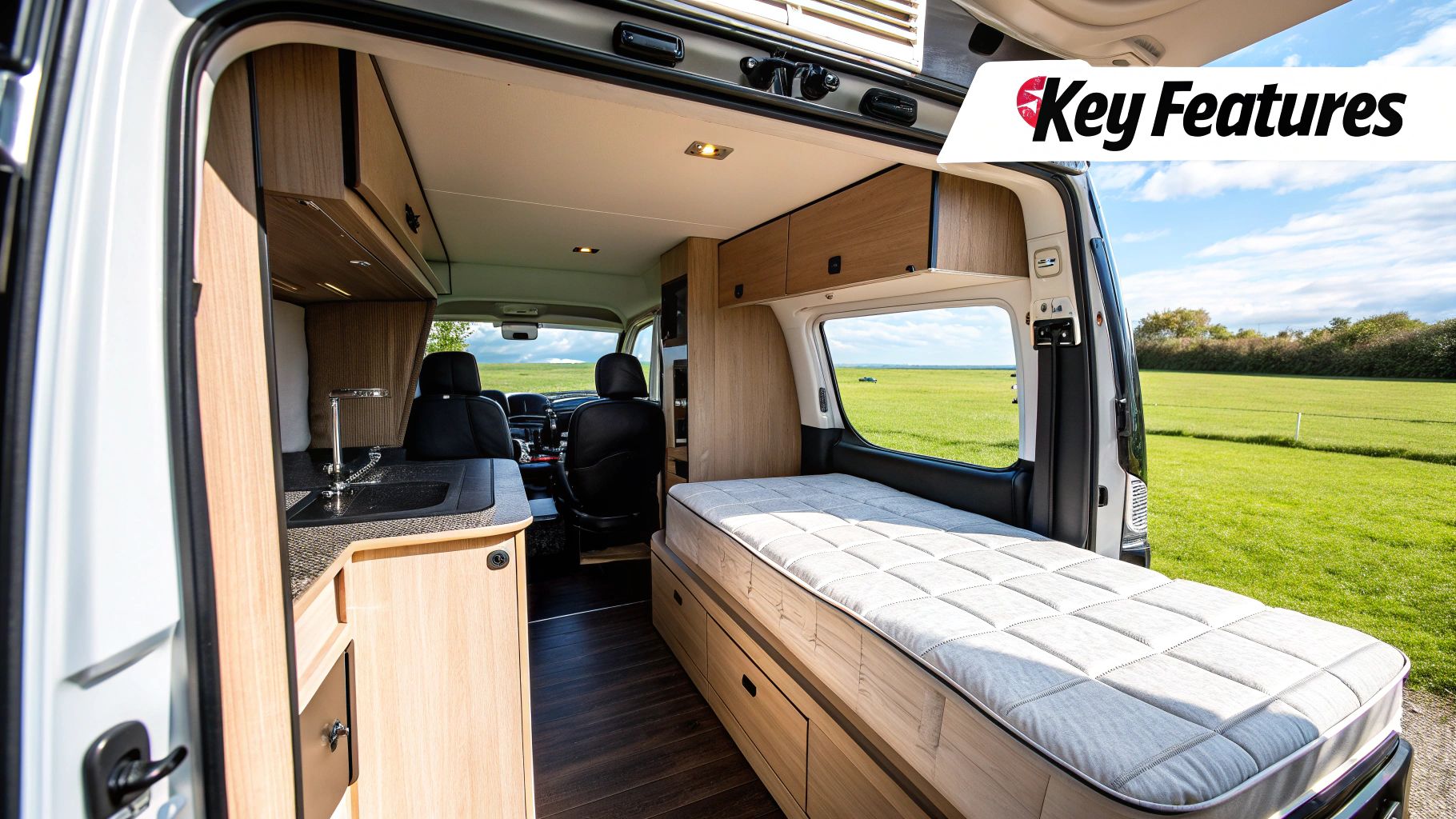
Once you've zeroed in on the right class of motorhome, the real detective work starts. The features that make a rig fantastic for a weekend trip are often worlds apart from what you need to live comfortably on the road day in and day out. Finding the best motorhomes for full time living means you have to look past the showroom shine and get down to the nitty-gritty.
Think of it like this: a hotel room is perfect for a few nights, but you wouldn't want to live there. It just doesn't have the storage, the practical flow, or the durability for real life. Your full-time motorhome has to be your kitchen, bedroom, office, and garage, all while handling the constant stress of being a vehicle.
This lifestyle isn't a niche secret anymore. The motorhome market has exploded, now worth over $38.8 billion globally, and it's not slowing down. This boom is fueled by folks like you choosing a life on wheels, which has thankfully pushed manufacturers to build better, more livable rigs. You can dig into the full motorhome market analysis to see just how much the industry is growing.
Of everything you'll consider, the layout is king. A floor plan that looks brilliant in a brochure can become a source of daily frustration if it doesn't mesh with your routine. Just imagine having to climb over your partner every single night just to get to the bathroom because the bed is jammed into a corner.
When you're walking through a potential motorhome, don't just look—live in it for a few minutes. Can you and your partner squeeze past each other in the hallway? Is there actually enough counter space next to the stove to chop vegetables?
Keep an eye out for these crucial layout elements:
- Defined Zones: The best layouts create a sense of separation between living, cooking, and sleeping areas. A rear living room or a front kitchen can make a small space feel surprisingly spacious and organized.
- Slide-Out Functionality: This is a big one. Make sure you can get to the bathroom and open the fridge when the slides are in. You'll thank yourself during those quick overnight stops in a Cracker Barrel parking lot or at a rest area.
- Workspace Potential: If you're working from the road, where will your "office" be? A dinette works for a little while, but some models now come with dedicated desks or clever multi-purpose tables that are a lifesaver for an eight-hour workday.
Your motorhome’s layout dictates the flow of your entire life. Prioritize a floor plan that reduces daily friction over one that simply looks impressive during a ten-minute walkthrough. A practical layout is the foundation of a happy life on the road.
Unless you plan on chasing 70-degree weather 365 days a year (which is a lot harder than it sounds), your motorhome has to be able to handle the extremes. We're talking freezing nights and sweltering desert afternoons. This is where "four-season" or "all-weather" packages go from a nice-to-have to an absolute necessity.
These aren't just marketing terms; they refer to critical construction upgrades. A true four-season rig will have better insulation in the walls, roof, and floor, plus dual-pane windows to keep the weather outside where it belongs.
Most importantly, look for an enclosed and heated underbelly. This protects your water tanks and plumbing from freezing up, which is a trip-ending disaster that can cost a fortune to fix. Heated holding tanks, usually powered by 12-volt pads, are a must-have if you plan to be anywhere the temperature drops below freezing. Without them, your entire water system shuts down.
When you move into a motorhome, you learn two things very quickly: space is precious, and resources are finite. The amount of gear you can bring is limited by storage, and your freedom to live off-grid is tied directly to the size of your tanks.
Storage Solutions to Look For:
- Exterior "Basement" Storage: Class A motorhomes and some of the bigger Class C's have massive pass-through storage bays underneath. This is where you'll keep your grill, camp chairs, tools, and other bulky essentials.
- Interior Cabinetry: Pay attention to the quality here. You want solid hardwood cabinets, not flimsy particleboard with a vinyl wrap. Look for deep pantries, ample overhead storage, and smart spaces like under the bed or inside dinette benches.
Just as important are your tank capacities. These numbers tell you how long you can live comfortably before you have to hunt down a dump station or city water hookup.
| Tank Type |
Full-Time Target (Gallons) |
Why It Matters |
| Fresh Water |
60+ |
This is your lifeblood for showers, dishes, and drinking water when you're off-grid. |
| Grey Water |
40+ |
Holds wastewater from sinks and the shower. You'd be amazed how fast this one fills up. |
| Black Water |
40+ |
This holds toilet waste. Ideally, you want it to last as long as your other tanks. |
A motorhome with generous tanks gives you the ultimate currency on the road: freedom. It's the difference between being tethered to pricey campgrounds and being able to spend a week parked in a beautiful, remote spot for free. It’s a feature that directly translates to more adventure.
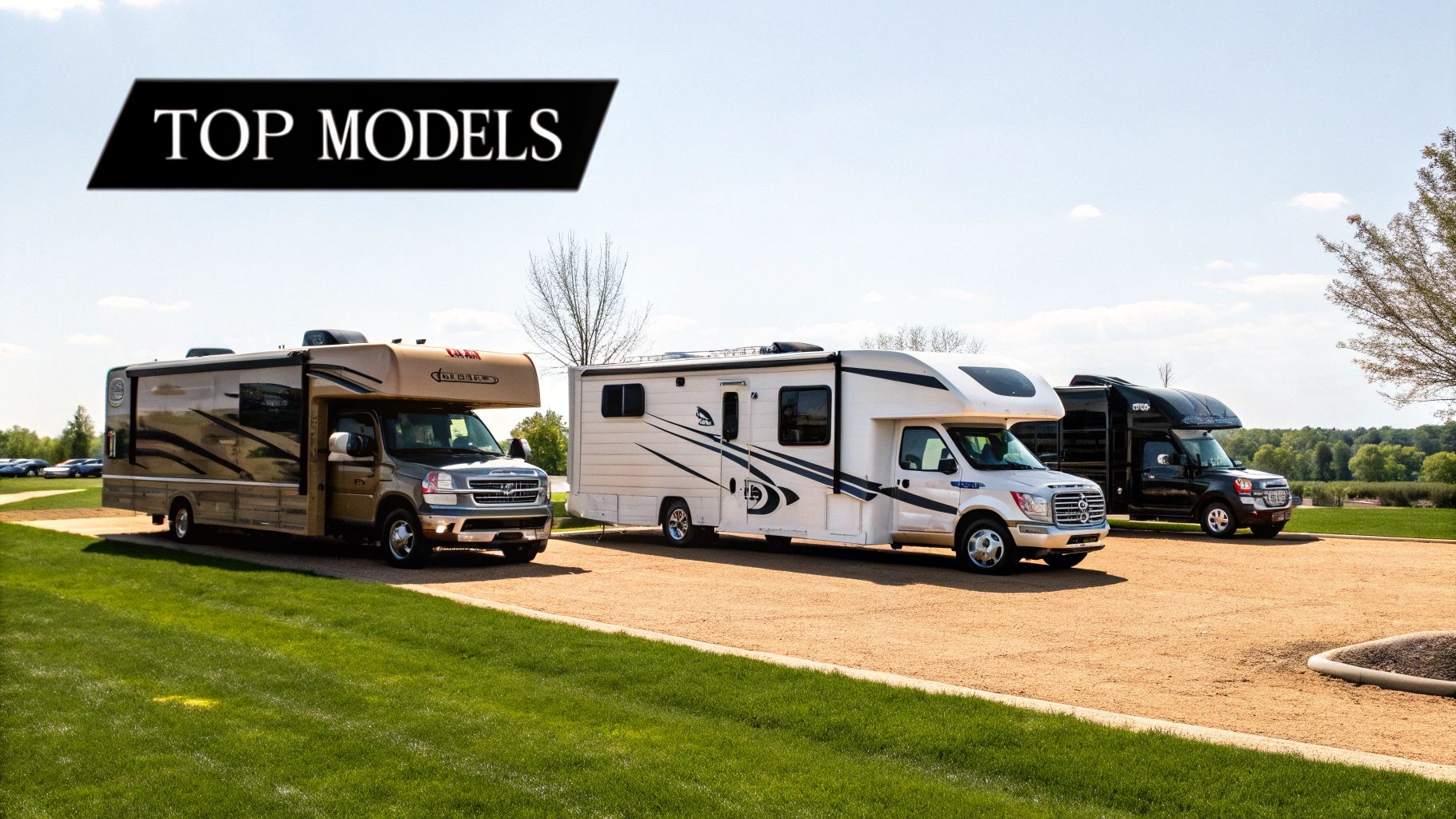
Knowing the specs is one thing, but seeing how they come together in a real motorhome is where it all clicks. The best motorhomes for full time living aren’t just the biggest or most expensive; they’re the ones that feel like they were built just for you and your travel style.
Let’s look at three very different models. Each one is a masterclass in its own niche, built for a specific kind of full-timer. This isn't just a list of popular rigs; it's a deep dive into how specific design choices—like a residential-style kitchen or a beefy off-grid power system—make life on the road better. Whether you’re a couple chasing luxury, a family seeking adventure, or a solo explorer going off-grid, there's a rig out there designed for your journey.
The demand for these specialized motorhomes is exploding. The U.S. is the world's biggest market, with lifestyle shifts pushing more people to hit the road. States like California ($549.8 million), Texas ($424.2 million), and Florida ($306.2 million) are leading the charge in sales. And it’s not just for retirees anymore. With 61% of RV owners now between 18 and 54, manufacturers are building rigs for a whole new generation of full-timers. You can dig deeper into these RV ownership trends and market insights to see just how much the landscape has changed.
For those who see full-time living as an upgrade, not a compromise, the Newmar Dutch Star is the gold standard. This Class A isn’t just a vehicle; it's a luxury condo on wheels, designed from the ground up for comfortable, long-term living. It truly shines when you plan to stay put for a while.
What makes the Dutch Star a full-timer's dream is its obsessive focus on the details of daily life. These aren't just flashy features; they solve real problems.
- Comfort Drive™ Steering: This proprietary tech is a game-changer. It actively fights crosswinds and road crowning, making a 40-foot coach feel surprisingly easy to handle on long-haul days.
- Residential Amenities: You’ll find full-size refrigerators, induction cooktops, and solid-surface countertops. This is a kitchen meant for actual cooking, not just reheating leftovers.
- Superior Insulation: Newmar is legendary for its insulation. This means a quieter cabin and rock-steady interior temperatures, so you're not constantly blasting the heat or AC.
The Dutch Star is for the full-timer who wants a stable, luxurious home base. If your plan involves spending weeks or months in one spot enjoying all the comforts of a high-end home, this is your rig.
When you put a family on the road, you have two non-negotiable needs: space and durability. The Thor Magnitude, a Super C built on a powerhouse Ford F-550 or F-600 chassis, delivers on both fronts. It blends the sleeping capacity of a Class C with the raw power and towing muscle of a heavy-duty truck.
The genius of the Magnitude is in its family-first floor plans. It’s not about just adding more beds; it’s about creating separate, functional zones so everyone isn't on top of each other.
Key Family-Friendly Features:
- Bunkhouse Models: Dedicated bunk beds are a sanity-saver. They give the kids their own turf and keep the main living area from becoming a nightly bedroom conversion project.
- Massive Towing Capacity: With the power to pull up to 12,000 pounds, you can easily bring along a car for running errands and exploring locally without tearing down camp.
- Durable Build: The truck chassis is built to take a beating, easily handling the weight of a full-time family and giving you the confidence to explore those less-than-perfect roads.
This Super C hits the sweet spot. It gives a family room to breathe while being rugged enough to chase adventures that would intimidate a larger, less nimble Class A. It’s a memory-making machine.
For the solo traveler or couple whose life revolves around the mantra "go anywhere, do anything," the Winnebago Revel is the undisputed king. This Class B is built on the legendary Mercedes-Benz Sprinter chassis and is engineered for one purpose: off-grid freedom. The Revel isn't about luxury; it’s an adventure tool.
Every inch of its design is a lesson in smart, functional minimalism. There's no wasted space here—everything serves a purpose.
Off-Grid Essentials:
- On-Demand 4x4 System: This is your ticket to adventure. It gives you the grip to confidently tackle dirt roads, snowy passes, and sandy trails that would leave other RVs stranded.
- Robust Electrical System: It comes standard with a high-capacity lithium battery bank and solar, giving you all the power you need for laptops and gear without ever needing a hookup.
- Flexible Gear Garage: The rear power-lift bed is brilliant. It rises to the ceiling, opening up a massive "garage" below for bikes, kayaks, or whatever gear your adventures require.
The Revel is the ultimate rig for the modern explorer who works from anywhere and plays everywhere else. It's one of the best motorhomes for full time living if your definition of "home" changes with the sunset.
That shiny new motorhome's price tag? It's just the first page of your financial story on the road. The real cost of living this life full-time is woven into the day-to-day expenses that will become your new normal. Getting a firm grip on these costs is the single most important thing you can do to make this lifestyle sustainable and, more importantly, enjoyable.
Think of the motorhome purchase as your ticket to the show. The main event is managing all the operational costs—everything from the gas pump to the insurance premium and that inevitable flat tire in the middle of nowhere. A solid, realistic budget isn't just a spreadsheet; it's your roadmap to financial peace of mind.
And it's a lifestyle that's catching on. It’s estimated that around 1 million Americans now call an RV their full-time home, which is a huge vote of confidence in its appeal. The demographic is also shifting, with 46% of new owners now between 35 and 54 years old. This has thankfully pushed manufacturers to create more practical rigs built for the long haul. You can dive deeper into these trends by checking out the latest RV shipment and sales trends.
Once you're past the initial RV payment, four major expenses will consistently show up in your monthly budget. These are the non-negotiables you absolutely have to plan for.
- Fuel: This is your biggest wild card. A massive Class A diesel pusher might guzzle fuel at 6-10 MPG, while a nimble Class B van can sip it at 18-25 MPG. How you travel makes all the difference—moving every few days will send this cost soaring, while staying put for weeks at a time will keep it grounded.
- Campsite Fees: Your nightly "rent" can be anything from completely free (if you're boondocking on public land) to over $100 a night for a spot at a high-end resort with a pool and pickleball courts. A good average to plan for is $30-$60 per night for a standard RV park with water, electric, and sewer hookups.
- Insurance: This isn't your average car insurance. Full-time RV insurance is a special hybrid policy. It has to cover your rig like a vehicle when you're driving, but it also needs liability coverage that acts like a homeowner's policy when you're parked, protecting you and your belongings.
- Maintenance and Repairs: This is the budget-buster that catches so many new full-timers by surprise. An RV is essentially a house experiencing a constant earthquake. Things will break. A dedicated savings fund for routine maintenance (oil changes, roof seals) and unexpected repairs (like a water heater that suddenly quits) is non-negotiable.
Making a budget isn't about telling yourself "no." It's about giving yourself the power to say "yes" to the adventure without the constant worry of running out of money. The best way to start is by breaking down your spending into clear categories.
Your budget is the single most important tool for a successful life on the road. It turns wishful thinking into a concrete plan, preventing financial stress from derailing your adventure before it truly begins.
The table below gives you a ballpark idea of what to expect for monthly costs. These are just estimates, of course. Your personal numbers will depend entirely on your rig, how fast you travel, and the kind of lifestyle you want to live. Use these as a starting point to build your own budget.
A breakdown of potential monthly expenses to help you budget for life on the road, categorized by motorhome class.
| Expense Category |
Class A Estimate |
Class C Estimate |
Class B Estimate |
| RV Payment |
$800 - $2,500+ |
$600 - $1,500 |
$500 - $1,200 |
| Insurance |
$150 - $300 |
$100 - $250 |
$80 - $200 |
| Fuel |
$400 - $1,000+ |
$300 - $800 |
$200 - $500 |
| Campsite Fees |
$600 - $1,500 |
$600 - $1,500 |
$600 - $1,500 |
| Maintenance Fund |
$150 - $400 |
$100 - $300 |
$75 - $250 |
| Propane |
$30 - $60 |
$30 - $60 |
$20 - $50 |
Remember, these numbers focus on the core costs of owning and operating the motorhome. You'll still need to budget for groceries, cell phone bills, entertainment, and all the other parts of daily life.
Knowing how you'll cover these ongoing costs is just as important as figuring out the initial purchase. For more on that, take a look at our guide on how to finance an RV the smart way.
Deciding to live in a motorhome full-time is a massive step, and it's totally normal to have a million questions swirling around. Getting real-world answers is the best way to feel confident and turn that dream into a solid plan. Let's tackle some of the most common—and most important—questions people ask when they're gearing up for life on the road.
We'll get into everything from the classic mistakes people make when buying their first rig to the nitty-gritty of getting your mail and setting up a legal home base. Think of this as the final piece of the puzzle, giving you the clarity you need to hit the road.
Hands down, the single biggest mistake is falling in love with a pretty interior while completely ignoring the floor plan's practicality and storage. It's so easy to be impressed by a residential-style kitchen or a massive picture window. But if you can't get to the bathroom when the slides are in, or there's nowhere to actually store your food, you're going to be miserable in a matter of weeks.
Another huge error is underestimating the need for four-season capabilities. So many new full-timers don't realize just how cold it can get, even in the southern states during winter. A motorhome without good insulation and, crucially, heated holding tanks, can quickly lead to a trip-ending disaster of frozen, burst pipes.
Always, always prioritize function over fashion. The best

