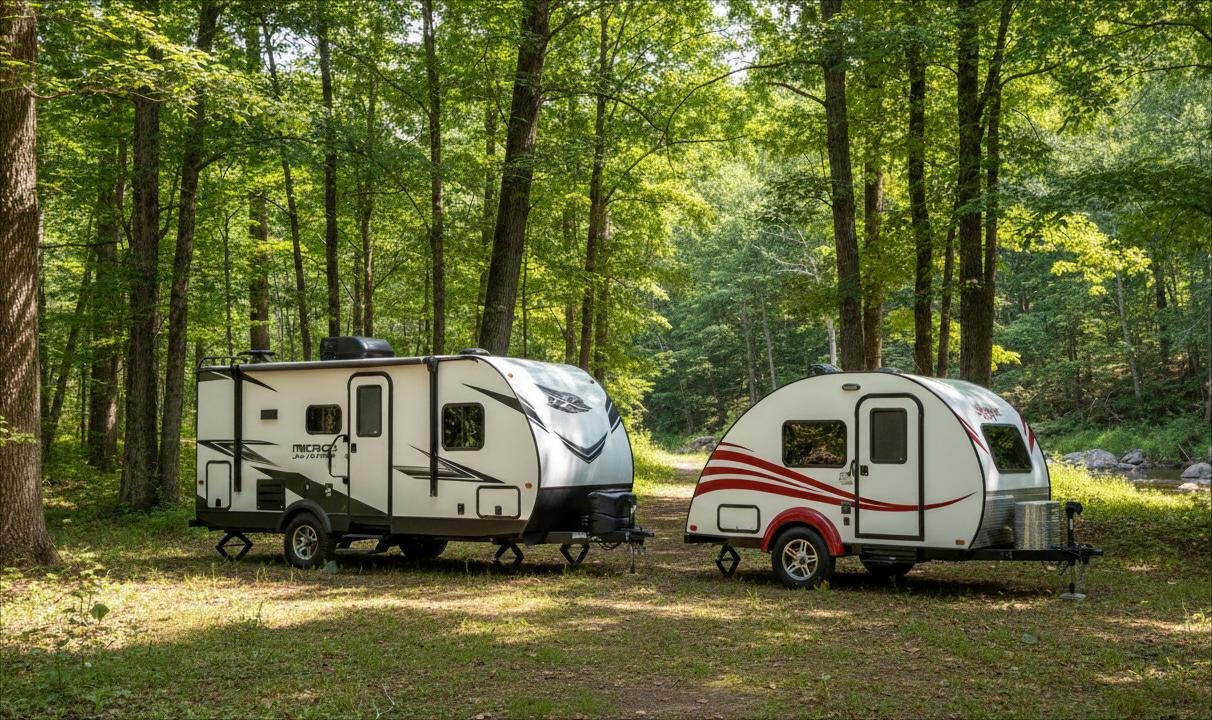
So, what's the best travel trailer for a beginner? It's the one that safely hitches to your tow vehicle, doesn't drain your bank account, and has a layout that makes you excited to hit the road.
There's no single "best" model out there. The right one for you will feel like a comfortable home-on-wheels, not a source of stress. This guide will walk you through finding that perfect match.
Welcome to the adventure! I know that picking your first travel trailer can feel like a huge decision, but it's the key that unlocks a whole new way to travel and explore.
Unlike a motorhome, where the engine and living space are one unit, a travel trailer is a camper you pull behind your everyday vehicle. That one simple difference is exactly why they are the undisputed champs for newcomers to RVing.
This setup gives you incredible freedom. Once you arrive at your campsite, you can unhitch the trailer and your truck or SUV is free for everything else—running to the store, exploring a winding mountain road, or heading to a local trailhead. That "drop-and-go" convenience is a total game-changer.
The numbers don't lie. Travel trailers are, by a long shot, the most popular type of RV in North America, making up over 70% of all RV shipments in early 2025. This isn't a new trend; it's a pattern driven by some very real advantages for first-time buyers.
So, why are travel trailers such a fantastic starting point for so many people? It really boils down to three things:
-
Affordability: They offer a much friendlier price tag compared to motorized RVs. This makes getting started in the RV world a reality for more people without requiring a massive financial leap.
-
Towing Ease: You probably don't need a new truck. Many travel trailers are light enough to be pulled by the mid-size SUVs and pickups that families already have in the driveway.
-
Endless Variety: From tiny teardrop trailers for two to spacious bunkhouse models for the whole family, the market is flooded with options. This huge selection means you're almost guaranteed to find a floorplan that feels just right.
For a great rundown of everything else you'll need for your first trip, check out this guide on essential camping gear for beginners. It's a lifesaver for avoiding those "oops, I forgot that" moments.
To put it all in perspective, here's a quick look at why these rigs are the top choice for those just starting their RV journey.
| Attribute |
Advantage for Beginners |
Typical Cost Range (New) |
| Affordability |
Lower upfront cost makes RV ownership accessible. |
$20,000 - $60,000 |
| Towing |
Can often be towed by existing SUVs or trucks. |
N/A |
| Flexibility |
Unhitch at camp and use your vehicle for exploring. |
N/A |
| Variety |
Massive selection of sizes and floorplans. |
Varies by model |
As you can see, travel trailers hit that sweet spot of value, convenience, and choice that makes them the perfect launchpad into a lifetime of adventure.
Before you even think about swooning over a travel trailer's gorgeous kitchen or perfect bunkhouse, we have to talk about the single most important number in your entire search: your vehicle's tow capacity. This isn't just a friendly suggestion—it’s the absolute limit of what your vehicle can safely pull.
Getting this wrong is the biggest and most common mistake first-timers make, and the consequences can be serious.
Think of it this way: your tow vehicle is a weightlifter, and the trailer is the barbell. You wouldn't ask a lifter to bench press 100 pounds more than their max. The same principle applies here. Overloading your truck or SUV can lead to everything from a fried transmission and failed brakes to terrifying sway on the highway.
So, how do you figure out how much weight your "lifter" can handle? Luckily, your vehicle's manufacturer has already done the heavy lifting and published the numbers.
You can usually find this critical info in a few places:
-
Your Owner's Manual: This is your best friend. It often has detailed charts that break down towing capacity by your specific engine, axle ratio, and other options.
-
The Manufacturer's Website: A quick search for a towing guide for your specific year and model should pull it right up.
-
The Driver's Side Door Jamb: Look for a sticker labeled "Tire and Loading Information" or something similar. This is gold.
This sticker has a bunch of acronyms, but you'll want to pay attention to the Gross Vehicle Weight Rating (GVWR) of your tow vehicle. This tells you the maximum your vehicle can weigh, including you, your family, your dog, and all your luggage.
Key Takeaway: Your actual, real-world towing capacity isn't just one number. It's the manufacturer's max tow rating minus the weight of every person, pet, and piece of cargo inside your vehicle.
As you start browsing travel trailers, you'll see a spec called "Unloaded Vehicle Weight" (UVW), often called "dry weight." This is simply the weight of the trailer as it left the factory—totally empty.
This number is a classic trap for beginners because nobody camps in an empty trailer. Once you add water, propane, batteries, food, clothes, and all your gear, the real-world weight shoots up fast.
This infographic provides a great visual for how to approach this, starting with what your vehicle can handle.
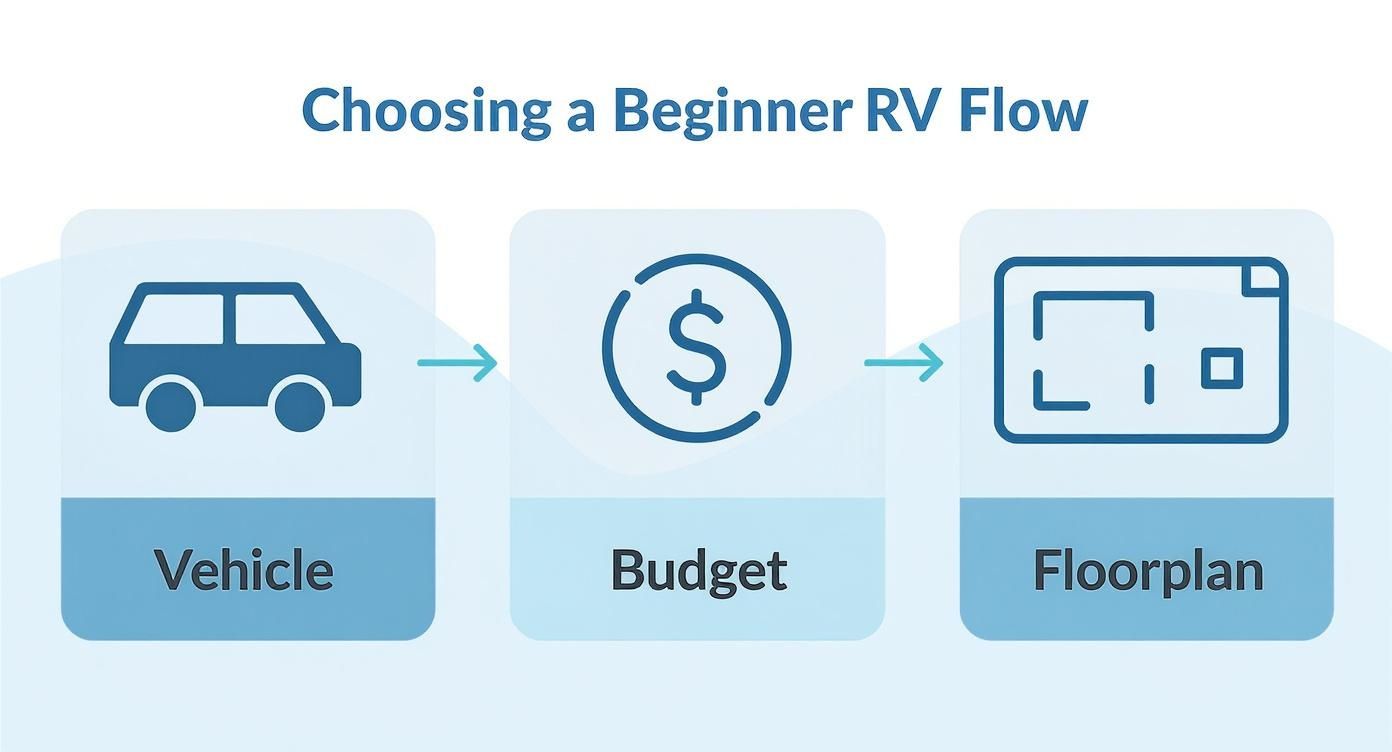
As you can see, matching your vehicle to a trailer is the very first step, long before you start comparing floorplans.
Your real goal is to make sure the trailer's Gross Vehicle Weight Rating (GVWR)—its absolute maximum loaded weight—is well under your vehicle's tow capacity. A safe rule of thumb is to keep the trailer's GVWR at or below 80% of your vehicle’s max rating. This buffer gives you a crucial safety margin for climbing hills, dealing with crosswinds, or making a sudden stop.
If you find your current vehicle isn't up to the task, our guide to the best truck for towing a travel trailer can point you in the right direction. While you're at it, it's interesting to see how new technologies, like those covered in a guide to an electric vehicle road trip, are changing the towing landscape. But no matter what you drive, getting your weight calculations right is the non-negotiable first step to finding the perfect travel trailer.
You’ve figured out your tow capacity. Think of that number as your budget—it tells you exactly what you can realistically and safely "afford" to pull. Now, let's translate that number into the real world of travel trailers and find one that fits both your vehicle and your adventure plans.
For someone just getting started, the world of travel trailers can seem overwhelming, but it really boils down to a few main categories. Each one is built for a different kind of camper, and getting to know them is the first step toward picking the right one.
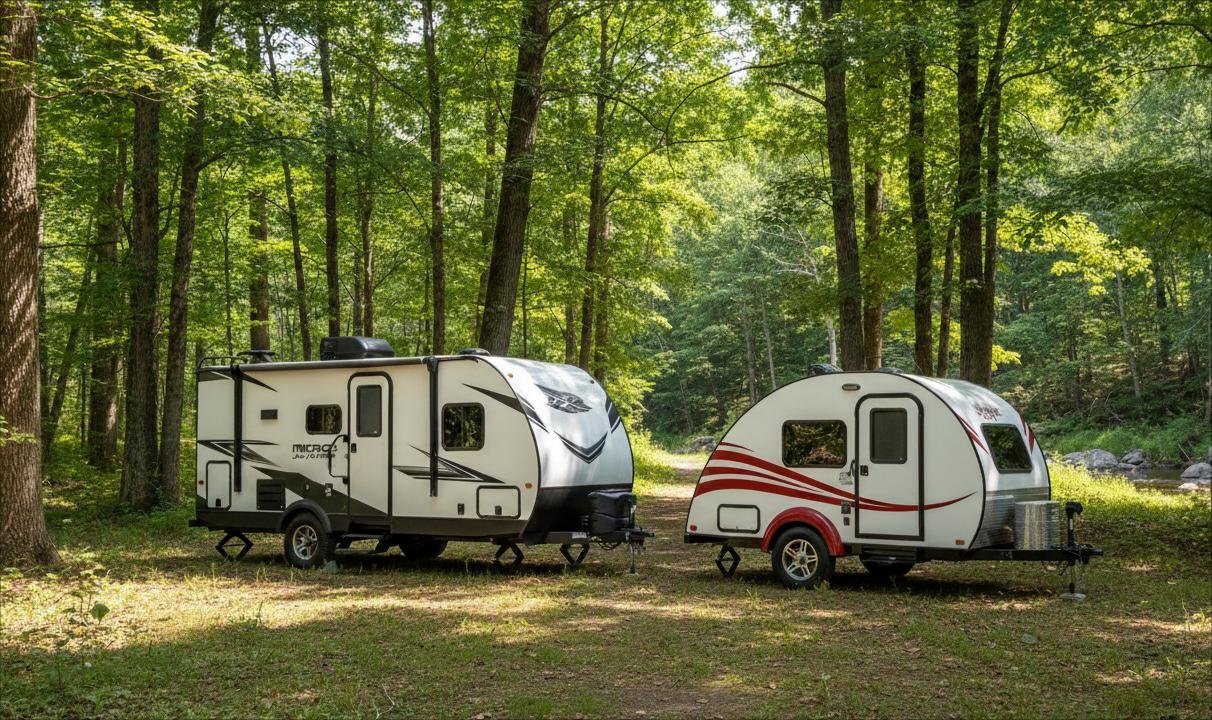
These are basically a cozy, hard-sided tent on wheels. Teardrop trailers are the smallest and lightest kids on the block, often weighing under 2,000 pounds. Their classic, aerodynamic shape makes them a breeze to tow, and you can often pull one with a larger sedan or a small SUV you already own.
So, who are they for?
-
Solo travelers or couples who live for the outdoors and just need a comfortable bed at night.
-
Weekend warriors who want to get up and go without a lot of fuss.
-
Minimalists who prefer simplicity over the bells and whistles of a big rig.
The trade-off here is pretty obvious: space. Most teardrops consist of a sleeping cabin and an outdoor kitchen galley that opens up at the back. You won’t find an indoor bathroom, so you’ll be relying on campground facilities. But if you want something simple that’s incredibly easy to handle, you can't go wrong with a teardrop.
Stepping up a notch, we find the single-axle travel trailer—a category that hits the sweet spot for so many beginners. They usually run from 15 to 22 feet long and weigh between 2,500 and 4,500 pounds, packing a ton of amenities into a very manageable footprint. Most mid-size SUVs and standard pickup trucks can handle these with ease.
Single-axle trailers offer the perfect balance for most first-time buyers. They’re big enough to give you creature comforts like a kitchen and bathroom but small enough to stay nimble in tight state park campsites where bigger rigs can’t go.
This is where you start to get a real indoor living space. You’ll often find a small dinette for meals, a functional kitchen, and a wet or dry bath. It's a huge upgrade in comfort for longer trips without feeling intimidating to tow down the highway.
If you’ve got kids in tow, a small bunkhouse trailer is like having your own private family cabin on the go. These models, typically between 20 and 26 feet long with a GVWR of 4,500 to 6,500 pounds, are cleverly designed to maximize sleeping room. By including dedicated bunk beds—which kids absolutely love—they free up the main living area for everyone else.
The explosion in RVing proves how much families love this lifestyle. By 2021, a whopping 11.2 million households owned an RV, which is a 62% jump from 2001. Travel trailers are the gateway for most of these new owners, mainly because they’re affordable. A lightweight trailer often runs between $20,000 and $40,000, a world away from the cost of a big motorhome.
This affordability is why travel trailers dominate the market, making up over two-thirds of sales even when overall RV numbers dipped in 2024. You can get a better sense of these market dynamics by reviewing current RV industry statistics.
Deciding between these different types really comes down to how you picture yourself camping. A smaller trailer is a dream to park and tow, but a bit more elbow room is a lifesaver on a rainy day.
To help you visualize the differences, here’s a quick comparison table.
| Trailer Type |
Typical Length |
Typical Dry Weight |
Best For |
Example Tow Vehicle |
| Teardrop/Micro |
10-14 feet |
1,000-2,000 lbs |
Solo/Couples, Weekends |
Small SUV, Crossover |
| Single-Axle |
15-22 feet |
2,500-4,500 lbs |
Couples, Small Families |
Mid-Size SUV, Light Truck |
| Small Bunkhouse |
20-26 feet |
4,500-6,500 lbs |
Families with Kids |
Half-Ton Truck, Large SUV |
Once you’re honest about how you’ll actually use your camper—and who you’ll be sharing it with—you can narrow your search from hundreds of options to just a few that are the perfect fit. For a deeper dive into floorplans and dimensions, our complete guide to RV trailer sizes is a great place to go next.
If towing capacity is the nuts and bolts, picking a floorplan is all about the feel. This is where your hunt for the right travel trailer gets personal. A layout is so much more than a blueprint on a website—it’s the space where you’ll actually live, cook, sleep, and unwind. Getting this right is what makes a camper feel like a cozy home on wheels instead of a frustratingly cramped box.
Don't just scroll through photos online. The best way to vet a floorplan is to mentally walk through your daily routines. Where are you going to brew that first cup of coffee on a chilly morning? If it’s pouring rain outside, is there a comfortable spot to read a book that isn’t just perching on the edge of the bed? Where can the dog's water bowl go so you aren't constantly tripping over it?
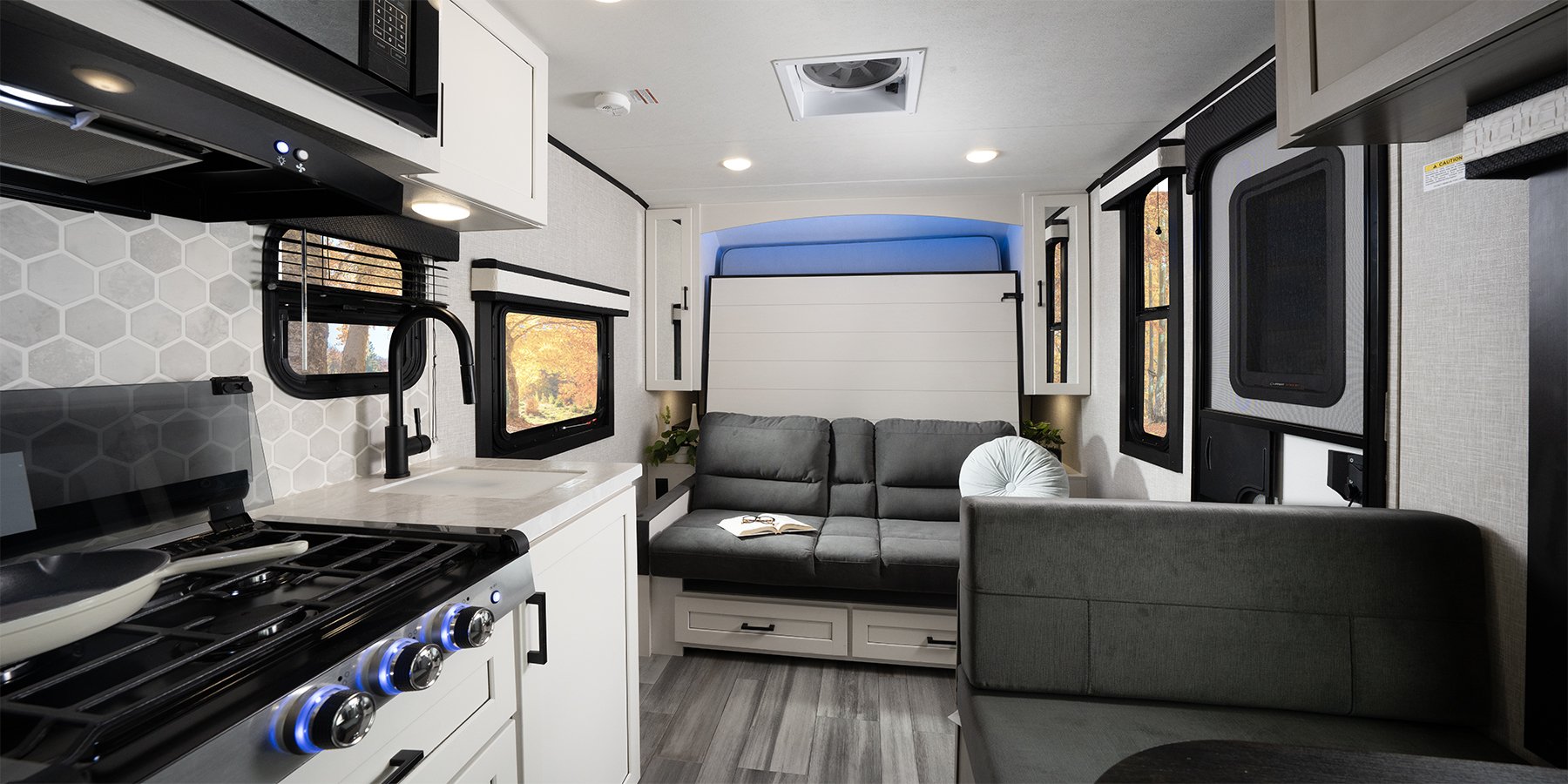
You don't need to become an expert on every layout ever designed. As a beginner, you'll find that a few popular, time-tested layouts consistently hit the mark for new RVers. They’ve mastered the art of balancing space, function, and comfort. Let's look at three of the most common ones you’ll see.
-
The Rear Kitchen: This setup puts the kitchen all the way at the back of the trailer. It's a fantastic design because it naturally separates the busy cooking area from the main living and sleeping quarters. This usually opens up the central part of the trailer, making it feel more like a small apartment.
-
The Murphy Bed: A true space-saving champion. A Murphy bed floorplan has a primary bed that folds up against the front wall during the day. This one simple move magically turns your bedroom into a living room, giving you a full-size sofa and a surprising amount of floor space in what might otherwise be a tight trailer.
-
The Bunkhouse: If you have kids, this is practically a must-have. Bunkhouse models dedicate a specific area—almost always in the back—to bunk beds. This gives the kids their own zone, which is a lifesaver for keeping the peace and preventing the main living area from turning into a chaotic mess of toys and camping gear.
Let's be real: no floorplan is perfect. Every single one comes with its own set of compromises, and being honest about them is key to picking a trailer you'll love for years to come. A smart choice means knowing exactly what you’re gaining and what you’re giving up.
For instance, that awesome Murphy bed is a game-changer for daytime living, but it means you have to make your bed and fold it away every single morning. If you’re not a "make the bed" kind of person, that daily chore could get old, fast.
A rear kitchen offers that great separation, but it often means the main entry door opens right into your lounge area. That’s not always ideal when you're tracking in mud after a long hike. And while the bunkhouse is a non-negotiable for most families, dedicating all that square footage to beds inevitably shrinks the shared living and kitchen space.
Your ideal floorplan isn't the one that looks best on paper—it's the one that best supports the rhythm of your daily life on the road. The goal is to minimize daily friction and maximize comfort.
Reading about layouts and watching 3D tours can only tell you so much. The single most powerful thing you can do is go to a dealership and physically walk through as many models as you can.
Once you’re inside, don’t just stand there and look around. Go through the motions of your daily routine.
Pretend to make breakfast. Is there enough counter space to chop vegetables? Do you have to squeeze sideways past the dinette to get to the fridge? Go into the bathroom, sit on the toilet, and shut the door. Do your knees hit the wall? Lie down on the bed. Is it long enough? Can you get out of it without having to awkwardly climb over your partner?
This process might feel a little silly in the middle of a showroom, but I promise you, it will uncover the functional flaws you’d never catch online. It’s how you find out if a trailer truly works for you, ensuring the one you bring home feels like it was designed just for your adventures.
It's easy to get starry-eyed when you walk through a brand-new travel trailer. Dealerships are masters at showing off the flashy stuff—the solar panels, the gleaming outdoor kitchens, the massive TVs. They paint a picture of effortless luxury. But learning to separate the absolute must-haves from the cool-but-not-critical upgrades is the key to getting a great first trailer without overspending.
Think about it like buying a car. These days, air conditioning and power windows are pretty standard. They're essentials. A heated steering wheel and a 12-speaker sound system? Awesome, but you can definitely live without them. Your travel trailer works the same way.
These are the core systems that make a travel trailer a safe and comfortable shelter. Don't skimp here. These features are the foundation of every good camping trip, so make sure they are solid.
-
A Solid Brake System: By law, your travel trailer needs its own electric brakes that sync up with your tow vehicle. This isn't just a feature; it's arguably the most important piece of safety equipment you have. Make sure it's in perfect working order.
-
A Working Water Heater: Trust me, a hot shower after a long day on the trail is one of camping's greatest pleasures. Whether it's a standard 6-gallon tank or a fancy tankless model, a reliable water heater is essential for basic comfort and hygiene.
-
Decent Insulation: A trailer's ability to stay warm when it's cool and cool when it's hot is a game-changer. Good insulation, often found in "thermal" or "all-season" packages, makes every trip more comfortable and extends your camping season.
Getting these basics right means your first RV will be a reliable home-away-from-home, not a rolling headache.
Okay, now for the fun stuff. These features are fantastic and can seriously upgrade your camping experience, but they also add weight, cost, and more things that could potentially break. It's smart to pause and ask if you need them from day one.
Here’s a bit of veteran advice: You can add most popular upgrades later. Start with a simpler, more affordable trailer. Figure out how you like to camp first, then you can invest in the add-ons you'll actually use.
A classic example is a slide-out. With the push of a button, it dramatically expands your living space, making a small trailer feel massive. The trade-off? It adds hundreds of pounds, introduces complex moving parts that need maintenance, and can make it harder to fit into tighter, more scenic campsites.
Another popular one is the outdoor kitchen. It’s incredibly convenient for grilling outside, no doubt. But it also adds weight and cost. For your first few seasons, a portable grill on a folding table gets the job done for a tiny fraction of the price. Other common upgrades to think twice about at first are things like power awnings, full solar packages, and high-end entertainment systems.
This focus on core functionality is a worldwide trend. The travel trailer market is projected to reach $113.22 billion by 2025, and while North America is the biggest market, European builders are leading the charge on clever, efficient designs perfect for beginners. They prioritize smart layouts over unnecessary bells and whistles. You can read more about the growing global travel trailer market and its evolving trends.
Alright, you’ve done the heavy lifting. You know your tow capacity, you’ve pinpointed the right size, and you have a floorplan in mind that already feels like home. Now for the big question that ties it all together: should you buy a shiny new travel trailer or a pre-loved one?
There's no single "right" answer here. It really boils down to your budget, risk tolerance, and what you value most. Let's break down the pros and cons of each path.
Buying a brand-new trailer is an incredible experience. You get that unmistakable "new RV smell," the latest tech and gadgets, and a full factory warranty to back you up. There’s a certain peace of mind that comes with knowing you're the very first person to cook a meal in the kitchen or sleep in the bed. It's a clean slate for your adventures.
Of course, that fresh-off-the-lot feeling comes at a price. Just like a new car, a new RV depreciates fast. We're talking a potential drop of 20% or more in value the second you tow it home. You're paying a premium for that pristine condition and warranty.
On the other hand, a used travel trailer can be a fantastic deal. The previous owner has already taken the biggest depreciation hit, which means you can often get a whole lot more trailer for your money. You might find a lightly-used, well-maintained model with more features or a better layout than you could afford new.
So, what's the catch? With a used trailer, you're the warranty. It's on you to be the detective and give it a thorough inspection. There’s a bit more risk, for sure, but the savings can be huge—freeing up thousands of dollars for campsites, gear, and fuel for your trips. For a deeper dive into the numbers, check out our ultimate buying guide on new vs. used RVs to help you weigh the financial side.
Whether you're looking at a used unit on a dealer's lot or in a private seller's driveway, a meticulous inspection is your best friend. Don't let excitement rush you through this part. A few extra minutes of detective work can save you from a world of headaches and hidden repair bills.
Water is the number one enemy of any RV. Your primary mission during an inspection is to hunt for any signs of past or present water damage, as it can compromise the trailer's entire structure.
Here's what you need to focus on:
-
Hunt for Water Damage: Look everywhere for signs of leaks. Check the ceilings, inside cabinets, and along the floors for discoloration, soft spots, or that telltale musty smell. Press firmly on the walls around windows and vents—any "spongy" feeling is a massive red flag.
-
Check the Tires: Don't just look at the tread. Find the four-digit date code on the tire's sidewall. RV tires often age out before they wear out and should be replaced every five to seven years. Old, cracked tires are a blowout waiting to happen on the highway.
-
Test Every Single Appliance: Don't just take the seller's word for it. Ask them to plug the trailer into power and turn on the propane. Fire up the furnace, the A/C, the water heater, the fridge, and the stove. Make sure everything works exactly as it should.
-
Inspect the Roof and Seals: Grab a ladder and get a good look at the roof. The sealant around every vent, seam, and skylight is your trailer's first line of defense against rain. Look for any cracks, gaps, or peeling caulk that could let water sneak in.
Armed with this checklist, you can confidently size up any used trailer. You'll be able to tell if you're looking at a great deal or a money pit, ensuring your first travel trailer is one you'll love for many miles to come.
Even after you've narrowed down your choices, a few lingering questions always seem to surface right before you'm ready to buy. Let's tackle some of the most common ones so you can move forward with total confidence.
If you want the best price, timing is everything. Most people start shopping for RVs when the weather gets nice, but the smart money is on buying during the off-season.
Dealerships are buzzing with customers from March to July. During this peak season, demand is high, inventory flies off the lot, and prices are at their stiffest. You'll see the widest selection of brand-new models, but you'll definitely pay a premium for it.
The real sweet spot for a great deal is in the fall and winter, usually from October to February. Dealers are motivated to clear out last year's models to make space for the new ones, which gives you a lot more negotiating power.
Here’s a quick breakdown of the seasons:
-
Fall (September-November): This is prime time for "model year-end" sales events. You can snag a brand-new trailer at a significant discount.
-
Winter (December-February): The slowest time of year for sales. Selection might be a bit thinner, but your bargaining power is at its peak.
-
RV Shows (Often in Winter/Spring): These events put a ton of dealers under one roof. The competition can lead to some fantastic "show-only" pricing and special financing offers.
For almost everyone buying their first travel trailer, the answer is a simple "no." In most states, you don't need a special license, like a Commercial Driver's License (CDL), to pull a personal camper.
The rules are almost always based on weight. The magic number to know is the Gross Combination Weight Rating (GCWR)—that's the total maximum weight of your truck and trailer combined. While it varies a bit by state, you typically only need a special license if your entire rig tops 26,000 pounds.
Your average setup, like a half-ton pickup towing a 6,000-pound trailer, won't even come close to that limit. It's always a good idea to double-check your state's DMV website just to be sure, but most beginners are well in the clear.
How Much Should I Budget for Maintenance?
This is a big one. Putting money aside for upkeep is the key to a stress-free ownership experience. A solid rule of thumb is to budget 1-2% of the trailer’s purchase price per year for maintenance. So, for a $30,000 travel trailer, you should plan on setting aside $300 to $600 annually.
This isn't for surprise repairs; it's for the routine tasks that keep your RV in great shape and prevent small issues from turning into big, expensive problems.
Your yearly maintenance fund will likely cover things like:
-
Checking and Resealing Seams: You'll want to inspect the roof, windows, and corner seals every few months. A tube of sealant is cheap; water damage is not.
-
Tire Care: This includes checking tire pressure before every trip and keeping an eye out for wear and tear.
-
Winterizing: If you live in a cold climate, you have to protect your plumbing system from freezing and bursting.
-
Appliance Servicing: Making sure your water heater, furnace, and air conditioner are clean and working properly.
Factoring in these costs from day one makes owning a travel trailer a much more sustainable and enjoyable adventure.
Ready to find the perfect RV that fits your lifestyle and budget? At Searchshop