Finding the right RV, boat, or even a car for sale in Austin, TX, doesn't have to be a chore. The secret is knowing the local landscape and having the right tools to zero in on what you actually need, whether that's a reliable commuter or something for your weekend adventures on the lake or open road.
Let's get you pointed in the right direction for finding your next car, RV, or boat right here in Austin. The market is buzzing, thanks to the city's growth and a local culture that's all about blending city life with a love for the outdoors. Consider this your insider's guide to what you can expect when you start looking.
Think of the Austin vehicle market a bit like its famous food truck scene—it's incredibly diverse, a little competitive, and full of incredible finds if you know where to look. While you'll see plenty of commuter cars, the real excitement is in the huge selection of RVs built for a weekend escape to the Hill Country and boats ready for Lake Travis.
Austin's non-stop growth directly influences what vehicles are available and how much they cost. With so many people moving here, the demand for vehicles is high. This makes the hunt for lifestyle toys like boats and RVs a pretty fast-paced experience.
The Austin market is more than just sedans and SUVs. It’s a direct reflection of a lifestyle where people work hard and play harder, which keeps demand high for recreational vehicles that open up all of Texas for exploring.
This means you'll want to be strategic. It’s one thing to know what you want, but it's another to understand the local trends that give you an advantage. For example, you’ll see boat prices tick up right before summer hits, and RVs get more attention as we get closer to holiday travel seasons. Knowing these little shifts can help you time your purchase perfectly.
Before you even start scrolling through listings for that perfect boat or RV, take a moment to set a realistic budget. A vehicle's price tag in another city might not be the same here, simply because of the local demand. Don't forget to think about the total cost of ownership, too—maintaining a compact car is a whole different ballgame than keeping up a big RV or a powerful boat.
The boom in Austin's population has created a seriously competitive local vehicle market, affecting both new and used sales. This high demand has pushed dealerships to offer a wider variety of vehicles to fit every kind of lifestyle and budget, especially for recreational vehicles. You can get a deeper look at how Austin's growth is shaping the car market over at spyne.ai.
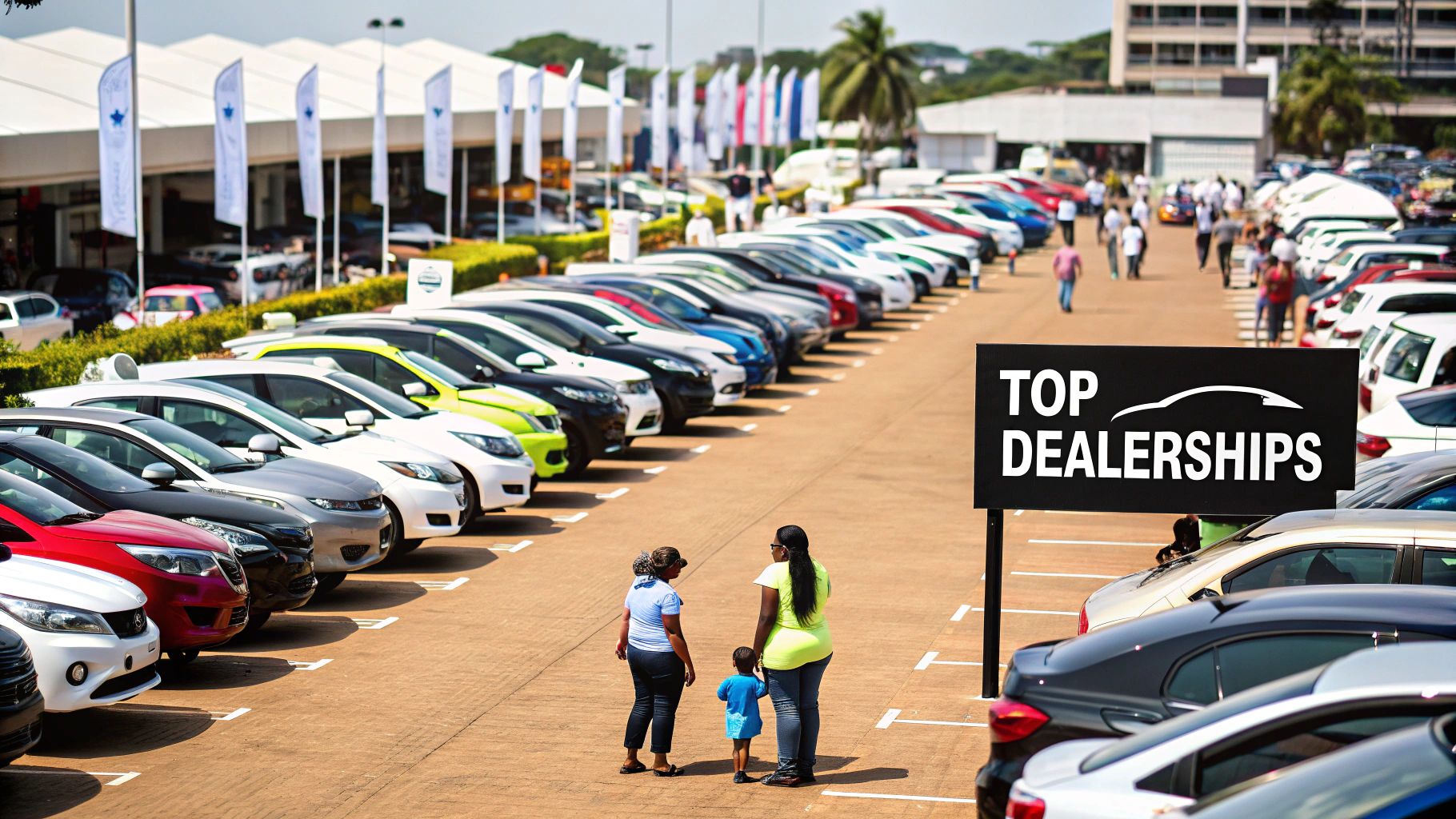
If you want to get a real edge when looking for RVs, boats, or cars for sale in Austin, TX, you have to start with the money side of things. Vehicle prices aren't just pulled out of a hat; they're constantly shifting based on local supply, what people are looking to buy, and even the time of year. Knowing how to read these signals is the key to finding a great deal instead of overpaying.
It's a lot like buying seasonal fruit at the grocery store. Strawberry prices plummet in the spring when they're everywhere, right? Well, vehicle prices work the same way, moving up and down with what's available and what's in high demand. This is especially noticeable with recreational vehicles like RVs and boats, which are a huge part of the Texas lifestyle.
The things that make prices swing in Austin are actually pretty predictable once you know what to watch for. The biggest one is local inventory. If a bunch of dealerships are sitting on too many motorhomes after the summer, you can bet they'll be more willing to cut you a deal. On the flip side, if every family in town is looking for the same type of wake boat and there aren't many around, prices will stay firm.
Seasonal demand is also a huge factor, particularly for those "fun" vehicles. When the weather starts to warm up, everyone gets the itch to hit Lake Travis or Lake Austin, and boat prices climb accordingly. It's the same story with RVs—prices tend to rise right before summer vacation and major holidays as families start planning their road trips.
Once you get a feel for these market dynamics, you stop being just another buyer and become a smart, strategic shopper. You’ll know a genuinely good deal on an RV or boat when you see one, spot an inflated price from a mile away, and time your purchase to save the most money.
This kind of insight puts you in a much stronger position when it's time to negotiate. You're no longer just haggling over the sticker price; you're discussing the vehicle's true value based on what's happening in the Austin market right now.
Honestly, one of the easiest ways to save a few bucks is to buy when nobody else is. Think about shopping for a boat in the dead of winter or late fall—most people aren't even thinking about being on the water then. You can also find better prices on RVs in the off-season, like late winter, before the vacation rush really kicks in.
Going against the grain like this gives you a lot more bargaining power. After a few years of high prices, the Austin market has started to cool off, which is great news for buyers. We saw used car prices drop quite a bit through 2023, following a national trend.
By November 2023, things looked much better for shoppers:
- Sedan prices had fallen by about 15.6%.
- Crossovers were down 9.9%.
- Even pickup trucks saw a small 1% decrease.
This shift happened because inventory levels finally started to recover, giving buyers more options and creating a much healthier market. You can see a great video breakdown of these Austin market price trends on YouTube.
Keeping these trends in mind will give you the confidence you need when you're browsing all the different cars for sale in Austin TX. It helps you find real value and make a smart buy that works for your life and your wallet.
Choosing the right vehicle in Austin is about so much more than getting from A to B. It's about finding the key that unlocks the life you want to live here. The "perfect" vehicle isn't always the fastest or the fanciest; it's the one that just fits—whether you're navigating downtown traffic, launching a boat on Lake Travis, or camping out in the Hill Country.
Think of your vehicle as a partner in crime for all your activities. A zippy little sedan is a dream for commuting from South Austin to the Domain, but it's not going to do you much good when you want to haul the family and a cooler out on the water. This is where you have to get real about what you need beyond the daily grind. Once you have that figured out, your search for cars for sale in Austin TX becomes laser-focused and way more productive.
First things first: map out your life. What does a typical week look like? What about an ideal weekend? Are you a die-hard city dweller, or do you get the itch to escape into nature every chance you get? The answer points you toward completely different types of vehicles. For a lot of Austinites, the real answer is "a little bit of both," which explains why versatile rides are so popular around here.
The numbers don't lie. Texas has a serious love affair with vehicles that can do it all. Out of 24.92 million registered vehicles in the state, SUVs and pickups are king, making up 38.1% and 26.9% of the total, respectively. The trend is even more obvious with new car sales, where SUVs command a staggering 53.5% of the market. These stats show that Texans, and especially Austinites, want vehicles ready for both city streets and country roads. You can discover more insights about Texas vehicle trends and see the full breakdown for yourself.
Let's get practical and see how different vehicles fit the unique Austin lifestyles. Your choice here impacts your budget, your weekend plans, and even your parking stress levels.
Finding the right vehicle means matching it to how you actually live. Are you hitting the trails, the lake, or just the downtown happy hour spots? This table breaks down which types of vehicles are best suited for common Austin adventures.
| Lifestyle / Activity |
Recommended Vehicle Type |
Key Advantages |
| Daily Urban Commute |
Compact Sedan, Hybrid, or EV |
Excellent fuel economy for I-35 traffic, easy to park in tight spots like South Congress or downtown. |
| Weekend Hill Country Explorer |
SUV (Mid-size or Full-size) |
Ample cargo space for camping gear, better handling on unpaved roads, comfortable for longer drives. |
| Lake Travis Enthusiast |
Pickup Truck or Large SUV |
Essential towing capacity for boats, plenty of room for coolers, tubes, and lake day essentials. |
| Cross-Country Traveler |
RV or Camper Van |
A home on wheels for ultimate freedom, saves money on lodging for extended trips to Big Bend and beyond. |
| Boating & Fishing |
Pontoon, Ski Boat, or Fishing Boat |
The actual vessel for on-the-water fun. Requires a capable tow vehicle to get to the launch. |
Whether you’re looking for a primary vehicle, a weekend toy, or a combination of both, thinking in terms of lifestyle first will ensure you end up with something you truly love to use.
-
The Urban Explorer: If your world is contained within downtown, East Austin, and South Congress, a compact car, hybrid, or small SUV will be your best friend. You'll save a ton on gas in stop-and-go traffic and thank yourself every time you find a parking spot.
The Weekend Warrior: For those who live for trips to Enchanted Rock or Garner State Park, an SUV or a truck is practically a necessity. You need the space for your gear and the capability for roads that aren't perfectly paved.
The Lake Life Enthusiast: If your happy place is on Lake Travis or Lake Austin, you're shopping for more than just a car. You'll need a powerful truck or a large SUV with serious towing capacity to haul your boat.
Thinking about adding a boat or RV to your life? This image really puts the cost into perspective, showing just how much you can save by buying a used car.
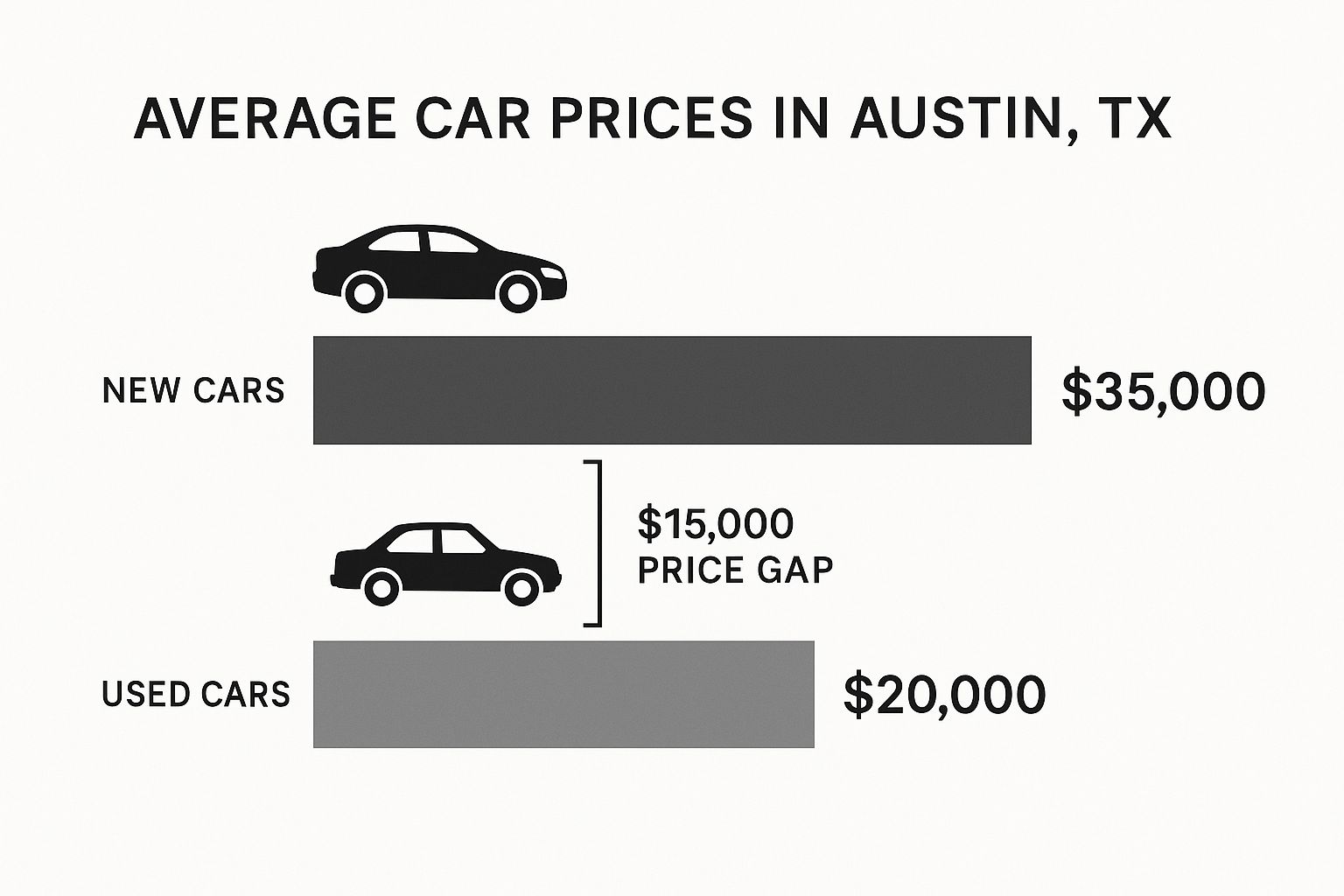
That $15,000 average price difference between new and used cars is huge. It's often the exact amount of budget you need to make that dream of owning a boat or an RV a reality.
- The Cross-Country Adventurer: For the ultimate wanderlust, nothing beats an RV. It’s a huge step up, turning your vehicle into a mobile basecamp. It's a major investment, but it unlocks a level of freedom and travel that a car just can't offer.
By defining your primary lifestyle—be it urban commuting, weekend getaways, lake trips, or long-haul travel—you can filter out 90% of the listings that don't fit. This focus saves you time and ensures the vehicles you do consider are genuinely right for you.
Alright, you've done your homework and have a good idea of what kind of RV or boat fits your life. Now for the fun part: making it yours. This is where the rubber meets the road, and we'll walk you through how to inspect, test drive, and seal the deal on a boat, RV, or car right here in Austin.
Having a solid process is your best defense against buyer's remorse. It takes the guesswork out of the equation and helps you avoid the common traps, especially when you're looking at something more complex like a motorhome or a boat. Let's break it down.
When you find a few promising cars for sale in Austin TX, that first in-person look is your opportunity to catch deal-breakers before you get too invested. For an RV or boat, you have to put on a different hat than you would for a regular car.
Think of an RV or a boat as a mobile home. You wouldn’t buy a house without checking the plumbing and electricity, right? Same principle applies here.
-
For RVs: Don't just focus on the engine. You need to test every single appliance—the fridge, stove, microwave, and especially the A/C and heating systems. Flip on the water pump and look for any hint of a leak around the windows, vents, and particularly the slide-outs. Water damage is the silent killer of RVs, and fixing it can cost a fortune.
-
For Boats: The hull is everything. Carefully check for deep scratches, cracks, or any bubbling in the fiberglass (that's called osmosis), as these can point to serious structural issues. Walk around the deck and press down firmly to feel for soft spots; that's a classic sign of rot underneath. And of course, get a good look at the engine compartment for any corrosion or leaks.
Taking your time on this initial once-over is crucial. A great-looking exterior can easily be hiding some expensive problems just beneath the surface.
The Test Drive and History Report: Your Fact-Finding Mission
A test drive isn't just a quick trip around the neighborhood; it's your chance to gather real-world data. For any vehicle, try to drive it in the conditions you'll face every day. That means getting it on I-35 or Mopac to see how it accelerates and brakes at highway speeds, not just on quiet side streets.
When it comes to specialty vehicles, you have to go a step further. If you’re testing an RV, find a big, empty parking lot to see how it feels to park and make tight turns. For a boat, an on-water test is non-negotiable. You have to feel how it handles on the lake, how the engine performs when you give it some throttle, and make sure all the electronics work when you're actually on the water.
Think of a vehicle history report as a background check. It's not going to tell you the whole story, but it will absolutely flag the big stuff—major accidents, flood damage, or a sketchy title. It’s your first line of defense against a vehicle with a hidden past.
After the drive, it's time to dig into the vehicle's history. A report from a service like CarFax or AutoCheck is a must. For boats, you can often run a report on the Hull Identification Number (HIN), and for RVs, the standard VIN report will do the trick. These documents can reveal critical details a seller might conveniently forget to mention.
So, you’ve done your inspection, the test drive went great, and the history report is clean. The last hurdle is the paperwork. It can seem like a lot, but it’s actually pretty straightforward once you know the steps. Here in Texas, the process varies slightly if you're buying from a private party versus a licensed dealer.
-
The Title Transfer: The Certificate of Title is the single most important document. The seller needs to sign it over to you. Before you hand over any money, double- and triple-check that the VIN on the title perfectly matches the VIN on the vehicle. Any difference here is a massive red flag.
-
The Bill of Sale: Even though Texas doesn't always require a bill of sale for a private transaction, always, always get one. This is your proof of purchase. It should list the date, sale price, vehicle details (year, make, model, VIN), and have the names and signatures of both you and the seller.
-
Registration and Fees: You have 30 days from the sale date to get the vehicle titled and registered in your name. You'll do this at your local county tax assessor-collector’s office. Be sure to bring the signed title, your proof of insurance, and a way to pay for the sales tax and registration fees.
Buying a vehicle in Austin should be an exciting experience. By following these steps, you can feel confident that you’ve done your due diligence for a smart, secure purchase that will get you on the road—or the water—for your next adventure.
You've finally found the perfect RV, boat, or car. The hunt is over! But before you can hit the road or the water, there are two crucial steps left: financing and insurance. Getting these right is just as important as the vehicle inspection itself. It's how you protect your new investment—and your wallet—from any bumps in the road ahead.
Think about it this way: walking into a dealership with a pre-approved loan is a massive power move. It tells the salesperson you're a serious, ready-to-go buyer, not just someone kicking tires. Suddenly, you’re in the driver’s seat of the negotiation.
Getting your loan sorted out before you start serious shopping is one of the smartest things you can do. It’s like having a firm budget before you walk into the grocery store; it keeps you from getting distracted by things you can't afford. You’ll know your exact price range, which helps you zero in on the right cars for sale in Austin TX without the temptation to overspend.
This strategy also neatly separates the two major negotiations: the price of the vehicle and the terms of the loan. Dealerships often like to blend these together, which can easily muddy the waters and make it hard to see what you're really paying. With your own financing already in hand, you can focus on one thing and one thing only: getting the best possible price on the vehicle.
Here are the most common places to get pre-approved:
- Banks: If you already have a relationship with a bank, this is a great place to start. They often give loyal customers with good credit some very competitive rates.
- Credit Unions: These guys are member-owned and are famous for offering fantastic interest rates and a more personal touch when it comes to service.
- Dealership Financing: It's definitely convenient, but the interest rates can sometimes be higher. Still, it's always smart to see what they can offer. You can use it to compare against your pre-approval and pick the best deal.
In Texas, insurance isn't just a legal hoop to jump through—it's your financial safety net. But not all policies are created equal. This is especially true when you're buying something more specialized than a simple sedan. A standard auto policy just won't cut it for most RVs and boats.
Your RV isn't just a vehicle; it's a home on wheels. Your boat isn't just for transport; it's a recreational hub. Standard auto insurance wasn't designed for the unique risks that come with these lifestyles, which is why specialized coverage is so essential.
For example, your typical car insurance might cover a collision in your RV, but what about all the stuff you have inside? What if a guest gets hurt while you're parked at a campsite? That's where dedicated RV insurance steps in.
Boats are in the same, well, boat. Boat insurance protects you from things that a car owner never has to think about. It covers liability for accidents on the water, damage from a nasty storm, and can even help with the cost of removing a wreck if the worst happens.
When you're shopping for a policy, be sure to ask about these kinds of specific coverages:
- Total Loss Replacement: A lifesaver for new RVs or boats. If it gets totaled, this coverage helps you replace it with a brand-new model.
- Vacation Liability: This protects you if someone gets injured in or around your RV while you're using it as a temporary home.
- On-Water Towing: Basically roadside assistance for boaters. Trust me, you'll want this.
- Personal Effects Coverage: This insures your belongings inside your RV or on your boat, which are almost never covered by a standard auto policy.
Getting the right financing and insurance from the get-go means you can kick back and truly enjoy your new purchase, knowing you’re covered no matter where your adventures take you.
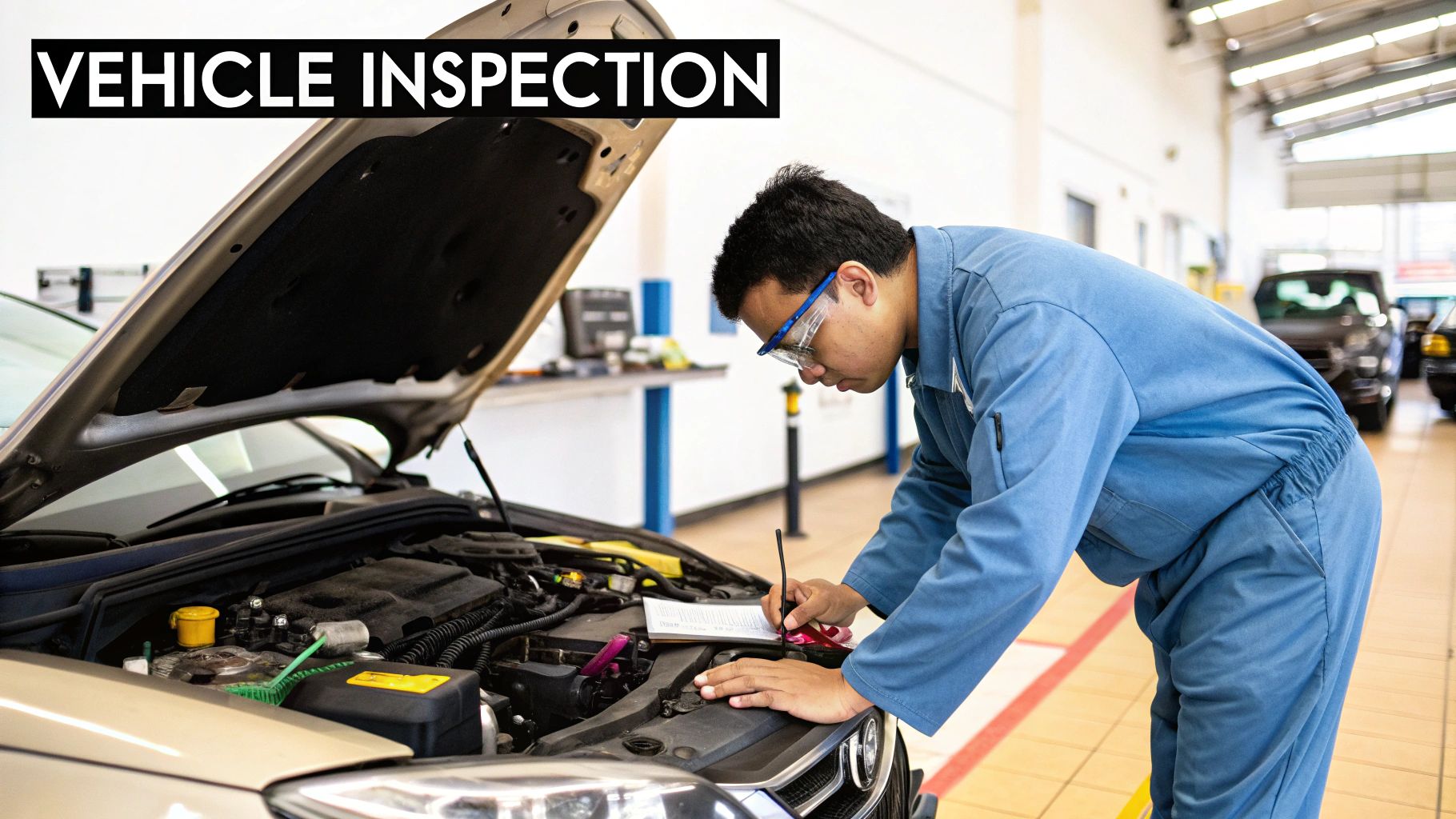
You've made it to the finish line. The test drive went great, the numbers look good, and you're about to make one of your biggest purchases. This final checklist is your last line of defense—a simple but crucial step to make sure the RV or boat you're buying is exactly what you think it is.
Think of it like the final walk-through before closing on a house. You’re there to confirm that every promise has been kept and no last-minute surprises have appeared. This step is all about giving you the confidence to sign on the dotted line without a single doubt.
Before you even think about the paperwork, a few core details need your full attention. These are the non-negotiables, the things that protect you from a world of legal and financial headaches later on.
First up, the Vehicle Identification Number (VIN) or Hull Identification Number (HIN). Find it on the dashboard (usually visible through the windshield), check the sticker on the driver's side doorjamb, and compare it to the number on the title. All three must match perfectly. If they don't, it’s a massive red flag. Stop the deal right there.
Next, methodically go through every feature and function that was advertised in the listing for the cars for sale in Austin TX.
- Does the A/C actually blow cold, or is it just blowing air?
- Do all the power windows, locks, and mirrors work smoothly?
- Are there any warning lights on the dash? Do all the gauges work?
If you're buying an RV, this is where you test the slide-outs, fire up the generator, and check the water heater. For a boat, you’d be checking the bilge pump, navigation lights, and every piece of electronics on board. Never assume something works. Verify it.
The sales contract is where the deal becomes official. Read every single line. Pay close attention to the final sale price, taxes, and any fees listed. Don't be afraid to ask about charges you don't recognize, like "dealer prep" or "documentation fees." You need to know exactly what you’re paying for.
Your final check isn't about distrust; it's about due diligence. Scrutinizing the details protects your investment and ensures your new RV or boat adventure starts without a single regret.
This is also your last chance to confirm that any repairs the seller agreed to have actually been done. Make sure any extras you negotiated for—like a second set of keys, floor mats, or the service records—are physically there. Once you sign that contract, it becomes a lot tougher to get these things sorted out. A few careful minutes now can save you from a lot of frustration later.
Jumping into the Austin vehicle market can feel like a lot, especially if you're looking for something more specialized like an RV or boat. It's totally normal to have questions. Here, I'll walk you through some of the most common things people ask when searching for RVs, boats, and cars for sale in Austin.
Think of this as your quick-start guide to making smarter decisions. We'll cover everything from timing your purchase just right to navigating the unique quirks of buying recreational vehicles.
Honestly, a little bit of timing can save you a whole lot of money. For recreational vehicles, you have to think seasonally.
- RVs: The sweet spot for RV deals is usually in the late fall and winter. Once the summer road trip season wraps up, demand plummets, and that's your chance to negotiate.
- Boats: It's the same story for boats. Start your search when everyone else is packing their lake gear away. From late fall through the winter, sellers are much more motivated.
For cars and trucks, the old advice still holds true: shop at the end of the month, quarter, or year. That’s when dealerships are scrambling to hit their sales quotas and are more willing to make a deal. Simply put, buying when demand is low is the single best strategy for getting a great price.
While the basics of negotiating a price are similar, the inspection process for an RV or boat is on a whole other level. You're not just buying a mode of transportation; you’re buying a complex machine with plumbing, electrical systems, and living spaces that all need a thorough once-over.
When you're looking at an RV, you absolutely have to fire up every appliance, hunt for any signs of water damage around the seals, and test the generator under load. For a boat, a meticulous hull inspection for cracks or weak spots is a must. And never, ever buy a boat without an on-water test to see how the engine actually performs.
Think of it this way: buying a car is like buying an appliance, but buying an RV or boat is like buying a small, mobile house. The amount of due diligence you do should match that complexity. Skimp on the inspection, and you could be looking at some seriously expensive repairs down the road.
Getting the paperwork right is the key to a stress-free transaction. For any private vehicle sale in Texas—be it a car, truck, RV, or boat—you'll need a few key documents.
- Signed Certificate of Title: This is the big one. The seller signs it over to you. Before you do anything else, double-check that the VIN on the title perfectly matches the one on the vehicle.
- Application for Texas Title and/or Registration (Form 130-U): A bit of a mouthful, but this form needs to be signed by both you and the seller.
- Proof of Insurance: You can't register the vehicle in your name without showing proof of your own liability insurance.
- Government-Issued Photo ID: It's a good idea for both the buyer and seller to have their driver's licenses ready.
I always recommend getting a bill of sale, too. While it’s not always legally required, it’s your official receipt and spells out the terms of the sale, which can save you a lot of headaches later.
Ready to put all this into practice? At SearchShop.com, we give you the listings and market data you need to find the perfect car, RV, or boat in the Austin area. You can analyze prices, compare your options, and start your search feeling confident.
Find your next vehicle on SearchShop.com today!