So, what's the best RV for a family? The honest answer is: it depends. The perfect rig is the one that fits your budget, your family's size, and how you plan to travel. For most families, Class C motorhomes and travel trailers hit that sweet spot between space and value, but the right choice for you is all about matching the RV's features to your adventure goals.
Picking out your family's home-on-wheels is the first exciting step toward a lifetime of incredible memories. Just imagine it: the open road, new places to explore, and real, quality time spent together. That's the magic of RVing.
It's a lifestyle that more and more people are getting into. The North American RV market recently ballooned to $21.8 billion, which tells you just how many families are trading in traditional vacations for this kind of freedom and flexibility. You can read more about RV market trends to see how this boom is shaping the industry.
But with a sea of options out there, it's easy to feel overwhelmed. Finding the best RV for your family isn’t about chasing a single "perfect" model. It’s about finding the one that fits you like a glove. The whole process really comes down to a few key questions you need to answer first.
Think of your decision as a three-legged stool. If one leg is too short, the whole thing wobbles. The three legs are your travel style, your family’s size, and your budget.
Nailing these from the get-go is the secret to avoiding buyer's remorse and making sure your new RV actually helps you live out your travel dreams, instead of getting in the way.
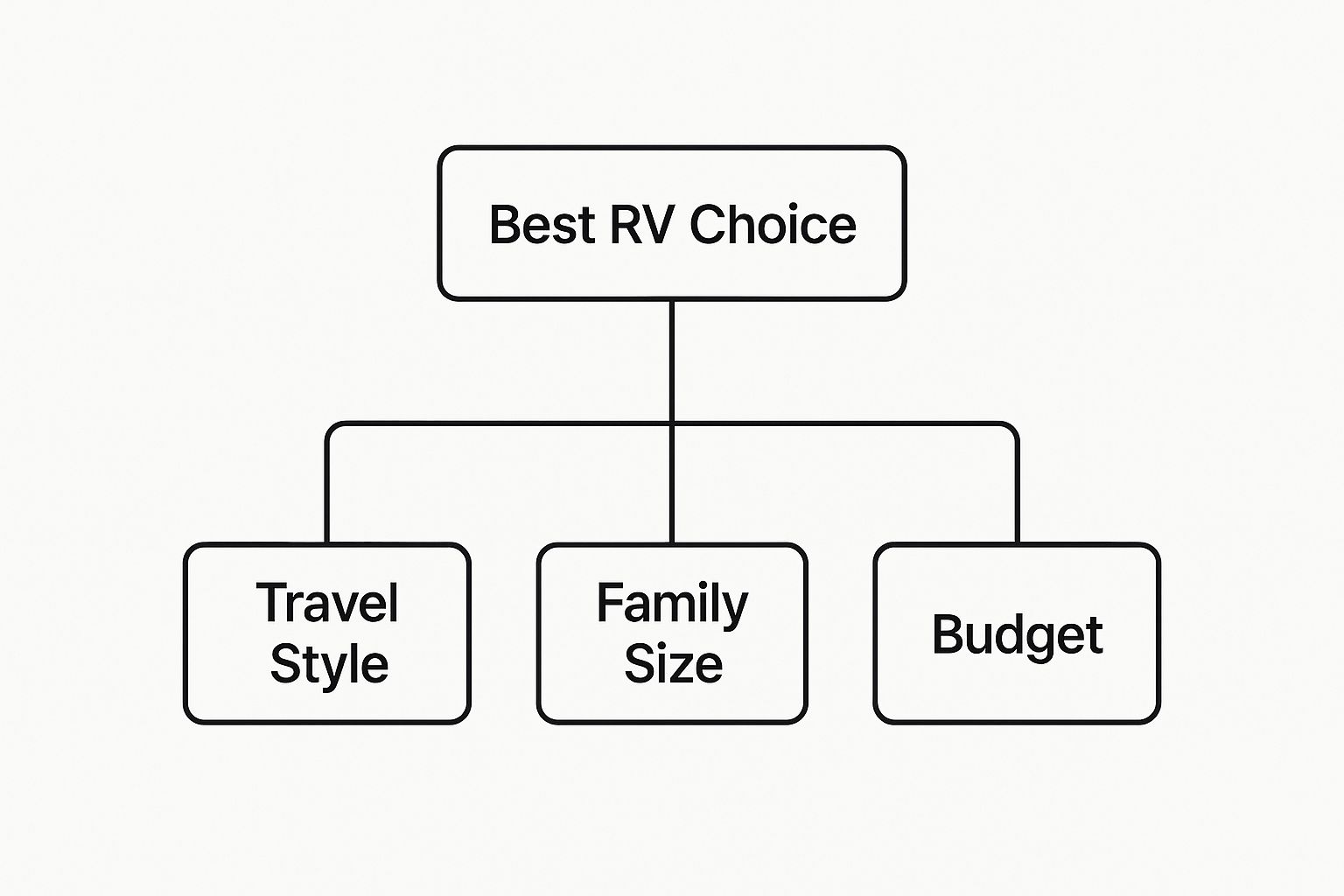
As you can see, it’s all about finding a balance. If you focus too much on one pillar—say, finding the absolute cheapest option—you might end up with an RV that's way too small or can't handle the kind of trips you want to take.
Your very first decision is a big one: do you want a motorhome you can drive, or a trailer you can tow? Each path leads to a totally different kind of road trip. A motorhome is an all-in-one package, pure convenience. A trailer gives you the freedom to unhitch and use your truck or SUV for day trips.
To help you get your bearings, let's break down the most popular RV types for families.
This table gives you a bird's-eye view of the top contenders. Think of it as a cheat sheet to help you narrow down which RV classes are worth a closer look for your family.
| RV Class |
Best For |
Typical Sleeping Capacity |
Average Price Range (New) |
| Travel Trailer |
Families seeking maximum layout variety and affordability |
4-10+ |
$25,000 - $75,000 |
| Class C Motorhome |
Families wanting an easy-to-drive, all-in-one RV |
4-8 |
$80,000 - $150,000 |
| Fifth Wheel |
Families needing residential-style space for longer trips |
6-10+ |
$50,000 - $120,000 |
| Class A Motorhome |
Large families wanting the most luxury and living space |
6-10 |
$150,000 - $300,000+ |
Each of these has its own set of pros and cons, which we'll dive into next. But for now, this should give you a solid starting point for your search.
Stepping into the world of RVs can feel a bit like learning a new language. You'll hear terms like "Class A," "fifth wheel," and "cab-over," and it's easy for them all to blur together. But don't worry—it’s simpler than it sounds.
The best way to think about it is by comparing them to vehicles you already know. The goal is to find an RV with a personality that matches your family's travel style. Get this right, and your rig will feel like a partner on your adventures, not a puzzle you have to solve. Let's break down the main types so you can figure out which one is the perfect fit.
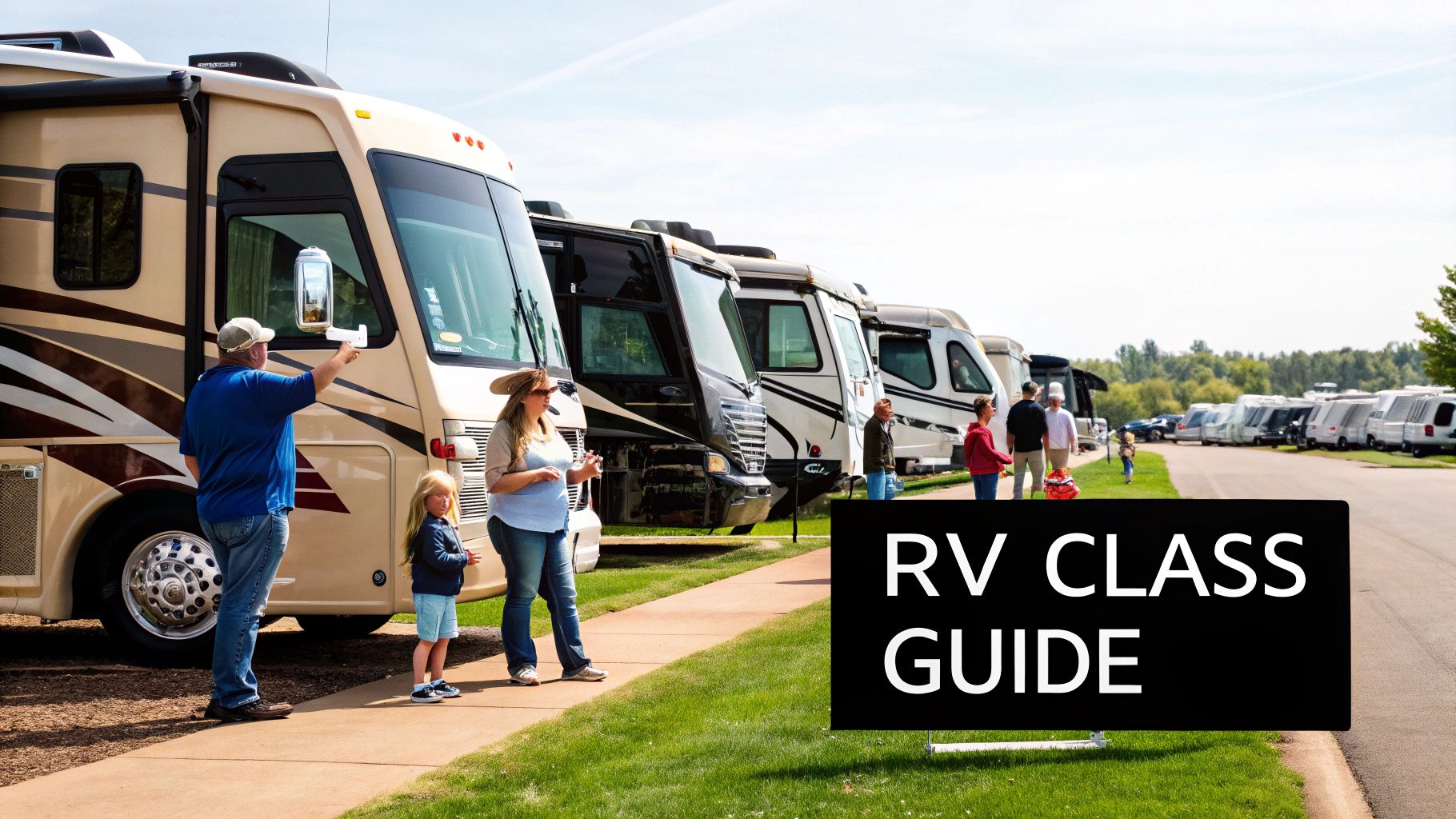
Picture your family rolling down the highway in a private tour bus, complete with a massive panoramic windshield. That's a Class A motorhome. These are the largest and most luxurious drivable RVs out there, built on a heavy-duty bus or truck chassis. Inside, you'll find sprawling living areas, residential-sized appliances, and cavernous storage bays underneath.
- Best for: Large families or anyone who puts a premium on interior space and home-like comfort, especially for long-haul trips.
- Family perk: The ability for kids to safely use the bathroom, grab a snack, or watch TV while you're still driving is a total game-changer on long travel days.
- The trade-off: Their sheer size can be intimidating to drive. Parking in towns or navigating tight campgrounds can be a real challenge, and you'll almost certainly want to tow a smaller car for local exploring.
If there's a quintessential family RV, the Class C is it. Think of it as the minivan of the motorhome world—it’s approachable, versatile, and built from the ground up with families in mind. You can always spot a Class C by its signature feature: the bunk or storage space nestled over the driver's cab.
That over-cab bunk is an absolute magnet for kids, quickly becoming their private fort on wheels. Class Cs are generally much easier to handle than their Class A cousins, offering a fantastic balance of living space, amenities, and maneuverability. This makes them a rock-solid choice for first-time RV owners.
Key Takeaway: Class C motorhomes are a top contender for the best RV for families because they blend drivability with dedicated sleeping spaces, like the popular cab-over bunk, which children often love. This makes them a practical and fun choice for both weekend trips and extended vacations.
A travel trailer is essentially a portable vacation cabin that you tow behind your own truck or SUV. They are, by far, the most popular type of RV, mainly because the variety is just incredible. You can find everything from tiny teardrop trailers for two to massive bunkhouse models that can sleep an entire crew.
The biggest advantage here is freedom. Once you're at the campground, you can unhitch the trailer and your tow vehicle is free for running into town for groceries, exploring scenic backroads, or heading to a trailhead an RV could never reach. For active families, this flexibility is a huge plus. You can explore various travel trailer layouts to get a feel for the endless configurations available.
Fifth wheels are the kings of the towable world, representing a big step up in both space and luxury. The best analogy is a split-level condo on wheels. They get their name from the large, fifth-wheel hitch that sits in the bed of a heavy-duty truck, which provides a more stable and secure towing experience than a traditional travel trailer.
This unique design creates a raised front section that almost always houses a spacious master bedroom and bathroom, giving parents a private retreat away from the main living area. With their high ceilings and multiple slide-outs, fifth wheels create a residential feel that's perfect for families who take longer trips or even live on the road full-time.
Choosing the right class is a big decision. This table breaks down the key trade-offs of each type specifically for family travel to help you see which one aligns best with your crew's needs and adventure style.
| RV Class |
Pros for Families |
Cons for Families |
Best Suited Travel Style |
| Class A |
Maximum interior space. Kids can access amenities while moving. Feels like a "house on wheels." |
Intimidating to drive. Limited campsite access. Requires a towed vehicle. High fuel consumption. |
Long-term travel, cross-country journeys, and families who prioritize comfort and space over off-grid access. |
| Class C |
Easier to drive than a Class A. Dedicated kids' sleeping area (cab-over). Good balance of space and maneuverability. |
Can feel cramped for larger families. Interior access is possible but less spacious than a Class A. |
Weekend getaways, state park hopping, and first-time RVing families looking for an all-in-one solution. |
| Travel Trailer |
Huge variety of layouts (especially bunkhouses). Frees up your vehicle for exploring. Most affordable option. |
Towing can be stressful for beginners. No access to the RV while in transit. Requires a capable tow vehicle. |
Families who love setting up a base camp and exploring the surrounding area, and those on a tighter budget. |
| Fifth Wheel |
Split-level design offers parental privacy. Residential feel with high ceilings. Very stable towing experience. |
Requires a heavy-duty truck. Tall profile can be an issue with low clearances. Most expensive towable option. |
Full-time RVing families, long-term "snowbirds," or those who want maximum luxury in a towable package. |
Ultimately, there's no single "best" RV—only the one that's best for your family. By understanding these core differences, you’re already well on your way to making a choice you’ll be happy with for many miles to come.
The layout of your RV is more than just a drawing on a brochure—it's the blueprint for your family's life on the road. A great floor plan can make even a compact space feel open and livable, but the wrong one will feel like a constant traffic jam. The trick is learning to look at these layouts and truly picture your family moving around inside them.
Think of the floor plan as the choreography for your family's travel adventures. Will everyone have space to maneuver, or will you constantly be tripping over each other? The goal is to find a layout that complements your daily rhythm, from chaotic morning routines to winding down in the evening. This means looking past the bed count and really considering how the space flows.
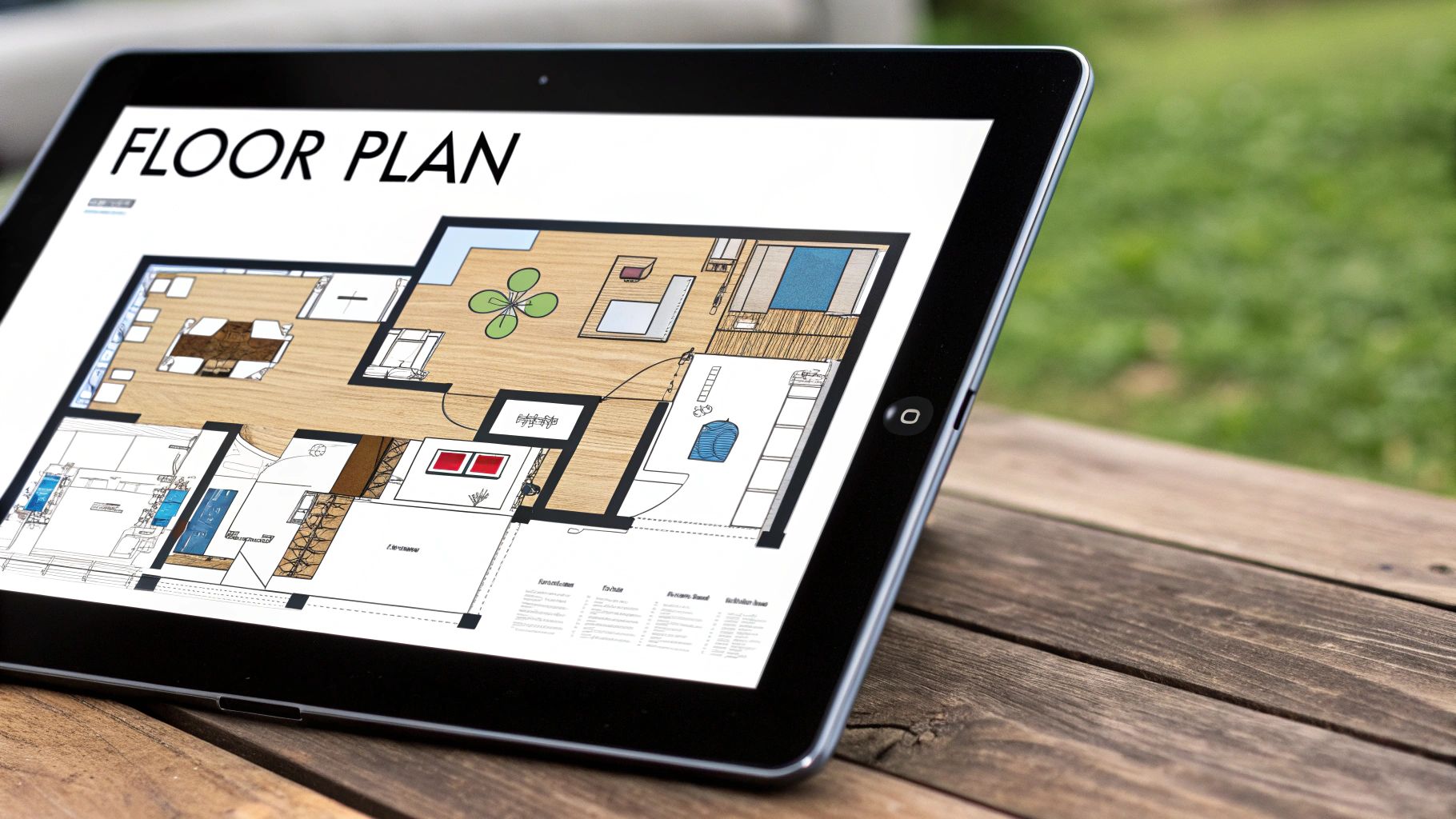
When you start looking at family-friendly RVs, one layout stands out above all others: the bunkhouse floor plan. These models are designed with a dedicated area just for the kids, usually with a set of two or more bunk beds. This isn't just about giving everyone a place to sleep; it’s about carving out a space for the kids to call their own—a spot to play, read, and stash their stuff.
Having a separate bunk room offers a huge psychological win for the whole family. It gives parents a distinct living area to relax in after the kids are in bed, which helps preserve that much-needed sense of privacy and normalcy you can easily lose in a small space.
A dedicated kids' space is one of the most requested features by family RVers. It transforms the RV from a shared sleeping space into a multi-zone home, reducing clutter and conflict on longer trips.
Bunkhouses come in a few different flavors, each catering to different needs and family sizes:
- Rear Bunkhouse: This is the classic setup. The kids' room is at the very back of the rig, giving you maximum separation from the master bedroom up front.
- Mid-Bunk: A fantastic option for families with teens, this design puts a small, private room (often with a loft) in the middle of the RV. It’s the perfect den, gaming room, or even a mobile office.
- Corner Bunks: You’ll see these mostly in smaller travel trailers. The bunks are tucked neatly into a rear corner, which is a great space-saving solution that still provides dedicated beds for the kids.
As you start comparing different models, you’ll run into some design terms that have a massive impact on how the RV actually feels to live in. Getting a handle on these concepts is key to picking a floor plan that works in the real world, not just on paper.
One of the most important features is the slide-out. This is a section of the RV wall that slides outward at the push of a button, dramatically expanding your interior living space. Many family models have "opposing slides" in the main living area, where two slides open on opposite walls. This creates a wide, almost residential feel that is an absolute lifesaver on a rainy day.
Another make-or-break detail is bathroom accessibility. Here’s the scenario: you’re on the road, and a kid has to go, now. Can you open the bathroom door when the slides are pulled in for travel? For many families, being able to use the bathroom at a rest stop without having to fully extend the slides is a non-negotiable feature.
Finally, pay attention to the kitchen work triangle. Just like in a house, a functional RV kitchen has the sink, stove, and fridge arranged in a way that makes meal prep easy. A poorly designed kitchen can turn cooking into a frustrating puzzle, but a well-planned one makes it simple to feed the whole crew after a long day of exploring.
The right features can turn an RV from a simple vehicle into your family's home base for adventure. It’s about more than just counting beds; the best family RVs have amenities that solve the real problems you face on the road, keeping everyone happy, fed, and comfortable.
Think of these features as your sanity-saving toolkit. A residential-sized fridge isn't just a luxury—it's what lets you stock up for a week, cutting down on those dreaded mid-trip grocery runs with a car full of hungry kids. An outdoor kitchen? It keeps the bacon grease and fishy smells outside and lets the cook be part of the campfire fun. These are the details that veteran family RVers absolutely swear by.

Some features have become standard on family models for a very good reason: they just make life on the road so much easier. As you walk through different RVs, keep an eye out for these game-changers that will directly affect your daily comfort.
A solid climate control system is completely non-negotiable. A quiet, powerful air conditioner is a blessing during a summer heatwave, and a good ducted furnace keeps everyone from freezing on a chilly mountain morning. And don't forget the water heater! A larger, quick-recovery model means more than one person can get a hot shower without a 30-minute wait in between.
Another big one is water tank capacity. Bigger freshwater, grey, and black tanks give you the freedom to camp for longer without needing to be tethered to a full-hookup site. This opens up a world of incredible state parks and even off-grid boondocking spots.
The best family RVs make the "work" part of camping disappear. You want features that make arriving and packing up as quick and painless as possible, so you can spend more time actually relaxing.
Auto-leveling jacks are a perfect example. Forget fiddling with blocks and a level—you just push a button, and the whole rig levels itself in minutes. It's a lifesaver after a long day of driving. A power awning is another must-have, creating instant shade or rain protection so you can set up your outdoor living space without a struggle.
These are the kinds of features that make a massive difference:
- Outdoor Kitchen: Usually a small fridge, a sink, and a cooktop. It’s perfect for grilling burgers, making coffee without waking the sleeping kids inside, and keeping cooking messes out of the main living area.
- Exterior Shower: Invaluable for rinsing off sandy feet after a day at the beach, cleaning up muddy pets, or hosing down dirty gear before it comes inside.
- Abundant Exterior Storage: Look for those huge, pass-through storage bays that can swallow up bulky gear like camp chairs, bikes, and fishing poles.
"The ability to cook meals, store belongings, and enjoy amenities like WiFi and entertainment systems are increasingly standard in new family-oriented models, shaping product design at major manufacturers."
Families are voting with their wallets, prioritizing things like slide-outs for that extra elbow room and dinettes that easily convert into another bed. This focus on practical functionality is driving the whole market, as you can see in this comprehensive industry report.
Let's be real: rainy days happen. A decent entertainment system can be the difference between a cozy movie day and a cabin-fever meltdown. Most family RVs today will have a TV, but also look for a Bluetooth stereo with both indoor and outdoor speakers and, most importantly, plenty of USB ports for everyone's devices.
Inside, smart design is everything. You want durable, easy-to-clean flooring and upholstery that can handle spills and dirt. Getting a feel for different RV interior designs and features can help you spot the difference between a layout that just looks good and one that actually works for a family. By making these features a priority, you'll end up with an RV that truly feels like a home away from home.
Let's talk about the money side of things. It's easy to get caught up in shiny new models and dream floor plans, but the best RV for your family is one that fits your budget without causing financial stress down the road.
Think of it less as a sticker price and more as the "total adventure cost." This includes the initial purchase, of course, but also all the ongoing expenses that come with owning a home on wheels. Getting a clear picture of these costs upfront is the secret to making sure your RV is a source of joy, not a constant worry.
The first big decision you'll make is whether to buy a brand-new rig or a pre-loved one. Both paths have some serious pros and cons for family budgets.
A new RV is fantastic because it comes with a full warranty, the latest tech, and that unmistakable "new RV smell." There's a real peace of mind in knowing you're the first owner. The flip side is a higher price tag and the fact that it depreciates the fastest in its first few years.
On the other hand, a used RV can be a goldmine for value. You can often get a much bigger or more tricked-out model for the same price as a smaller, newer one. The catch? You're inheriting its history, so a thorough pre-purchase inspection is non-negotiable to avoid any nasty, expensive surprises.
It's also worth noting the market has been on a bit of a rollercoaster. After a huge surge in demand, the RV industry saw a 36.5% drop in wholesale shipments from 2022 to 2023. By late 2024, things started to level out with a 2.6% increase in shipments. This tells us that families are now thinking more critically about long-term value, making both the new and used markets pretty competitive. You can discover more insights about RV industry statistics to get a feel for these trends.
The purchase price is just the tip of the iceberg. To build a truly realistic budget, you have to factor in all the recurring costs that come with the territory.
- Insurance: This is a must-have. Depending on your RV's class, value, and your driving history, you can expect to pay anywhere from $800 to over $2,500 annually.
- Storage: If you can't park it at home, you'll need to pay for storage. A basic outdoor lot might run $50-$100 a month, while a covered or climate-controlled spot can easily be $200-$450 per month.
- Fuel: This one’s a biggie and changes with every trip. A massive Class A motorhome might only get 6-8 MPG, whereas a truck pulling a travel trailer could see 9-12 MPG. You'll want to bake this into your travel budget.
- Maintenance: An RV needs regular care, just like a house. A good rule of thumb is to set aside 1-2% of the RV’s value annually for things like sealing the roof, checking tires, winterizing, and fixing whatever decides to break.
Most people finance their RVs, which is a great way to spread out the cost. RV loans are a bit different from car loans; they often have much longer terms, sometimes 10 to 20 years, which helps keep the monthly payments from getting out of hand.
Here's the smartest first move you can make: get pre-approved for a loan before you even start looking at RVs. This sets a concrete budget, gives you a huge advantage when negotiating at the dealership, and keeps you from falling for a rig that's just out of reach.
Taking the time to understand your financing options is a crucial step. Shopping around for different lenders and loan terms can literally save you thousands of dollars over the life of your loan. Our detailed guide on how to navigate RV financing is a great place to start.
Alright, you've done the homework. You’ve waded through the different RV classes, pored over floor plans, and wrestled with your budget. Now comes the exciting part: turning all that research into a real, tangible set of keys in your hand.
This is where the rubber meets the road—literally. Think of it as the final, critical walk-through before you sign on the dotted line. It’s your chance to make sure the RV that looks perfect on paper actually feels right in person.
Reading specs online is a great start, but nothing beats the real thing. To see a ton of options in one go, your best bet is an RV show. It’s a fantastic way to walk through dozens of different models from various manufacturers, all in a single afternoon. You’ll get a much better sense of build quality and how the space actually flows when you’re standing in it.
But for the ultimate test drive? Rent an RV for a weekend trip. This is, without a doubt, the best "try before you buy" experience you can get. You'll learn more in 48 hours of real-world use than you will in weeks of online research. Maybe you’ll discover that the small kitchen drives you nuts, or that a Class C is way less intimidating to drive than you thought. A test run like this provides priceless, practical insights.
This is the single most important step, whether you're buying a shiny new model or a seasoned used one. For a new rig, the dealership will perform a Pre-Delivery Inspection (PDI). A technician should walk you through every single system—from the slide-outs and leveling jacks to the water heater and A/C—to prove it all works. Take videos, ask questions, and don't you dare sign anything until every last issue is resolved to your satisfaction.
When it comes to a used RV, hiring a certified, independent RV inspector is the smartest money you'll spend in this entire process. These pros are trained to find the deal-breakers you might miss, like hidden water damage, frame issues, or appliances on their last leg. It could save you from a nightmare repair bill down the road.
So, you found "the one," and it passed the inspection with flying colors. Time to talk turkey. Don't ever be shy about negotiating the price. Do your research to know what the RV is actually worth on the market, and be ready to walk away if the deal doesn't feel right. Coming to the table with your financing already pre-approved gives you a huge advantage here.
Lastly, go over that warranty with a fine-tooth comb. Know exactly what’s covered, for how long, and what the process is for getting service when you’re traveling. That piece of paper is your safety net. It might feel like a lot of hoops to jump through, but all this diligence is what paves the way for years of incredible family adventures.
Alright, you've done the homework, narrowed down your options, and you're almost ready to pull the trigger. But a few nagging questions keep popping up, right? That's completely normal. Let's tackle some of the most common final-hurdle questions that families ask before buying their first RV.
Think of this as the last little bit of clarity you need to make your choice with total confidence.
This is the big one, and honestly, there's no single right answer—it all comes down to how your family travels.
For families with toddlers and young children, a motorhome often feels like a lifesaver. Need a potty break or a snack? Just pull over. The kids can use the bathroom or grab something from the fridge without anyone ever stepping outside. That kind of on-the-road convenience is hard to beat. The downside? Once you set up camp, you're either stuck in one place or you have to tow a separate car for exploring and running errands.
On the flip side, a travel trailer gives you freedom. As soon as you arrive, you can unhitch your truck or SUV and have your own vehicle for day trips to the beach or a run to the grocery store. Many families find this flexibility way more practical for their style of camping.
This is a non-negotiable safety check, so no guessing allowed! Your vehicle's owner's manual is your ultimate guide—it will tell you the exact towing capacity. Don't even think about exceeding it.
Here’s a solid rule of thumb from seasoned RVers: Make sure the RV’s Gross Vehicle Weight Rating (GVWR)—that’s its max weight when it's fully loaded with water, food, and all your gear—is comfortably under your vehicle’s limit. To give yourself a safe buffer, aim for the RV's GVWR to be no more than 80% of your vehicle's maximum tow rating. This buffer helps account for the weight of your family and all the extra stuff you pack into your tow vehicle.
It’s so easy to get fixated on the number of beds and then completely miss two of the most important things: storage and tank sizes.
An RV gets cluttered incredibly fast. When you're looking at a model, open every single cabinet and drawer. Is there enough room for clothes, food, and toys? Check for a large exterior "pass-through" storage bay, which is perfect for stashing bulky gear like camp chairs, outdoor rugs, and grills.
Here's a pro tip: Pay very close attention to the size of the freshwater, grey water (from sinks and the shower), and black water (from the toilet) tanks. Bigger tanks are a game-changer. They give you the freedom to camp for longer stretches at beautiful state parks or other spots that don't have full hookups, which is a huge win for family adventures.
This really boils down to a classic budget versus peace-of-mind d