
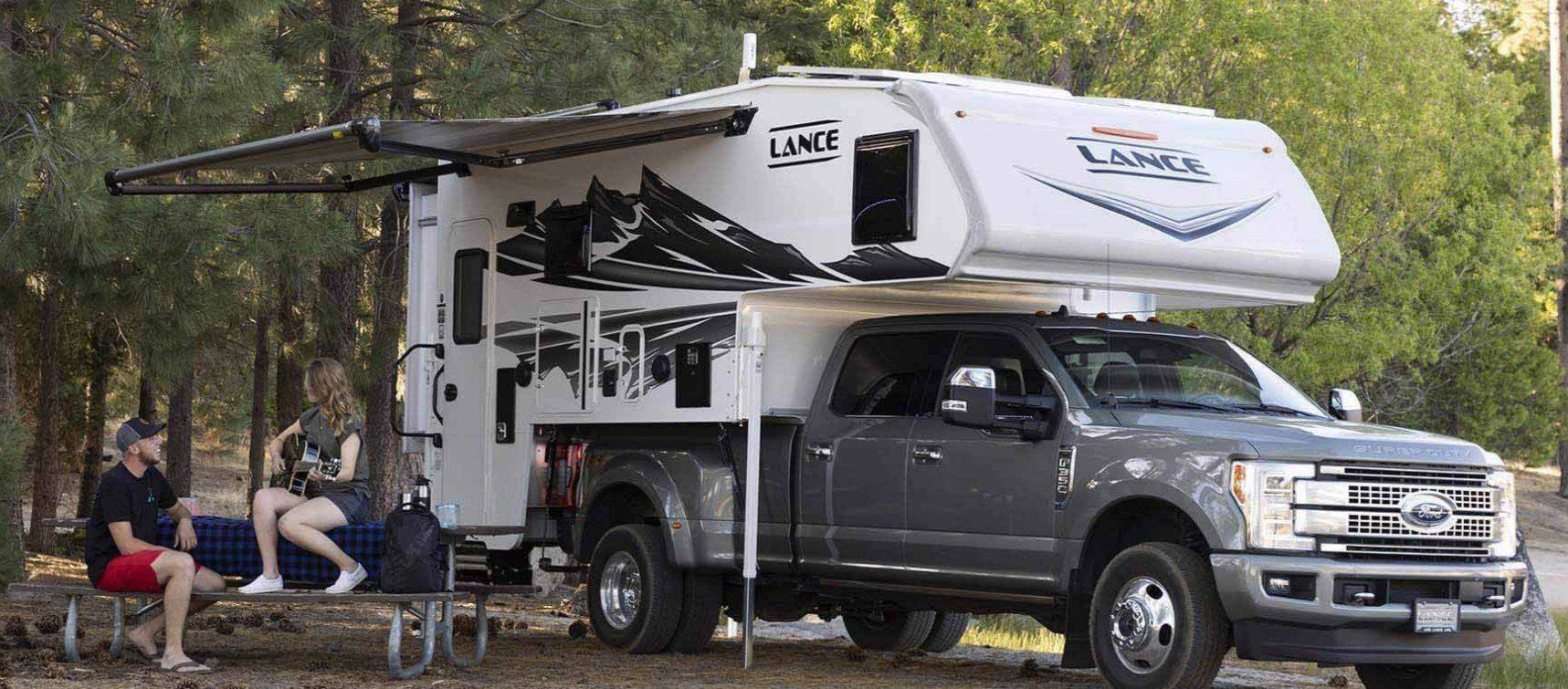
When you start looking for a Lance travel trailer for sale, you quickly realize you’re not just buying another RV. You're investing in a reputation—one built on serious quality and smart design. For campers who want a truly dependable rig, Lance is often at the top of the list, known for being genuinely four-season capable and surprisingly lightweight.
What Makes Lance a Top Choice for RVers
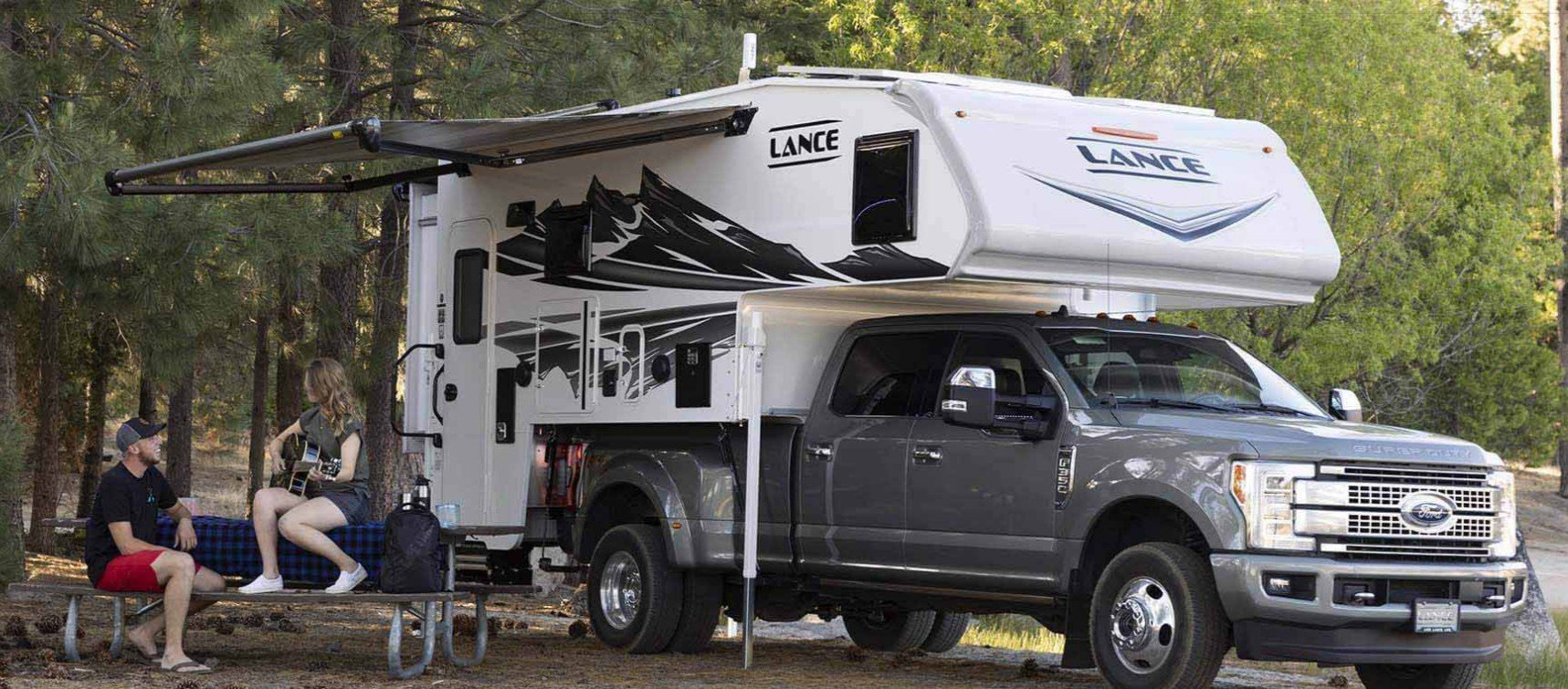
Before we get into the nuts and bolts of specific models, it helps to understand what makes Lance, well, Lance. They’ve carved out a special niche in the RV world by sticking to a few core principles that resonate with both seasoned travelers and people just getting started. This isn't about flashy features; it's about building a fundamentally better travel trailer.
Think of it this way: you can buy a mass-produced table, or you can buy one from a skilled woodworker. Both will hold your dinner plate, but the handcrafted one is built with precision, superior materials, and an attention to detail that means it will last a lifetime. That's the approach Lance takes, and the result is a trailer that just feels solid, performs without drama, and holds its value remarkably well.
A Legacy of Precision Engineering
At the very core of every Lance trailer is a deep commitment to modern manufacturing. While a lot of builders still rely on old-school manual processes, Lance uses high-tech CNC (Computer Numerical Control) machines to cut every single wall panel. This means every piece is cut to an exact specification, creating a structure that’s stronger, tighter, and better sealed. It might sound like a minor detail, but it’s the bedrock of their legendary durability.
On top of that, every component—right down to the last screw—is mapped out in advanced CAD software before a single part is made. This meticulous digital blueprinting all but eliminates the guesswork and human error you can find on other assembly lines. The payoff for you is huge:
-
Superior Structural Integrity: The walls, floor, and roof fit together flawlessly. This creates a much more rigid and resilient frame that can handle the bumps and twists of the road.
-
Reduced Waste: Precision cutting is incredibly efficient, minimizing leftover materials. It’s a smarter, more responsible way to build.
-
Enhanced Longevity: A perfectly assembled trailer is far less likely to develop the squeaks, rattles, and other issues that can plague RVs after a few thousand miles.
Built for All Seasons and Adventures
One of the biggest reasons people specifically seek out Lance travel trailers for sale is their reputation for being true four-season rigs. A lot of brands throw that term around, but Lance actually engineers for it.
Lance's whole philosophy is to build an RV that keeps you comfortable and safe, whether you’re parked in the 100-degree desert sun or a below-freezing mountain pass. You can see this in practical features like ducted heating that circulates warm air around the tanks and water lines to prevent freezing.
They pull this off with better insulation, dual-pane windows, and fully enclosed and heated holding tanks. It means your plumbing is protected even when the temperature plummets, and the inside stays cozy without the furnace working overtime. This opens up a whole new world of year-round travel, from snowy ski trips to crisp fall adventures, making a Lance one of the most versatile RVs you can own.
Finding Your Perfect Lance Travel Trailer Model
Shopping for a Lance travel trailer can feel a bit like trying to pick the right hiking boot—they all look good, but the best one truly depends on the terrain you plan to cover. Lance designs their trailers for specific kinds of adventures, and once you figure out your travel style, the perfect model becomes a whole lot easier to spot.
Forget about memorizing a long list of model numbers for now. The best way to start is by asking a simple question: Who is this for? Are you a solo explorer with an SUV? A couple planning to hit the road for months at a time? Or a family who needs room for the kids and all their gear? Your answer will immediately point you in the right direction.
Ultra-Light Trailers for Maximum Mobility
If you value getting into those tighter, off-the-beaten-path spots, Lance's ultra-light, single-axle models are your ticket. These trailers are specifically engineered to be towed by a much wider range of vehicles, including many popular mid-size SUVs and smaller trucks. This is a game-changer for people who don't want to buy a massive pickup just to go camping.
Think of these as the nimble scouts of the Lance lineup. They're compact, a breeze to maneuver into a tricky campsite, and their lighter weight means you'll feel it less at the gas pump.
-
Models to Look For: Start with the smaller trailers in the lineup, like the 1475 and 1575.
-
Ideal Tow Vehicles: Many mid-size SUVs (like a Toyota 4Runner or Ford Explorer) or compact trucks (like a Toyota Tacoma or Ford Ranger) can handle these. Just be sure to always check your vehicle's specific tow rating.
-
Best Use Case: They're absolutely perfect for solo travelers or couples who love quick weekend getaways and exploring national parks where bigger rigs just can't fit.
These trailers prove you don't need a monster rig to enjoy the premium build and comfort Lance is famous for. They pack a ton of smart features into a footprint that’s easy to tow, park, and store.
The image below really breaks down what makes any Lance model a top-tier choice, from their solid construction to their smart interiors and tow-friendly designs.
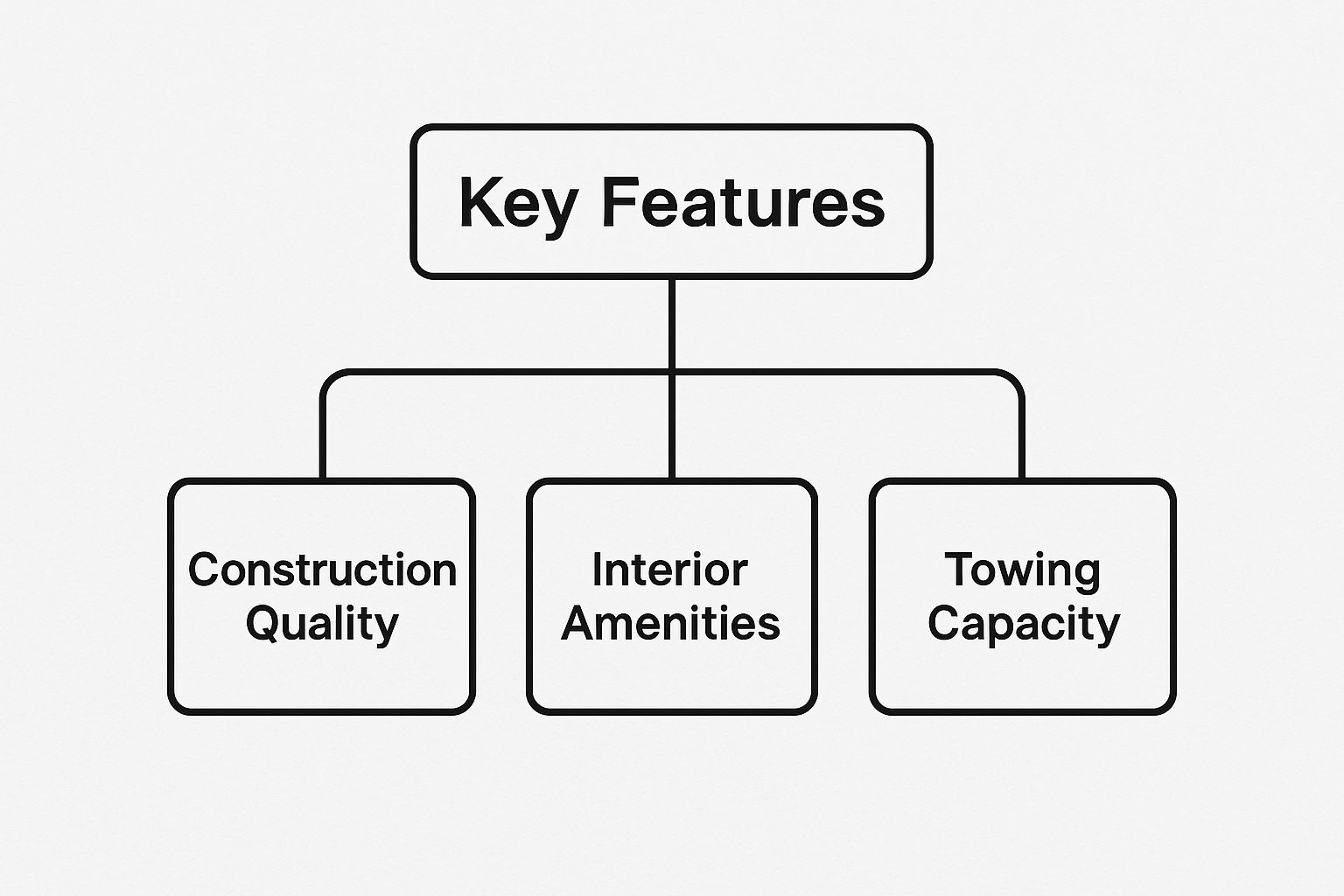
This shows that whether you buy their smallest or largest trailer, you're getting a product built on a foundation of quality, smart amenities, and practical, real-world engineering.
Spacious Couple's Coaches for Extended Travel
Move up a bit in size and you’ll find the couple's coaches. These dual-axle trailers are built for two people who want more residential comforts and plan to spend serious time on the road. The big upgrades here are usually a dedicated bedroom and a much roomier living and kitchen area.
The secret weapon in many of these models is the slide-out. This is a section of the trailer wall that mechanically extends outward when you're parked, and it completely transforms the interior space. It’s like an expandable room, turning a cozy travel trailer into an open, spacious living area. For anyone planning to be in their trailer for more than a few days, a slide-out is a must-have.
These models are the sweet spot for a huge number of RVers. They strike the perfect balance between home-like comfort and manageable towing, making them ideal for snowbirds, full-timers, or anyone planning a multi-week road trip.
With the extra size and features comes more weight. This means you’ll need a more capable tow vehicle. Pay close attention to the Gross Vehicle Weight Rating (GVWR)—that's the maximum weight of the fully loaded trailer. Your truck has to be rated to handle it safely.
-
Models to Look For: Mid-size options like the 1995 or 2185 are classic examples of great couple's coaches.
-
Ideal Tow Vehicles: You'll generally need at least a half-ton truck (like a Ford F-150, Ram 1500, or Chevy Silverado 1500).
-
Best Use Case: Couples gearing up for long trips, living the full-time RV life, or just wanting more elbow room and creature comforts.
Family-Friendly Bunkhouse Models
When you've got kids in tow, the search for a Lance travel trailer almost always ends at the bunkhouse models. These floor plans are the ultimate answer for family travel, giving everyone their own dedicated sleeping space. No more converting the dinette into a lumpy bed every night!
The magic of a bunkhouse is that it gives the kids their own zone. This not only makes bedtime easier, but it also gives the parents their own space back in the main living area after the kids are down. Some of the bigger models even have a separate "bunk room," which is a huge win for family harmony on a long trip.
To give you a better sense of how these different styles stack up, here’s a quick-reference table comparing some popular Lance models.
Lance Travel Trailer Model Comparison
This table breaks down the key specs so you can quickly see how each model's size, weight, and sleeping capacity align with different needs and tow vehicles.
|
Model Number |
Overall Length |
Gross Dry Weight (Lbs) |
Sleeping Capacity |
Best For |
|---|---|---|---|---|
|
1575 |
20' 5" |
3,015 lbs |
2-3 |
Solo/Couple, SUV Towing |
|
1685 Shop RVs For SaleBrowse current rvs from dealers near you — updated daily. |
21' 0" |
4,030 lbs |
4-5 |
Small Families, Light Truck |
|
1995 |
23' 11" |
4,900 lbs |
4 |
Couples, Half-Ton Truck |
|
2445 |
29' 5" |
6,375 lbs |
7-8 |
Large Families, Bunkhouse |
As you can see, there’s a logical step-up in length, weight, and capacity. A model like the 2445 is a true family hauler that provides incredible space but demands a stout truck to pull it. Matching these real-world numbers to your own needs is the key to finding the Lance that will make your adventures unforgettable.
Decoding the Current RV Market for Buyers
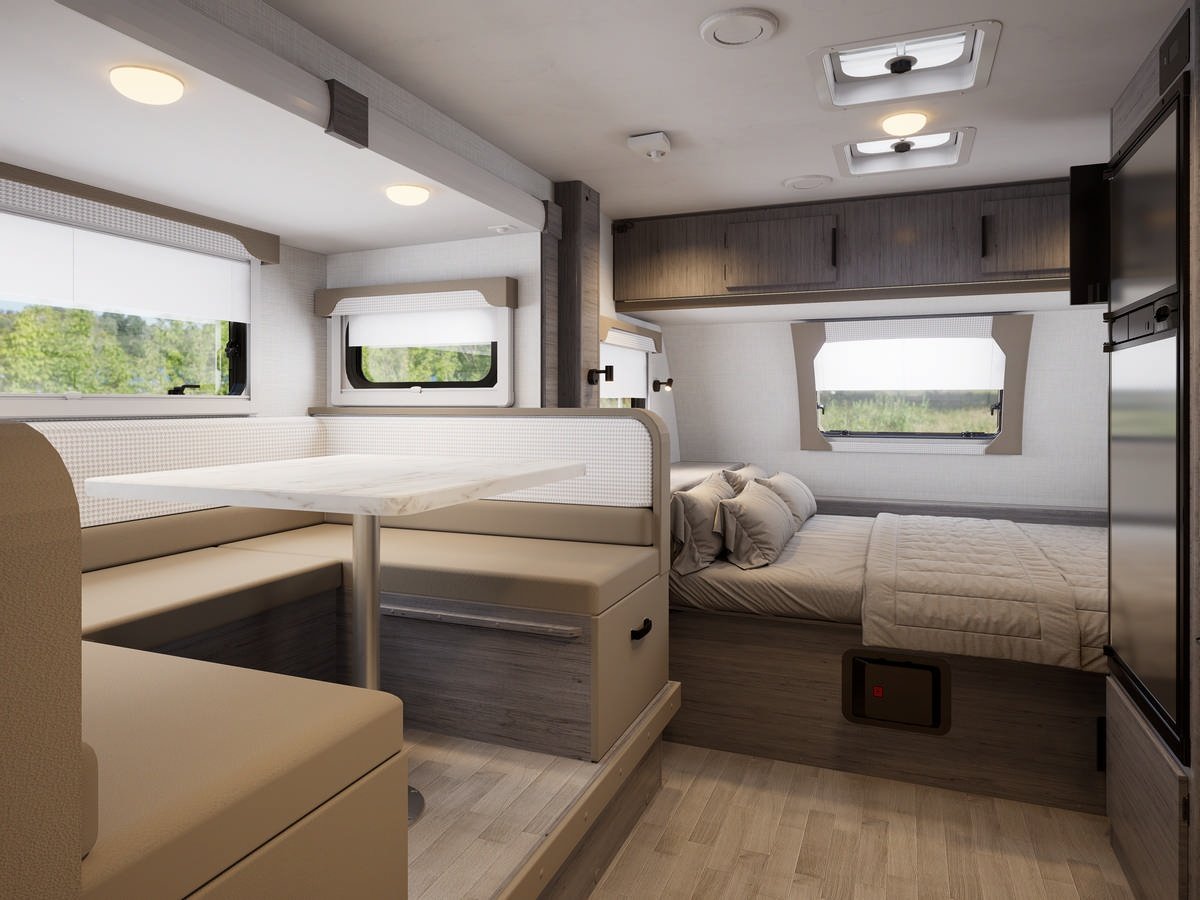
Jumping into the RV market right now can feel a bit like trying to read the stock market. Prices go up, inventory goes down, and you’re left wondering if you’re getting a great deal or paying a peak-season premium. Getting a handle on the current climate is the first and most important step to buying with confidence, especially when you’ve set your sights on a quality brand like Lance.
The entire RV world ebbs and flows with supply and demand. It’s not unlike the housing market—sometimes it’s a seller’s game, and other times, the buyers hold all the cards. After a few years of red-hot demand, things have started to cool off, opening up some fantastic opportunities for shoppers who know where to look.
So, what does that mean for you? It means you’re likely to see more trailers sitting on dealer lots and find more wiggle room on the price tag than you would have a couple of years ago. For anyone searching for Lance travel trailers for sale, this is great news. The playing field is more balanced, and a little bit of research and good timing can save you a serious amount of money.
What's Happening in the Market Right Now?
The RV industry has been on a wild ride. Following a massive sales boom, shipment numbers from manufacturers have begun to settle down, and that has a direct ripple effect on dealer inventory and pricing. This isn't a crash; it's a recalibration, a normal part of the economic cycle that creates a whole new landscape for buyers.
To put some numbers to it, the RV Industry Association reported that total shipments in May 2025 hit 28,150 units. That’s a 15.1% dip compared to the same month last year. For conventional travel trailers, the category Lance calls home, the drop was even steeper at 22.8%. You can dig deeper into these recent RV market trends to see how they’re shaping consumer choices.
These aren't just dry statistics; they tell a story. When shipments slow down, it’s a strong signal that dealers are more motivated to sell the trailers they already have. For you, this can translate into better prices, special financing offers, or extra perks thrown in. A savvy buyer sees this market adjustment not as a downturn, but as a strategic advantage.
New vs. Used Lance Trailers in Today's Market
With all this in mind, the age-old question of "new or used?" becomes even more interesting. There’s no single right answer, as both paths have their perks. It all boils down to what you value most.
A brand-new Lance trailer offers total peace of mind. You get the full factory warranty, the very latest features and floor plans, and of course, that feeling of being its one and only owner. In today’s market, you may find dealers are more willing to deal on new, in-stock models as they look to clear space for the upcoming model year.
Choosing a new RV is a lot like buying a new car. You get the full warranty, the latest tech, and the assurance that there are no skeletons in the closet. For a lot of folks, that security is worth the higher price tag.
On the flip side, a used Lance trailer can be an incredible bargain. Lance builds its trailers to last, so a well-cared-for model from a few years back can deliver nearly the same quality for a fraction of the cost. The original owner has already taken the biggest depreciation hit for you.
Here’s a quick breakdown to help you decide:
-
New Lance Trailer
-
Pros: Full manufacturer warranty, the latest designs and technology, factory-fresh condition, and access to attractive dealer financing.
-
Cons: A higher initial investment and the steepest depreciation happens in the first couple of years.
-
-
Used Lance Trailer
-
Pros: Huge cost savings, much slower depreciation, and the proven reliability of a top-tier brand.
-
Cons: No factory warranty, potential for hidden issues, and you'll need to be more diligent with your pre-purchase inspection.
-
Ultimately, the current market makes both options compelling. If you have the budget and a warranty is non-negotiable, a new model is a great choice. But if you're all about maximizing value and don’t mind doing your homework, the used market for Lance travel trailers for sale is brimming with amazing deals.
Where to Find Your Ideal Lance Travel Trailer
Knowing what you want is only half the battle. Knowing where to look for Lance travel trailers for sale is just as crucial. The path you choose—whether it's the polished floor of a dealership or a private seller's driveway—will shape your entire buying experience, from the price you pay to your long-term peace of mind.
Let's break down where you'll find these rigs and what to expect from each. Think of it like buying a high-quality camera: you could visit a specialty shop with expert staff, a big-box store with competitive prices, or buy a used one directly from another photographer. Each route has its perks, and the best one for you depends entirely on your budget, your own expertise, and what makes you feel comfortable.
Authorized Lance Dealerships: The Expert Source
Your first stop should probably be an authorized Lance dealer. These folks are the specialists; they live and breathe the Lance brand. Their sales team gets factory training, their service bays are full of the right parts, and they have a direct line to the manufacturer when things get tricky.
Honestly, building a good relationship with a local dealer can pay off for years. They become your go-to for maintenance, upgrades, and just solid advice. You're not just buying a trailer; you're gaining a support system for your entire ownership journey.
National RV Chains and Online Marketplaces
Beyond the brand specialists, you have the big players. Large national RV chains and the sprawling online marketplaces throw the doors wide open, giving you a massive selection to browse from the comfort of your couch. This is where you can really start comparing prices and see what's available across the country.
Here are the top places to start your digital search:
-
National Retailers: Big names like Camping World often have Lance models in their huge inventory and can offer some very competitive financing options.
-
Online Classifieds: Websites like RV Trader are the go-to. It's like a giant, nationwide RV lot that pulls in listings from both dealers and private sellers.
-
Social Marketplaces: Don't sleep on Facebook Marketplace. You can find some incredible deals directly from local owners who've taken great care of their trailers.
A crucial piece of advice for online shopping: be skeptical. If a deal on a Lance travel trailer for sale seems too good to be true, it almost certainly is. Always, always verify who the seller is and insist on seeing the trailer in person before a single dollar changes hands.
Timing Your Purchase for the Best Deal
Here’s a strategy that many buyers miss: timing. The RV market is incredibly seasonal, and if you play your cards right, you can save thousands just by buying at the right time of year.
RV show season, which usually hits in late winter and early spring, is a fantastic opportunity. Dealers are hungry to make sales and roll out special "show pricing" or throw in extra packages to sweeten the deal. The other golden window is during the model year changeover, typically in late summer or early fall. This is when dealers are desperate to clear out last year's inventory to make room for the new stuff.
This patient approach is especially powerful right now. The RV market as a whole has been shrinking for a couple of years. Recent reports show new RV registrations at just over 105,000 units year-to-date, which is a drop of about 7.6% from last year. You can get a deeper dive into current RV sales trends to see how this puts a savvy buyer in a great spot. By understanding the market and picking your moment, you walk into a negotiation with all the leverage.
Your Pre-Purchase Inspection Checklist
Alright, you’ve found a Lance that looks perfect. The excitement is building, but hold on—the most critical step is right before you sign on the dotted line. I'm talking about a meticulous, top-to-bottom inspection.
Whether it’s a shiny new model on the lot or a gently used rig from a private seller, this walkthrough is your single best defense against future heartaches and wallet-draining repairs. Put on your detective hat for a bit. A tiny clue now can expose a much bigger problem hiding just out of sight.
We're going to break this down into zones to keep it manageable. For each item, I'll explain why it’s so important and what red flags to look for. Seriously, take your time with this. The hour you spend now will give you total confidence that the Lance travel trailer for sale you're buying is ready for adventure, not for the repair shop.
The Exterior Inspection Zone
Let's start on the outside, where the trailer battles the elements. The exterior shell is its armor against rain, sun, and road grime, so you want to make sure it's solid.
Get up on the roof first. If you can't, use a ladder. This is ground zero for water intrusion—the number one killer of RVs. You're hunting for any cracks in the sealant around the vents, the AC unit, and the skylights. Good sealant is flexible; bad sealant is dry, cracked, and peeling away. If it's safe, walk around gently. Any soft or spongy spots underfoot are a massive red flag for water damage rotting the structure underneath.
Next, circle the trailer and inspect the walls and windows. Get up close and personal with the seals around every window, door, and storage hatch. Keep an eye out for discoloration or, worse, delamination. That’s when you see bubbles or waves in the fiberglass siding, a classic sign that water has snuck in.
Finally, get down on the ground and check the running gear:
-
Tires: Find the four-digit date code on the sidewall. RV tires almost always die of old age, not low tread. If they’re more than five years old, plan on replacing them immediately, no matter how good they look.
-
Axles and Suspension: Glance at the leaf springs and axles. You’re looking for excessive rust or any obvious signs of damage.
-
Frame: Poke your head underneath and inspect the steel frame. Surface rust is normal, but deep, flaky rust or cracks—especially near the welds—are serious problems.
The Interior Inspection Zone
As you step inside, trust your nose. Does it smell musty or damp? That’s an immediate warning sign of hidden mold or moisture. Now, get methodical. Flip every single light switch. Test every outlet (a cheap outlet tester is a great tool to bring along).
Go through the systems one by one. Fire up the air conditioner and then the furnace. Don't just see if they turn on—let them run for a few minutes to make sure they're actually cooling and heating properly. Do the same with the appliances: the fridge (on both propane and electric), the microwave, and the stove.
The water systems are next. The best-case scenario is having the seller hook the trailer up to a city water connection.
This is non-negotiable: you have to test the plumbing under pressure. Turn on every faucet, flush the toilet, and then open the cabinets under the sinks and look for leaks. A slow drip that goes unnoticed can absolutely destroy a floor over time.
While you’re at it, open every single cabinet, drawer, and closet. Peer into the corners with a flashlight, looking for water stains or soft wood. Pay extra close attention to the ceiling and walls around vents and windows, as these are common entry points for leaks.
The Underlying Structure and Systems
This last check is for the bones of the trailer and its essential utilities. First, the propane system. Ask the seller to turn on the propane tanks and light a burner on the stove to prove gas is flowing. If you really want to be thorough, a handheld propane leak detector can sniff out issues around fittings that your nose might miss.
Next, the electrical system. Pop open the battery box and look for corrosion on the terminals. Inside, find the converter and check the fuses. Then, if the trailer has slide-outs, run them in and out several times. Listen carefully. A smooth, quiet hum is what you want. Any grinding, jerking, or groaning noises could signal a costly problem with the motor or track. Getting a slide fixed is a huge expense, so you want to be sure it’s operating perfectly on any Lance travel trailers for sale you consider.
Thinking Beyond the Sticker Price: Financing and Long-Term Costs
Getting a great deal on a Lance travel trailer feels like a huge win, and it is! But that initial purchase price is really just the starting point of your financial journey. To make sure your new adventure rig brings you joy instead of stress, you need to look at the bigger picture of financing and what it really costs to own one long-term.
Financing an RV is a bit like getting a car loan, but the terms and options can be a little different. Most people finance their purchase, and you’ve got a few solid paths to explore.
-
Dealer Financing: This is almost always the path of least resistance. Dealers work with a network of lenders who specialize in RVs, so they can often shop around for you and find a competitive rate, especially if there's a promotion running.
-
Your Bank or Credit Union: Don't forget to check with your own bank. If you have a good relationship and a solid credit history, they might be able to beat the dealer's offer. Credit unions, in particular, are known for having great rates.
-
Personal Loans: This is less common for a new Lance, but if you're looking at an older, less expensive used model, a personal loan could be on the table. Just be aware that the interest rates are usually higher since the loan isn't secured by the trailer itself.
The True Cost of Owning a Lance Trailer
Once you have the keys in hand, your monthly loan payment is just one piece of the puzzle. A handful of other expenses will pop up regularly, and the smartest owners budget for them from the very beginning.
The purchase price is just the down payment on the total adventure. True peace of mind comes from knowing you’ve planned for the ongoing costs of insurance, storage, and upkeep.
Think of these as non-negotiable costs for protecting your investment and making sure your trailer is always ready to hit the road. You’ll want to factor in:
-
RV Insurance: Protects your rig from accidents, theft, and other mishaps.
-
Storage: If you don’t have space at home, you’ll need a secure spot to park it.
-
Maintenance: This is a big one. Think regular seal checks, tire care, and winterization.
-
Registration: Just like a car, your trailer needs its annual tags and fees.
A Quick Word on the Future of Lance Campers
It's also worth knowing what's happening with the company itself. You may have heard that Lance Camper's parent company, Rev Group, announced plans to sell the brand. While that sounds like big news, for now, it's business as usual at Lance. Their commitment to quality and customer service hasn't wavered.
From a financial standpoint, the company's assets were valued at $17.1 million against $11.6 million in liabilities, showing a solid foundation. The brand's stellar reputation is its biggest asset, and that's not changing. You can read more about the Lance Camper sale here to get the full story. For anyone buying a Lance today, the expectation is that the legacy of quality and support will carry on just as it always has.
Common Questions About Buying a Lance Trailer
As you get closer to making a decision, a few last-minute questions always seem to pop up. Getting solid answers to these common queries can give you that final boost of confidence before you sign on the dotted line.
Here’s a look at the most frequent questions we hear from folks browsing Lance travel trailers for sale.
Are Lance Travel Trailers Good for Four-Season Camping?
You bet they are. In fact, Lance has built its entire reputation on being one of the best four-season RV builders out there. They pull this off with top-notch construction and clever engineering designed to handle everything from scorching heat to freezing cold.
This isn't just marketing fluff; it's backed by some serious features that make a real difference:
-
Superior Insulation: They use high-density block foam insulation in the walls, floor, and ceiling, which is a big step up from the stuff you find in many other trailers.
-
Dual-Pane Windows: These windows act as a thermal barrier, dramatically cutting down on heat loss in the winter and keeping the cool air inside during the summer.
-
Enclosed and Heated Tanks: All your holding tanks and water lines are tucked away in an insulated, heated compartment. This is the secret to preventing freeze-ups when the temperature plummets.
All these components work together to keep you comfortable inside, no matter what the weather is doi