When you boil it down, the new vs used RV debate really comes down to one thing: trading peace of mind for price.
A brand-new RV gets you the latest and greatest features backed by a full manufacturer's warranty. The catch? You'll pay a premium for that "new RV smell" and take a massive hit on depreciation the second you drive it off the lot.
On the flip side, a used RV can save you a ton of money upfront. The first owner already absorbed that initial value drop, which is a huge win for your wallet. But it also means you’re buying a rig with an unknown history, which requires a sharp eye and a willingness to handle potential repairs.
Figuring out whether to buy a factory-fresh rig or a pre-owned model is one of the first big decisions you'll make. It’s a choice that ripples through your entire RV experience, from your initial budget to how you'll handle maintenance down the road.
Let's cut through the noise and break down the fundamental differences side-by-side. This will give you a solid foundation to decide which path truly fits your budget, your stomach for risk, and your travel dreams.
To kick things off, let's look at the big picture. The table below is your cheat sheet—a quick snapshot of the most critical differences. It's designed to help you see which direction feels right before we dive into the nitty-gritty details.
| Factor |
New RV |
Used RV |
| Initial Cost |
Much higher sticker price right from the dealership. |
Lower upfront cost, often by tens of thousands. |
| Depreciation |
Takes a massive hit, losing 20-30% of its value in year one. |
Slow, minimal depreciation. The first owner took the big loss. |
| Warranty |
Comes with a comprehensive manufacturer's warranty. |
Usually sold "as-is" with no warranty protection. |
| Reliability |
No wear and tear, but expect a "shake-down" period for bugs. |
History is a mystery. A thorough inspection is non-negotiable. |
| Features |
Has all the latest tech, modern layouts, and amenities. |
Technology might be dated, but components are often proven. |
| Financing |
Lenders love new RVs; expect better rates and easier approvals. |
Can be tougher to get a loan, especially on older models. |
This quick comparison should already have you leaning one way or the other. It really paints a clear picture of the trade-offs you're making at the start of your journey.
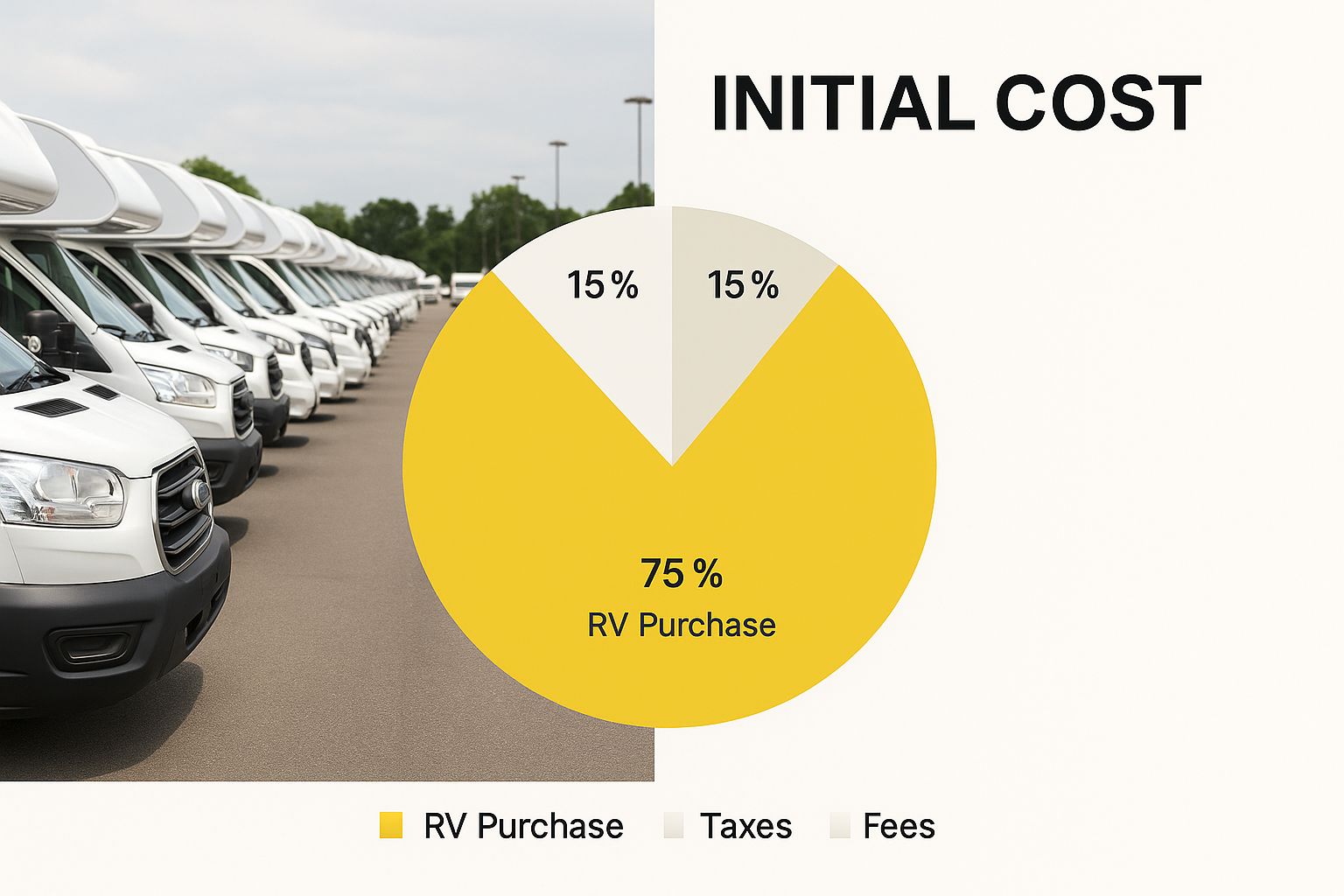
As you can see, that initial price tag is the first and biggest financial hurdle you'll face when buying new. It’s a major factor that shapes everything else.
This isn't just about the sticker price. It's about deciding what you value more: the security of a warranty and modern features, or the huge savings and slower depreciation that come with a pre-owned rig.
At the end of the day, there's no single right answer—it’s completely personal. A new RV is a fantastic choice if you want to hit the road without worrying about immediate repairs, making it perfect for first-timers or full-timers who need reliability.
A used RV, however, is a dream for budget-conscious adventurers, DIY-savvy folks, or weekend warriors who are happy to trade a warranty for a much lower cost of entry and better long-term value.
When you’re weighing a new vs used RV, the sticker price is just the tip of the iceberg. It’s the starting point, sure, but the real cost of ownership is a sprawling web of finances that plays out over many years. Getting a handle on these details is the only way to make a smart investment that actually fits your budget and your travel dreams.
A new RV gives you a predictable, if high, number to start with. A used one, on the other hand, is much easier to get into financially but can throw you a few curveballs down the road. The trick is to see past the shiny new models in the showroom or the tempting price tag on a used rig and really calculate what you'll be spending in total.
The single biggest financial difference between buying new and used is depreciation. It’s a beast. A brand-new motorhome or travel trailer loses value just like a luxury car—a huge chunk of it vanishes the second you drive off the lot.
This initial hit is no small thing. On average, a new RV can plummet in value by 20% to 30% in the first year alone. That means your shiny $100,000 rig might only be worth $70,000 by its first birthday. That’s a $30,000 loss you just absorbed.
Buying a used RV means the original owner has already taken the steepest depreciation hit for you. You're getting an asset that will lose value much more slowly, protecting your investment and giving you more financial peace of mind.
Once an RV is about three to five years old, it’s already weathered that initial financial storm. It will still depreciate, of course, but the decline is far more gradual. This is why a used rig is often the smarter financial move if you're worried about keeping as much of your capital as possible.
How you'll pay for the RV is another big fork in the road. Lenders absolutely love financing new vehicles, and RVs are no exception. They’ll typically roll out the red carpet with better interest rates and longer loan terms because the asset is brand new, has a clear high value, and no history of problems.
Getting a loan for a used RV can be a bit more work. Banks might bump up the interest rates or offer shorter terms, especially if the model is over 10 years old. But here’s the thing: because the total loan amount is so much lower, even a slightly higher interest rate can still result in a much smaller, more manageable monthly payment.
Here’s a quick look at how the numbers might shake out:
| Factor |
New RV Scenario |
Used RV Scenario |
| Purchase Price |
$90,000 |
$50,000 |
| Typical Interest Rate |
~7.5% |
~9.0% |
| Loan Term |
20 Years |
15 Years |
| Estimated Monthly Payment |
~$740 |
~$507 |
Remember, these are just ballpark figures. Your actual rates and terms will depend on your credit and the lender.
Insurance follows the same logic. A brand-new, high-value RV is going to cost more to insure than an older model with a lower replacement cost. That difference can add a significant chunk to your annual operating budget.
Beyond the big-ticket items, both new and used RVs have their own little "gotchas"—hidden costs that can catch you by surprise.
With a new RV, the factory rarely includes everything you need to actually go camping. You’ll have to outfit it yourself, which means buying all the essentials.
- Sewer and water hoses
- A quality surge protector and electrical adapters
- Leveling blocks and wheel chocks
- All the kitchen supplies, bedding, and towels to make it a home
This initial shopping spree can easily add another $1,000 to $3,000 to what you thought you were spending.
On the used side, the hidden costs are all about maintenance and repairs. Even if you get a great inspection, an older rig will almost always need a little TLC right away. You should plan for things like:
- Replacing old tires (this is a big one)
- Servicing the generator and major appliances
- Resealing the roof and windows to prevent leaks
- Upgrading batteries or other outdated tech
My rule of thumb? Always set aside a "fix-it" fund of 10-15% of the purchase price for a used RV. Having that cash ready means you can tackle any immediate needs without stress, making your decision in the new vs used RV debate a well-calculated one.
When you're weighing a new vs. used RV, it’s easy to assume "new" automatically means more reliable. But after years in this industry, I can tell you the reality is much more complicated. It’s really a trade-off between a factory warranty on a brand-new rig and the proven track record of a pre-owned one. Your game plan for getting a dependable RV will look completely different depending on which way you go.
There's no denying the appeal of a new RV. It's pristine, untouched, and everything is fresh from the factory. You don't have to wonder about a hidden history of shoddy repairs or neglect. This clean slate comes with a powerful safety net that you just don't get with a used model.
The biggest perk of buying new is the comprehensive manufacturer's warranty. This is your backstop, typically covering you for one to two years against defects in how the RV was built. If the slide-out motor gives up the ghost or the furnace decides to quit in the middle of a cold night, the manufacturer foots the bill for the repair.
For a first-time RVer, that peace of mind is huge. But—and this is a big but—new RVs are rarely perfect right off the lot.
You’ll often hear experienced owners talk about the "shake-down" period. This is the first few trips where all the little kinks and bugs from the assembly line start to surface. While the warranty covers the cost of fixing them, it doesn't cover your time or the frustration of having your travel plans derailed by trips back to the dealership.
Buying a used RV is a different ballgame entirely. Most are sold "as-is," which means the moment you drive away, every problem is your problem. This is exactly why a professional Pre-Purchase Inspection (PPI) is not just a good idea—it's absolutely essential.
Hiring a certified RV inspector is the single most important thing you can do to protect yourself. A good inspector will crawl over, under, and through that rig for hours, testing every system and looking for red flags you’d never spot on your own. This isn't just a quick look-around; it's a deep dive.
A professional inspection should cover:
- Life Safety Systems: Testing the propane (LP) system for leaks, checking smoke and CO detectors, and making sure emergency exits actually work.
- Water Intrusion: This is the big one. An inspector uses moisture meters to find hidden leaks around seams, windows, and in the roof—the silent killer of RVs.
- Appliance Checks: Running the fridge, A/C, furnace, and water heater on all power sources to ensure they perform as they should.
- Structural and Mechanical Health: A close look at the frame for rust or damage, the suspension, axles, tires, and the condition of the roof.
A comprehensive pre-purchase inspection isn't an expense—it's an investment. It's the single most effective tool for mitigating the risks of buying used and can save you thousands in unexpected repairs.
The inspection report does two things for you. First, it can reveal a deal-breaker, saving you from a money pit. Second, it becomes your best negotiation tool. You can use the list of issues to ask the seller for a lower price or to get things fixed before you sign on the dotted line.
This is more important than ever. Even when new RV sales dip, the used market often stays strong. As prices and interest rates for new rigs climb, more people turn to the pre-owned market for a more affordable way to get started. We're seeing a surge in private sales of used RVs, which shows just how much demand is out there. You can get more insights on these RV sales trends from Bish's.
With a used RV, its reliability is a known quantity. It has a story. A thorough inspection lets you read that story and decide if you want to be the next chapter. And often, you're getting a rig where the first owner has already dealt with all those initial shake-down bugs for you.
When you're weighing a new vs. used RV, you're really deciding between two very different paths to your ideal travel setup. One offers the latest and greatest right off the lot, while the other gives you a foundation to build on, often with the savings from the purchase price fueling your vision.
A brand-new RV is essentially a showcase of current technology. Manufacturers are constantly competing to add the newest comforts and conveniences, from smart home systems and factory-prepped solar to highly efficient appliances. Buying new often means you get to pick your floor plan and interior finishes, so it feels like yours from the moment you drive away.
For a lot of people, the biggest draw of a new RV is that it’s simply ready to go. You don't have to spend your first few weekends tearing out old carpet or troubleshooting a finicky water heater. Everything is clean, works as it should, and is backed by a manufacturer's warranty.
This is a huge deal for complex systems that are a major headache to install later. Think about features like:
- Integrated Smart Controls: Managing your lights, slides, and awnings from a single touchscreen is a luxury that's hard to retrofit.
- Factory Solar & Lithium Systems: These are engineered to work perfectly with your RV's electrical system, professionally installed, and warrantied.
- Advanced Construction: Newer models often use composite materials that are lighter and better insulated, which makes a real difference in extreme weather.
If your top priority is to start traveling immediately with the best tech and zero projects, a new RV is tough to beat. It’s a finished product, polished and prepared for adventure.
While a new RV gives you that out-of-the-box perfection, a used RV offers something just as valuable: potential. That lower price tag isn't just a discount—it's your renovation budget. This freedom lets you turn an older rig into a custom-built machine that can easily outshine a standard factory model.
Buying used is often a trade-off: you swap factory-installed features for the freedom to create a camper that's perfectly suited to how you travel. The money you save upfront is your ticket to customization.
Let's say you save $20,000 by choosing a used fifth wheel. You could turn around and invest $10,000 into a top-tier off-grid solar and battery bank, and still have money left over for new flooring and furniture. We see it all the time—creative owners taking a well-built older RV and giving it a complete, modern overhaul.
This DIY spirit is a powerful force in the RV market. Even when the industry sees dips and changes, the demand for solid, customizable used rigs stays strong. For example, some older Class C motorhomes hold their value exceptionally well because people know they're a great platform for a custom build. If you're curious about market trends, you can find great data on the state of the RV industry from Statistical Surveys.
Ultimately, the choice comes down to what you value more. Do you want to pay for ready-made features, or for the freedom to create your own? A new RV is for the RVer who wants convenience and cutting-edge tech now. A used RV is for the adventurer who sees a blank slate and an opportunity to build their dream on wheels.
The best RV isn't always the flashiest or the most expensive—it's the one that feels like a natural extension of how you travel. To really settle the new vs used RV debate for yourself, you have to get honest about your adventure style. Your decision should be shaped by your actual plans, not just a glossy brochure.
After all, different travel styles put different demands on a rig. A full-timer's needs are worlds apart from a weekend camper's, and a hands-on renovator is playing an entirely different game.
Do you picture your RV life as a series of short, sweet getaways? Think long weekends, holiday trips, and maybe a week-long vacation once a year. If so, your goal is to maximize that precious time on the road without sinking a fortune into a rig that sits idle most of the time.
For this kind of casual use, a well-maintained used RV is often the perfect fit. You completely sidestep that initial, brutal depreciation hit, which is a huge financial advantage for something that isn't a daily driver. The cash you save upfront can go directly into your travel fund for fuel, campground fees, and unforgettable experiences. The trick is to invest in a thorough pre-purchase inspection to make sure you're getting a reliable rig without the brand-new sticker price.
Living in your RV full-time changes everything. This isn't just a vehicle anymore; it's your home, your office, and your ticket to freedom. When you're logging thousands of miles a year, things like reliability, comfort, and simple peace of mind become absolute necessities.
This is where a new RV is almost always the smarter, safer bet. That comprehensive manufacturer's warranty isn't just a piece of paper; it's a critical safety net protecting you from the kind of major repair bill that could derail your entire lifestyle. You also get the benefit of modern, energy-efficient appliances and the latest construction standards, which makes a real difference in daily comfort. Yes, the initial cost is higher, but you're buying security for a life that completely depends on it.
For full-time living, a new RV's warranty and modern systems provide a critical foundation of reliability. You're not just buying a vehicle; you're investing in a home that needs to be dependable, day in and day out.
This commitment to a life on the road is becoming more common than ever. The expanding global RV market on amraandelma.com shows just how much this travel style is growing in popularity worldwide, moving far beyond its traditional North American roots.
Then there are those of us who see an RV as more than just a camper—it's a project. If you love getting your hands dirty and see a dated interior as a blank canvas, you're in this camp. The goal isn't to buy a finished product, but to build a custom rig that perfectly fits your vision and needs.
For the DIY crowd, a vintage or older used RV is the undisputed champion. The low entry price leaves plenty of room in the budget for the fun part: the renovations. You can tear out the old dinette, install a powerful solar setup, and completely redesign the floor plan without a second thought about voiding a warranty or hurting resale value. This path offers total freedom to create a one-of-a-kind home on wheels that no factory could ever produce.
At the end of the day, the new versus used RV debate isn't about finding the "best" option—it's about finding the best option for you. It all boils down to your budget, how much risk you're comfortable with, and what you envision for your travels.
By now, the trade-offs should be pretty clear. A new RV gets you the latest features and a warranty that lets you sleep at night, but it comes with a premium price tag. On the other hand, a used RV can be an incredible value, especially if you don't mind getting your hands dirty with a few projects.
Let's shift from general pros and cons to what really matters: your specific situation. Take a minute to think through these questions honestly. There are no wrong answers here, just the ones that will lead you to the right rig for your life on the road.
First, let's talk money.
- What's my all-in, real-world budget? Don't just think about the sticker price. Factor in taxes, registration, insurance, and a solid cushion for those inevitable first-year costs, whether it's repairs or just outfitting your new home-on-wheels.
- How would a surprise repair bill affect me? If a sudden $2,000 expense would throw your finances into a tailspin, the security blanket of a new RV's warranty might be worth every extra penny.
Now, think about your personality and skills.
- How much maintenance am I actually willing to do? Do you enjoy the challenge of figuring out why the water heater is acting up, or does that sound like an absolute nightmare? Be realistic about your DIY comfort level.
- Are the newest gadgets and modern decor a must-have for me? Or would you be just as thrilled in a well-loved older model, knowing you've got thousands of extra dollars to spend on gas and campsite fees?
The heart of the new vs. used RV question is simple: Are you buying a product or a project? A new RV is a turnkey product, ready for adventure. A used RV is often a project, trading a lower price for your time and willingness to make it your own.
Answering these questions honestly makes the decision much less intimidating. If your budget is tight and you love a good project, a used RV is an amazing way to get on the road for less. But if you value reliability above all else and just want to start traveling without a fuss, a new RV offers a clear, worry-free path.
Whichever direction you go, making a well-informed choice is your first real step toward a whole lot of adventure.
When you're weighing the pros and cons of a new versus used RV, a few key questions always seem to pop up. Let's tackle them head-on, so you can move forward with confidence and find the right rig for your adventures.
Hands down, the most expensive mistake is skipping a professional, independent pre-purchase inspection (PPI). It’s easy to get caught up in the excitement, but an expert inspector is trained to spot the deal-breakers you might miss—subtle signs of water damage, frame issues, or electrical problems.
Relying on the seller's word or your own quick once-over is a huge gamble. That inspection fee might feel like an extra cost upfront, but it can save you from a nightmare of unexpected repairs that could cost thousands down the road. It's the best insurance you can buy.
The depreciation on a brand-new RV is steep. You can expect it to lose 20% to 30% of its value in the very first year. That’s a massive financial hit, and it's one of the most compelling reasons to consider a gently used model instead.
When you buy a used RV that's a few years old, you're letting the original owner take that initial depreciation hit for you. Your investment becomes much more stable from day one.
That immediate drop in value is a guaranteed financial loss on a new RV. A used rig, on the other hand, has already gone through its most dramatic depreciation phase, giving you a much better value retention.
It can be a little tougher, but it's absolutely doable and very common. Lenders sometimes favor new RVs with slightly better rates because the collateral is brand new and has a higher, more predictable value.
That said, plenty of banks and credit unions offer great financing for used RVs, especially if they're less than 10 years old. Your credit score is the most important piece of the puzzle. Plus, since the sticker price is so much lower on a used unit, your total loan amount will be far more manageable.
That's a common myth, but the reality is quite different. New RVs almost always have a "shake-down" period. During your first few trips, you'll likely uncover a list of bugs and glitches—things that weren't assembled quite right or components that failed early.
While the warranty will cover these fixes, it still means your new rig will be spending time at the dealership instead of the campground. It’s a classic trade-off: with a used RV, you might be fixing someone else's wear and tear, but with a new one, you're often sorting out the factory's mistakes.
Ready to explore your options? At Searchshop, we provide a massive selection of both new and used RVs to fit any travel style and budget. Use our powerful search tools and expert resources to find the perfect rig for your next adventure. Find your dream RV today at Searchshop.