By Searchshop Editorial Team17 min readSeptember 12, 2025Updated January 2, 2026
Some links in this article are affiliate links. If you buy through them, Searchshop may earn a commission at no extra cost to you. Learn how this works.
So, you're ready to find the perfect RV for sale in NC. It’s a great choice. From the winding mountain roads of the Blue Ridge to the sandy shores of the Outer Banks, North Carolina is a paradise for RV travelers, and that means you've got a fantastic local market to explore for your next adventure vehicle, whether it's an RV or a boat.
Let's get you started on the right foot.
Getting a Feel for the North Carolina RV & Boat Market
Before you even start looking at listings, it helps to understand what makes buying in the Tar Heel State unique. We have a huge community of outdoor lovers here, which keeps the demand for everything from rugged campers and fishing boats to luxury motorhomes pretty high all year round.
This isn't just a niche hobby; it's a big part of the state's economy. North Carolina’s overall automotive industry, which includes RVs, kicked in about $1.85 billion in state tax revenues as of 2024. For a buyer, that’s good news—it means plenty of dealerships and a healthy, competitive market full of both new and used inventory. You can dig into more of those numbers by checking out North Carolina's automotive economic impact.
Which RV Type Fits Your North Carolina Adventure
To avoid getting overwhelmed by the sheer number of options, the very first thing to do is think hard about how you’ll actually use your RV. A weekend warrior hitting up Pisgah National Forest has very different needs than a family planning a summer-long trip up the coast.
This little table breaks down the main players to help you zero in on what makes sense for your travel style.
RV Class
Typical Size (Feet)
Best For
Average NC Price Range
Class A
29-45
Full-timers, large families, luxury travel
$90,000 - $300,000+
Class B
17-23
Solo travelers, couples, easy driving & parking
$75,000 - $150,000
Class C
21-35
Families, weekend trips, a balance of space & maneuverability
$60,000 - $200,000
Travel Trailer
12-35
Flexible camping, requires a tow vehicle, budget-conscious buyers
$20,000 - $80,000
Fifth Wheel
25-45
Long-term stays, spacious living, requires a heavy-duty truck
$45,000 - $150,000+
Think of these categories as a starting point. Your perfect fit will depend on your budget, your tow vehicle (if you have one), and what "comfort" means to you when you're on the road.
My two cents: Don't just shop for the biggest RV you can afford. Buy for the experience you want to have. The best rig is the one that gets you out there without being a hassle to drive, park, and maintain.
Where to Find Your Ideal RV or Boat in NC
Alright, you've figured out what kind of recreational vehicle fits your lifestyle. Now for the fun part: finding that perfect RV for sale in NC. The search will almost immediately split into two paths—you're either looking at established dealerships or browsing listings from private sellers.
There’s no right or wrong answer here, just different experiences. Dealerships are great because they offer a huge selection of both RVs and boats, can help you with financing, and might even throw in a warranty. That peace of mind is a big deal, especially for first-timers. On the flip side, a private seller might offer a better price and give you the rig’s entire life story, straight from the source. It really boils down to your budget, how comfortable you are checking out the mechanicals, and what kind of support you want after you drive off.
Remember, a great deal isn't just about the price tag. The best value comes from finding a well-maintained RV or boat, whether it's from a large lot in Raleigh or a private driveway in Asheville.
Keep in mind that national trends play a big role in what you'll find here in North Carolina. In 2024, dealers sold more RVs (356,518 units) than were actually produced, which tells us they were digging into their existing inventory. This can be good news for buyers, as dealerships are often motivated to move older models to make room for new ones. You can get a better sense of these numbers by checking out some of the recent RV sales trends.
Vetting Online Listings Like a Pro
Let's be real—your search is going to start online. But scrolling through listings for RVs and boats requires a sharp eye, because not all ads are created equal. Learning to spot the red flags from the get-go will save you a ton of headaches and wasted trips. A good listing should feel honest and comprehensive.
Here’s what I always look for when I'm sizing up an online ad:
Plenty of Good Photos: I want to see everything. Clear, bright pictures of the inside, outside, the roof, the tires, and even the undercarriage. If I only see one or two blurry shots, I’m immediately suspicious.
A Detailed Story: A seller who cares will tell you the year, make, model, mileage, and a full rundown of features and recent upkeep. Vague phrases like "runs great, needs TLC" are a huge red flag for me.
Proof of Upkeep: The best listings will mention that maintenance records are available. That’s a great sign that the owner has been diligent and has nothing to hide.
Getting Your Hands Dirty: The Pre-Purchase Inspection
So, you’ve found an RV for sale in NC that looks perfect online. The pictures are great, the description checks all your boxes—that's a fantastic start. But now comes the most important part of the entire process: the in-person inspection. This is where you roll up your sleeves and confirm that the reality matches the ad. A thorough, hands-on walkthrough is your single best tool to avoid buying someone else’s problem.
Shop RVs For Sale
Browse current rvs from dealers near you — updated daily.
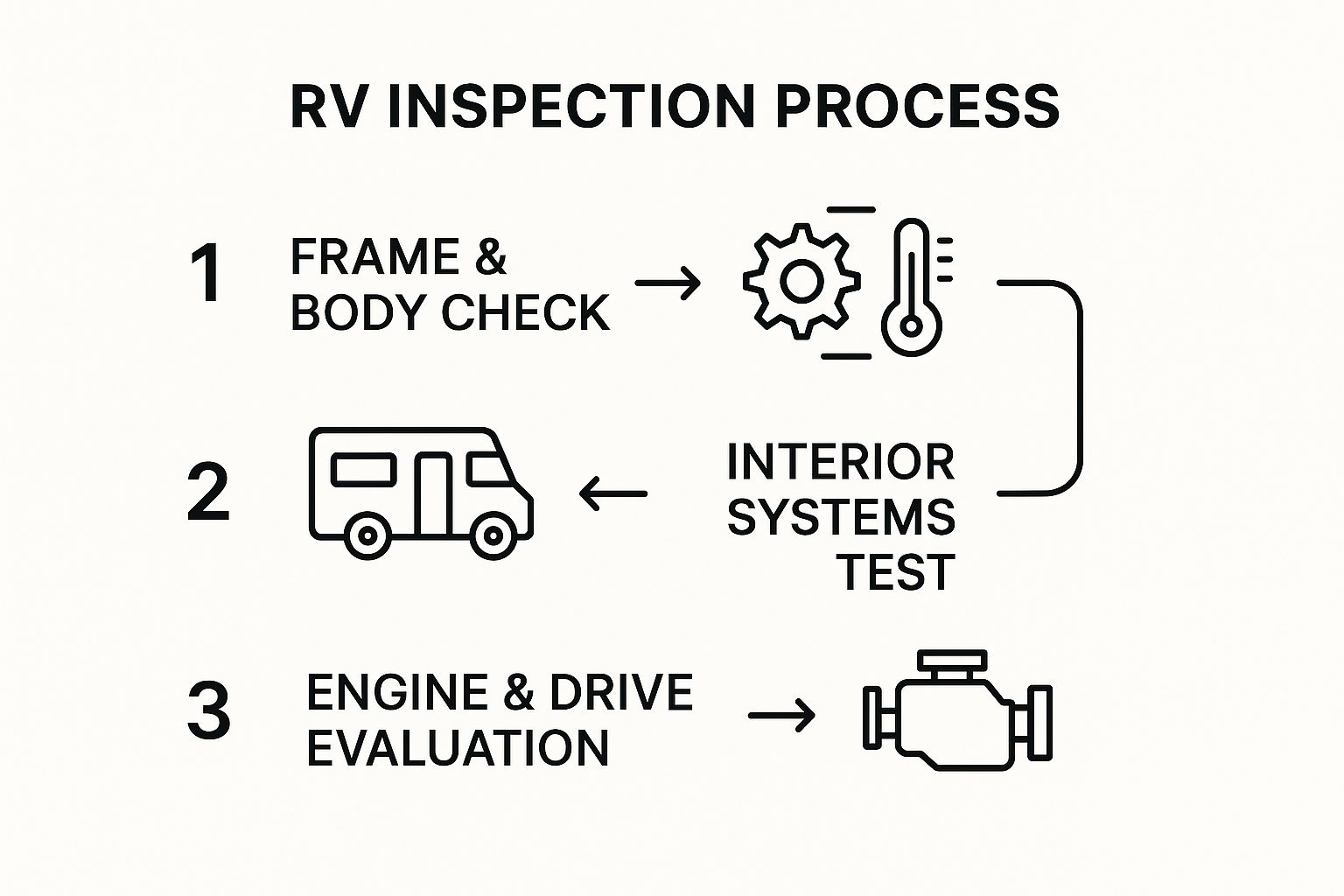
It's easy to feel overwhelmed by the sheer number of systems and components on a modern RV. Don't be. The trick is to have a plan. I always tell first-time buyers to tackle it methodically: start with the exterior shell, move to the interior living space and systems, and finish with the mechanicals. A systematic approach keeps you focused and prevents you from missing a deal-breaker.
This flowchart breaks down a solid inspection process, moving from the outside in.
There’s a reason for this order. It forces you to evaluate the rig's fundamental structure—the roof, walls, and chassis—before you get distracted by the shiny appliances and cool floor plan inside. It’s a way to keep your head in the game and not fall for a pretty interior when the foundation is crumbling.
First Things First: The Exterior Shell and Chassis
Always begin your inspection on the outside, and start at the top. The roof is ground zero for the most catastrophic (and common) RV issue: water damage. Get up there if you can safely do so and look for cracked, peeling sealant around every vent, skylight, and seam. Even small cracks are an invitation for water to get in, and neglected sealant is a massive red flag.
From there, do a slow walk around the entire rig. Squat down and sight down the walls, looking for any bubbles, waves, or ripples in the fiberglass siding. This is called delamination, and it’s a telltale sign that water has penetrated the wall. It’s also an incredibly expensive fix. While you’re down there, inspect the tires. Check the tread, of course, but more importantly, find the DOT date code stamped on the sidewall to see how old they are. Look closely for any fine cracks, especially between the treads and on the sidewalls.
Pro Tip: New RV owners often check tread depth and call it a day. That's a huge mistake. RV tires rarely wear out; they age out. UV exposure and sitting for long periods cause the rubber to break down. Any tire over five to seven years old is a safety hazard and needs to be replaced, which can be a hefty expense right off the bat.
Knowing When to Call in a Pro
If you’re new to the world of RVing, or if you're looking at a rig that represents a major financial investment, do yourself a favor: hire a certified RV inspector. It's some of the best money you'll ever spend. These folks are trained to spot things you'd never notice. They use specialized tools like moisture meters and thermal cameras to uncover hidden leaks, electrical gremlins, and propane system faults.
When you're looking for an inspector in North Carolina, don't just pick the first name you find. Vet them properly by asking a few key questions:
What's included in your inspection? You want a comprehensive report that covers all major systems: plumbing, LP gas, electrical (12-volt and 120-volt), appliances, and the chassis.
Can you send me a sample report? This is the best way to see the level of detail they provide. A good report is dozens of pages long with photos and detailed notes.
Think of it this way: an inspection might cost a few hundred dollars, but it can easily save you thousands in repairs you didn't see coming. It’s an investment in your peace of mind.
How to Negotiate Your Purchase Price
So you’ve found the one. The excitement is real, but now comes the part that can save you thousands: the negotiation.
Walking into that conversation cold is the fastest way to leave money on the table. Before you ever talk numbers, you need to arm yourself with a solid understanding of the RV's fair market value.
Start your homework online. Resources like NADAguides are a fantastic place to get a baseline value for nearly any make and model. But don't stop there. The real magic happens when you look at local listings to see what a comparable RV for sale in NC is actually listed for. That local data is your most powerful negotiating chip.
Turning Your Inspection Into Bargaining Power
Remember that thorough inspection we talked about? It’s not just for your peace of mind—it's your single best negotiation tool.
Every single issue you found, from the small stuff like a sticky cabinet latch to bigger-ticket items like aging tires or a weak water pump, is a future out-of-pocket expense for you. This is where you can make a fact-based case for a lower price. The key is how you present it.
A respectful, matter-of-fact approach is far more effective than an aggressive one. Try something like this: "I really love this layout, and it's in great shape overall. My inspection did show that the tires are from 2017, and for safety, they'll need to be replaced right away. That's a $2,000 job. How can we work that into the price?"
See the difference? You’re not just demanding a discount; you're anchoring your request to a real, justifiable cost. You're shifting the conversation from a tug-of-war over price to a practical discussion about the RV's true condition.
Navigating Dealer Versus Private Seller Talks
Your strategy will need to shift slightly depending on who you're buying from.
With a dealership:
They have more wiggle room on price but also employ professional salespeople.
Be polite but firm. Know your absolute maximum price before you start.
Don't be afraid to walk away. Seriously. It's your strongest move.
With a private seller:
The transaction is often more personal, and they might have an emotional connection to the rig.
Take a moment to build some rapport and hear their story.
Gently present your offer, backing it up with your market research and the inspection results.
At the end of the day, a fair offer backed by solid reasoning is compelling, whether you’re sitting across from a seasoned sales manager or the original owner in their driveway.
Finalizing the Sale Title and Financing
You’ve found the perfect RV, inspected every nook and cranny, and settled on a fair price. Now for the final hurdle: the paperwork. This is the moment your dream rig officially becomes yours, so getting the details right is non-negotiable.
Your first stop will be navigating the requirements of the North Carolina Division of Motor Vehicles (NCDMV). To successfully title and register an RV for sale in NC, you'll need a few key documents from the seller: the signed-over title, a comprehensive bill of sale, and proof of your new liability insurance. If the previous owner had a loan on the vehicle, you’ll also need a formal lien release document from their lender.
Securing Your Financing and Insurance
Unless you’re paying cash, you’ll need to line up financing. The good news is the recreational vehicle market is booming. Dealers nationwide brought in $25.9 billion in sales according to a recent census report, which is an incredible 81.5% jump in just five years. This explosion in popularity means you have plenty of financing options right here in North Carolina. If you're interested, you can dig deeper into the economic impact of RV sales.
You've got three main avenues for funding your purchase:
Dealership Financing: This is often the path of least resistance. The dealership’s finance office handles everything for you, and their rates can be surprisingly competitive, especially on brand-new models. Just make sure to compare their offer with outside options before signing.
Credit Unions: Never underestimate your local credit union. They are famous for offering some of the best interest rates and genuinely personal service. If you already have a good relationship with one, start there.
Specialized RV & Marine Lenders: These companies live and breathe RVs and boats. They understand the lifestyle and often offer more flexible terms, like longer loan periods, which can significantly lower your monthly payment.
Finally, before you can hitch up and hit the road, you absolutely must have insurance. Don't make the mistake of thinking your auto policy will cover it. RV and boat insurance are specialized products that protect your personal belongings, cover liability at campsites or on the water, and include accessories like awnings and fishing gear. Get quotes from several providers to find the right balance of coverage and cost for your adventure machine.
Got Questions About Buying an RV in NC? We’ve Got Answers.
Even the most seasoned researchers hit a point where a few nagging questions pop up right before pulling the trigger on a big purchase. It’s completely normal. Think of this as your go-to guide for those last-minute uncertainties we hear all the time from folks looking for an RV for sale in North Carolina.
These questions usually circle around timing the market, sorting out the legal stuff, and figuring out what you’ll actually pay. Let's tackle them head-on so you can move forward with total confidence.
When’s the Best Time of Year to Buy?
This is probably the number one question we get: "When should I really start looking?"
If you're hunting for the best possible deal, your sweet spot is the off-season. In North Carolina, that means from late fall to early spring—think October through March. Demand plummets during these colder months, and dealers are hungry to clear out last year's models to make room for the new inventory. This gives you some serious negotiating leverage.
Do I Need a Special Driver’s License?
The next big worry for many is licensing. It’s a valid concern, especially when you’re looking at some of the bigger rigs on the lot.
Good news: for the vast majority of RVs, your standard Class C driver's license is all you need. This covers any single vehicle with a weight rating under 26,001 pounds. However, if you've got your eye on a massive Class A motorhome that tips the scales over that limit, you might need to get a non-commercial Class A or B license. Always, always check the Gross Vehicle Weight Rating (GVWR) on the specific RV you’re considering.
Pro Tip: Most Class B vans, Class C motorhomes, and nearly all travel trailers fall safely under this weight limit. It's really only the largest diesel-pusher Class A models where you'll need to double-check the license requirements.
How Much Should I Budget for Taxes and Fees?
Ah, the "hidden" costs. Let's shine a light on them so there are no surprises when you’re signing the paperwork.
When you buy an RV or boat in North Carolina, you won’t pay the typical sales tax. Instead, the state has a 3% Highway Use Tax (HUT) that’s calculated on the sales price for RVs. The state also sets a maximum cap on this tax, which is a nice bonus. For boats, the tax rate is similar but collected by the NC Wildlife Resources Commission. Beyond that, you’ll need to budget for title and registration fees, which usually add up to a few hundred dollars. It's always a good idea to check the current tax caps and fee schedules directly with the appropriate state agency before you buy.
Ready to put this knowledge into action? At SearchShop.com, we give you everything you need to find, research, and compare thousands of RV and boat listings across North Carolina. Your next adventure starts right here: https://www.searchshop.com.
SE
Written by
Searchshop Editorial Team
Vehicle research & buying-guide team
The Searchshop editorial team researches and writes buying guides, model reviews, and category roundups across RVs, boats, motorcycles, ATVs, autos, and snowmobiles. We combine hands-on product research, live dealer inventory data, and manufacturer specifications to help buyers make confident decisions.
Reviewed by Searchshop Review Board — credentialed industry professionals.