By Searchshop Editorial Team23 min readOctober 28, 2025Updated January 2, 2026
Some links in this article are affiliate links. If you buy through them, Searchshop may earn a commission at no extra cost to you. Learn how this works.
Finding a Class A RV for sale is the first step onto a much bigger path. It’s an exciting moment, for sure, but the real magic happens during the research phase. This is where you lay the groundwork for a smart purchase, one that will lead to years of happy travels.
Getting Started on Your Class A RV Search
The dream of cruising down the highway in a big, beautiful Class A rig usually starts with a bit of online window shopping. It's easy to get swept away by a shiny new model, but hold on a second. Before you get your heart set on something, it’s critical to do your homework.
This isn’t just about picking a vehicle; it’s about making a series of smart choices that will define your life on the road. The happiest RV owners I know are the ones who put in the time upfront, long before they ever step onto a dealer’s lot. It really comes down to nailing down your budget, figuring out what you actually need, and then diving deep into research.
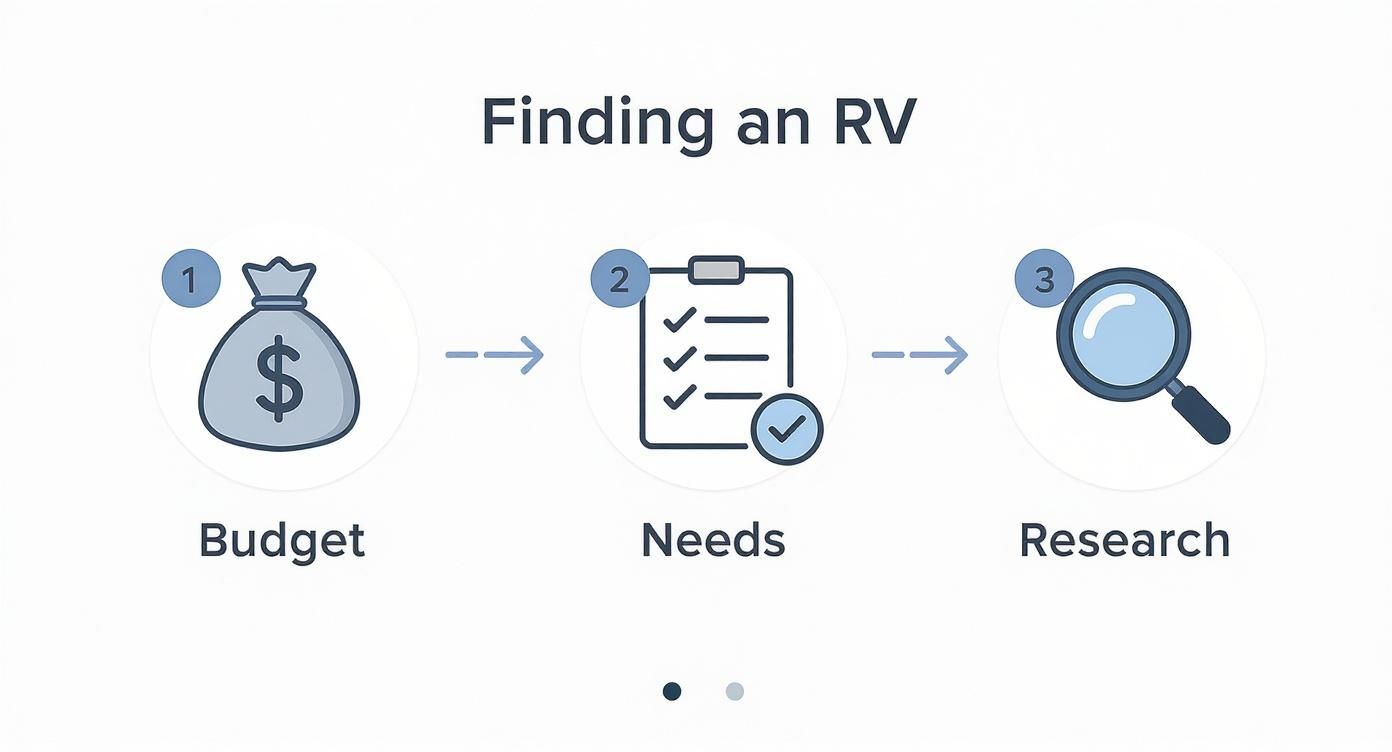
The infographic below really breaks down the smart way to approach your search.
As you can see, it all starts with the money. From there, you get clear on your personal needs, and then you hit the books (or, more likely, the internet). Following this path helps you make a decision you'll feel great about.
Nailing Down Your Budget and Must-Haves
First things first: let's talk money. Your budget needs to be more than just the sticker price. The total cost of owning a Class A is a different beast entirely—you've got to factor in insurance, storage fees, fuel, regular maintenance, and the inevitable repairs.
A good rule of thumb is to set aside an extra 10-20% of the RV's price for these annual costs. Trust me, doing this from the start prevents that dream purchase from becoming a financial headache.
With a realistic budget in hand, it's time to list your non-negotiables. Ask yourself a few key questions:
Who’s coming with you? The number of travelers directly impacts the sleeping arrangements you’ll need, whether that’s bunks for the kids or a pull-out sofa for guests.
How will you travel? Are you planning weekend getaways, long seasonal trips, or are you jumping into the full-time lifestyle? Full-timing demands way more storage, bigger tanks, and more robust, residential-style features.
Where are you headed? If you dream of boondocking and getting off the grid, you need to prioritize things like solar panels, a massive freshwater tank, and a dependable generator. When you start your search, it’s a great idea to learn about the power systems in these rigs, including the benefits of modern inverter RV generators.
Researching Brands, Models, and Floor Plans
Once you know your budget and what you need, the fun part begins: exploring specific models. Now’s the time to dive into owner forums, binge-watch YouTube review videos, and compare dozens of floor plans.
Manufacturer reputation is a huge deal in the RV world. Brands like Tiffin, Newmar, and Entegra have built a name for quality and customer service, but every manufacturer has its champions and its critics. Do your homework.
A classic rookie mistake is falling for a floor plan that looks amazing in a pristine showroom. You have to live in it in your mind. Walk through the space and pretend you're cooking dinner, getting ready in the morning, or just trying to relax after a long drive. That’s how you’ll know if a layout actually works.
When you're looking at any Class A RV for sale, zero in on models known for being solid and reliable within your price range. If you want to get into the nitty-gritty, a comprehensive database can give you all the specs and owner feedback you could ever want. You can learn more by exploring the wide world of Class A motorhome models to see what truly fits your criteria.
This research phase is your best defense against buyer's remorse. It's what ensures the motorhome you choose becomes a source of joy, not a headache.
New vs Used Class A RV Decision Matrix
Deciding between a brand-new rig and a pre-owned one is a major crossroads in the buying journey. Each path has distinct advantages and disadvantages. This table breaks down the key factors to help you figure out which is the better fit for your situation.
Consideration
New Class A RV
Used Class A RV
Initial Cost
Significantly higher purchase price.
Lower upfront cost due to depreciation.
Depreciation
High initial depreciation, losing 15-25% of value in the first year.
Slower depreciation; the first owner absorbed the biggest hit.
Warranty
Comes with a full manufacturer's warranty for peace of mind.
Often sold "as-is" or with a limited third-party warranty.
Condition
Pristine condition, no prior wear and tear.
Varies widely; requires a thorough inspection for hidden issues.
Customization
Can often be ordered with your choice of colors, fabrics, and options.
What you see is what you get; customization requires aftermarket modifications.
Technology
Features the latest technology, safety features, and modern amenities.
May have outdated technology and less efficient systems.
Maintenance
Fewer immediate repair concerns, but initial "shakedown" bugs are common.
Potential for more immediate repairs and maintenance needs.
Ultimately, there's no single right answer. A new RV offers a blank slate and the security of a warranty, while a used RV provides significant value and lets you avoid that steep initial depreciation. Your budget, tolerance for risk, and desire for the latest features will guide you to the best choice.
How to Navigate the Current RV Market
Before you even start looking at listings for a Class A RV, it pays to step back and get the lay of the land. The RV market is constantly shifting, shaped by everything from fuel prices and travel trends to the economy itself. Understanding what’s going on behind the scenes gives you a huge advantage when it's time to buy.
There’s no doubt about it—the appeal of mobile living has exploded. More people than ever are drawn to the freedom of the open road, whether for weekend getaways or a full-time lifestyle. This isn't just a passing fad; it's a fundamental shift in how people want to spend their time.
Of course, this surge in popularity directly affects the price and availability of motorhomes. The global recreational vehicle market was valued at around USD 56.35 billion recently and is on track to hit nearly USD 97.86 billion by 2033. That’s some serious growth, and it proves the RV lifestyle has staying power. You can dive deeper into the numbers by checking out the full recreational vehicle market research.
Technology is Reshaping the Modern Motorhome
If you haven't shopped for an RV in a while, you're in for a surprise. The Class A motorhomes rolling off the line today are technological marvels compared to models from even a decade ago. Tech isn't just an add-on anymore; it's woven into the very fabric of the design.
These aren't just flashy gadgets. The new systems are genuinely changing how people live on the road, making it more comfortable, connected, and downright easier.
Here are a few of the biggest tech shifts you'll see:
Integrated Smart Systems: Forget running around to flip a dozen different switches. New RVs often have a central command center—usually a touchscreen or an app on your phone—to control everything from the lights and slide-outs to your tank levels.
Factory-Installed Solar Power: Solar is quickly becoming a standard feature, not just a custom modification. This gives you the freedom to go boondocking without firing up a noisy generator.
Advanced Safety Features: Many of the safety features you’re used to in your car are now in Class A RVs. Things like adaptive cruise control, collision mitigation, and lane-keeping assist can make driving a 40-foot rig a lot less stressful.
Better Connectivity: With so many people working remotely, manufacturers have gotten serious about internet access. You'll find rigs equipped with powerful Wi-Fi boosters and cellular gateways to keep you online.
When you're looking at a Class A for sale, really think about how its tech package fits your travel style. A full-timer might love the convenience of a high-tech smart system, but it could be an expensive and unnecessary feature for a casual camper who prefers to keep things simple.
Shop RVs For Sale
Browse current rvs from dealers near you — updated daily.
All this innovation does add to the initial price tag, but it can also pay off in the long run. Not only will you enjoy your travels more, but these features add significant resale value down the road.
Fuel Efficiency and Drivetrain Choices
For a long time, the big debate for Class A buyers was simple: gas or diesel? That choice is still a major one, but the technology for both engine types has come a long way.
Today’s big gasoline V8s, like Ford's popular 7.3L "Godzilla", pack more punch and deliver better performance than ever before. Meanwhile, diesel pushers are still the undisputed kings of torque, longevity, and towing power, which is why they remain the go-to for full-timers and anyone planning to conquer serious mountain passes.
The real evolution, though, is in overall efficiency and chassis engineering. Manufacturers are working closely with chassis builders like Freightliner and Ford to fine-tune aerodynamics and use lighter, stronger materials. The result is a coach that handles better and squeezes out a few more precious miles from every gallon of fuel.
For instance, a new diesel pusher might get 7-9 MPG. That doesn't sound like much, but it's a real improvement that adds up to significant savings over a year of travel. Looking past the shiny countertops to understand these engineering details is how you spot a truly well-built machine. By staying on top of these market and tech trends, you're not just buying an RV for today—you're making a smart investment for all your adventures to come.
Mastering the Pre-Purchase RV Inspection
You’ve found it—the Class A that looks perfect online. The pictures are great, the floorplan is exactly what you wanted, and you can already picture yourself on the road. It’s an exciting moment, but now is the time to slow down and put on your detective hat.
A detailed, hands-on inspection is the single most important thing you can do to avoid buying someone else’s problems. This is more than a quick walkthrough; you need to poke, prod, and test every system. This is how you separate the well-kept gems from the money pits disguised with a fresh coat of wax.
Start with an RV's Worst Enemy: Water
Your first mission is to hunt for any sign of water intrusion, past or present. Water damage can be a deal-breaker, often leading to thousands in repairs.
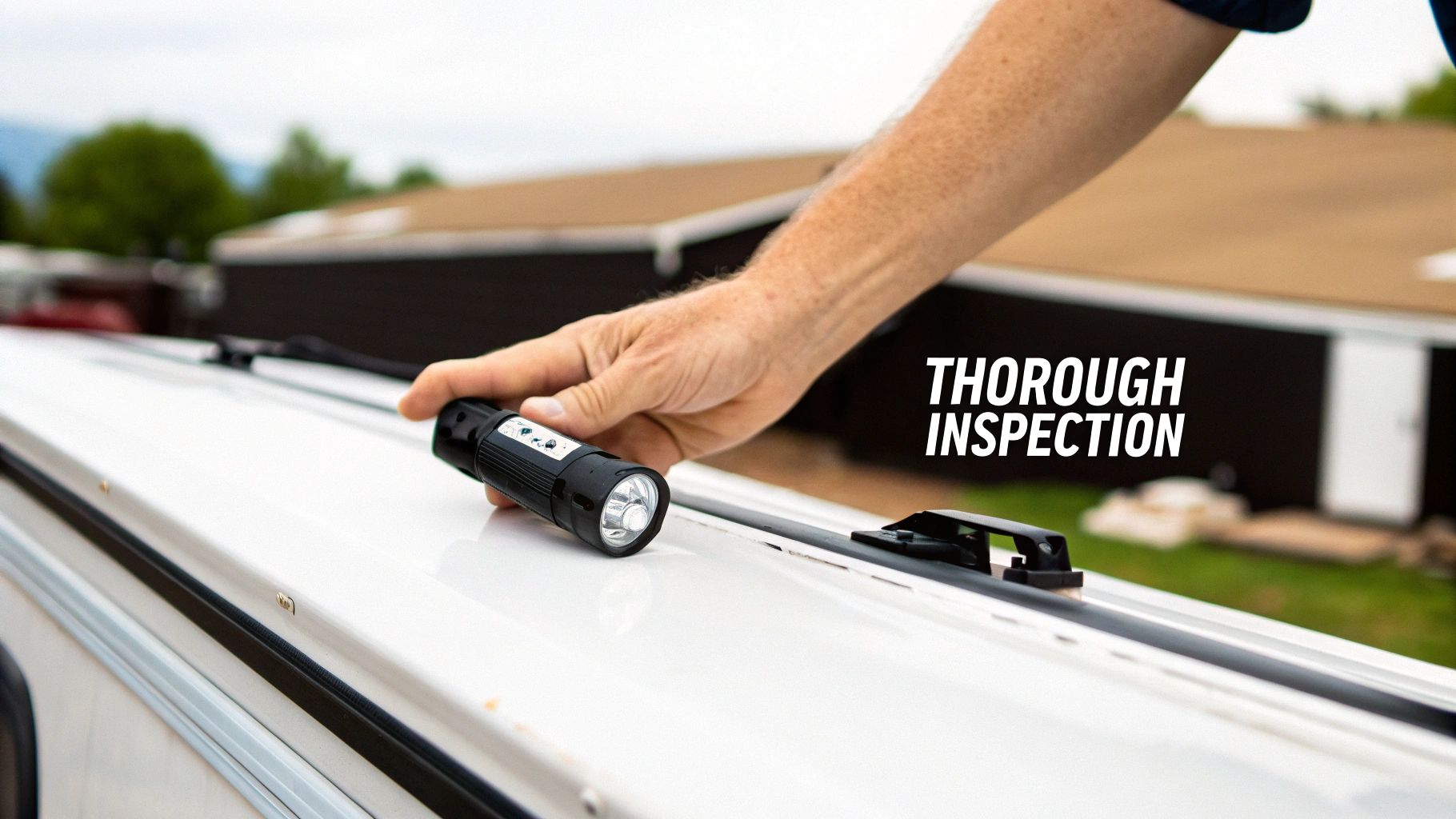
Get up on the roof. Check the sealant around every vent, skylight, and seam. You’re looking for any cracks, peeling, or gaps where moisture could get in. As you walk around, feel for any soft spots. A spongy feeling underfoot is a massive red flag for rot in the roof structure.
Inside, trust your nose. A musty, damp smell is a dead giveaway for hidden water damage. Scan the ceiling and walls for any stains, discoloration, or bubbling paint, especially inside closets and cabinets where leaks can hide for years.
Put Every Single System to the Test
A Class A is a complex machine, and you need to confirm that everything works as it should. Don't just take the seller's word for it.
Here’s a quick checklist to run through:
Slide-Outs: Run every slide-out in and out a few times. They should move smoothly without any strange grinding or jerking motions, which could signal a failing motor or alignment issue.
Appliances: Turn everything on. Run the air conditioners, fire up the furnace, and test the water heater. Check the fridge, microwave, and every burner on the stove.
Plumbing & Electrical: If you can, hook the RV up to shore power and a water connection. Run all the faucets, flush the toilet, and look for leaks under every sink. Flip every light switch and test every outlet to make sure both the 12-volt and 120-volt systems are working correctly.
Don't just turn things on—put them under load. It’s one thing to run a single AC unit. It's another to run both ACs while the microwave is on. This is how you find the weak spots that a simple on-off check will miss.
Underneath and Outside the Coach
What you see on the outside and underneath is just as important as the interior. This is where you’ll find clues about the RV’s structural and mechanical health.
First, check the tires. Don't just glance at the tread depth; find the DOT date code stamped on the sidewall. RV tires often age out long before they wear out. If they’re more than five to seven years old, you're looking at a big, immediate expense.
Next, get down on the ground and look under the rig. Check the frame for excessive rust, which could mean it lived in a salty or humid climate. Scan the engine, transmission, and generator for any fluid leaks. For a more detailed guide on this, check out our list of crucial RV inspection steps for spotting hidden issues that can save you a fortune.
When to Call in a Professional
Feeling a bit overwhelmed by all this? That’s perfectly normal. A Class A motorhome is an incredibly complicated piece of equipment, and it's easy for an untrained eye to miss something critical.
This is where hiring a pro can be the smartest money you'll spend in this entire process.
A certified inspector from an organization like the National Recreational Vehicle Inspectors Association (NRVIA) can perform an unbiased, multi-point inspection. They have specialized tools and the experience to spot problems you’d never notice. For a few hundred dollars, you get a detailed report on the RV’s true condition. This not only provides peace of mind but also gives you powerful leverage for negotiation.
Securing a Loan and Negotiating the Best Price
You've found the one! Finding the perfect Class A is an incredible feeling, but don't let the excitement rush you through the most important part—the deal itself. Walking into the financing office unprepared is a surefire way to leave thousands of dollars on the table.
Here’s the single most powerful move you can make: get your financing locked in before you talk numbers with a dealer. It completely changes the conversation. By getting pre-approved from your own bank or a credit union, you'll know exactly what you can afford and what interest rate you qualify for.
When you walk into a dealership with a pre-approval letter, you're not just a shopper anymore; you're a cash buyer in their eyes. This takes their financing out of the equation and lets you focus entirely on one thing: the price of the RV. It also gives you a fantastic benchmark. If their finance manager can beat your rate, great! If not, you’re already covered.
Arming Yourself for a Smart Negotiation
Knowledge is your best friend when it’s time to talk money. Before you even think about making an offer on any Class A RV for sale, you absolutely must know its real market value. Spend time on sites like RVUSA and dig through sold listings to find what that specific year, make, and model is actually selling for.
With that number in your head, you can make a confident first offer. A good rule of thumb, especially for used coaches, is to start 15-20% below the sticker price. Expect a counteroffer—it's all part of the dance. The trick is to be polite but firm, backing up your numbers with the research you did.
Your greatest negotiating power is your willingness to walk away. If the deal doesn't feel right or you're getting pressured, just say thank you and leave. You’d be surprised how often a better offer magically appears in a follow-up call a day later.
Navigating Dealer Add-Ons and Fees
The price you see on the vehicle is just one part of the overall purchase experience. Dealers offer a range of add-ons and services designed to enhance your ownership experience, protect your investment, and provide long-term peace of mind.
Extended Warranties: These plans can be an excellent way to protect your RV beyond the factory coverage. Dealer-backed warranties often provide comprehensive protection and convenient service options that third-party plans may not match.
Fabric and Paint Protection: Professional-grade protection packages help maintain your RV’s appearance and resale value. These coatings are applied with precision using specialized products that go beyond what’s available to most consumers.
Documentation Fees: Documentation or administrative fees cover the time and resources required to properly process your purchase, handle title and registration paperwork, and ensure compliance with state and federal regulations.
Taking the time to understand these options helps you make informed decisions about what best fits your lifestyle and budget. Dealerships aim to be transparent about costs and can walk you through each item to ensure you’re comfortable with every part of your investment. For more insights into financing your RV, explore our comprehensive guide on smart RV financing strategies.
Understanding North American Market Dynamics
When you're hunting for a Class A RV, where you shop can make a massive difference in both the price you pay and the selection you find. It might sound strange, but the market itself has its own rhythm, and learning to read it can save you a bundle.
North America is, by a long shot, the biggest and most active RV market on the planet. This isn't just a niche hobby here; it's a deep-rooted culture of hitting the open road. That constant demand, fueled by our love for road-tripping and exploring, creates a unique set of conditions you can use to your advantage.
The sheer scale is mind-boggling. The regional market is valued at around USD 21.8 billion, and North America makes up about 92% of the U.S. recreational vehicle market revenue. To put that in perspective, Americans registered 356,518 RV units in a single recent year. If you want to dig deeper into these numbers, you can find more RV marketing statistics that paint a fascinating picture of the industry.
The Role of Dealership Inventory and Rentals
Dealership inventory levels can work to your advantage as a buyer, but they also reflect a dealer’s commitment to offering variety and value. A well-stocked lot means you have more choices in models, features, and price points — all in one place. Dealers carefully manage their inventory to make sure customers can find both the latest models and great deals on previous-year options. It’s a win-win: you get selection and flexibility, and the dealer helps match you with the right RV at the right price.
Rental programs are another excellent avenue for value-conscious buyers. Many dealerships or partner rental companies maintain their vehicles with rigorous service schedules and professional care. When these rentals are offered for sale, they provide a unique opportunity to own a nearly new, well-maintained RV at a more affordable price. While they may show minor cosmetic wear, these vehicles are often in top mechanical condition — a testament to the dealer’s maintenance standards and commitment to quality.
By exploring both new inventory and certified ex-rental options, you can work with your dealership to find the perfect balance of price, performance, and peace of mind.
Buying Local vs. Traveling for a Deal
When it comes to finding the right RV, it’s natural to compare prices across regions—but there’s real value in working with your local dealership. Local dealers don’t just sell you an RV; they become your long-term partner for service, warranty work, and maintenance support. Building that relationship often pays off in convenience, personalized service, and priority assistance down the road.
That said, some buyers consider traveling for a deal on a specific model or configuration. If you do explore options outside your area, be sure to take smart precautions:
Request a detailed video walkthrough from the selling dealer so you know exactly what you’re getting.
Confirm the full, all-in price in writing before making any travel arrangements.
Ask about available inspection options—many reputable dealerships can coordinate third-party inspections for added peace of mind.
While traveling for a deal can sometimes save money upfront, buying locally offers lasting advantages—especially when it comes to service, support, and establishing a trusted relationship with a dealership that knows you and your RV. It’s about finding the right balance of value, confidence, and convenience for your journey.
Answering Your Top Class A RV Buying Questions
We've walked through the big steps—budgeting, inspecting, and even haggling—but I know there are probably a few questions still bouncing around in your head. It's completely normal.
Think of this as our final chat before you sign on the dotted line. Getting these last few details ironed out is what builds real confidence, ensuring you drive away in a motorhome that’s perfect for you.
What's the Biggest Mistake First-Time Class A Buyers Make?
Hands down, the most common pitfall is getting laser-focused on the purchase price and completely ignoring the total cost of ownership. That shiny sticker price is just your ticket to entry. The real costs pile up with insurance, storage, fuel, regular maintenance, and those unexpected repairs that always seem to pop up.
A good rule of thumb? Plan to budget an extra 10-20% of the RV's value annually for these expenses. Having that cash cushion turns potential disasters into minor inconveniences.
The other classic rookie error is falling in love with a floor plan that looks amazing on the lot but just doesn't work in the real world. You have to get in there and live in it for a few minutes. Pretend to cook a meal. Sit on the toilet and see if your knees hit the wall. Imagine watching a movie on a rainy day. Does the layout actually fit your life?
Should I Get a Gas or Diesel Class A?
This is the big one, and the right answer really boils down to your wallet and your travel plans. They both have their place.
Gas Models: These are your entry point. They have a lower upfront cost and are typically cheaper to maintain. Since the engine is basically a heavy-duty truck engine, you’ll find more mechanics who can work on them. If you’re a weekend warrior, a seasonal traveler, or someone planning shorter trips on mostly flat ground, a gas coach is a fantastic, practical choice.
Diesel Pushers: The higher price tag buys you some serious perks. Diesels deliver a ton of torque, which makes a world of difference when towing a car or climbing steep mountain grades. Because the engine is in the back (hence "pusher"), the ride is much quieter and smoother. They also get better fuel economy and boast engines that can last for hundreds of thousands of miles.
If you're dreaming of full-time RVing, crisscrossing the country, or putting serious miles on the odometer every year, the power and longevity of a diesel often make the initial investment well worth it.
"Your travel style should be the ultimate decider. A diesel's power is wasted on short, infrequent trips, just as a gas engine will feel strained if you're constantly tackling steep mountain passes with a car in tow."
How Important Is the Manufacturer's Reputation?
It’s everything. A manufacturer's reputation is a direct reflection of their build quality, how they treat customers, and whether they’ll stand behind their product when something goes wrong. Brands with a great reputation didn't get there by accident; they use better materials and smarter construction methods.
For you, this means a more reliable RV and fewer headaches down the road. Before you get serious about any a class rv for sale, you need to do your homework. Dive into owner forums. Read reviews. See what actual owners are saying about the specific brands and models you're considering.
No manufacturer is perfect, but sticking with a brand known for quality and owner support drastically improves your chances of a great experience. As the RV market grows, with new interest across Europe and Asia, understanding the bigger picture can be helpful. You can dig into these global recreational vehicle market trends to see how things are evolving. A company with a strong international footprint can sometimes make it easier to find parts and service, no matter where your travels take you.
At Searchshop, we believe an informed buyer is a happy owner. Our platform gives you the tools to research, compare, and find the perfect Class A RV for your next adventure. Start your journey and explore our extensive listings today!
SE
Written by
Searchshop Editorial Team
Vehicle research & buying-guide team
The Searchshop editorial team researches and writes buying guides, model reviews, and category roundups across RVs, boats, motorcycles, ATVs, autos, and snowmobiles. We combine hands-on product research, live dealer inventory data, and manufacturer specifications to help buyers make confident decisions.
Reviewed by Searchshop Review Board — credentialed industry professionals.