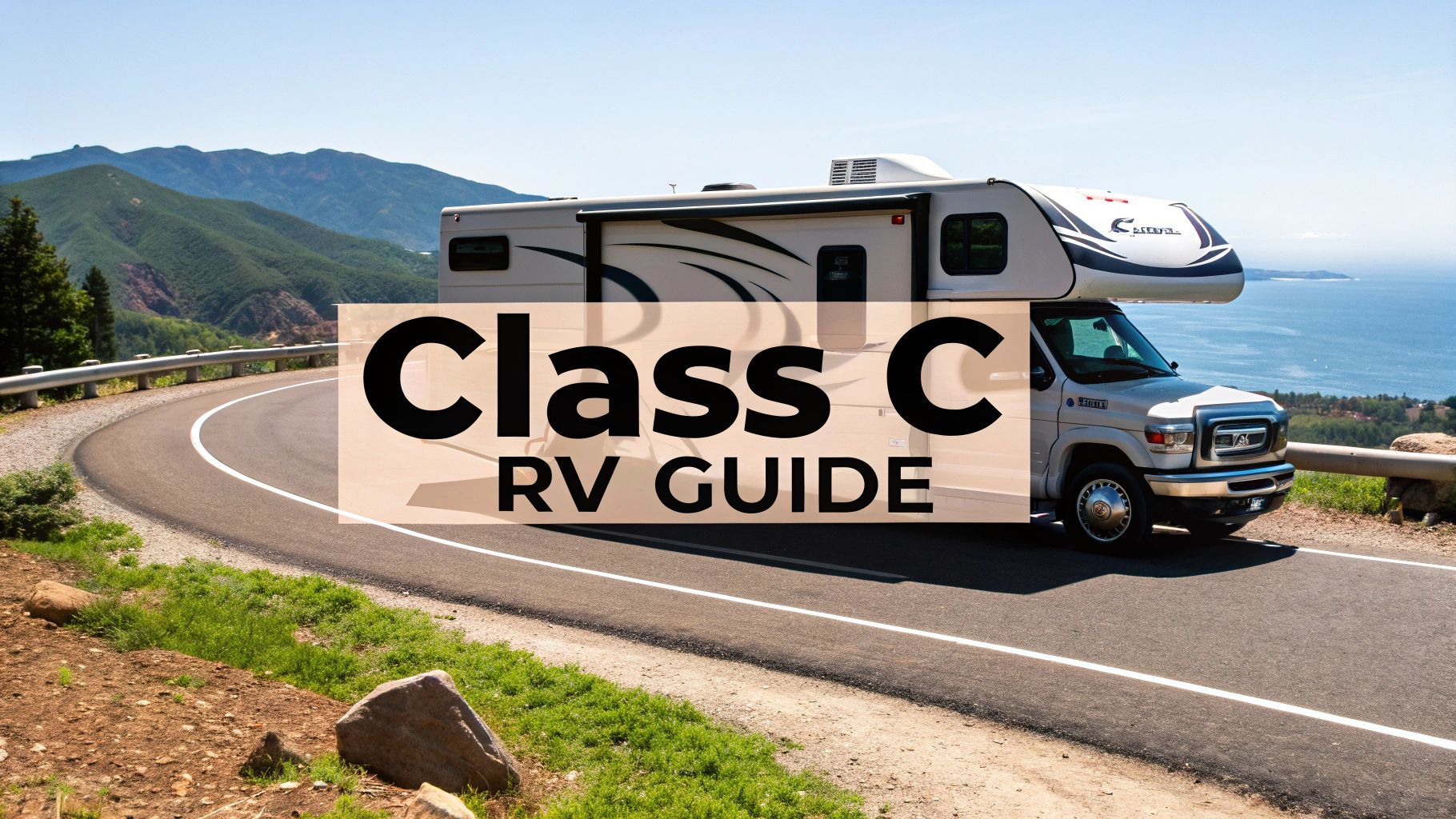
So, you're starting the hunt for a for sale RV Class C. Good choice. You’ve landed right in the sweet spot of the motorhome world. Class C RVs manage to strike that perfect balance between the roominess of a big Class A and the nimble feel of a smaller Class B. Think of them as the SUV of the RV market—they're practical, great for families, and always ready for the next adventure on the road or by the lake.
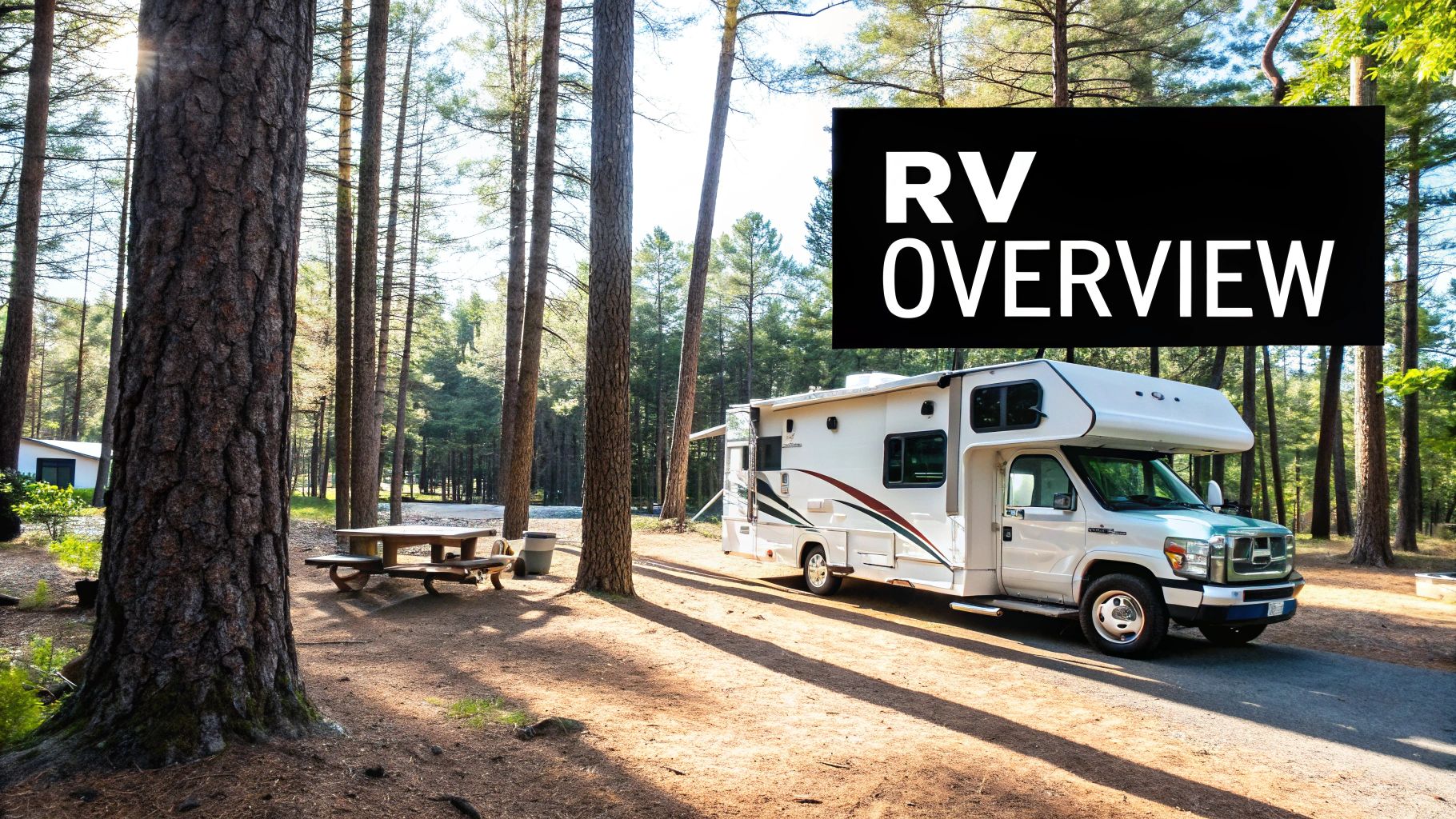
When you're new to RVing, the Class C is often the one that catches your eye first. Its most distinctive feature is that signature "cab-over" profile, which almost always holds an extra bunk or a handy storage space right above the driver's cabin. This smart design makes it a go-to for families who need more sleeping spots without giving up precious living space.
But they're not just for family trips. Couples love them for extended travel because they offer more amenities and storage than a campervan, all without the intimidating size of a bus-like Class A. Even solo travelers find the Class C to be a great fit, giving them all the comforts of home in a rig that's actually easy to drive and park, making it the perfect vehicle to tow a small boat for a weekend getaway.
The buzz around this type of RV isn't just talk; it's a major trend. People want more freedom and flexibility in how they travel, whether on land or water, and that has sent this part of the market soaring.
As of 2025, the global market for Class C RVs is sitting at around $5 billion. That's a huge number, and it’s driven by people having a bit more to spend and a real desire to get outdoors. Experts predict this segment will keep growing by about 6% each year through 2033, which tells you there's a lasting interest in this balanced style of motorhome. If you're curious, you can explore more data on the Class C RV market trends and see what the projections look like for the next few years.
A Class C RV offers a unique combination of comfort, convenience, and capability. It's built on a familiar truck or van chassis, making the driving experience less intimidating for newcomers while still providing the robust systems needed for life on the road.
This guide is your roadmap for navigating every for sale RV Class C listing you come across. We’ll break down everything you need to know to make a smart choice and find an RV that truly matches your travel dreams.
Here’s what you can expect to learn:
- Essential Features: We’ll demystify the famous cab-over bunk, slide-outs, and the different chassis options you'll encounter.
- Budgeting Realities: We'll get real about new versus used pricing and uncover the hidden costs of ownership.
- The Pros and Cons: An honest look at what it's really like to own and drive a Class C.
- Inspection Tips: A practical checklist to help you spot potential problems and find a solid, reliable rig.
By the time you're done here, you'll feel confident enough to look at listings, ask the right questions, and ultimately pick the perfect Class C for your journey.
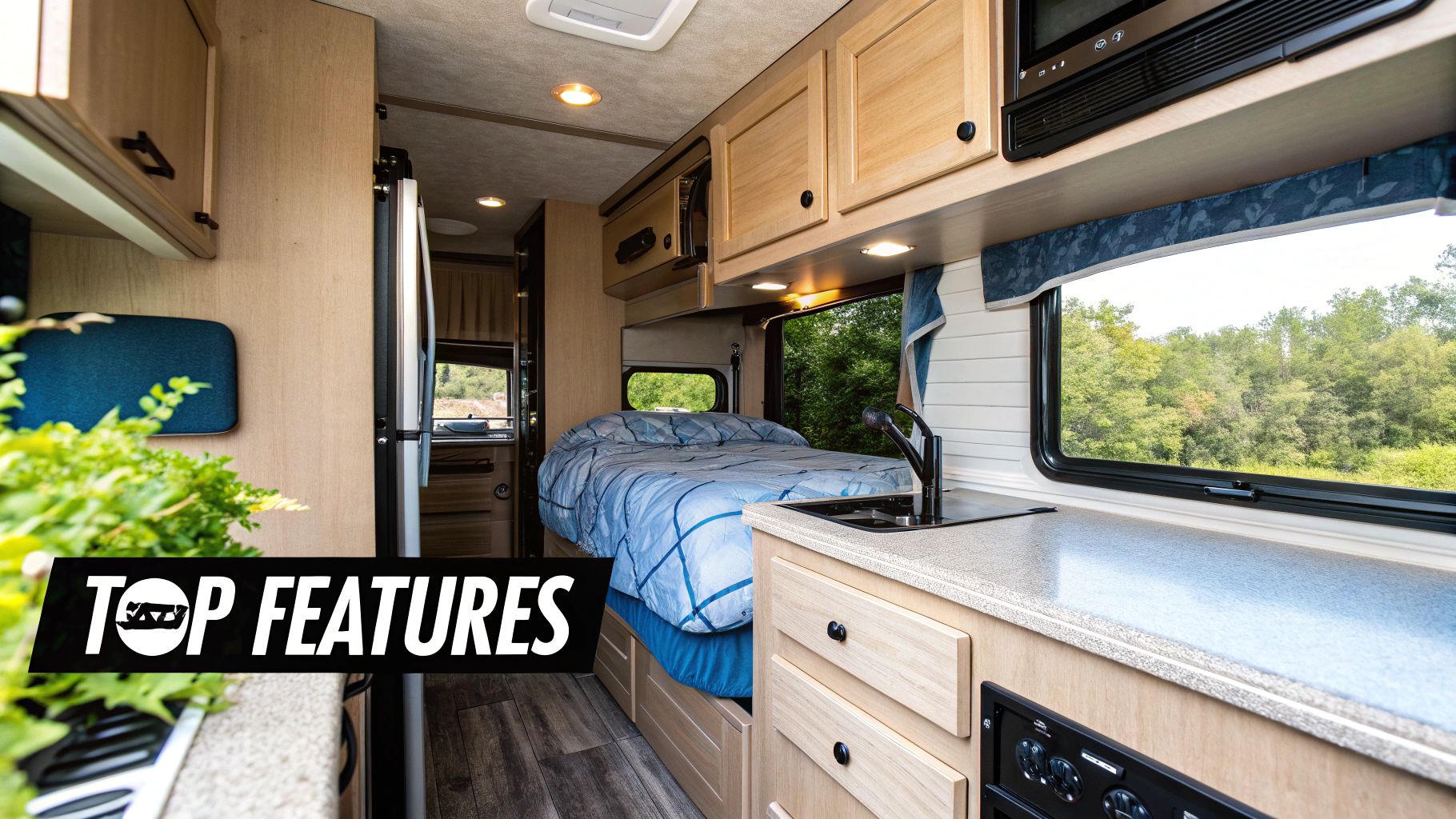
When you're scrolling through for sale rv class c listings, it’s easy to get lost in the photos. But to really know what you're looking at, you have to decode the features that truly define what it’s like to live in one. These aren’t just bullet points on a sales sheet; they're the details that will shape your day-to-day life on the road.
Think of it like buying a house or a boat. You wouldn't just count the bedrooms or bunks, right? You'd check out the kitchen's workflow, the closet space, and what kind of foundation it's sitting on. That same hands-on approach is exactly what you need when you're comparing different Class C motorhomes.
Let's dig into the most important features you'll come across and talk about how they actually impact your travel style. This will help you start picturing your routine in each potential RV and figure out what really matters to you.
The first thing most people notice about a Class C is that distinctive bump-out over the driver's cab. That's not just for looks—it's one of the rig's best features. This cab-over bunk is a genius bit of design that adds a ton of flexible space.
For families, it's the perfect extra sleeping spot, giving kids or guests their own cozy loft. If you’re a couple or a solo traveler, it often becomes a massive storage attic. It’s the ideal place to stash bulky gear like camp chairs, fishing rods, and storage bins, keeping your main living area from feeling cluttered. Some of the fancier models even build a full-blown entertainment center up there.
When you're checking out a Class C, don't just peek at the cab-over bunk—climb up into it. See how much headroom you have, feel the mattress, and check for windows that can give you a nice cross-breeze. It's a key part of the Class C design, so make sure it works for how you plan to use it.
Many modern Class C RVs come with one or more slide-outs. These are sections of the RV that motor out when you’re parked, and they can make a world of difference in your interior space. Even a single slide-out in the living room can take a narrow galley and turn it into a comfortable, open room.
Slide-outs feel like magic, but they do add mechanical parts to the equation. While they're generally very reliable these days, it’s good to know how they work. They can hold anything from the dinette and sofa to the kitchen counter or even the master bed, making a 28-foot rig feel more like a 32-footer on the inside.
- Living Area Slides: These are the most common. They typically push the sofa or dinette out, creating a much wider path to walk through the coach.
- Bedroom Slides: You'll see these more on larger models. They extend the space around the bed, making room for a true walk-around queen (or even a king!) and bigger closets.
- Full-Wall Slides: This is the big one—a single, massive slide that runs almost the entire length of one side of the RV. It provides the most dramatic increase in living space.
Every Class C motorhome is built on a pre-made truck or van chassis. This is the rig's skeleton: the frame, engine, and driver's cab. The chassis it's built on has a huge effect on how it drives, what kind of gas mileage you’ll get, and how much you can tow. As you look through for sale RV Class C listings, you'll see a few names pop up over and over:
- Ford E-Series (E-350/E-450): This is the undisputed workhorse of the Class C world. It's built around a powerful gas V8, parts are everywhere, and pretty much any mechanic in any town knows how to work on it.
- Chevrolet Express: A close competitor to the Ford, the Chevy chassis also offers a dependable gas engine and a familiar, truck-like driving experience. It's a rock-solid choice used by many manufacturers.
- Mercedes-Benz Sprinter: This chassis brings a more premium, European feel. You get a fuel-sipping diesel engine, a car-like ride, and more advanced safety features. The trade-off is a higher upfront cost and the need for specialized (and more expensive) maintenance.
Picking the right chassis comes down to balancing your budget and your travel plans. If you want to tow a car or a boat, or plan on tackling steep mountain passes, the extra torque from a diesel might be worth it. For more casual trips on flatter ground, a gas engine is usually more than enough power and will be friendlier on your wallet when it comes to repairs.
Before you even start looking at listings for a for sale RV class c, the most critical first step is setting a realistic budget. It's easy to get caught up in shiny new models, but the sticker price is just the first chapter of the financial story. A clear budget will keep you grounded and help you find a motorhome you'll love for years to come.
Think of it this way: the price tag gets you in the door, but owning an RV comes with ongoing expenses. A lower upfront cost on a used rig might feel like a great deal, but it could lead to unexpected maintenance bills down the road. On the other hand, a brand-new Class C costs more initially but gives you the peace of mind that comes with a full warranty.
There’s nothing quite like a brand-new Class C. You get the latest tech, modern designs, and a manufacturer’s warranty that lets you hit the road without a worry. Prices for new models typically start around $80,000 for a more basic, shorter unit and can easily climb past $200,000 for a high-end Super C on a premium diesel chassis.
So, what drives that huge price difference? A few key things:
- Brand Reputation: Top-tier brands with a long history of quality construction and customer satisfaction will always cost more.
- Chassis Type: The foundation of your RV matters. A rig built on a Mercedes-Benz Sprinter chassis, for example, will carry a higher price tag than one on a standard Ford or Chevy chassis.
- Length and Floor Plan: More space means more money. Longer motorhomes with multiple slide-outs and complex, feature-rich layouts are more expensive to produce.
- Amenities: Luxury features add up quickly. Things like full-body paint, residential-sized appliances, factory-installed solar power systems, and premium electronics can significantly increase the final cost.
For many people, a used Class C is the perfect way to get into the RV lifestyle. The biggest draw is avoiding the steep initial depreciation. RVs lose the most value in their first few years, which means you can often find a well-cared-for model with low mileage for a fraction of what it cost new. You get a lot more bang for your buck.
Buying used, however, demands a bit more homework. You’ll need to be a detective, carefully inspecting for any signs of water damage, checking the mileage and service records, and assessing the condition of the tires and all major systems. While you save big on the purchase price, it’s wise to have a savings cushion for potential repairs since you won’t have that new-RV warranty to fall back on.
This side-by-side look helps clarify the trade-offs when you're weighing your options.
| Factor |
New Class C RV |
Used Class C RV |
| Upfront Cost |
Highest due to depreciation; full sticker price. |
Significantly lower; previous owner absorbed the biggest depreciation hit. |
| Financing |
Easier to secure with lower interest rates from dealers and banks. |
Can be harder to finance; may come with higher interest rates. |
| Warranty |
Comprehensive manufacturer's warranty covers most issues for the first 1-3 years. |
Typically sold "as-is" with no warranty; requires a repair fund. |
| Maintenance |
Minimal initial maintenance. All systems are brand new and unused. |
May require immediate or near-future repairs (tires, batteries, resealing). |
| Customization |
Full control over floor plan, colors, and optional features from the factory. |
Limited to what's available on the market; customizations are post-purchase. |
Ultimately, the right choice depends on your budget, risk tolerance, and how hands-on you're willing to be with maintenance.
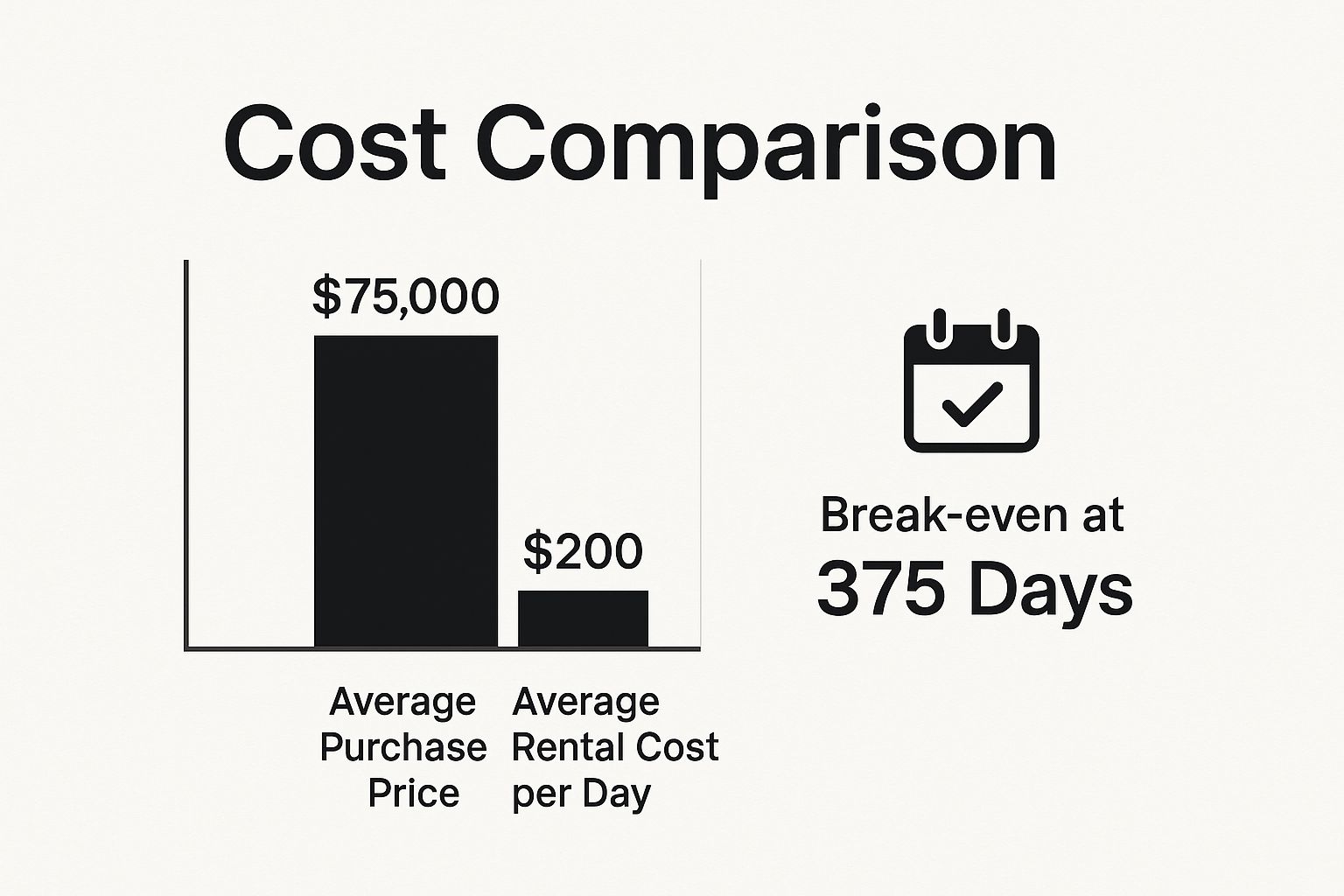
As the data shows, while the purchase price is a big hurdle, ownership can quickly become more economical than renting for anyone who travels frequently. After about a year of regular use, buying becomes a smart long-term move.
Whether you buy new or used, the purchase price is only part of the equation. Smart buyers plan for the total cost of ownership right from the start to avoid any surprises.
Building a comprehensive budget means looking beyond the sale price. Factoring in insurance, storage, fuel, and maintenance gives you a true understanding of what it costs to own and enjoy your Class C motorhome.
Here are the main expenses you need to account for:
- Insurance: RV insurance is a specialty product. Costs can run anywhere from $800 to $2,500 per year, depending on the RV’s value, your driving history, and the coverage you choose. Bundling with boat or auto insurance can sometimes lead to savings.
- Storage: If you don’t have space at home, you’ll need to rent a spot. This can be as low as $50 a month for a simple outdoor lot or over $300 a month for a secure, climate-controlled facility.
- Fuel: This will be one of your biggest recurring costs on the road. Most Class C RVs get between 8 and 12 miles per gallon, so be sure to factor that into your trip planning.
- Maintenance: Proactive upkeep is key. A good rule of thumb is to budget 1-2% of the RV's value each year for routine engine service, new tires, generator maintenance, and resealing the roof to prevent costly leaks.
It's also worth keeping an eye on market trends. For example, recent industry data showed that while the broader motorhome market saw prices climb over 15% in a single month, Class C values actually dipped by 1.0%. This shows how specific supply and demand can create great buying opportunities. You can discover more insights about RV sales reports to help time your purchase perfectly.
It’s easy to get lost in the romance of the open road when you're looking at a for sale rv class c. But a smart buyer is an informed buyer. Every type of RV has its high points and its headaches, and the Class C is no different. Knowing both sides of the coin is what helps you pick a rig that genuinely fits your life, not just one that looks good online.
Think of this as a reality check, not a deterrent. A great trip to the lake or the mountains starts long before you turn the key, with a clear understanding of what you’re getting into—from the ease of driving to the nitty-gritty of maintenance and those frequent fuel stops. Let's weigh the good against the not-so-good to see if the Class C is truly your perfect match.
Right off the bat, the biggest win for most people is how easy a Class C is to drive. Because it’s built on a familiar truck or van chassis, it handles more like a big U-Haul than an intimidating tour bus. This alone makes it a lot less scary for newcomers to RVing. You’ll find it’s much easier to navigate tight gas stations, winding national park roads, and even some city streets compared to a behemoth Class A.
The other standout feature is that iconic cab-over bunk—it’s a brilliant piece of design.
- Extra Sleeping Quarters: It’s a perfect built-in loft for kids or guests, giving them their own space without you having to convert a dinette every night.
- Massive Storage: If you’re a couple or solo traveler, that bunk often becomes a massive "garage" for stashing gear, bins, fishing equipment, and anything else you don't want cluttering up your living area.
This clever layout makes a Class C feel surprisingly spacious for its size, giving you a comfortable home on wheels without feeling oversized.
Now, let's get real about the downsides. While a Class C is definitely more agile than its bigger siblings, it's still a big vehicle. Parking a 25- to 32-foot rig is no small feat, especially in a crowded city or a popular national park trailhead. You'll quickly learn to plan ahead, and many owners end up towing a smaller car or a boat for day trips and errands.
Fuel economy is another dose of reality. You're looking at somewhere between 8 to 12 miles per gallon, which, while better than a Class A, will still make fuel a significant line item in your travel budget. It’s a far cry from what you’d get in a smaller campervan.
Owning a Class C also means becoming a part-time mechanic, plumber, and electrician. The complex systems—from the water heater and generator to the slide-outs and holding tanks—have a learning curve and require regular maintenance to prevent costly problems.
Finally, you’re not the only one who thinks a Class C is a great idea. The market is booming. The Class C motorhomes market was valued at about USD 2 billion in 2023 and is on track to hit around USD 3.5 billion by 2032. This popularity confirms they’re a solid choice, but it also means the market can be competitive. You can learn more about the growth of the Class C motorhome market and see where the industry is headed.
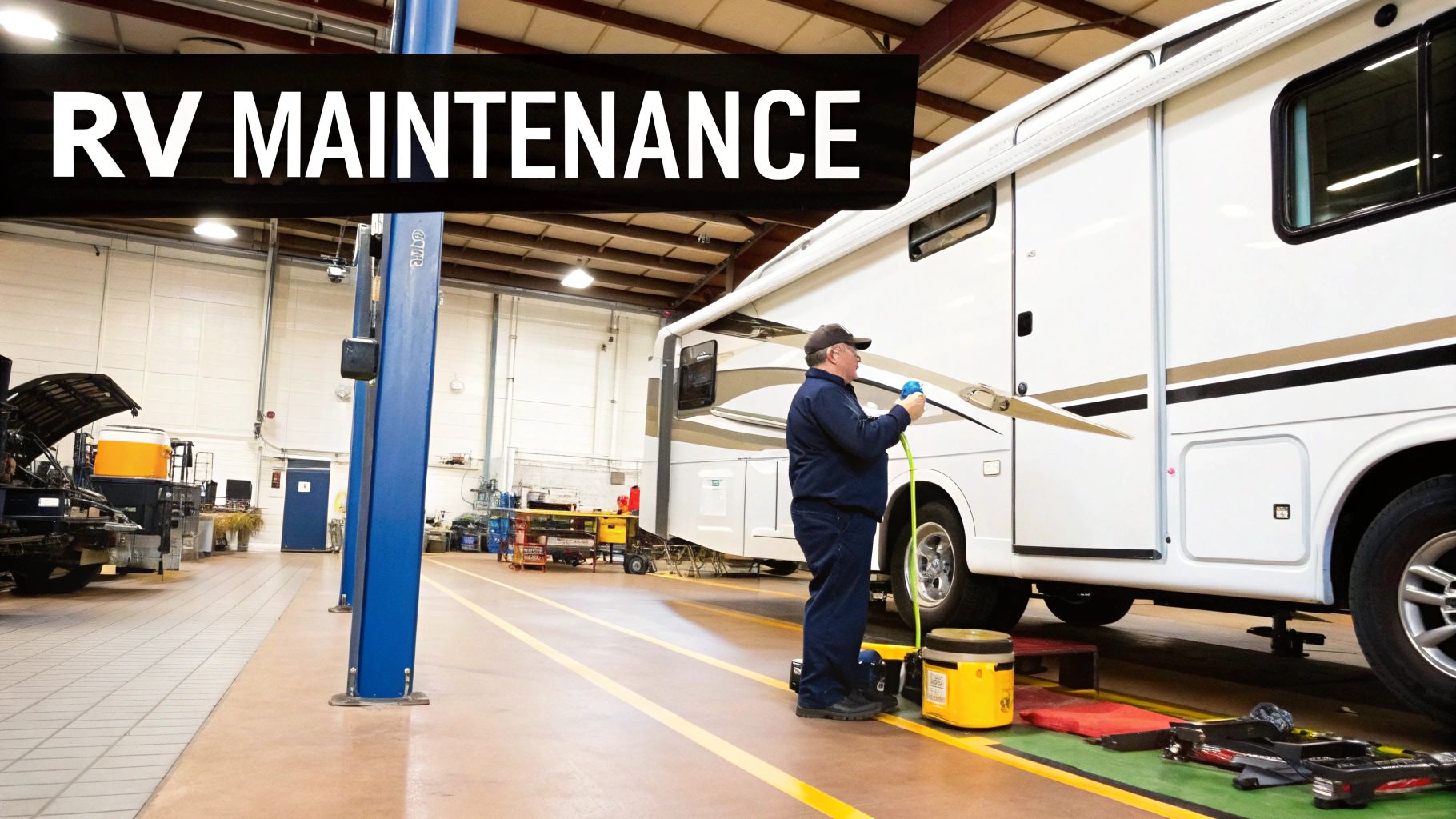
Alright, this is the moment of truth. This is where you either lock in a fantastic deal or narrowly dodge a financial bullet. A thorough, hands-on inspection is your single most powerful tool, whether you're at a dealership or in someone's driveway. It's what turns you from a hopeful buyer into an informed one, giving you the ammo you need to spot hidden problems and make a smart offer.
Think of yourself as a detective looking for clues. Every inch of that RV tells a story—how it was used, if it was loved or neglected, and what expensive surprises might be hiding just out of sight. I'm going to walk you through how to perform an inspection like a pro, so you can confidently evaluate any for sale RV class c you come across.
Your inspection starts before you even think about stepping inside. The RV's exterior gives you the first—and most critical—clues about its overall condition, especially when it comes to its biggest enemy: water. Start at one corner and slowly make a complete lap around the rig. Don't rush it.
First, get up close and personal with the siding. You're looking for any weird bubbles, ripples, or waves in the fiberglass panels. This is the classic sign of delamination, which is a deal-breaker for many. It happens when water sneaks in behind the wall and causes the layers to literally un-glue themselves. Run your hand flat along the sides; they should feel smooth and solid, not puffy or wavy.
Next, look up. The roof is the RV's first line of defense, and sadly, it's often the most neglected. If you can get on a ladder safely, check the sealant around every single vent, skylight, and antenna. You want to see sealant that's still pliable, not a mess of dried, cracked gunk. Brittle or missing sealant is a flashing red light for potential water leaks.
Finally, crouch down and inspect the tires. Don't just glance at the tread. You need to find the date code—it’s a four-digit number stamped on the sidewall. For example, "3221" means it was made in the 32nd week of 2021. RV tires almost always "age out" before they wear out. Most pros agree they should be replaced every 5-7 years, no matter how much tread is left. Old tires are a massive safety hazard and a big-ticket replacement item you need to budget for.
Once you're inside, your mission is to test everything. And I mean everything. Don’t be shy about flipping every switch and opening every cabinet. This is your one chance to make sure it all works before you own the problems.
Start by hunting for evidence of those exterior leaks. Walk the entire floor, pressing firmly with your foot, especially in corners, under windows, and around the slide-outs. Any soft or spongy spots are a dead giveaway for water damage and rotted subflooring. Trust your nose, too. A persistent musty smell is a big clue that mold or mildew is hiding somewhere.
The rule for an interior inspection is simple: if it has a switch, turn it on. If it has a handle, open it. And if it’s supposed to move, make it move. This is the only way to uncover issues that aren't obvious at first glance.
Run through this checklist to make sure you don't miss anything:
- Appliances: Fire up the fridge (on both gas and electric!), light every stove burner, run the microwave, and test both the furnace and the air conditioner. Let them run for a bit.
- Plumbing: Switch on the water pump and run water through every faucet, hot and cold. Check for good pressure and look for drips under every sink. Flush the toilet and make sure the bowl holds water.
- Electrical System: Flip every light switch and test every single outlet (a cheap outlet tester is great for this). If there’s a generator, start it up and let it run under load by turning on the A/C or microwave.
- Slide-Outs: This is a big one. Run every slide-out all the way out and all the way back in—do it a couple of times. Listen for ugly grinding noises or jerky movements. When they're closed, check to see if they create a tight seal against the RV body.
Look, even with a detailed checklist, some major issues are nearly impossible for an untrained eye to spot. That's why I always recommend investing in a professional pre-purchase inspection (PPI) from a certified RV inspector, especially when buying used.
An inspector brings specialized tools and a trained eye. They'll check for propane leaks, faulty wiring, hidden frame damage, and complex engine issues. Their final report gives you either incredible peace of mind or all the leverage you need to negotiate a much lower price—or walk away. Think of the few hundred dollars it costs as cheap insurance on a massive investment.
Alright, you've done it. You’ve waded through the listings, kicked the tires, and found the one—the perfect for sale RV class c that feels like home. Now for the exciting part: closing the deal and getting the keys in your hand.
This is the moment where all your careful research pays off. Whether you're standing on a dealership lot or shaking hands with a private seller, a cool head and a clear plan will make sure you not only get a great deal but start your RV life on the right foot.
Don't ever feel shy about negotiating—it's just part of the process. Dealerships almost always build some cushion into their asking price, so there’s room to talk.
If you're buying privately, this is where your inspection report becomes your best friend. Use any issues you found, like a set of aging tires or a water pump that needs replacing, as friendly leverage for a better price. The key is to be polite but firm.
Once you’ve settled on a number, the next steps are financing and insurance. While most dealers have financing options, I always tell people to walk in with a pre-approval from their own bank or credit union. It gives you a powerful negotiating tool and a benchmark to make sure you’re getting a competitive interest rate. And whatever you do, don't drive away without proper RV insurance in place. You need that investment protected from the very first mile.
The paperwork is just the beginning. The real journey starts when you take the time to truly get to know your new rig before you head out on that first big adventure.
That feeling of holding the keys to your first Class C is amazing, but it definitely comes with a learning curve. Before you book that dream trip to a national park, take a little time for a "shakedown" period. It’s the best way to build confidence and iron out the wrinkles.
Here’s what I recommend every new owner do in their first week:
- Practice, Practice, Practice: Find the biggest, emptiest parking lot you can and just drive. Learn how your RV swings on tight turns. Practice backing into a parking spot using only your mirrors. Get a real feel for your braking distance. An hour or two here will make your first travel day a thousand times less stressful.
- Gear Up: Your RV is just the beginning. You’ll need a list of essentials to actually use it. Think about a dedicated freshwater hose (the white ones!), sewer hookup gear, leveling blocks for un-level campsites, and a good surge protector to protect your rig's electronics from sketchy campground power.
- Take a "Shakedown" Trip: Your first adventure shouldn't be a 500-mile haul. Find a campground just an hour or two from home and book a weekend stay. This is your low-pressure chance to learn how everything works—from firing up the water heater and furnace to your first time dumping the tanks—with the comfort of being close to home if you forget something or need help.
When you're this close to buying, the last few questions are usually the most important. You’ve done the research, browsed countless "for sale RV Class C" listings, and now it's time to get down to the brass tacks.
Think of this as the final checklist before you shake hands on a deal. These are the practical questions we hear all the time from buyers who are right where you are now—ready to stop dreaming and start driving. Let's clear up these final details so you can buy with total confidence.
This is the big one, and the honest answer is: it varies a lot. The price tag on a new Class C is a moving target, depending heavily on the brand, size, and all the bells and whistles you want.
Generally, here’s a realistic breakdown of what you'll find on dealer lots:
- Entry-Level Models: These get you into the RV life and usually start around $80,000.
- Mid-Range Models: This is the sweet spot for most buyers, with prices falling between $100,000 and $150,000.
- High-End Luxury Models: For top-of-the-line features, premium finishes, and sought-after chassis like the Mercedes-Benz Sprinter, prices can easily climb past $200,000.
Just remember, the sticker price isn't the final price. Always budget for taxes, dealership fees, and any last-minute upgrades you decide you can't live without.
For most people, driving a Class C isn't necessarily hard, but it definitely takes some getting used to. The good news is they’re built on a familiar van or truck chassis, so the experience feels more like driving a big U-Haul than a semi-truck.
Your biggest hurdles will be remembering your height, judging your length, and giving yourself way more room to turn. Forget about swinging into tight parking spots like you do with your car. Before you even think about hitting the highway, do yourself a favor: find a big, empty parking lot and practice. Get a feel for braking, backing up, and making wide turns. A little practice beforehand makes that first trip to a crowded campground so much less stressful.
What Are the Biggest Maintenance Costs I Should Plan For?
Water is the enemy of every RV. The single biggest maintenance headache—and potential expense—comes from leaky seals. If you stay on top of one thing, make it this: regularly inspect and reseal the roof, windows, and every single exterior seam.
Proactive maintenance is your bes