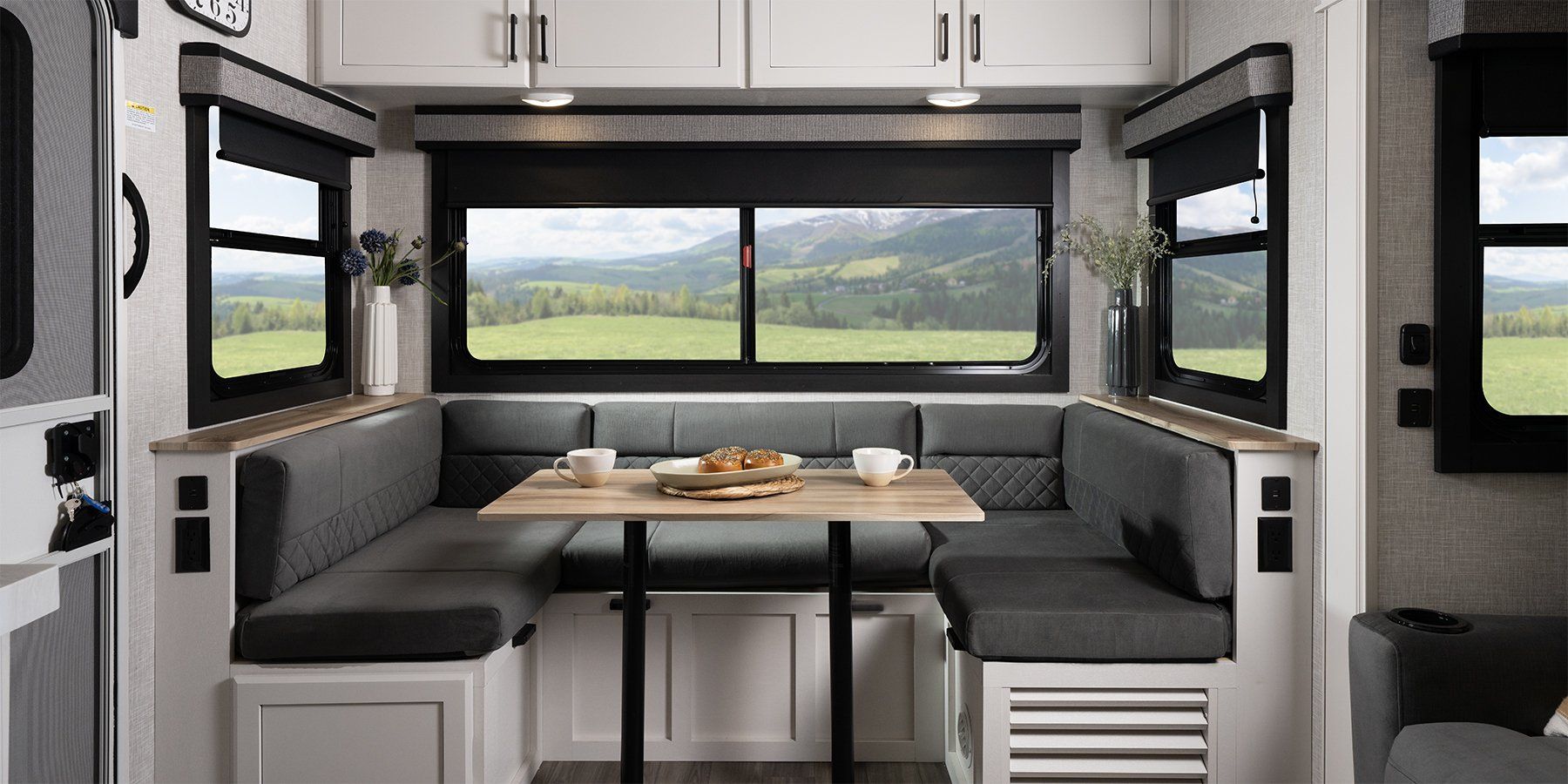
If you've started shopping for an RV, you've almost certainly come across the Jayco Eagle travel trailers. These models have carved out a real sweet spot in the market, managing to blend high-end, residential-style features with practical layouts perfect for family adventures. This guide is designed to give you the essential information you need to decide if an Eagle is the right travel trailer for your next purchase.
For many shoppers, the sheer volume of RV options is dizzying. Every brand claims to have the best quality and comfort, but the Jayco Eagle really hones in on a specific kind of experience. This isn't just about getting you from point A to point B; it’s about giving you a genuine home on wheels.
Think of the Eagle as where solid construction and residential comfort shake hands. Some travel trailers go all-in on over-the-top luxury, while others are stripped down to the bare essentials. The Eagle, however, finds that perfect middle ground. It's this balanced approach that makes it such a strong contender for families who need a durable, practical rig but aren't willing to give up the creature comforts that make a long trip truly enjoyable.
This reputation didn't just appear overnight; it's built on a long history of listening to what RVers actually want. Jayco was founded way back in 1968 by Lloyd and Bertha Bontrager, who sold just 132 camping trailers in their first year. Today, the Jayco Eagle travel trailers are a cornerstone of their lineup, cementing the company as one of the most recognized names in the industry. You can learn more about Jayco's innovative history to see just how far they've come.
At its heart, the Jayco Eagle philosophy is about delivering a premium travel trailer experience without the jaw-dropping price tag you'd see on a luxury fifth wheel. It’s built for people who appreciate solid craftsmanship and smart design in a trailer they can actually tow.
The infographic below really nails down the three pillars that define the Jayco Eagle.
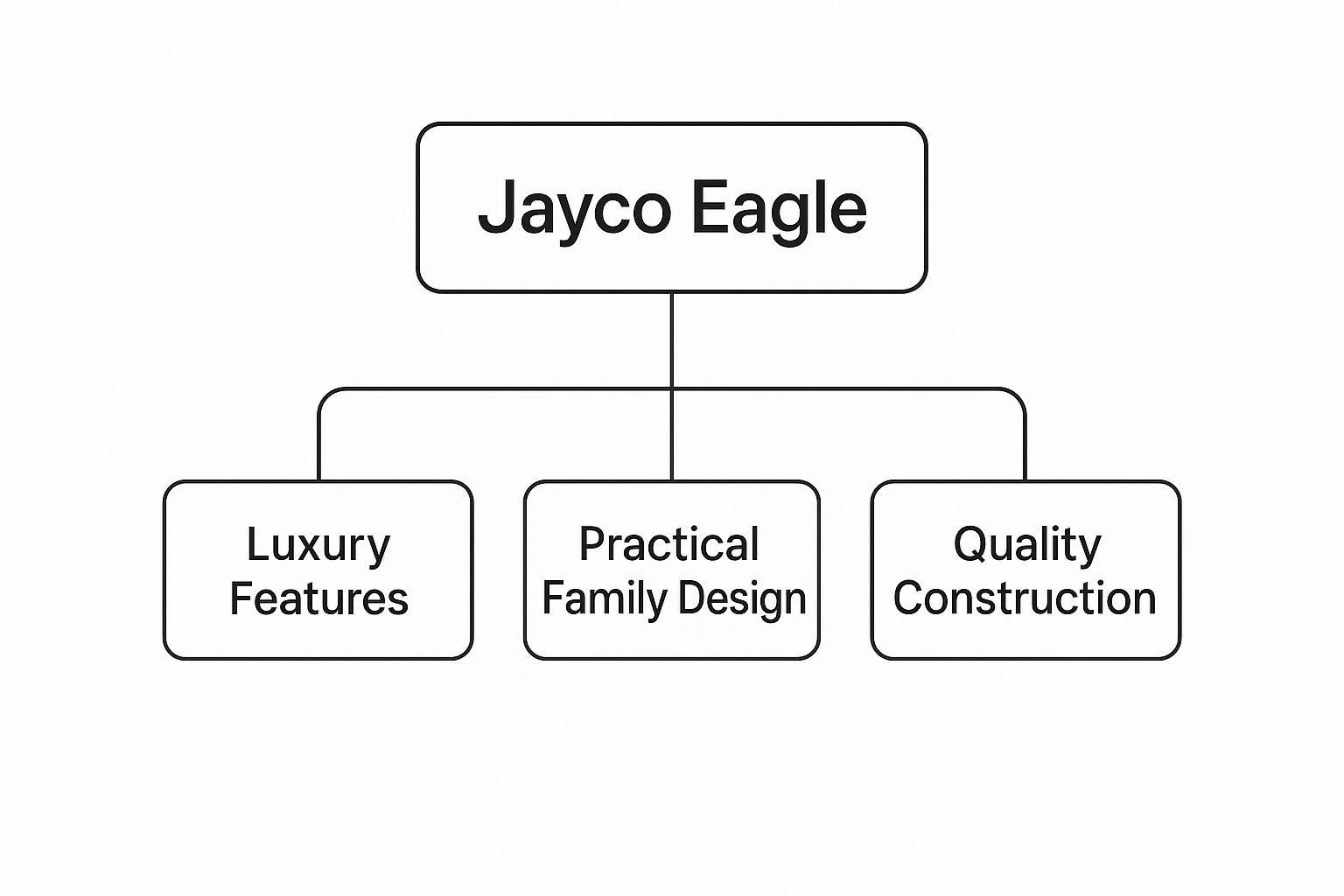
As you can see, Jayco focuses on weaving these three elements—luxury, practicality, and quality—into every model to create a travel trailer that just works.
So, where does the Eagle fit into your search? It’s perfect for the buyer who is ready to move past the entry-level models and wants a long-term investment. You're getting a trailer that feels a step above, and that comes down to a few key characteristics:
-
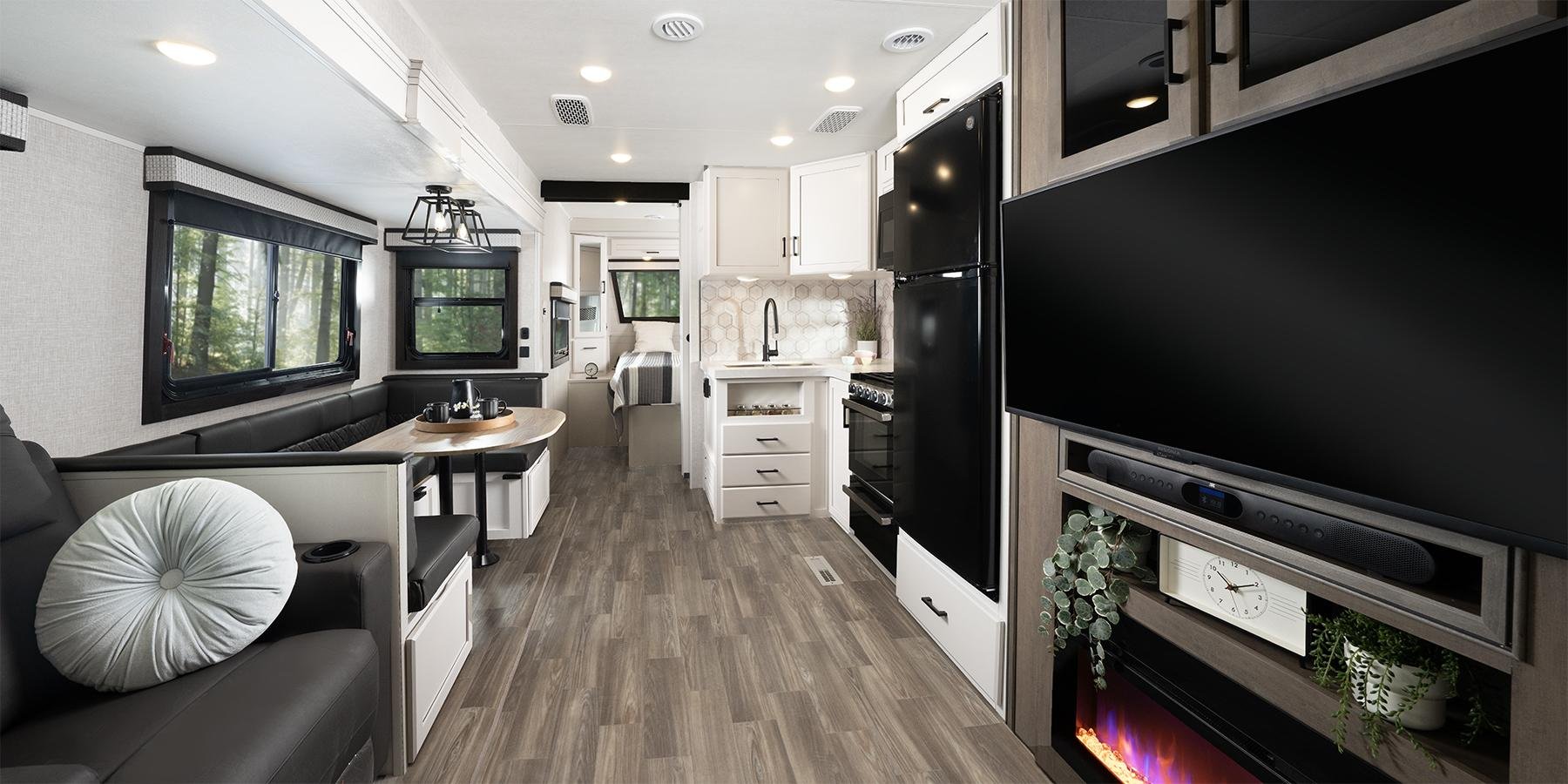
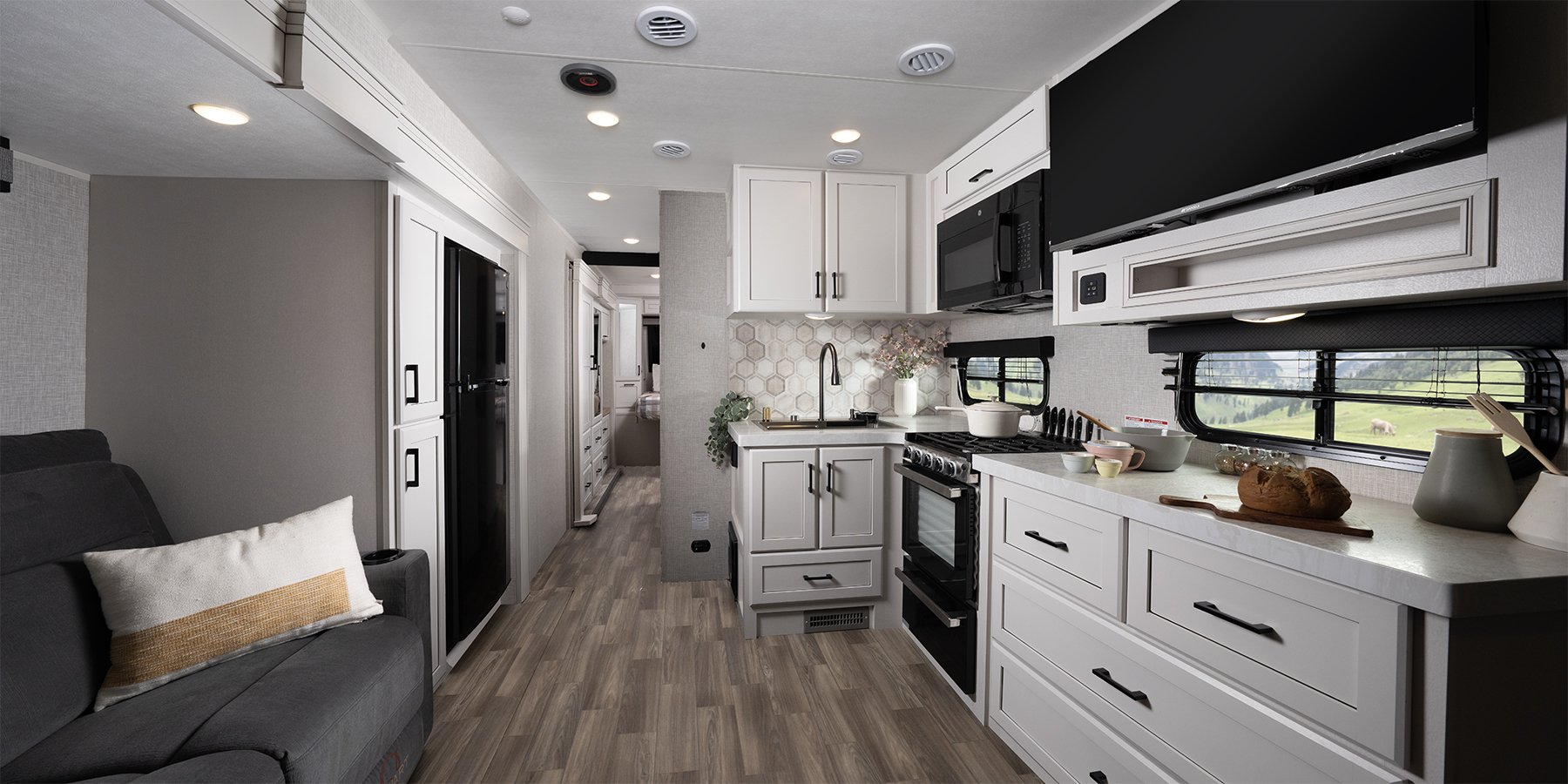
Residential Finishes: The interiors often feel more like a modern condo than a camper. We’re talking solid-surface countertops, comfy theater seating, and master suites with plenty of room to move around.
-
Family-Centric Floorplans: You’ll find tons of layouts with bunkhouses, outdoor kitchens, and smart storage solutions—features that cater directly to families hitting the road.
-
All-Season Capability: With options like the Climate Shield™ package, these trailers are built to extend your camping season. You aren't just limited to perfect summer weather, which gives you a lot more freedom.
By keeping these core principles in mind, you can pretty quickly figure out if a Jayco Eagle is the right fit for your travel style and budget. This guide will dive into all the specifics, from floorplans to construction, so you can make a decision you'll be happy with for years to come.
Picking out a travel trailer is so much more than just looking at the length or counting the slide-outs. It's really about finding a layout that clicks with your lifestyle. The floorplan is the very soul of your RV, shaping how you'll cook, sleep, hang out, and host guests. This is one area where Jayco Eagle travel trailers really nail it, offering a smart variety of layouts built for all kinds of campers.
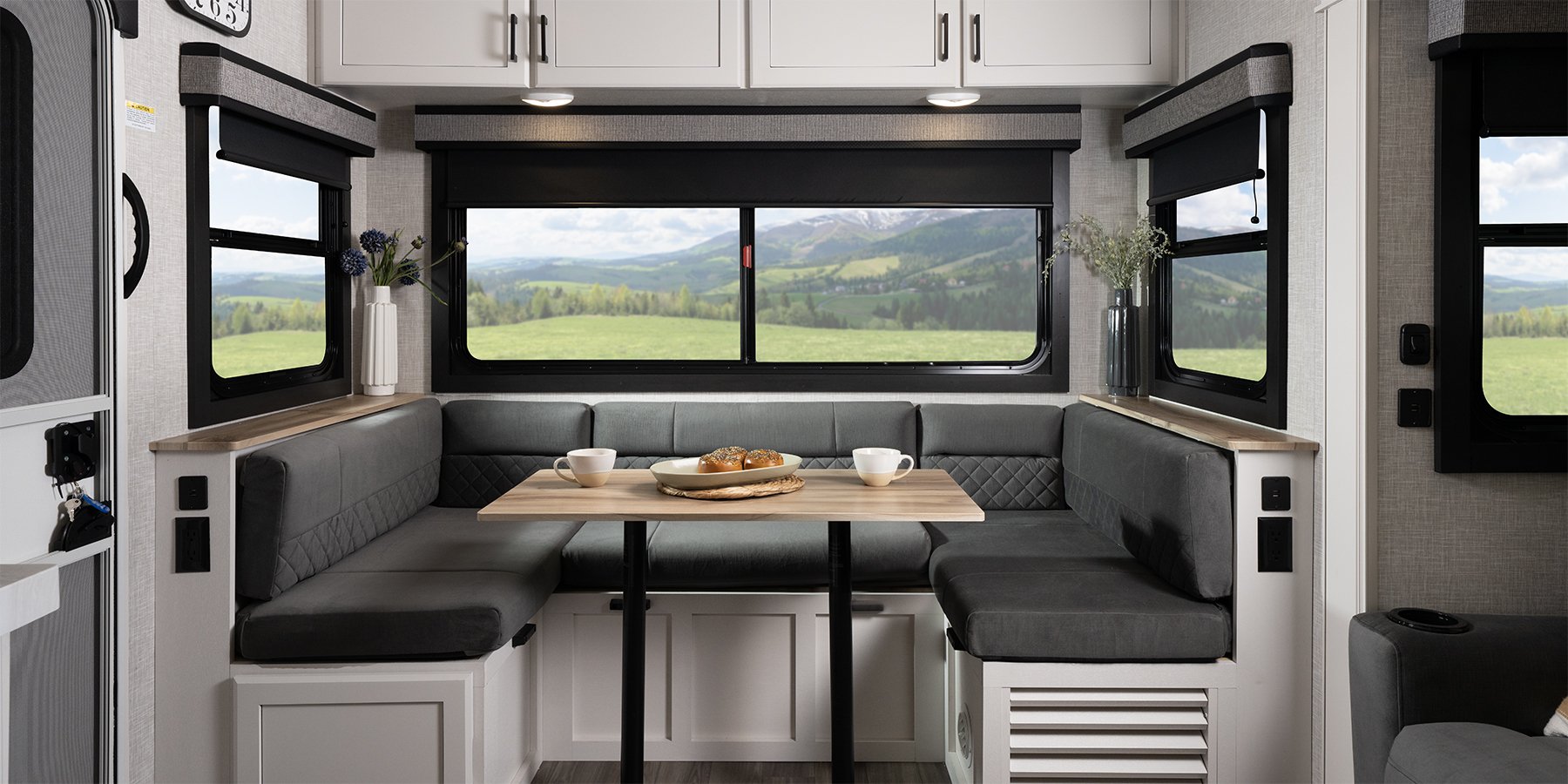
Think of the floorplan as the blueprint for your adventures. A cozy layout that’s perfect for a couple’s weekend escape would feel seriously cramped for a family of five on a two-week cross-country trek. Jayco gets this, which is why they’ve created distinct floorplan categories to meet these different needs. Chances are, there's an Eagle that feels like it was custom-made for you.
If your camping crew includes kids, grandkids, or a group of friends, a bunkhouse model isn't a luxury—it's a game-changer. These floorplans are brilliantly designed to maximize sleeping capacity without eating up your main living space. Jayco's bunkhouses are more than just beds; they're dedicated kid-zones.
Instead of the nightly hassle of converting a dinette into a lumpy bed, these models give you permanent, comfy bunk beds. Many floorplans even feature a whole separate bunk room, often with its own storage and sometimes even a second half-bath. This gives the kids a space to call their own and gives everyone a little breathing room after a long day of adventuring together.
Do you imagine your campsite being the neighborhood hub for evening drinks and conversation? If that sounds like you, then a rear-living floorplan is your perfect match. These layouts feature a massive picture window at the back of the trailer, usually framed by comfortable seating like theater-style recliners or a big, welcoming sofa.
This setup creates a wide-open, inviting vibe that feels more like a residential living room than an RV. The kitchen and dinette are usually placed in the middle of the coach, making a natural, flowing space for entertaining. It’s an ideal layout for couples who love to have friends over and want a premium spot to kick back and enjoy the best view at the campground.
Choosing the right layout is less about features and more about envisioning your daily routine. Ask yourself: "How will my family actually use this space day in and day out?" That's where you'll find the perfect match.
Of course, the options don't stop there. Jayco Eagle also offers floorplans that cater to other needs, like front kitchens that keep the cooking action separate or master suites that feel like a true retreat on wheels.
To help you get a better handle on how these layouts serve different purposes, we've put together a quick comparison of the most common types. This table breaks down the core idea behind each design, making it easier to see which one lines up with your camping style.
|
Floorplan Type
|
Best For
|
Key Features
|
Typical Sleeping Capacity
|
|
Bunkhouse
|
Families with children or groups
|
Separate bunk rooms or dedicated bunk areas, often with extra storage and a second bathroom.
|
6-10 people
|
|
Rear-Living
|
Couples who entertain or enjoy scenic views
|
Large rear window, spacious seating area with sofas or recliners, open-concept living space.
|
2-6 people
|
|
Front-Kitchen
|
Campers who love to cook
|
Expansive counter space, residential appliances, and separation from the main living area.
|
2-6 people
|
|
Couples Coach
|
Solo travelers or couples seeking comfort
|
Focused on a luxurious master suite, comfortable living area for two, and efficient use of space.
|
2-4 people
|
At the end of the day, the best way to choose between the various Jayco Eagle travel trailers is to really picture yourself in them. Imagine making coffee in the kitchen, kicking your feet up after a long hike, and turning in for the night. That mental walkthrough is the secret to finding a floorplan that doesn't just work, but one that genuinely makes every trip better.
Floorplans and decor are important, but the real heart of any travel trailer is its construction—the stuff you don't always see. When you start digging into Jayco Eagle travel trailers, you'll find they're built on a foundation of solid engineering, focused on making them last for the long haul. Let's peel back the curtain and look at the signature features that give the Eagle its reputation for durability.
These aren’t just catchy marketing slogans; they’re real-world solutions to common camping problems. A stronger roof, better insulation, and smarter controls all work together to make your time on the road safer, more comfortable, and a lot more enjoyable.
An RV's roof is its first line of defense against just about everything. It has to handle scorching sun, pouring rain, heavy snow, and the constant vibration of the road. Jayco’s Magnum Truss™ Roof System is engineered to be 50% stronger than many competitors, which is a huge deal when it comes to the trailer's lifespan.
How do they do it? The system uses oversized nail plates and beefier wood trusses to create an incredibly rigid frame. This isn't just about surviving a freak snowstorm; it's about preventing the subtle flexing and shifting that eventually leads to leaks. A stronger roof also means you have a more stable platform for things like air conditioners and solar panels, so everything stays put.
Let's face it, a lot of RVs are built for sunny, 75-degree days. The Jayco Eagle, however, is designed to push the boundaries of the camping season. The Climate Shield™ package is a whole suite of features that gives the Eagle its zero-degree-tested weather protection, making chilly mornings and scorching afternoons way more comfortable.
This isn't just one thing—it's a system of components working in harmony. Here’s a breakdown of what’s included:
-
Heated and Enclosed Underbelly: This is a game-changer for cold-weather camping. It protects your tanks, pipes, and gate valves from freezing by circulating warm air from the furnace around them. No more worrying about a burst pipe when the temperature plummets.
-
Double-Sided Radiant Barrier Insulation: Think of this like a space blanket for your RV. This reflective layer in the roof, floor, and front cap bounces heat away in the summer and keeps warmth inside during the winter.
-
PEX Plumbing: Instead of rigid pipes that can crack when frozen, Jayco uses flexible PEX lines. It's one more layer of defense against the cold.
The real value of the Climate Shield is freedom. It means you can book that early spring fishing trip or late fall color tour with confidence, knowing your trailer can handle whatever Mother Nature throws at it.
This package transforms Jayco Eagle travel trailers from a seasonal camper into a much more versatile adventure machine. It’s a smart investment in your comfort and peace of mind.
Modern RVing is getting smarter, and Jayco’s JAYCOMMAND® Smart RV System is a perfect example. This is your central command center, letting you manage almost every important function of your trailer from a built-in touchscreen or an app right on your phone.
Picture this: you pull into your campsite after dark. Instead of stumbling around looking for switches, you just pull out your phone to:
-
Put out the slide-outs and extend the awning.
-
Flip on all the exterior and interior lights.
-
Check how much water is in your fresh, gray, and black tanks.
-
See how your battery is doing.
This kind of convenience completely changes the setup and teardown experience, giving you more time to actually kick back and relax. JAYCOMMAND shows how Jayco blends that rock-solid construction with modern tech that actually makes camping better. It’s this thoughtful mix of brawn, all-weather readiness, and smart features that really makes the Jayco Eagle stand out.
Let's talk money. It's a huge part of the conversation when you're shopping for a high-quality RV. With Jayco Eagle travel trailers, though, the discussion quickly shifts from the initial price tag to the serious long-term value you're getting. Looking at the full financial picture helps you see it not just as buying a camper, but as investing in a durable rig, top-notch support, and a whole lot of future adventures.
The sticker price on a new RV can feel like a big number, but it’s helpful to understand what goes into it. A few key things directly shape what you'll actually pay at the dealership.
The final price of your Jayco Eagle is almost never the base Manufacturer's Suggested Retail Price (MSRP). It’s better to think of the MSRP as a starting line. From there, a few things can nudge the final number up or down.
-
Optional Packages: Jayco puts together some great packages, like the Luxury Package or the Four Star Handling Package. These add awesome features like better electronics, solid-surface countertops, or an improved suspension system, and each one will adjust the final cost.
-
Dealership Location: RVs are a lot like cars—prices can vary depending on where you are. A dealer in a huge camping destination might have different pricing than one in a smaller market with less competition.
-
Time of Year: The RV world definitely has its seasons. You'll often find better deals in the off-season (think late fall and winter) when dealers are trying to clear out last year's models to make room for the new stuff.
Because of these variables, the price isn't carved in stone. That gives you some wiggle room to find a deal that works for you.
So, what can you expect to spend? New Jayco Eagle travel trailers typically fall somewhere between $55,000 and $106,401. This wide range means Jayco can meet the needs of a lot of different buyers, from families looking for a premium-yet-attainable first rig to seasoned RVers who want all the bells and whistles. It's always a good idea to explore how these prices compare to other popular brands to get a feel for where the Eagle sits in the market.
While that initial cost is a big factor, the real value of a Jayco Eagle unfolds over years of ownership. This is where things like resale value and the total cost of ownership enter the picture, and it’s an area where the Eagle really shines.
A smart RV purchase isn't just about what you pay today—it's about what that trailer will be worth down the road. The Jayco Eagle is built to last, and that durability is a huge reason it holds up so well on the used market.
One of the best signs of a good investment is how well it holds its value, and a Jayco Eagle tends to do slightly better than many competitors. Why? It comes down to its solid construction, the trust people have in the Jayco name, and that industry-leading warranty that gives the next buyer peace of mind.
Ultimately, this means that when you decide to sell or trade in your Eagle, you’re likely to get more of your original investment back. Better resale value directly lowers your total cost of ownership over the entire time you have the trailer.
An informed shopper is a confident shopper. When you're exploring the world of premium travel trailers, the Jayco Eagle is a major contender, but it's not the only name you'll see. Understanding how it stacks up against other popular models, like the Grand Design Reflection and the Keystone Cougar, is the key to finding the absolute best fit for your family.
These brands all compete in a similar space, offering high-end features and family-friendly floorplans. But they each have their own philosophy on construction, standard features, and—most importantly—warranty coverage. Let's break down where the Eagle really pulls ahead and where competitors show their own unique strengths.
When it comes to the bones of the trailer, Jayco, Grand Design, and Keystone all build robust RVs. The real differences often lie in their specific construction methods and how they approach all-season camping.
The Jayco Eagle really stands out with its Magnum Truss™ Roof System, which is engineered to be significantly stronger than many competitors. This detail adds a ton of long-term durability against the elements. On top of that, its Climate Shield™ package is a major selling point, boasting a zero-degree rating thanks to a heated underbelly, radiant barrier insulation, and freeze-resistant PEX plumbing.
On the other hand, Grand Design's Reflection series features its own Arctic 4-Seasons Protection Package. It uses fully laminated walls with rigid foam insulation and a healthy dose of radiant foil in the underbelly and roof. Similarly, Keystone's Cougar models offer a Climate Guard Protection package, which also includes an enclosed and heated underbelly, astro-foil insulation, and even standard 12-volt heat pads on the holding tanks.
The bottom line on build quality? All three are excellent choices. Jayco often leads with its roof strength and a well-marketed all-season package, while competitors like Grand Design and Keystone offer very comparable, robust solutions for extending your camping season.
This is arguably where Jayco creates the most distance from its competition. The Jayco Eagle comes with an industry-leading 2+3 year warranty. This includes a two-year limited warranty that covers virtually everything for two full camping seasons—that's double the industry standard of one year. It also has a three-year structural warranty covering the frame, roof, and floors.
Let’s see how that compares:
-
Grand Design Reflection: Typically offers a one-year limited warranty and a three-year structural warranty.
-
Keystone Cougar: Also generally comes with a one-year limited warranty and a three-year structural warranty.
That extended two-year bumper-to-bumper coverage from Jayco is a massive value proposition. It provides a whole extra year of peace of mind and shows just how much confidence the company has in its manufacturing quality. For a lot of buyers, this alone is enough to tip the scales in favor of the Eagle.
To see just how these top trailers stack up side-by-side, it helps to put the key features in a table.
|
Feature
|
Jayco Eagle
|
Competitor A (e.g., Grand Design Reflection)
|
Competitor B (e.g., Keystone Cougar)
|
|
Limited Warranty
|
2 Years
|
1 Year
|
1 Year
|
|
Structural Warranty
|
3 Years
|
3 Years
|
3 Years
|
|
Roof System
|
Magnum Truss™
|
Laminated w/ Radiant Foil
|
Laminated w/ Radiant Foil
|
|
4-Season Package
|
Climate Shield™ (0-degree tested)
|
Arctic 4-Seasons Protection
|
Climate Guard Protection
|
|
Smart System
|
JAYCOMMAND®
|
Compass Connect
|
iN-Command Control System
|
As you can see, while all three offer premium construction, Jayco's standout 2-year limited warranty is a clear differentiator in the market.
All three brands pack their trailers with modern amenities, but their focus can differ slightly. Jayco often integrates smart technology like the JAYCOMMAND® Smart RV System, giving you convenient app-based control over your slides, lights, and awnings right from your phone.
Grand Design is known for its high-end residential touches and customer-focused design, often including features based on direct feedback from its passionate owner community. Keystone's Cougar models are frequently praised for their innovative floorplans and their own iN-Command control system.
Jayco’s market presence is also undeniably strong. The wild success of models like the Jay Flight, which has been the best-selling travel trailer in North America for over a decade, gives the entire brand a powerful reputation. The Eagle benefits directly from this legacy of building popular, reliable RVs that people love. You can explore Jayco's history of top-selling models to really get a sense of their market impact.
Ultimately, choosing between these top-tier Jayco Eagle travel trailers and their rivals comes down to your personal priorities. If a best-in-class warranty and proven roof construction are at the top of your list, the Eagle is incredibly tough to beat. If specific residential features or a particular floorplan from another brand catch your eye, they remain excellent alternatives worth exploring.
When you're close to making a decision on a big purchase like an RV, it's usually those last few nagging questions that stand in the way. You've looked at the floorplans and checked out the build quality, but a few key details might still be bouncing around in your head.
Let's clear those up. Here are the most common questions we hear from people considering a Jayco Eagle travel trailer. Think of this as your final check-in to make sure an Eagle is a perfect match for your truck, your travel plans, and your expectations for years to come.
This is a big one, and honestly, it’s an area where Jayco really shines. They back the Eagle with an industry-leading 2+3 year warranty, which gives a lot of buyers the confidence to pull the trigger.
Here’s how that warranty breaks down:
-
2-Year Limited Warranty: For two full camping seasons, Jayco covers defects in materials and workmanship. That’s double the typical one-year warranty you see from most other manufacturers, giving you a whole extra year of peace of mind.
-
3-Year Structural Warranty: This covers the "bones" of the trailer—the roof, the walls, and the floor frame. It’s a testament to Jayco’s confidence in their construction.
This robust warranty isn't just a piece of paper; it’s a significant value-add for any new owner.
It's a great question. While you'll find plenty of Eagle owners who take long, extended trips for months at a time, these travel trailers are really designed for seasonal adventures rather than permanent, year-round living. They are incredibly well-equipped for long getaways, with features like the Climate Shield package and residential-style appliances making them feel like a home on wheels.
However, if you're seriously planning to live in your RV, most seasoned full-timers will point you toward the Jayco Eagle fifth-wheel lineup. Fifth wheels just offer more of that true residential feel, with higher ceilings and multi-level floorplans that create more separation and living space.
The Jayco Eagle travel trailer is a top-tier choice for just about any adventure short of permanent living. It’s a fantastic home base for snowbirding down south for the winter or spending a few months touring the country.
So, while you could live full-time in an Eagle travel trailer, the fifth-wheel version is almost always a better fit for that specific lifestyle.
Let's be blunt: you need a serious truck for these trailers. Because of their size and weight, a standard half-ton pickup like a Ford F-150 or a Ram 1500 just isn't going to cut it.
The real starting point for towing a Jayco Eagle is a three-quarter-ton truck. We're talking about a Ford F-250, a Ram 2500, or a Chevy/GMC 2500. For the biggest Eagle floorplans, you might even need to step up to a one-ton dually (F-350, Ram 3500, etc.) to handle the weight safely.
The most important thing is to look at the numbers—the right ones. You absolutely must match your truck's towing capacity to the trailer's Gross Vehicle Weight Rating (GVWR). That’s the maximum weight of the trailer when it's fully loaded with water, propane, and all your gear. Never, ever use the "dry weight" for your calculations. Always check your truck's owner's manual to confirm its specific tow ratings before you even think about buying.
What is the Main Difference Between an Eagle Travel Trailer and a Fifth Wheel?
The biggest difference comes down to one thing: how it hitches to your truck. This single design element changes everything about the towing experience, the interior layout, and even your storage options.
Here’s the simple version:
-
Travel Trailer: Hooks up to a ball hitch on the back of your truck. It's a classic setup, but it can be more prone to sway from crosswinds.
-
Fifth Wheel: Connects to a big jaw-and-pin hitch mounted right in the bed of the truck, over the rear axle. This makes for a rock-solid, incredibly stable towing experience.
This difference in hitching style has some real-world consequences for how you'll use your RV.
|
Aspect
|
Jayco Eagle Travel Trailer
|
Jayco Eagle Fifth Wheel
|
|
Towing Experience
|
Tows with a conventional hitch.
|