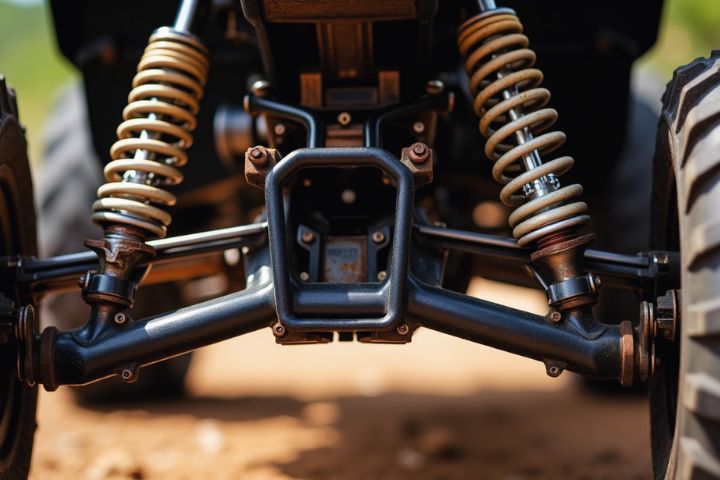
Detecting Bad Shocks: Essential Tips for Used ATVs
Buying a Used ATV
Detecting Bad Shocks: Essential Tips for Used ATVs
By Searchshop Editorial Team14 min readOctober 29, 2024Updated January 2, 2026
Some links in this article are affiliate links. If you buy through them, Searchshop may earn a commission at no extra cost to you. Learn how this works.
ATV shocks play a crucial role in ensuring a smooth and safe ride on all-terrain vehicles. These vital components absorb bumps and impacts, providing stability and comfort for riders. However, over time, ATV shocks can wear out, leading to reduced performance and potential safety hazards. Recognizing the signs of bad shocks is essential for ATV owners, especially when considering a used vehicle purchase.
This article will guide readers through the process of detecting faulty ATV shocks. It covers visual inspection techniques, performance-based detection methods, and common indicators of worn shock absorbers. Additionally, it explores when and how to adjust ATV suspension or replace shocks entirely. By understanding these aspects, ATV enthusiasts can maintain their vehicles' optimal performance and extend their lifespan.
VISUAL INSPECTION OF ATV SHOCKS
Shop ATVs & UTVs For Sale
Browse current atvs & utvs from dealers near you — updated daily.
A thorough visual inspection is the first step in detecting bad ATV shocks. This process involves carefully examining the shock absorbers for any visible signs of wear, damage, or malfunction. By conducting regular inspections, ATV owners can identify potential issues early and maintainoptimal performance of their vehicles.
Checking for oil or gas leaks
One of the most obvious indicators of faulty ATV shock absorbers is the presence of leaks. Owners should look for oil seeping from the shock absorber, which suggests a problem with the seals. To detect gas leaks, they can apply soapy water to the seals and watch for bubbling, which indicates escaping nitrogen gas. These leaks compromise the shock's ability to function properly and require immediate attention.
Identifying rust or dents
Rust and dents on the shock absorber body can significantly impact its performance. These issues can limit the movement of the interior piston, affecting the ATV's ability to absorb bumps and maintain stability. Riders should carefully inspect the entire length of the shock absorber for any signs of corrosion or physical damage. If rust or dents are present, it's advisable to replac
SE
Written by
Searchshop Editorial Team
Vehicle research & buying-guide team
The Searchshop editorial team researches and writes buying guides, model reviews, and category roundups across RVs, boats, motorcycles, ATVs, autos, and snowmobiles. We combine hands-on product research, live dealer inventory data, and manufacturer specifications to help buyers make confident decisions.
Reviewed by Searchshop Review Board — credentialed industry professionals.