If you're searching for boats in Florida for sale, you've come to the right place. Welcome to the biggest, most active boating market in the entire country. With nearly one million registered vessels, the number of options is staggering, but that also means the competition among buyers is fierce. To come out on top, you need to know the lay of the land from the get-go.
This isn't just any market; it's the epicenter of American boating. Florida's endless sunshine and thousands of miles of coastline have created a true boater's paradise, fueling a massive marketplace for both new and used boats. Buying a boat here isn't just a transaction—it's stepping into a lifestyle that's woven into the very fabric of the state, much like the freedom of exploring the open water in a boat.
The sheer demand means you'll find an incredible selection. Are you dreaming of chasing marlin off the coast of Islamorada? Or maybe a relaxed sunset cruise down the Intracoastal near Fort Lauderdale is more your speed. Whatever your vision, the right boat for it is almost certainly here.
The constant churn of new boaters entering the scene and experienced owners trading up keeps this market incredibly fluid. It moves fast. A good deal on a popular model won't stick around, especially during the peak seasons of spring and early summer.
On the flip side, this high turnover means there's always a fresh supply of pre-owned boats hitting the listings, many of which have been cared for by dedicated owners. Since Florida is such a hub, it attracts an incredible range of vessels—from tiny skiffs perfect for the flats to mega-yachts that command attention. This variety is fantastic, but it also means you need to have your goals dialed in to avoid getting lost in the options.
Key Takeaway: The Florida boat market boils down to two things: a huge selection and intense competition. If you do your homework ahead of time and are ready to act when you find the right boat, you'll be in the best position to land a great deal.
While you can find just about anything that floats, a few boat types are king here because they're built for what Florida's waters have to offer. Knowing them will help you cut through the noise.
- Center Consoles: This is, without a doubt, the quintessential Florida boat. The open design gives you 360-degree fishability, making it a top choice for offshore anglers. They’re also versatile enough for a family day at the sandbar.
- Pontoon Boats: Think of these as the ultimate party barge or floating family room. Pontoons are unbeatable for social gatherings and leisurely cruises on lakes and calmer inland waterways. Their stability and huge deck space make them a favorite for families.
- Deck Boats: Sitting somewhere between a pontoon and a classic V-hull, a deck boat gives you lots of seating with a sportier ride. They're a great all-around choice for everything from watersports to coastal cruising.
Figuring out which style matches how you plan to use your boat is the critical first step. It's the foundation for a smart search and will help you sidestep the common mistakes that trip up so many first-time buyers in this busy market.
Before you get lost scrolling through thousands of online listings for boats in Florida for sale, let's hit pause for a moment. It's so easy to get wowed by a sleek design or a great photo, but the biggest mistake I see new buyers make is falling for a boat that doesn't actually fit their life. The secret to a happy purchase is simple: match the boat to what you'll really be doing out on the water.
Are you dreaming of running 30 miles offshore at dawn to chase marlin? Or is your perfect day dropping anchor at Peanut Island with a dozen friends and the cooler full? Maybe you just want to cruise the Intracoastal and watch the sunset. Each of those daydreams points to a completely different kind of boat.
Let's get practical. To help you narrow down the search, here’s a look at the most common boat types you'll find in Florida and what they’re truly built for. Thinking this way helps you build a mental filter to immediately weed out the wrong options.
| Boat Type |
Best For |
Pros |
Cons |
| Center Console |
Serious fishing (inshore & offshore), diving, all-around utility. |
360-degree fishability, easy to clean, holds value well. |
Limited protection from sun/rain, minimal creature comforts. |
| Deck Boat |
Entertaining, family cruising, watersports like tubing and skiing. |
Massive seating capacity, stable platform, feels spacious. |
Not ideal for rough offshore conditions. |
| Walkaround |
Overnight trips, family fishing, cruising with foul-weather protection. |
Small cabin for shelter/napping, balances fishing with comfort. |
Cabin space eats into cockpit area, less open than a CC. |
| Cabin Cruiser |
Extended cruising, weekend getaways, dockside entertaining. |
Air conditioning, galley, head—all the comforts of home. |
Higher maintenance costs, less suited for serious fishing. |
| Bay Boat |
Inshore and nearshore fishing in protected waters and flats. |
Shallow draft to get into skinny water, versatile fishing platform. |
Not designed for big offshore waves. |
This table should give you a solid starting point. By being honest about how you'll spend 90% of your time on the water, you can focus on the one or two categories that make the most sense for you.
This chart really drives home what works for most people here in the Sunshine State.
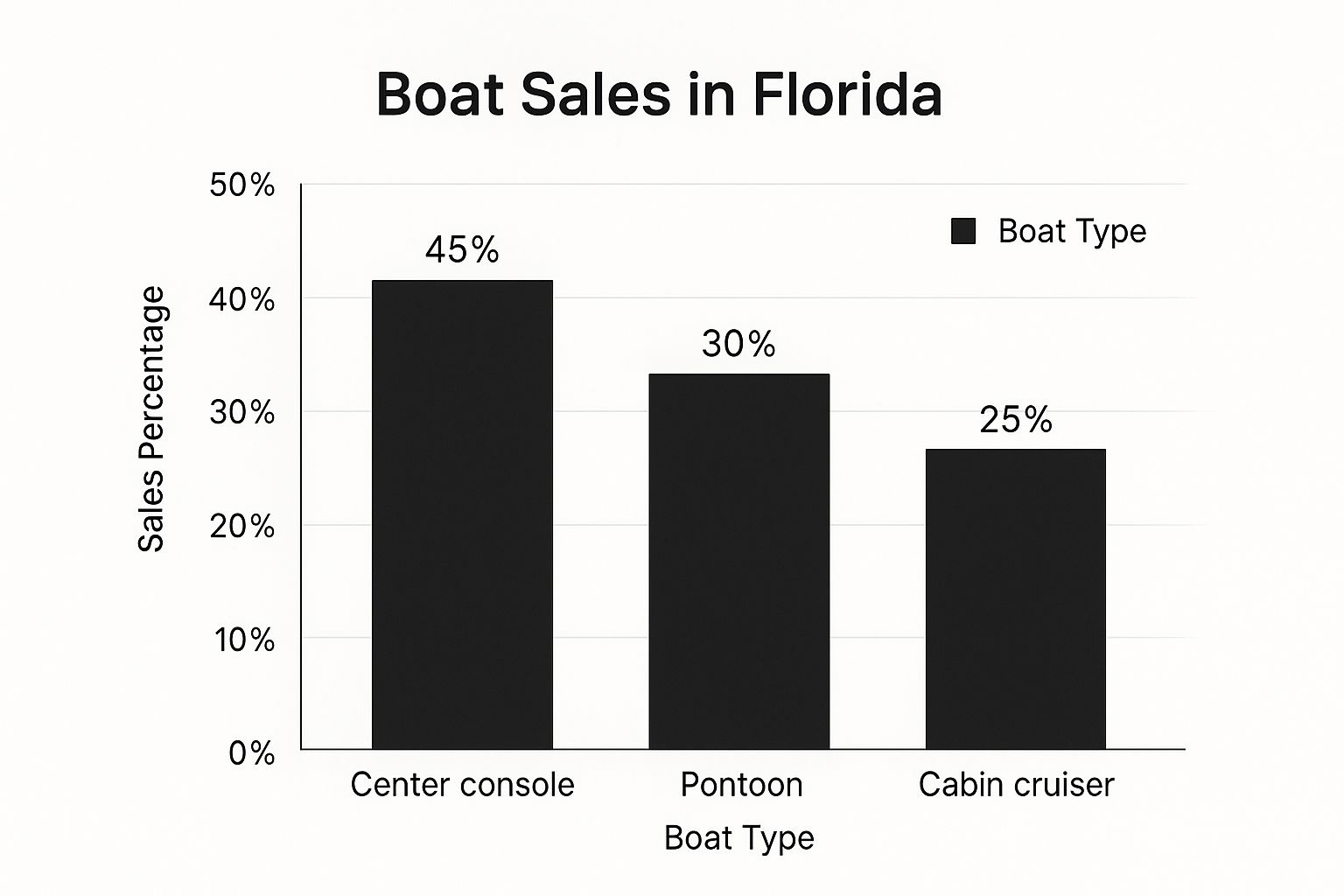
As you can see, the do-it-all center console is king in Florida for a reason—it’s just a perfect fit for our diverse waterways.
The sticker price is just the entry ticket. A smart buyer knows the total cost of ownership is what truly matters. Whether you're buying a boat, I've seen too many people get in over their heads because they forgot to budget for the recurring expenses.
Here's what you need to account for, beyond the purchase price:
- Insurance: This can vary wildly depending on the boat's value, your age, and your experience. Get quotes early.
- Storage/Slip Fees: Are you trailering it at home for free, or will you need a slip at a marina? A wet slip can easily add hundreds of dollars to your monthly budget.
- Maintenance: This is the big one. A good rule of thumb is to set aside 10% of the boat’s value every year for upkeep. Engine services, bottom paint, and unexpected repairs add up.
- Fuel: Don't underestimate this! A day of fun on the water with a big V8 or twin outboards can burn through a surprising amount of cash.
Think of it this way: budgeting for these costs before you buy is the best way to ensure your dream boat doesn't become a financial nightmare. It lets you enjoy your time on the water, stress-free.
The boat market is always changing, and Florida is often where you see new trends take off. After the huge sales boom during the pandemic, things have cooled off a bit, but some specific boat types are still seeing incredible growth.
For instance, the latest industry data showed that while overall sales were down, new jet boat sales jumped by an astounding 44.3%. This points to a growing desire for versatile, high-performance fiberglass boats that can handle our coastal chop. It's always a good idea to check out a full boating industry report to see where the market is headed.
Okay, now that you’ve thought about your lifestyle and your real budget, it’s time to create your non-negotiable checklist. This simple tool will be your best friend, turning a sea of listings into a manageable handful of real contenders.
Get specific. What do you absolutely need?
- Main Purpose: Is it for hardcore offshore fishing, sandbar hopping, or family watersports?
- Guest Count: How many people will you realistically have on board most of the time?
- Engine Setup: Do you prefer the simplicity of a single outboard or the redundancy of twins?
- Key Features: Is a T-top for shade a must-have? What about a livewell, a GPS, or a small bathroom (head)?
- All-In Budget: What is the absolute maximum you're willing to spend, including that first year of ownership costs we talked about?
Putting this down on paper transforms your search from a vague wish into a targeted mission. You'll stop wasting time on boats that are a bad fit and can focus all your energy on finding the perfect vessel for your Florida adventures.
Alright, you've got your must-haves list and a budget. Now for the fun part: the hunt. Knowing where to look for boats in Florida for sale is half the battle, and each avenue—from big online marketplaces to local marinas—has its own quirks.
Your search will almost certainly kick off online. A great first stop is a large aggregate site like SearchShop.com, which pulls in listings for both boats and RVs from all over the state. It's the perfect way to get a real-world feel for what your money can buy, compare pricing on similar models, and see the sheer volume of options available.
But remember, an online listing is a sales pitch. It’s designed to look good. Your job is to become an expert at reading between the lines and spotting what isn't being said.
For a lot of people, especially if this is your first boat, going through a reputable dealership or a certified boat brokerage is the way to go. It just takes a lot of the guesswork and risk out of the equation. These businesses live and die by their reputations, so they have a vested interest in making sure you're happy.
Think of it this way: they handle the nitty-gritty paperwork, make sure the title is clean and clear, and can often connect you with financing and even warranties. A good broker really earns their keep by listening to what you want and steering you toward boats that actually fit the bill, saving you from chasing down dead ends.
A dealership is a lot like buying a certified pre-owned car or boat. You might pay a bit more than you would in a private sale, but that premium buys you professional service, a vetted product, and someone to call if a problem pops up after you've signed on the dotted line.
Now, if you've got a bit of experience under your belt and enjoy the thrill of the chase, the private market is where the real treasures can be found. Scrolling through places like Facebook Marketplace or Craigslist can unearth some fantastic deals, often from owners who have babied their boats and have a three-ring binder full of service records to prove it.
Patience is your best friend here. You have to be willing to sift through a lot of duds to find a gem. Look for ads with tons of clear, recent photos—if a seller only posts two blurry pictures from a distance, they're probably hiding something. Be wary of vague descriptions like "runs great." What does that mean?
When a private listing catches your eye, it's time to play detective. Ask direct questions:
- "When was the last time the engine was serviced? Do you have the paperwork?"
- "Any history of major fiberglass work or structural repairs?"
- "What's your reason for selling?"
How they answer—or if they get defensive—tells you as much about the boat as the answers themselves.
Never, ever underestimate the value of heading to one of Florida's big boat shows. Events like the massive Fort Lauderdale International Boat Show are an incredible opportunity. It's one-stop shopping on a grand scale, similar to the big boat shows where you can explore dozens of models in one place.
You can physically climb aboard dozens of different boats in a single afternoon. Want to see how a Sportsman feels compared to a Sea Ray? Here's your chance. You can touch the materials, sit at the helm, and get a gut feeling for the boat's build quality in a way you never could online.
Plus, you get to talk directly with dealers and manufacturer reps in a pretty low-pressure environment. They often have special "boat show pricing" to entice buyers, which can be your ticket to a great deal, especially on a brand-new or nearly new model. It’s your chance to research, inspect, and negotiate, all in one weekend.
So, you’ve found a boat that looks perfect online. The pictures are stunning, and the description checks all your boxes. Great. Now comes the most crucial part of the entire process: the hands-on inspection and sea trial. This is where the online fantasy meets dockside reality.
Forget the sales pitch for a minute. A gleaming gelcoat can easily mask deep, expensive problems with the structure or engine. A boat that sits pretty at the dock might reveal a totally different, and much uglier, personality once you're out on the water. Your job now is to uncover the boat's true condition before you sign anything.
Before you even dream of firing up the engines, it's time for a detailed walkthrough. Don't be rushed. Bring a powerful flashlight, your phone for taking pictures of everything, and a game plan. A systematic approach is your best defense against missing a deal-breaker.
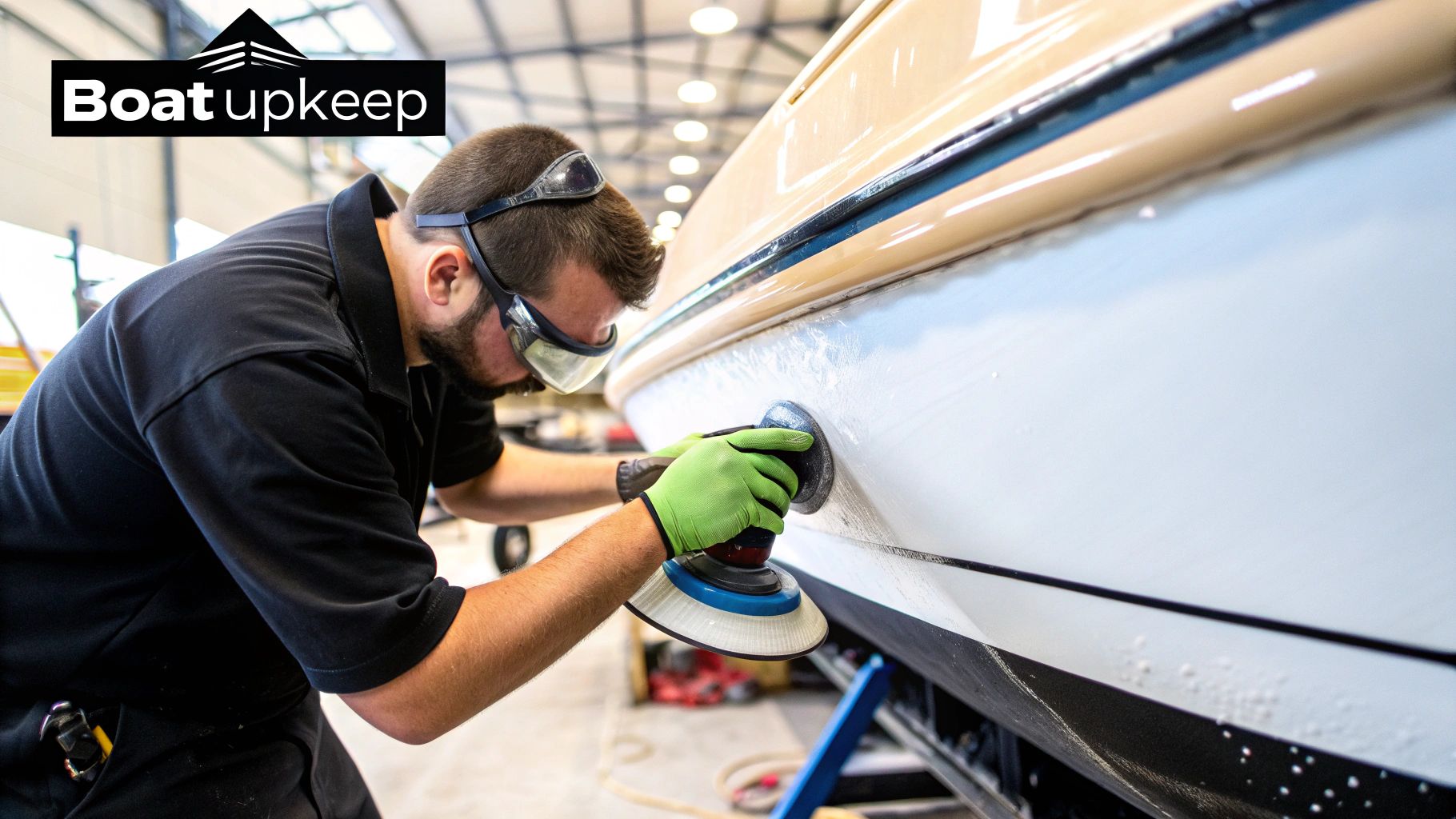
Start on the outside. Get up close and look for those tell-tale spider cracks in the fiberglass, especially around high-stress points like cleats and the transom. While some are just cosmetic, others can signal serious structural flexing. Run your hand along the hull, feeling for blisters or evidence of sloppy repair work.
Now, it's time to get inside and dig a little deeper:
- Engine Compartment: Stick your head in there and look for any signs of leaks—oil, coolant, or saltwater drips. Check belts and hoses for cracking or fraying. I've always found that a clean, well-organized engine room is a great sign of a meticulous owner. A messy one is a red flag.
- Electrical Systems: This is tedious but non-negotiable. Flip every single switch. Test the navigation lights, bilge pumps, livewell pumps, GPS, VHF radio—everything. Chasing down electrical gremlins later on is a special kind of nightmare you want to avoid.
- Deck and Hardware: Walk every square inch of the deck. Pay close attention to how it feels under your feet. Any soft, spongy spots are a huge warning sign of a rotted core. Grab onto the railings, cleats, and T-top supports and give them a good shake to make sure they’re rock-solid.
This first look gives you a gut feeling for how the boat's been cared for. If you find a laundry list of issues here, it might be time to walk away before you spend another minute or dollar.
No matter how confident you are, your inspection is no substitute for a professional marine survey. Think of a surveyor as a boat detective—much like an independent inspector for a comparable vessel. These are trained pros who know exactly where to look for hidden issues that you and I would almost certainly miss.
A proper survey involves both an "out-of-water" inspection of the hull and running gear, plus an "in-water" systems check. The surveyor will use specialized tools like moisture meters and percussion hammers to find delamination or water intrusion that’s completely invisible to the naked eye. This is especially vital when looking at the thousands of pre-owned boats in Florida for sale, where the relentless sun and saltwater environment can wreak havoc.
Key Takeaway: A marine survey isn't just for your own protection. Most insurance companies and marine lenders will demand a recent survey on a used boat before they’ll even consider writing a policy or approving a loan. It's a mandatory step that protects everyone.
Don't just hire any surveyor. Look for credentials from respected organizations like the Society of Accredited Marine Surveyors (SAMS) or the National Association of Marine Surveyors (NAMS). A qualified surveyor works for you, providing a completely unbiased report on the boat’s condition and its real-world market value.
Finally, the fun part! The sea trial is your chance to feel how the boat actually performs. This isn't a casual cruise around the bay; it’s a focused test drive with a clear purpose.
Here's what you need to do while you're out on the water:
- Run It Through the Paces: Don't just idle away from the dock. See how the boat gets on plane. Does it leap out of the hole or struggle? Listen carefully to the engine as you move through its entire RPM range, from a slow troll all the way to wide-open throttle (if conditions permit).
- Test the Handling: Make a variety of turns, from long, sweeping arcs to tight, sharp maneuvers. How does the steering feel—is it responsive or sloppy? If there's any chop, see how the boat handles it. Does it pound and slap, or does it cut through the waves smoothly?
- Watch the Gauges Like a Hawk: Keep your eyes glued to the engine temperature and oil pressure. These readings should climb to a normal operating range and then stay put. Wild fluctuations are a serious warning sign.
This is also the perfect time to chat with the owner or broker. Ask about fuel burn at cruising speed, any known quirks, and who has done the maintenance. A transparent seller will have no problem answering your questions. By combining your own inspection, a professional survey, and a thorough sea trial, you'll have all the information you need to make a smart, confident decision.
You’ve done the legwork. You’ve sifted through countless listings for boats in Florida for sale, found the one, and put it through its paces with a solid inspection and sea trial. Now for the exciting part: making it officially yours.
This final stretch is all about nailing down the financing and tackling the paperwork. Get this right, and you'll have a smooth path to ownership and be out on the water in no time.
When it comes to paying for your new toy, you’ve got options. Some buyers can pay cash, but most of us will be looking at financing. The real decision isn't if you'll finance, but who you'll finance with. This usually boils down to your local bank versus a specialized marine lender.
Your neighborhood bank or credit union might seem like the easy choice, but they often approach a boat loan like it's a car loan. That can mean shorter terms and less favorable rates. Specialized marine lenders, on the other hand, live in this world every single day.
- Specialized Marine Lenders: These folks get it. They understand a boat’s value and its expected lifespan, so they're comfortable offering longer loan terms—often 15-20 years. A longer term can dramatically lower your monthly payment.
- Local Banks/Credit Unions: While they're convenient for a checking account, they might be less flexible on a big purchase like a boat and may not know how to properly value older or more unique vessels.
My Best Advice: Get pre-approved for your loan before you even think about making an offer. Showing up with your financing already sorted is a massive power move. It tells the seller you’re serious and ready to go, giving you real leverage to negotiate the best price.
With your financing lined up, you’re ready to make an offer. Remember that professional marine survey you had done? That’s your secret weapon. If the survey turned up any issues—a tired-out bilge pump, outdated electronics, you name it—use the cost of those repairs to back up a lower offer. This isn't about being cheap; it's about presenting a fair number based on the boat’s actual, documented condition.
Once you and the seller shake hands on a price, lock it in with a Purchase and Sale Agreement. This is the legally binding contract that protects everyone involved.
Make sure your agreement spells out:
- The final sale price.
- A detailed list of everything included (GPS, safety gear, trailer, etc.).
- Any contingencies, like the sale being dependent on that satisfactory sea trial and survey.
- The closing date.
Putting it all in writing leaves zero room for misinterpretation down the road.
The last hurdle is gathering the documents to legally transfer the boat into your name. If you stay organized, the process in Florida is pretty straightforward.
Here’s the short list of what you'll need to finalize the deal:
- Bill of Sale: This is your official receipt. It needs signatures from both you and the seller, plus the boat's Hull Identification Number (HIN), the price, and the date.
- Original Title: The seller must sign the title over to you. Double- and triple-check that the HIN on the title perfectly matches the HIN on the boat itself.
- Application for Certificate of Title With/Without Registration (HSMV 82040): This is the state form you'll need to get the boat registered in your name.
Once you have these documents, you’re in the home stretch. You’ll need to get boat insurance—most marinas and lenders require it anyway. Then, just take all your paperwork to your local Florida county tax collector's office to pay the sales tax, transfer the title, and walk out with your new registration and decals.
The boating market is always fluid. Recent data from the NMMA shows that U.S. powerboat sales hit between 230,000 and 240,000 units in 2026. But Florida continues to be a hot spot, especially for pontoons and personal watercraft, which speaks to the state's vibrant boating culture. You can dive deeper into the market by reviewing the latest U.S. boat sales statistics on BoatingIndustry.com to see where your purchase fits into the bigger picture.
When you're nearing the finish line of a boat purchase, a flood of last-minute questions always seems to pop up. Getting clear, accurate answers is what separates a smooth closing from a stressful one. Let's tackle some of the most common questions I hear from buyers looking at boats in Florida for sale.
This is all about handling those final details with confidence, from figuring out Florida’s unique sales tax rules to the logistics of actually getting your new boat home.
The sales tax on boats in Florida can feel a bit confusing at first, but it's pretty straightforward once you know the rules. The state charges a 6% sales and use tax on the boat's purchase price. On top of that, some counties might add their own small discretionary sales surtax.
Here’s the key detail you need to know: the total tax on any boat sale is capped at $18,000. That means if you're buying a boat for more than $300,000, your tax bill won't go a penny over that $18,000 limit. This is a huge benefit for anyone purchasing a higher-value vessel.
Pro Tip: Don't think you can skip the tax by buying from a private seller. You're still on the hook for it. You'll typically pay it when you go to your local county tax collector’s office to register the boat and get the title put in your name.
Florida is a magnet for boat buyers from all over the country and even the world. If you're buying a boat here but plan to take it to another state for registration and use, you can often get a sales tax exemption.
To make this happen, you have to follow a few strict rules:
- You can't be a Florida resident or have a business based in the state.
- The boat must be removed from Florida waters within 90 days of the purchase.
- You'll need to sign a sworn affidavit at closing, promising you'll meet these requirements.
Be warned: if you fail to get the boat out of Florida within that 90-day window, you'll be liable for the full sales tax, plus some nasty penalties and interest. So, make sure you have your transport plan completely sorted out before you sign on the dotted line.
A title search is one of the most critical—and most often overlooked—steps in a private boat sale. It’s how you officially confirm that the person selling the boat is the true legal owner and that there are no hidden loans or claims against it.
Think about it. The last thing you want is to buy your dream boat, only to have a bank show up and repossess it because the previous owner never paid off their loan. A proper title search uncovers these financial time bombs before you part with your money.
You can do a basic check yourself through the Florida Department of Highway Safety and Motor Vehicles (FLHSMV), but for true peace of mind, it’s worth hiring a professional marine documentation service for a thorough search.
You bought the boat! Now, how do you get it home? If it's on a trailer, you might just hitch it up and hit the road. But for larger vessels, you'll need to call in the pros.
You generally have two options for moving a big boat:
- Over-the-Road Transport: This is the most common method. A specialized trucking company loads your boat onto a custom rig and hauls it anywhere in the country.
- On-Its-Own-Bottom Delivery: For this, you hire a licensed captain and crew to actually sail or motor the boat to your home port. It’s a fantastic option for long-distance moves along the coast or through inland waterways.
No matter which route you choose, always get quotes from several insured and reputable transport companies. They’ll need the boat’s exact specs—length, beam (width), height, and weight—to give you an accurate price. And absolutely confirm that their insurance covers the full value of your boat during transit.
When you’re ready to get started, let SearchShop.com be your guide. Our platform pulls together thousands of listings for both boats and RVs, giving you the tools to analyze prices, research different models, and find the perfect vessel for your adventures on the water or on the road. Start your search for new and used boats in Florida for sale with us today at https://www.searchshop.com.