Finding the right boats for sale in Florida can feel like you're navigating a huge, open ocean. But trust me, it’s an adventure worth embarking on. As the nation's boating capital, the Sunshine State has an incredible range of vessels, from serious saltwater fishing machines to laid-back pontoon boats perfect for a lazy Sunday on the lake. Much like searching for the perfect RV to explore the open road, finding the right boat is about matching the vehicle to your adventure.
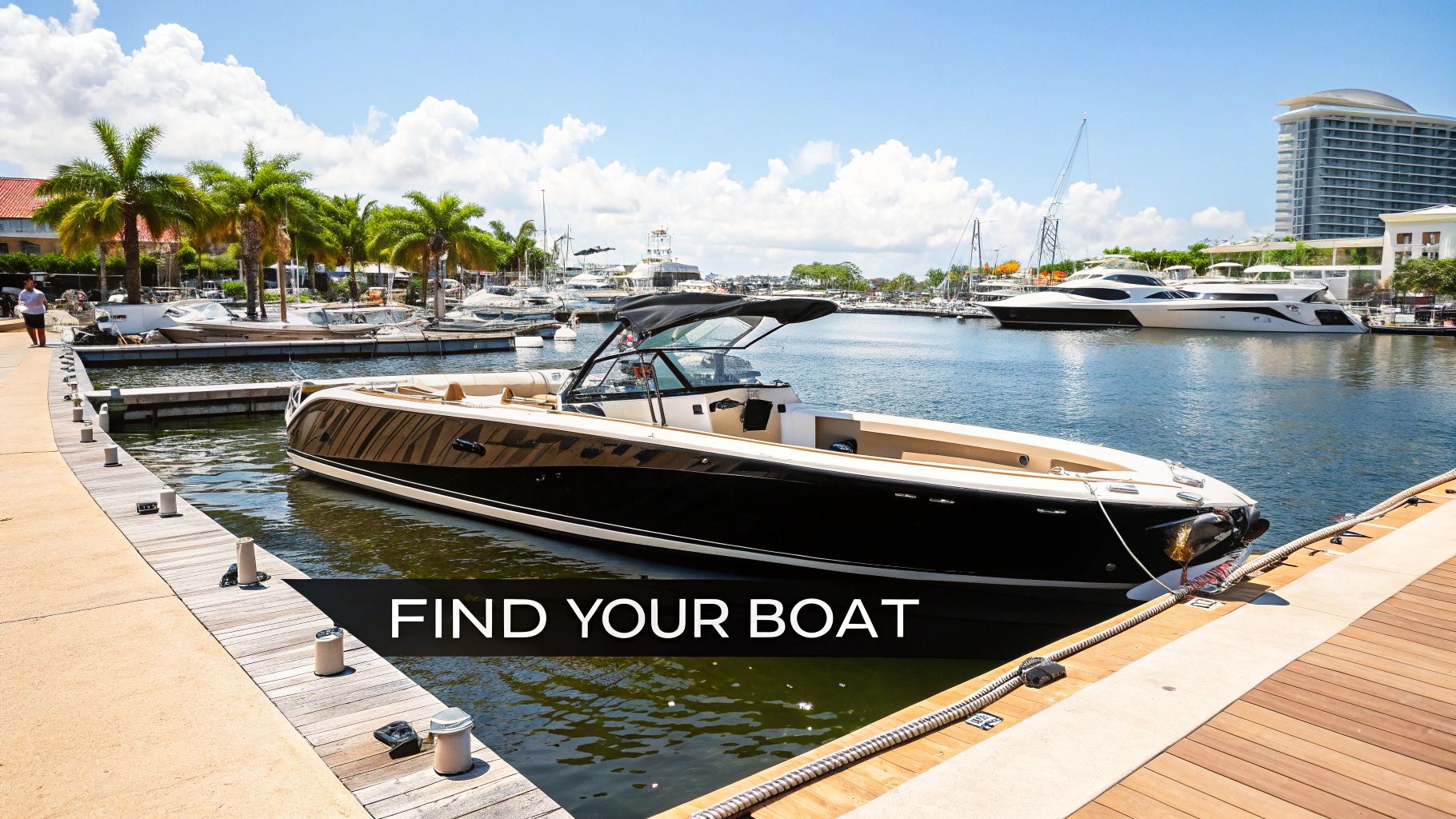
Florida's boating scene is really in a league of its own. You've got thousands of miles of coastline, more inland lakes than you can count, and the legendary Intracoastal Waterway. This makes it a hotspot for pretty much any kind of watercraft you can dream up. The flip side? That huge selection can feel a little daunting, whether you’re a first-time buyer or a seasoned skipper.
Think of this guide as your personal chart plotter for the buying process. I'm going to break down the major milestones, giving you a solid game plan to find a boat that actually fits your life and your budget. Getting a feel for the market is your first real step toward making a smart, confident purchase.
The state's unique geography and amazing weather create a market that’s always buzzing with activity. From the Atlantic waves to the calm Gulf waters, the possibilities for adventure are endless. This constant demand fuels a healthy ecosystem of dealers, brokers, and private sellers, which is great news for you.
- So Much Variety: You'll find everything from high-performance offshore center consoles built for the deep sea to comfy deck boats made for family sandbar trips.
- Year-Round Boating: This is a big one. Unlike a lot of other places, Florida’s climate means you can be on the water pretty much any day of the year. That makes owning a boat a much better investment of your time and money.
- Strong Resale Values: Because there's always someone looking to buy a boat here, they tend to hold their value better than in other parts of the country. That's a huge plus when you think about long-term ownership.
There’s no denying Florida’s central role in the recreational boating world. In 2021 alone, an unbelievable 231,030 boats were sold and titled right here in the state. A big part of that wave was the more than 415,000 first-time boat buyers who jumped into the market nationwide, which shows just how many people are falling in love with the water. You can dig into more of these stats and boating market trends from Boat History Report®.
Key Takeaway: The trick is to look past all the shiny gelcoat and initial excitement and make a real plan. Figure out what you need first, and you'll be able to tune out the noise and zero in on the boats that are actually a good fit for you.
Before you even start scrolling through listings for boats for sale in Florida, let's take a step back. What does your perfect day on the water actually look like? The answer is everything. A boat built to chase tuna 20 miles offshore is a world away from one made for lazy Sundays on the Intracoastal or pulling the kids on a tube around Lake Weir. Getting this part right from the start is the single best way to avoid a bad case of buyer's remorse.
Think it through. Who's usually coming with you—just your spouse, or the whole neighborhood? How many people do you realistically need room for? Are you trailering it every weekend, or will it live in a marina slip? Being honest about these practical details gives you a filter to cut through the noise and focus on what truly works for you. This is the same logic you'd use when choosing between a compact camper van for solo trips or a Class A motorhome for family cross-country tours.
Florida’s waters are a playground for just about every type of boat imaginable, and each one has its specialty. For the serious fisherman, a center console is king. It gives you 360-degree access to fight a fish and is typically designed to handle a bit of chop. But if your weekends are more about sandbar parties and family cruises, a deck boat or a pontoon boat is probably more your speed, prioritizing deck space and comfort over everything else.
Maybe you're dreaming of a weekend getaway to the Keys or a quick hop over to the Bahamas. A cuddy cabin offers a small sleeping area without jumping up to the size, cost, and maintenance of a full-blown cabin cruiser.
A boat is a compromise. The trick is to find the right set of compromises for how you'll spend 80% of your time on the water—not the 20% you dream about.
To give you a better idea of what's out there, here's a quick look at some of the most popular boat types you'll find around Florida and what they do best.
| Boat Type |
Primary Use |
Ideal Florida Waterway |
Average Size Range |
| Center Console |
Fishing (offshore & inshore) |
Atlantic, Gulf of Mexico, large bays |
18 - 40 ft |
| Pontoon Boat |
Socializing, cruising, family fun |
Intracoastal, lakes, calm bays |
20 - 30 ft |
| Deck Boat |
Watersports, cruising, entertaining |
Lakes, rivers, Intracoastal |
19 - 26 ft |
| Cuddy Cabin |
Day cruising, occasional overnights |
Coastal waters, large lakes |
22 - 30 ft |
| Flats Boat |
Inshore/backcountry fishing |
Florida Bay, Mosquito Lagoon |
16 - 20 ft |
This table should help you start narrowing down the field based on what you plan to do and where you plan to do it.
The price you see on the listing is just the down payment on your boating life. If you want to enjoy your time on the water without financial stress, you have to build a realistic budget that covers the total cost of ownership. First-timers often get surprised by these recurring expenses.
- Insurance: This can vary wildly depending on the boat's value, your boating experience, and where you'll be keeping it.
- Storage/Slip Fees: Marina fees in Florida are a significant monthly expense. Even dry storage or a spot for your trailer has a cost.
- Maintenance: A solid rule of thumb is to set aside 10% of the boat's purchase price for annual upkeep, repairs, and preventative maintenance.
- Fuel: Think about the engine's fuel burn and how many hours you plan to run it. It adds up fast.
This chart gives you a ballpark idea of average sale prices for popular boat styles in Florida, which is a great starting point for your purchase budget.
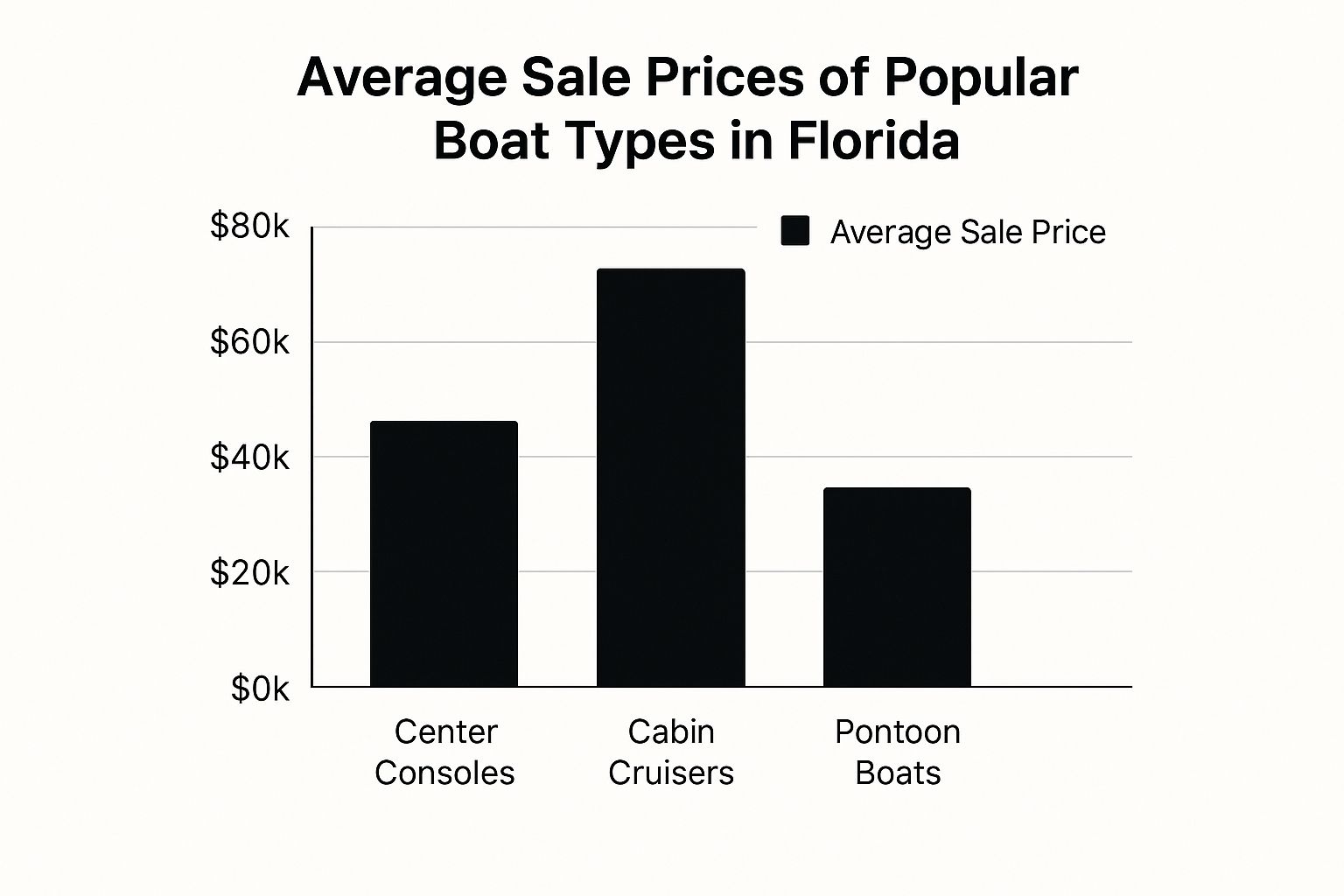
As you can see, versatile boats like pontoons and center consoles offer a more accessible way to get on the water than larger cruisers. The market reflects this. Pontoons are expected to see between 52,000 to 55,000 new units sold, while personal watercraft sales might hit 75,000 units. If you're a data nerd, you can read the full analysis of recent boat sales stats to get a deeper sense of where the industry is heading.
Alright, you’ve got a clear picture of the boat you want. Now for the fun part—the hunt. Florida's market for recreational vehicles, both on land and water, is enormous. This is a blessing and a curse. Your perfect boat is definitely out there, but you’ve got to know where to find it.
Most people naturally start online, and that’s a great place to get a feel for the market. But you need to be smart about it and learn to spot the good listings from the bad. When you're scrolling through websites with boats for sale in Florida, the photos are your first clue. You want to see lots of recent, high-quality pictures from every conceivable angle.
If you see a listing with blurry photos, stock images, or a seller who hesitates to send you more pictures, consider it a major red flag. Move on.
While browsing online is great for gauging prices, you can unlock a whole different level of opportunities by working with a professional. A good boat broker is so much more than a salesperson; they’re your guide and advocate through this entire process.
Brokers often know about boats for sale before they ever hit the public market—we call them "pocket listings." They can also give you the real scoop on a boat's true value and negotiate like a pro on your behalf. This alone can save you thousands of dollars and a ton of headaches.
Expert Insight: A good broker’s network is their superpower. They hear whispers about boats coming up for sale long before they're listed online, giving their clients a huge head start in a competitive market.
Don't underestimate how active the Florida boat market is. By June 2022 alone, an incredible 119,831 boats were sold and titled in the state, including both new and used vessels. That kind of volume shows just how fast things move. Having an expert in your corner is invaluable, and you can learn more about Florida's recent boat sales data to get a better handle on these market trends.
Your search shouldn't be confined to a computer screen. Some of the absolute best deals are found the old-fashioned way: by walking the docks and getting involved in the local boating scene.
- Visit Local Marinas: Seriously, just go for a walk. Stroll through the marinas where you'd want to keep your boat. You'll spot plenty of "For Sale by Owner" signs on boats that you won't find listed anywhere else. It’s also the best way to see what kinds of boats people are actually using in those waters.
- Attend Boat Shows: Events like the Fort Lauderdale International Boat Show are a boater's paradise. You can hop on dozens of boats in a single afternoon, compare different brands side-by-side, and talk directly with dealers and manufacturers. Plus, there are often "boat show specials" you can't get any other time.
- Talk to Boaters: This is my favorite tip. Strike up a conversation with people at the boat ramp, the fuel dock, or a waterfront restaurant. Boaters love talking shop, and you might just get a lead on someone who's thinking about selling before they've even told their spouse.
By mixing a savvy online search with these real-world tactics, you cover all your bases. You’ll be looking in places other buyers aren’t, giving you a much better shot at finding the perfect boat at the right price.
You’ve found a boat that looks great online, and the pictures are perfect. But as any seasoned boater will tell you, a shiny gelcoat can hide a world of expensive problems. A thorough, hands-on inspection is probably the most important thing you can do to protect your investment. This is your chance to get past the polish and really understand the condition of the vessel you’re about to buy.
Think of your initial walkthrough as a fact-finding mission. You're starting with the big picture and then zeroing in on the details. This isn't just about looking for a few cosmetic dings; it's about spotting the red flags that could turn your dream boat into a financial nightmare.
The moment you step aboard, trust your senses. What do you smell below deck? Is it musty or damp? How do the floorboards—the soles in boat-speak—feel under your feet? Spongy spots are a bad sign. These first impressions are surprisingly accurate and can point you toward areas that need a much closer look.
Here's a practical checklist I use when I first look at any boats for sale in Florida:
- Hull and Deck: Take your time and walk the entire perimeter. I always look for fine "spider cracks" in the gelcoat, especially around high-stress areas like cleats, winches, and railings. Also, keep an eye out for signs of old repairs, which often show up as mismatched paint, bumps, or uneven surfaces.
- Engine Room and Bilge: The engine is the heart of any powerboat, so give it your full attention. Look for obvious signs of leaks—oil, coolant, or saltwater stains. A clean engine room isn't just for show; it's usually the mark of a meticulous owner. Pop open the bilge—it should be relatively clean, not swimming in oily water.
- Electrical Systems: This is an easy one to test. Flip every single switch. Turn on the navigation lights, cabin lights, bilge pumps, electronics, and even the horn. In Florida's salty air, electrical systems take a beating. Corroded wiring or flickering lights are tell-tale signs of neglect.
- Safety Gear: Check the expiration dates on the flares and fire extinguishers. Does the boat have enough life jackets (PFDs) for its capacity? If the owner has let basic safety gear expire or go missing, it makes you wonder what other, more critical, maintenance they've skipped.
This first pass helps you build a picture of the boat's history and care. If it passes your initial smell test, it's time to bring in a professional.
No matter how many boats you've been on, your personal inspection is just the opening act. Let me be clear: hiring a professional, certified marine surveyor isn't an optional expense. It is an absolute must for any serious boat purchase.
A surveyor is basically a home inspector for boats, but with specialized tools and training to find issues you would never spot. They can detect hidden structural damage, moisture trapped in the hull (a very expensive fix), looming engine problems, or faulty through-hulls.
The cost of a survey, usually priced per foot of the boat's length, is nothing compared to the cost of fixing a major flaw you missed. In fact, you probably won't have a choice. Most insurance companies and marine lenders will require a recent, satisfactory survey before they’ll even consider giving you a policy or a loan.
Insider Tip: Never, ever use a surveyor recommended by the seller or their broker. It’s a clear conflict of interest. Find your own independent, accredited surveyor through trusted organizations like the Society of Accredited Marine Surveyors (SAMS) or the National Association of Marine Surveyors (NAMS).
The sea trial is where the rubber meets the road—or rather, the hull meets the water. This isn't just a fun boat ride; it's a critical performance test.
You need to run the boat through its paces. Don't just cruise around at a comfortable speed. Push it from a slow idle all the way up to wide-open throttle (if conditions permit).
Does it get on plane smoothly, or does it labor? Watch the engine temperature gauges—do they stay stable? Listen for any strange noises and feel for unusual vibrations through the hull and steering. This is your one and only chance to experience how the boat actually handles before you sign the papers, so make it count.
You did it. You’ve sifted through countless listings, walked the docks, and put your dream boat through its paces on the water. Now that you’ve found "the one" and your offer has been accepted, it’s time to handle the final steps that make it officially yours.
This last leg of the journey is all about locking down your financing, navigating the paperwork, and getting the right insurance. It might sound like a hassle, but getting these details right is what ensures a smooth closing and a stress-free start to your life on the water.
Once the sea trial goes well and the survey checks out, the first thing on most buyers' minds is money. While paying cash is always an option, financing is the route many people take when looking at boats for sale in Florida. And it's important to know that not all loans are created equal.
Boat loans are a different beast than car loans. Lenders who specialize in the marine and RV industry get it. They typically offer much better terms, like longer amortization periods—sometimes up to 20 years—which can seriously lower your monthly payments. This is a huge leg up compared to a standard personal loan you might get from your bank.
Before you even start talking to lenders, get your financial house in order. They’ll want to see a solid credit score and proof of stable income. My advice? Get pre-approved before you even make an offer. It signals to the seller that you're a serious buyer who can close the deal, which gives you a ton of leverage.
When you're comparing loan offers, don't just fixate on the interest rate. You need to look at the whole picture: the down payment required, whether there are any prepayment penalties, and the lender's reputation. A good marine lender understands the nuances of a boat purchase and can be a huge asset.
With your financing lined up, the next step is the official transfer of ownership. The stack of documents can look a little daunting, but it's a straightforward process designed to protect everyone involved. A little attention to detail here will save you from major legal headaches later.
Here are the key documents you'll be handling:
- The Bill of Sale: Think of this as the master receipt for your boat. It needs to be incredibly detailed, listing the boat’s Hull Identification Number (HIN), engine serial numbers, the final sale price, and, of course, signatures from both you and the seller. Make sure every single piece of gear that comes with the boat—from the trailer to the fish finder—is listed on it.
- The Title: Just like with a car, the title is the ultimate proof of ownership. The seller needs to sign it over to you. If the seller has a loan on the boat, their bank is holding the title. Part of the closing process will be paying off that lien so the bank will release it.
- Registration: Once the title is officially in your name, you have to register the vessel with the Florida Highway Safety and Motor Vehicles (FLHSMV). This is where you'll settle up on any state and county sales tax and get your official registration numbers and decal.
There's one last, absolutely critical step before you can pop the champagne and take possession: insurance. In fact, you'll find that most marinas in Florida won't even let you tie up in a slip without showing proof of liability coverage. And if you have a loan, your lender will absolutely require a comprehensive policy to protect their investment.
Don’t treat insurance as an afterthought. A solid marine policy goes way beyond just covering damage to your boat. It provides crucial liability protection, medical payments coverage, and can even help with things you'd never think of, like fuel spills or wreckage removal.
By taking care of these final steps with a clear head, you guarantee a clean, legal transaction. That way, when you finally cast off the lines for that first trip, you can do it with complete peace of mind.
Even with a perfect game plan, buying your first boat is bound to stir up some questions. Getting straight answers is the only way to move forward feeling confident and sidestep the common pitfalls that trip up so many new owners.
Let’s run through some of the most frequent questions we hear from people looking at boats for sale in Florida. These are the practical, real-world concerns that pop up between finding "the one" and finally getting out on the water.
The sticker price is just the starting line. Experienced boaters know you have to budget for the total cost of ownership if you want to avoid some nasty financial surprises. A good rule of thumb is to set aside about 10% of the boat's value for annual running costs.
So, what does that 10% actually cover?
- Annual Registration: Every year, you'll pay a fee to the state to keep your boat legal. It's just part of the deal.
- Boat Insurance: Policies can vary wildly, but it's a major—and often mandatory—expense, especially if you have a loan or keep your boat at a marina.
- Routine Maintenance: Think engine servicing, oil changes, and regular hull cleanings. In Florida's saltwater, keeping that hull clean isn't just for looks; it's essential for performance and longevity.
- Slip or Storage Fees: This is a big one. Whether you're renting a wet slip at a marina or paying for a spot in a dry stack, this will likely be your largest monthly boating expense after the loan payment.
- Fuel and Everything Else: Don't forget to budget for fuel, replacing safety gear, and a little "just in case" fund. Trust me, unexpected repairs have a way of popping up at the worst times.
Florida has some specific rules about boater education. If you were born on or after January 1, 1988, you're required to pass a state-approved boater safety course to legally operate any boat with 10 horsepower or more.
Once you pass, the Florida Fish and Wildlife Conservation Commission (FWC) issues you a Boating Safety Education ID Card. You have to carry this card with you whenever you're at the helm.
But here’s my take: even if you were born before the cutoff date, you should take the course. It’s an fantastic primer on local laws, navigation rules, and critical safety procedures that every boater should know inside and out.
Pro Tip: Passing a boater safety course isn't just about checking a legal box. Most insurance companies offer a nice little discount for it, so the course can literally pay for itself.
When you buy a boat, you’ll have to pay sales tax. Florida has a 6% statewide sales tax, and many counties tack on their own local discretionary surtax. You'll pay this tax when you go to register the boat with the FLHSMV.
Here's an important detail for bigger purchases: the total sales tax on any single vessel is capped. This can lead to some pretty significant savings if you're buying a more expensive boat.
If you buy from a dealer, they'll handle all the tax paperwork for you. If it's a private sale, the responsibility falls on your shoulders to calculate and pay it during the registration process.
Is a Boat History Report Worth the Cost?
Without a doubt, yes. A Boat History Report is a small investment that can save you from a catastrophic mistake. Using the boat's Hull Identification Number (HIN), a service like Boat-Alert.com can uncover a ton of information that a seller might not be so quick to share.
You can find out about a boat's accident history, see where it's been registered before, check for outstanding manufacturer recalls, and even find out if it has ever been reported stolen or salvaged. Getting this report is a non-negotiable due diligence step before you even think about hiring a surveyor or scheduling a sea trial.
Ready to start your search with confidence? At SearchShop.com, we provide the tools and listings you need to find the perfect boat or RV. Analyze prices, research history, and explore thousands of vehicles to make your next big purchase a smart one. Start your adventure today at https://www.searchshop.com.