If you've ever wondered what makes an RV toilet different from the one in your house, the answer is surprisingly simple: it's all about efficiency and a direct path to a holding tank. Instead of a complex plumbing system that whisks waste away to a sewer, an RV toilet is a self-contained unit designed for life on the move.
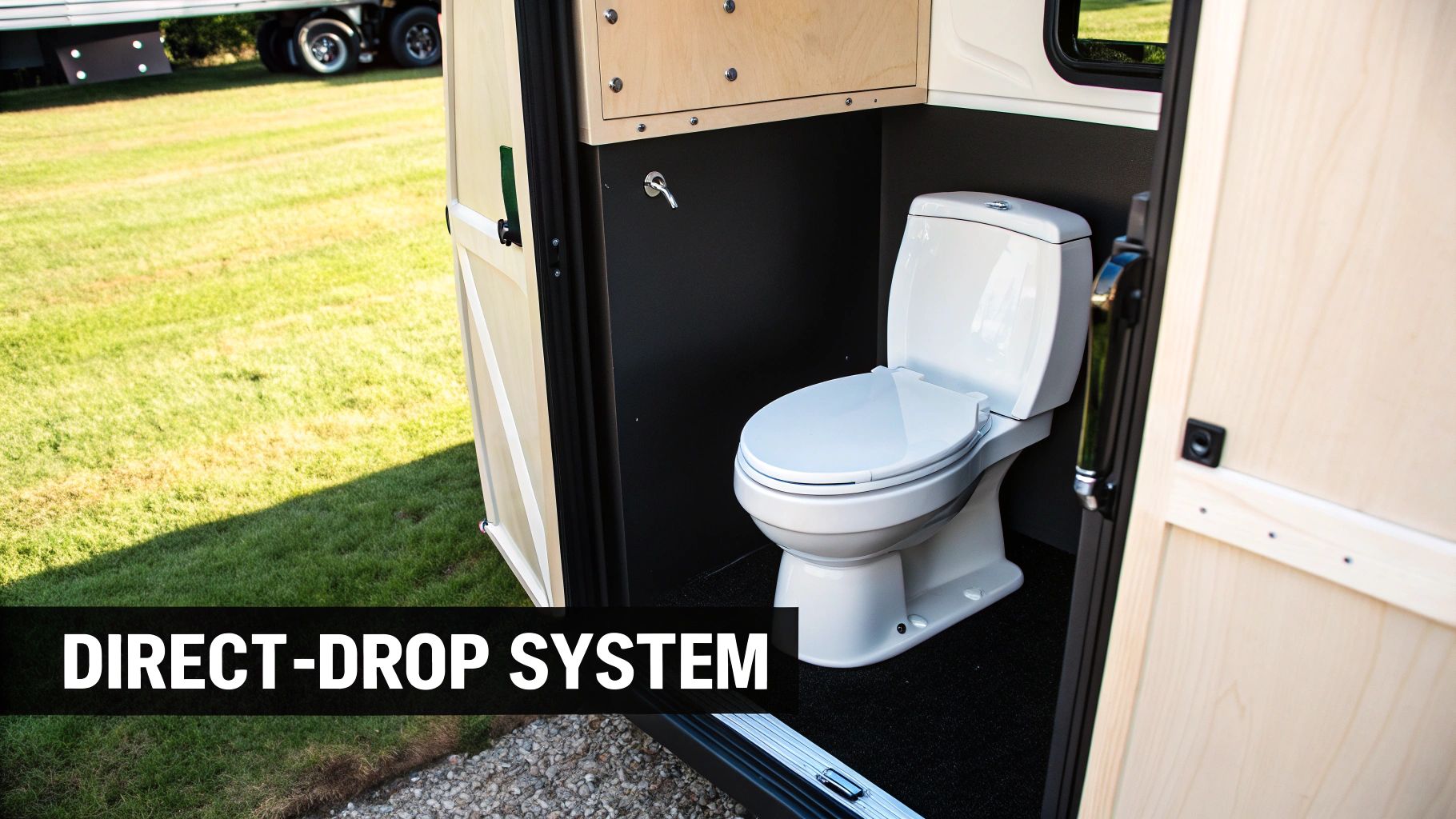
It operates on a direct-drop gravity or vacuum system, sending waste straight down into what's called a "black water tank" located right beneath it. This setup is the key to off-grid freedom.
The biggest difference you'll notice is how little water it uses. A typical RV flush uses just 0.1 to 0.5 gallons of water, a tiny fraction of what a residential toilet consumes. This is absolutely critical when you're carrying a finite supply of fresh water on board.
This water-conscious design is a core part of RV life, and it's a good idea to brush up on general water-saving practices in general. With RV shipments hitting a record 600,200 units back in 2021, the demand for smart, efficient systems like these has never been higher. You can dive deeper into these kinds of topics in our guide to owning and maintaining an RV.
To put it all in perspective, let's break down the key differences between your RV toilet and the one back home.
This quick comparison highlights just how different these two systems really are, from how they flush to where the waste ultimately goes.
| Feature |
RV Toilet |
Residential Toilet |
| Waste System |
Direct drop into a sealed black water tank |
Flushes into a municipal sewer or septic system |
| Water Usage |
Very low (0.1 to 0.5 gallons per flush) |
High (1.6+ gallons per flush) |
| Plumbing |
Simple, self-contained unit |
Complex, integrated with the home's plumbing |
| Chemicals |
Requires tank treatments to control odor/waste |
None required |
| Portability |
Designed for mobile use |
Stationary, permanently installed |
As you can see, an RV toilet is a specialized piece of equipment purpose-built for the unique demands of travel.
To really get how your RV toilet works, you first need to know the parts doing all the heavy lifting. Think of it less like a complex plumbing system and more like a simple, efficient machine designed for one specific job.
At a glance, you'll see the bowl, which isn't all that different from the one in your house. The real magic happens just underneath with the blade valve (sometimes called a slide valve). This is the gatekeeper, a flat panel that slides open and shut, creating an airtight seal between the bowl and the holding tank below.
Then you have the flush mechanism itself. Whether it’s a foot pedal you press or a button on the wall, this is what sets everything in motion.
When you activate the flush, two things happen at once. The blade valve slides open, creating a direct path to the tank, and a separate water valve opens to release just enough water to rinse the bowl clean.
It’s a beautifully simple, coordinated action. The waste and water drop straight down into the black water tank, the gate closes, and the job is done. This self-contained design is precisely what makes it perfect for life on the go.
Gravity vs. Vacuum: The Two Main Flush Systems
When it comes to RV toilets, not all flushes are created equal. The system in your rig will almost certainly fall into one of two main categories, and understanding which one you have is key.
The most common design by far is the classic gravity-flush toilet. Its genius lies in its simplicity. When you press the pedal or lever, a valve at the bottom of the bowl slides open, and gravity takes over. Waste drops straight down into the black tank, which is positioned directly underneath. No pumps, no extra parts—just simple physics doing its job.
Then you have the more complex systems, known as vacuum-flush or macerator toilets. These are a different beast altogether. Instead of relying on gravity, these toilets use a powerful pump to pulverize waste and then actively move it to the black tank. Think of it less like a trap door and more like a high-tech disposal system. This design is fantastic for larger RVs because it means the bathroom doesn't have to be built directly over the tank, giving designers a lot more layout flexibility.
This infographic breaks down the straightforward path of a gravity system, showing how waste moves from the bowl directly into the holding tank.
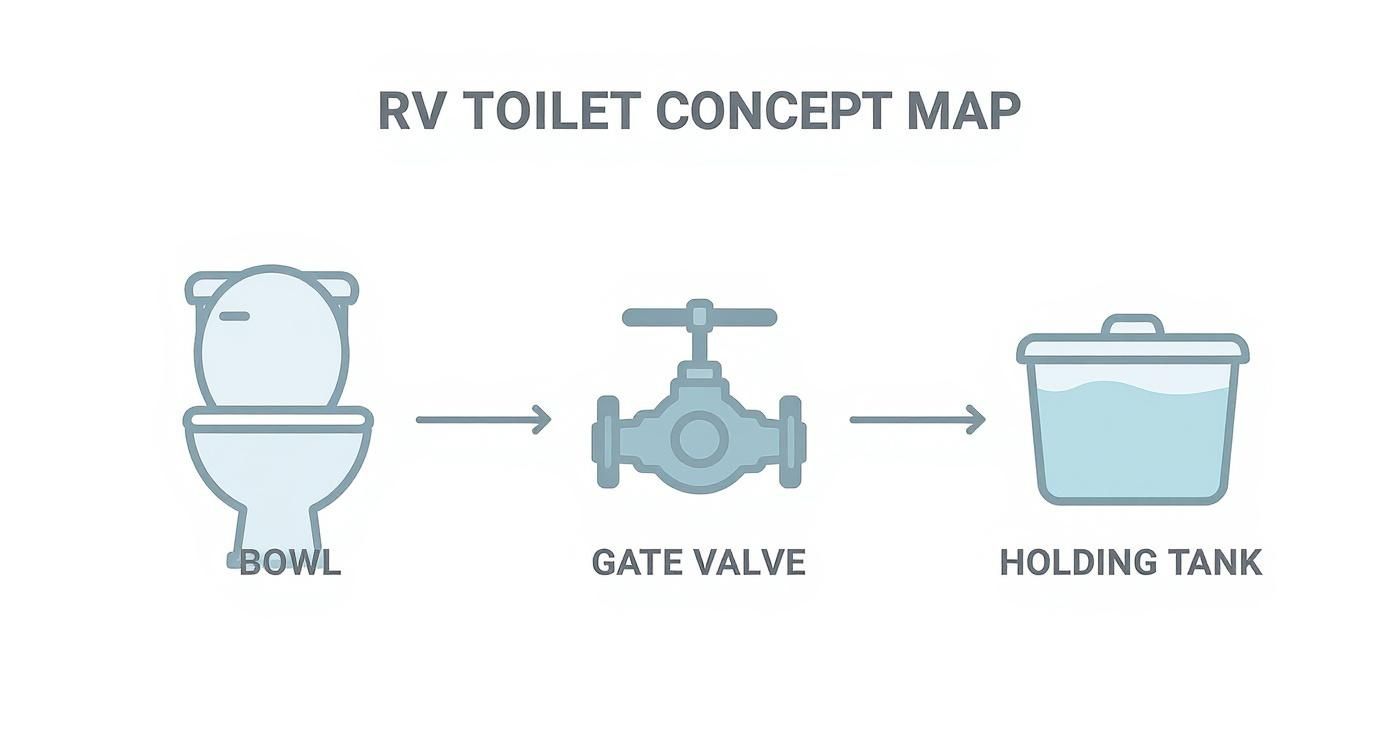
As you can see, that slide valve is the critical gatekeeper between the toilet bowl and the black tank. When it's closed, it holds water in the bowl; when it's open, gravity gets to work.
To help you visualize the differences, here’s a quick side-by-side comparison of the two main technologies. Each has its pros and cons depending on the RV's design and your personal needs.
| Feature |
Gravity Flush |
Vacuum/Macerator Flush |
| Mechanism |
Simple slide valve; relies on gravity. |
Electric pump pulverizes and moves waste. |
| Simplicity |
Very simple, few moving parts. |
More complex with pumps, motors, and wiring. |
| Water Usage |
Generally uses more water per flush. |
Very low water consumption. |
| Tank Location |
Must be directly above the black tank. |
Can be located almost anywhere in the RV. |
| Maintenance |
Easy to maintain and repair. |
Can be more difficult and costly to fix. |
| Clog Potential |
Less prone to clogs, but clogs are harder to clear. |
Clogs are rare due to the macerating pump. |
| Cost |
Less expensive. |
More expensive. |
Ultimately, the gravity toilet is the reliable workhorse of the RV world, while the macerator offers modern convenience and design freedom at a higher cost and complexity.
Getting the hang of an RV toilet is easy once you master its simple two-step rhythm. While the design feels modern, it's actually the result of over a century of innovation in mobile sanitation. In fact, the very first motorhomes back in 1910 had integrated toilets, a concept that has been refined ever since. You can actually trace the history of portable toilets from those early days to what we use now.
But let's get down to business. Here’s how it works.
First things first, you need to add a little water to the bowl before you use it. Just press the foot pedal or lever about halfway down.
This quick step is crucial for a couple of reasons. It helps everything flush away cleanly and, just as importantly, prevents waste from sticking to the bowl. Think of it as creating a slick surface for an easy exit.
Once you're ready, press the pedal all the way down. This single action does two things at once: it snaps open the blade valve at the bottom of the bowl and sends a jet of water to rinse everything down. The contents drop straight into the black tank below.
When you release the pedal, the valve slams shut, creating an airtight seal.
That seal is everything. It's the only thing standing between you and the odors from your black tank, so making sure it closes properly is the most important part of the whole process.
Essential Maintenance for a Trouble-Free Toilet
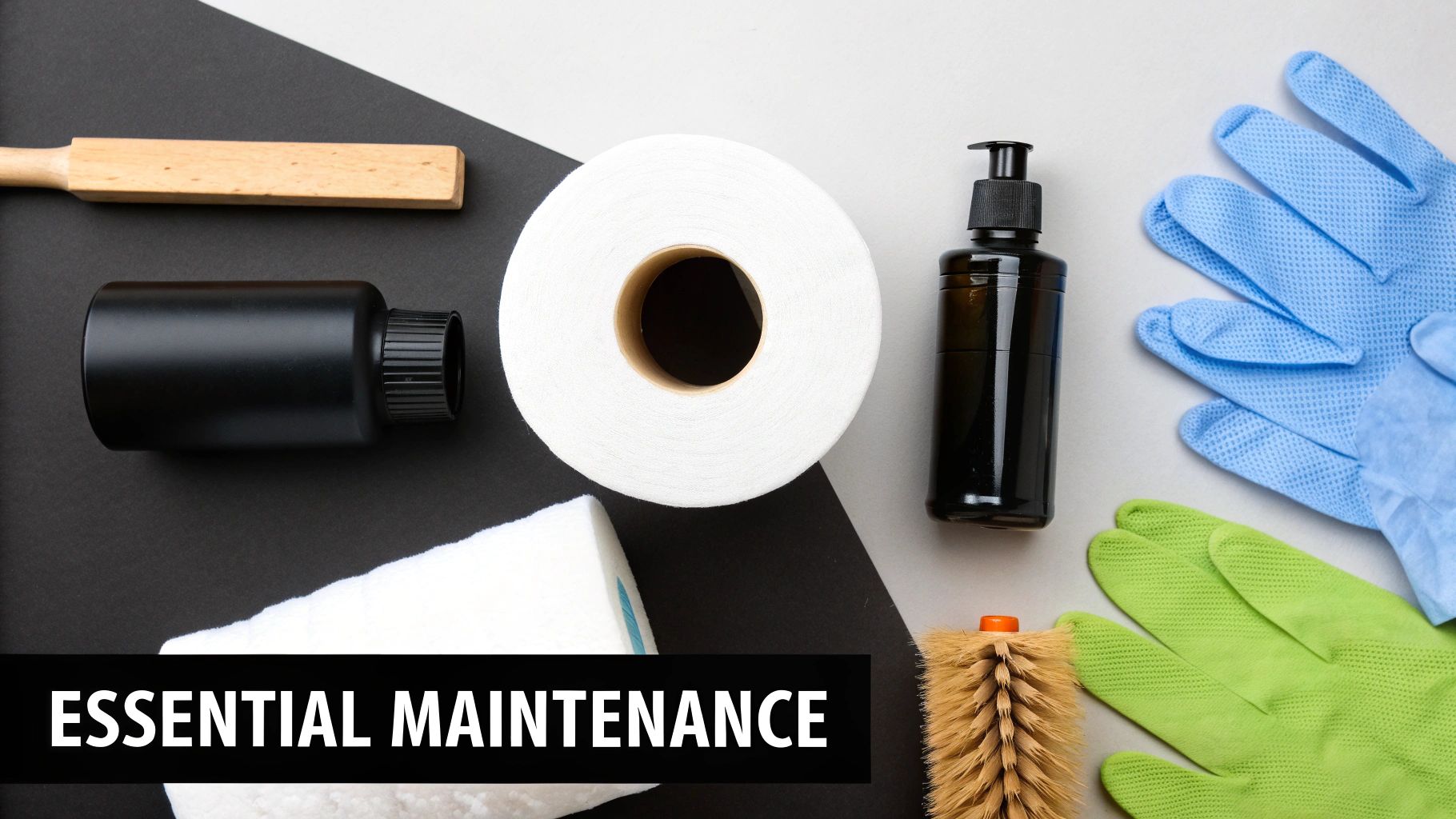
If you want your RV toilet to work without any drama, a little preventative care goes a long, long way. The key is to be mindful of what goes down the drain, because an ounce of prevention is worth a ton of cure when it comes to RV plumbing.
First things first: RV-specific, fast-dissolving toilet paper is non-negotiable. Seriously. Your regular household TP is designed for high-volume residential septic systems and is the number one cause of clogs and false sensor readings in a black tank. It just doesn't break down quickly enough.
Next up, you absolutely need to use black tank treatments. Think of these as probiotics for your holding tank. They contain enzymes and bacteria that actively break down solid waste and toilet paper, helping to control odors and prevent the dreaded "pyramid plug." You can find them in easy-to-use liquids, powders, or drop-in pods.
When it's time to clean, stick to gentle, non-abrasive cleaners. Harsh chemicals and abrasive scrubbers can eat away at the rubber seals and gaskets, leading to leaks and poor sealing.
For a more comprehensive guide on keeping your entire system in top shape, check out these essential plumbing for RV maintenance tips.
Sooner or later, every RVer runs into a toilet issue—it’s practically a rite of passage. The good news is that most problems are surprisingly easy to fix yourself. You're usually dealing with one of three common culprits: persistent odors, stubborn clogs, or mysterious leaks.
If you're noticing a foul smell, the first thing to check is the blade valve seal at the bottom of the toilet bowl. Is it holding water? A dry bowl is an open invitation for nasty sewer gases to sneak up from the holding tank. Also, take a peek at your roof vent to make sure it isn't blocked by leaves or other debris.
When it comes to clogs, the best defense is a good offense: always use plenty of water with every single flush. Water is your best friend here. But if you do find yourself with a blockage, don't panic. You can try some expert methods for unclogging a toilet to get things flowing again.
Spotting a puddle around the base of the toilet can be alarming, but a little detective work usually solves the mystery. Start by tracing the water source. Check all the water line connections first, then inspect the floor flange seal. A small leak here is a common and often simple fix.
Keeping an eye on these small things is a huge part of smart RV ownership. In fact, it's a core part of any good RV maintenance checklist to avoid common pitfalls.
Let's tackle some of the most common questions new and even seasoned RVers have about their toilets.
The best practice is to empty your black tank once it hits about two-thirds full. You need a good amount of liquid in there to help all the solids flush out properly. While most RVs come with built-in sensors, they can be notoriously inaccurate. A much more reliable signal is when the toilet starts to "burp" air back at you when you flush—that's a tell-tale sign it's getting full.
Finding a place to dump is rarely an issue, with about 62% of private campgrounds providing dump stations. The whole portable sanitation system is a massive industry, with the portable toilet market expected to reach an incredible $34.69 billion by 2032. If you're curious, you can dig into more details about this growing market on fortunebusinessinsights.com.
A classic rookie mistake is leaving the black tank valve open when you're hooked up to a sewer line. It seems logical, but it lets all the liquids drain away, leaving the solids behind to dry out and create a nasty, cement-like clog.
Ready to find the perfect RV for your next adventure? Searchshop has the tools and listings you need. Start your search at Searchshop today!