Before you even think about making an offer on that dream RV or boat, there's one non-negotiable step you have to take: run a history check. It all starts with a unique identifier—the Vehicle Identification Number (VIN) for an RV or the Hull Identification Number (HIN) for a boat. Armed with that number, you can unlock a detailed report that lays out the vehicle's entire backstory, from accidents to title problems. It’s the single most powerful tool you have to protect yourself.
Your First Line of Defense: The Vehicle History Check
It’s easy to get caught up in the excitement of finding what looks like the perfect rig. But hitting the pause button to dig into its past is the smartest thing you can do. Many people are used to running history checks on cars, but those standard reports often don't tell the whole story for recreational vehicles. The risks that come with RVs and boats are in a league of their own and require a much closer look.
Think about it—an RV is a house on wheels, with plumbing, electrical, and gas systems all rattling down the highway. A boat lives in a harsh marine environment that's constantly trying to wear it down. A generic car report just isn't going to flag the issues unique to these lifestyles.
Skipping a history check on a high-dollar asset like an RV or boat is the equivalent of buying a house without a home inspection. You're opening yourself up to a world of potentially expensive and heartbreaking problems. A proper background check is designed to catch the big red flags specific to these vehicles.
-
Hidden Water Damage: A history report can show if a boat was registered in a hurricane zone, raising the possibility of submersion. Flood damage is a nightmare, leading to rot, mold, and fried electronics that can be almost impossible to fix.
-
Compromised RV Structures: Even a seemingly minor accident can cause delamination (where the fiberglass skin separates from the frame) or tweak the frame itself. These issues can destroy the structural integrity of your mobile home.
-
Surprise Liens: Most RVs and boats are financed. The report will tell you if the current owner still owes money on it, so you don't unknowingly inherit their debt.
-
"Washed" Titles: This is a sneaky trick where a vehicle with a "salvage" or "flood" brand on its title in one state gets moved to another state that issues it a "clean" title. A comprehensive report sees right through this and will show you the original title brand.
Think of the history report as your ultimate pre-purchase checklist. It gives you the hard facts you need to confirm what the seller is telling you, helping you negotiate with confidence or, more importantly, walk away from a potential money pit.
The sheer size of the used vehicle market makes a thorough check absolutely critical. In the U.S., there are over 298.7 million registered motor vehicles. With a pool that massive, the chances of running into an RV or boat with a checkered past are pretty high.
One eye-opening study found that 70% of total loss vehicle valuations were for vehicles seven years or older—the exact age bracket where many used RVs and boats fall. You can find more data on the U.S. vehicle market from Hedges & Company. These numbers drive home a simple point: spending a little on a history report now can save you from losing a whole lot more later.
Everything we're about to discuss starts with one critical piece of information. But finding it isn't always as straightforward as looking at the dashboard. I'm talking about the unique identifier for your potential purchase: the Vehicle Identification Number (VIN) for an RV or the Hull Identification Number (HIN) for a boat.
Think of this code as the vehicle's unique fingerprint. No two are the same, and it’s the key to unlocking its entire history.
Before you even think about running a report, you need to find this number on the vehicle itself and make sure it matches the seller's title and registration. If those numbers don't line up perfectly, that's your first major red flag.
On motorhomes, travel trailers, and fifth wheels, you're looking for a standardized 17-character code. It’s usually found on a metal plate or a durable sticker in a few common places.
-
Driver's Side Dashboard: This is usually the easiest spot. Just peer through the windshield at the lower corner on the driver's side where the dash meets the glass.
-
Driver's Side Door Jamb: Open the driver's door and inspect the frame (the B-pillar). You should see a sticker that not only has the VIN but also other useful info like tire pressure recommendations and the build date.
-
On the Frame: For towables like travel trailers, get down and look at the A-frame or tongue near the hitch. Manufacturers often stamp the VIN directly into the metal here, which is great because it can't just be peeled off.
Here’s a great example of what a typical VIN plate looks like. This is what you should be searching for.
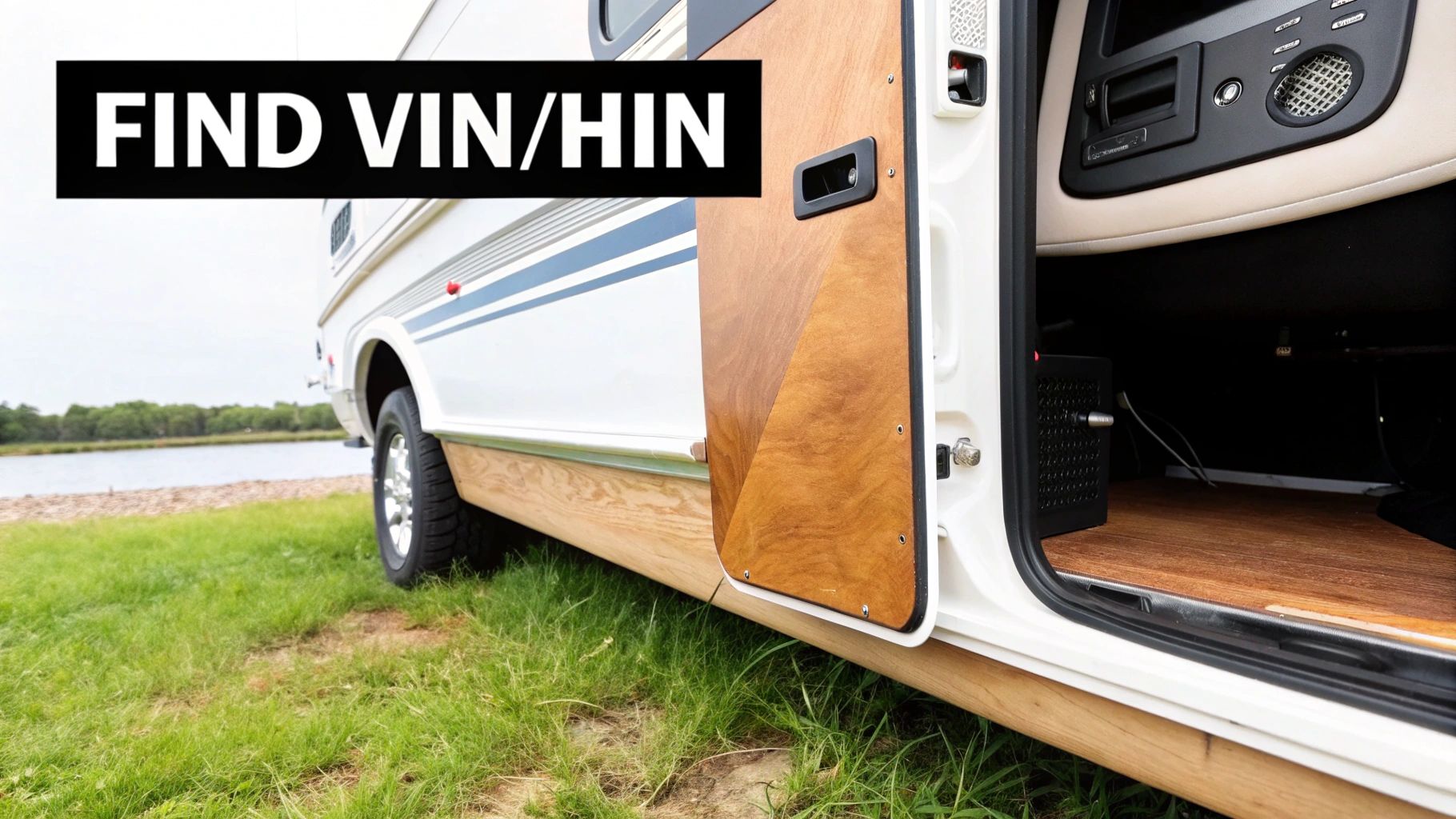
As you can see, that 17-character code packs in a ton of information, from the manufacturer and model year to the specific plant where it was assembled.
When you’re inspecting a boat, the magic number is the Hull Identification Number (HIN). This is a 12-character code that's been mandatory on all boats built or imported since 1972.
The HIN is almost always located on the outside of the hull at the stern. Specifically, check the upper-right (starboard) corner of the transom—the boat’s back wall. Manufacturers also place a second, hidden HIN somewhere inside the boat as a theft deterrent.
Pay close attention to the condition of the HIN plate. If it looks like it's been tampered with—scratched out, painted over, or attached with new-looking screws or rivets—stop right there. This is a serious warning sign that someone might be trying to hide a stolen boat or a history of major damage. Unless the seller has a rock-solid explanation and the paperwork to back it up, I'd walk away.
Picking the Right History Report Service
So, you've got the VIN or HIN. Great. Now comes the crucial part: choosing a service to actually run the check. This is where a lot of people trip up. They assume any old vehicle history report will do the trick, but that’s a rookie mistake, especially when you're looking at something as unique as an RV or a boat.
Think of it this way: using a standard car-focused service for a big, complex motorhome is like asking your family doctor to perform open-heart surgery. They get the general idea, but they're going to miss the life-or-death details that only a specialist would catch. You need the right tool for the job.
For motorized RVs—your Class A, B, and C motorhomes—a report from a big name like Carfax or AutoCheck is a perfectly good place to start. Why? Because these rigs are built on an automotive chassis from companies like Ford or Mercedes-Benz, so their VINs are logged in the same databases as regular cars and trucks.
These reports are fantastic for digging up the basics on the "automotive" part of the RV:
-
Accident History: See if the chassis has been in any reported wrecks.
-
Title Brands: This will flag critical issues like a salvage, flood, or rebuilt title.
-
Odometer Readings: A good way to check for potential mileage fraud.
-
Service Records: You might even get lucky and see maintenance records from registered shops.
But here’s the catch: for anything that doesn't have its own engine—like a travel trailer or a fifth wheel—these reports are pretty much useless. The same goes for boats. The data simply isn't in their system.
This is where you have to turn to the pros who live and breathe this stuff. Specialized services tap into databases that the mainstream providers completely ignore, painting a far more complete picture of what you're actually buying. When you're about to drop a serious amount of cash, this is not the place to cut corners.
A cheap, generic report might save you $20 today, but a specialized one that uncovers a hidden lien or a history of water damage could save you $20,000 tomorrow. Consider it a small investment in your own peace of mind.
Here’s my go-to breakdown for which service to use for which type of vehicle:
| Vehicle Type |
Recommended Service |
What It's Best For |
| Motorhomes (Class A, B, C) |
Carfax, AutoCheck |
Accident records, odometer history, title brands, and service history on the chassis. |
| Travel Trailers & Fifth Wheels |
RVchecks.com |
Finding salvage titles, manufacturer recalls, and other red flags specific to towables. |
| Boats & Watercraft |
Boat-Alert.com |
Reporting on accidents, pollution incidents, outstanding liens, and hurricane damage exposure. |
See the difference? It’s not about finding the cheapest report; it’s about getting the right information. A Boat-Alert.com report, for instance, can flag if a boat was ever registered in a hurricane zone—a huge indicator of potential submersion damage that a car-based report would never, ever find.
In the same way, RVchecks.com is built from the ground up to understand the unique lifecycle of a travel trailer. By matching the report to the vehicle, you're arming yourself with the kind of intel that lets you buy with confidence.
How to Decode Your Vehicle History Report
Getting a vehicle history report is step one. The real skill is knowing how to read it like a pro. The summary page is great for a quick glance, but the clues that save you from a major headache are almost always buried deeper in the details. Learning to analyze each section is what separates a savvy buyer from someone who ends up with a lemon.
The first place I always look is the title history. This isn't just a list of previous owners; it's a permanent record of any "brands" attached to the title. These are official labels that shout from the rooftops if the vehicle has a checkered past.
This infographic is a great cheat sheet for finding the right lookup service, whether you're looking at a motorhome, a trailer, or a boat.
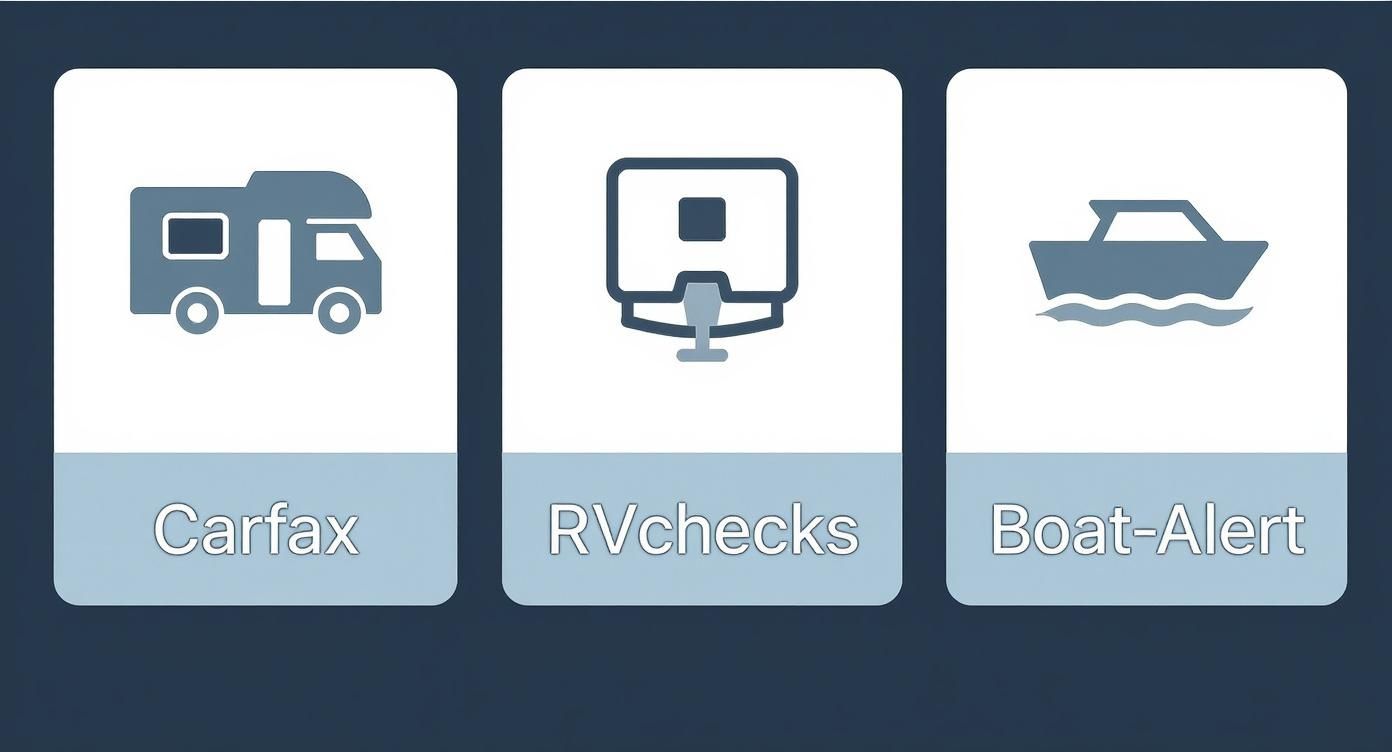
As you can see, a standard report like Carfax might catch the chassis of a motorhome, but you’ll need a specialized service like RVchecks or Boat-Alert to uncover the full story on trailers and watercraft.
Title brands are the ultimate deal-breakers. On an RV, a 'salvage' or 'rebuilt' title is a massive red flag. This means an insurance company once declared it a total loss from a major accident, fire, or flood. Even if it's been patched up, the vehicle's core structure could be compromised—a huge safety risk for something you plan to live or travel in.
For a boat, a 'flood' brand is the kiss of death. It signals that the vessel was likely submerged, which can cause irreversible damage to the engine and electrical systems. Even worse, it can lead to hidden mold and rot deep within the hull that you'll be fighting for years.
Beyond the big, scary brands, you need to look at the pattern of ownership.
-
Rapid Ownership Changes: If an RV or boat has been sold multiple times in just a year or two, it’s often because there's a persistent, hard-to-fix issue that each new owner discovers and then quickly pawns off on someone else.
-
Title Washing: Pay very close attention to title transfers between states. A common scam is to move a vehicle with a salvage title to a state with looser regulations to get a new, "clean" title issued. A comprehensive report will show the full history across all states, exposing this kind of deception.
A branded title does more than just signal past damage. It crushes the vehicle's resale value and can make it difficult, if not impossible, to get insurance or financing. It's a financial and safety risk you should be extremely wary of.
Red Flags on an RV vs Boat History Report
While both RVs and boats can have hidden problems, the warning signs often look a little different. Here’s a quick breakdown of what to watch for in each type of report.
| Red Flag Category |
What It Means for an RV |
What It Means for a Boat |
| Title Brands |
A 'salvage' or 'rebuilt' title suggests severe structural damage from an accident. 'Lemon Law' buybacks are also a major concern. |
A 'flood' brand is catastrophic, often indicating saltwater corrosion. A 'salvage' brand could mean it sank or was severely damaged in a storm. |
| Damage History |
Look for reports of rollovers, side-impacts (can cause delamination), or fires. Water damage can be hidden but devastating. |
A history of grounding, collisions, or capsizing can lead to unseen hull fractures or delamination. |
| Ownership Pattern |
Frequent sales in a short period, especially across state lines, can indicate "title washing" to hide a salvage brand. |
Multiple owners in a coastal area prone to hurricanes could mean the boat has been through unreported storms. |
| Liens & Debts |
Unpaid financing liens are common. A mechanic's lien could also be attached if repair bills went unpaid. |
Maritime liens are a huge risk. This could be for unpaid fuel, marina fees, or crew wages, and the debt legally follows the boat, not the owner. |
Understanding these distinctions is crucial. You’re not just looking for any red flag—you’re looking for the right ones for the specific vehicle you're considering.
Next, it’s time to dig into the accident and damage reports section. This is where you’ll find information pulled from police reports and insurance claims. It won’t list every minor ding, but it should flag any major incidents. For an RV, keep an eye out for accidents involving rollovers or significant side impacts—these can easily cause frame damage or delamination of the exterior walls.
For a boat, a history of groundings or collisions can point to hidden hull damage that only an expert surveyor can spot. Another critical item unique to boats is an outstanding maritime lien. If a previous owner didn't pay a marina, a mechanic, or a lender, that debt is legally attached to the vessel itself. If you buy the boat, their debt becomes your problem.
By carefully reading between the lines of the title, ownership, and damage sections, you transform a simple report into a detailed map of the vehicle's entire life story.
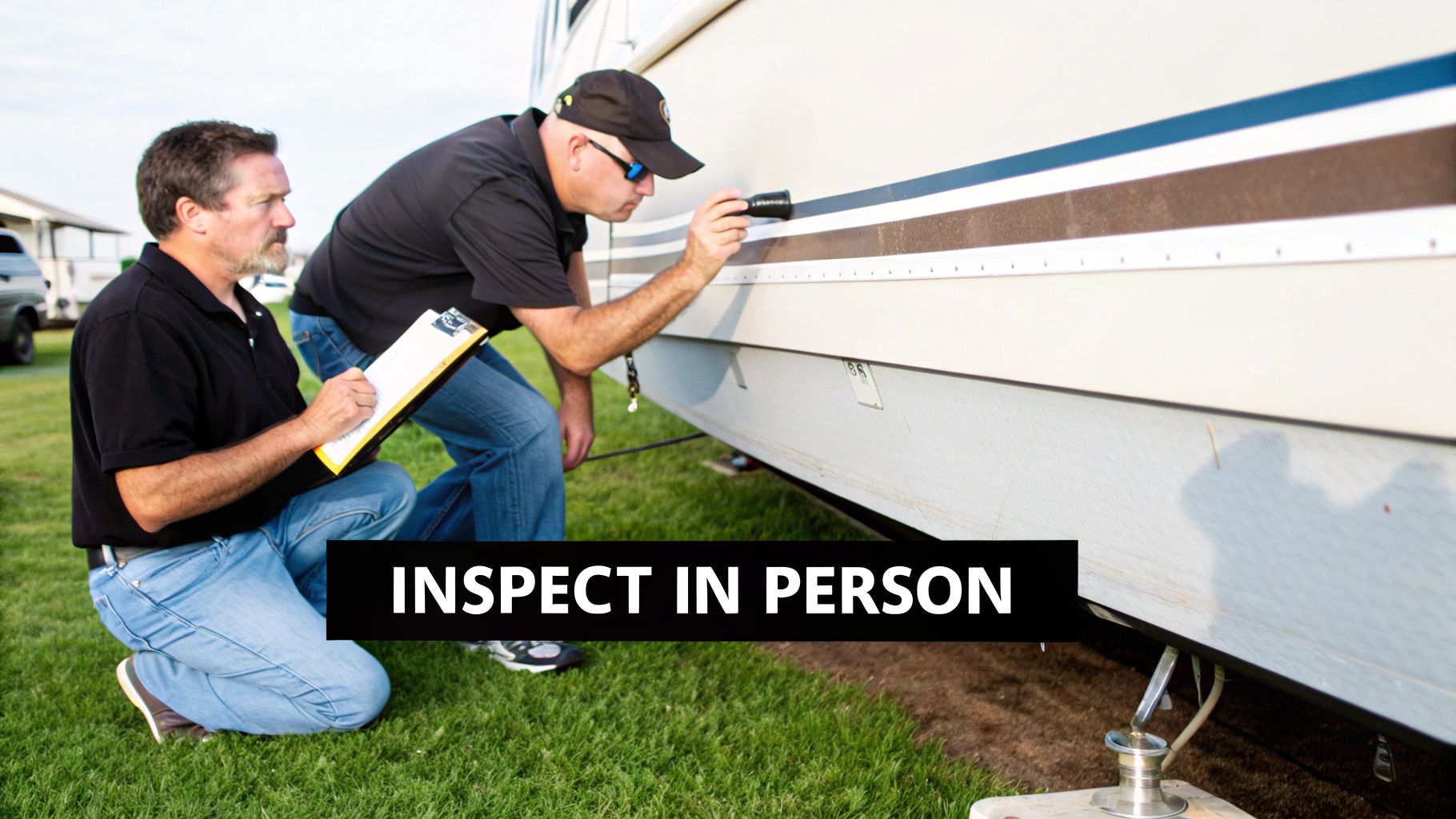
A clean vehicle history report is a fantastic starting point. It clears the big hurdles like salvage titles and reported accidents, giving you the green light to move forward. But it's crucial to remember that the report is only half the story—it’s a summary of the past, not a guarantee of the present.
Your next move is to get hands-on, and it starts with a simple but vital check. Physically match the VIN or HIN on the vehicle to the one on your report and the seller’s title.
If they don't match perfectly, stop everything. This is a massive red flag. It could indicate fraud or a serious clerical error that you need to resolve before even thinking about making an offer.
Once the numbers are confirmed, it’s time to call in the experts.
For a standard car, you might ask a trusted mechanic to give it a once-over. For an RV or a boat, that’s not nearly enough. These are complex machines, part vehicle and part home, and they demand a specialist with a trained eye for issues that databases will never catch.
-
For RVs, hire a Certified RV Inspector. They go far beyond the engine. They'll test the propane system for leaks, check for water intrusion with moisture meters, inspect the roof for sealant failures, and spot early signs of delamination on the sidewalls—an incredibly costly structural problem.
-
For boats, hire a Marine Surveyor. A surveyor performs an in-depth "out-of-water" inspection. They'll tap the hull to listen for voids, check for osmosis blisters (a form of fiberglass decay), and assess the integrity of thru-hulls, rigging, and the engine's raw water cooling system.
Think of it this way: a history report tells you what has happened to the vehicle. An inspection tells you what is happening now. Overlooking this step is the single biggest mistake a buyer can make, often leading to thousands in unexpected repairs.
With the inspection results in hand, you're now armed with specific, actionable information. This is your chance to fill in any gaps left by the history report. Approach the seller with clear, direct questions based on what the inspector found and what the report showed.
You should also request all available maintenance logs and service records. These documents provide a timeline of care. Consistent oil changes, winterizations, and system checks show a history of responsible ownership. A thick file of receipts is one of the best signs you can find.
This is especially critical today, as vehicles are staying on the road longer than ever. The average age of vehicles in the U.S. is projected to reach 13 years by 2026. Older RVs and boats naturally carry a higher risk of undocumented issues, making a physical check and a review of maintenance logs absolutely essential.
While a physical inspection is crucial, modern tools for ongoing vehicle health monitoring can provide even more detailed insights after the purchase. This combined approach of historical data, expert inspection, and real-time monitoring gives you the complete picture you need to make a smart, confident investment.
Common Questions About RV and Boat History Checks
When you start shopping for an RV or boat, you quickly realize it's a different ballgame than buying a car. The questions are different, and the potential pitfalls are unique. I've heard the same questions from buyers over and over, so let's get you some clear, straightforward answers.
Can I Check the History of a Travel Trailer Without an Engine?
Yes, and you absolutely should. It's a common misconception that just because a trailer doesn't have a motor, it doesn't have a history to check.
Travel trailers and fifth wheels are issued a standard 17-digit VIN—the same kind you'd find on any car or motorhome. That VIN is your golden ticket. Run it through a dedicated service like RVchecks.com to uncover its past. You might find a history of serious accidents, hidden structural damage, or even a salvage title that could make it unsafe and tank its value. Don't let the lack of an engine lull you into a false sense of security.
This is a great question, especially for those of us who appreciate a classic vessel. It's true—boats built before November 1972 weren't required to have a Hull Identification Number (HIN). When that universal identifier is missing, your detective work has to be a lot more hands-on.
You'll need to rely on a paper trail. Ask the seller for everything they have, including:
-
The original bill of sale
-
Past state registration documents
-
All available maintenance and repair logs
Without a HIN, a professional pre-purchase inspection by a marine surveyor isn't just a good idea; it's non-negotiable. These experts are trained to spot the subtle signs of a boat's true condition and structural integrity, giving you a history that no database can provide.
Not a chance. This is probably the most critical point to understand. A clean report is an excellent first step. It means the vehicle has dodged major documented disasters, like being declared a total loss by an insurance company. Think of it as a green light to move forward with the buying process.
But that report is not a substitute for a professional, in-person inspection. An RV inspector can spot delamination that will cost thousands to fix. A marine surveyor can find hull blisters hidden below the waterline. These are expensive, deal-breaking problems that will never, ever show up on a history report.
A clean report is a starting point, not the finish line. It only shows what's been officially documented. Unreported damage, shoddy maintenance, and minor accidents will fly completely under the radar.
Always follow up a clean report with an expert inspection. It's the only way to get the full story before you put your money down.
Ready to find your next adventure vehicle with confidence? At SearchShop.com, we provide the tools and transparent listings you need to research, compare, and make the right choice on your next RV or boat purchase. Start your search today!