By Searchshop Editorial Team25 min readSeptember 30, 2025Updated January 2, 2026
Some links in this article are affiliate links. If you buy through them, Searchshop may earn a commission at no extra cost to you. Learn how this works.
Before you even step onto a dealer's lot, the most important work happens right at your kitchen table. Choosing the right RV starts by asking one simple, brutally honest question: how are we actually going to use this thing?
Forget the glossy brochures and aspirational Instagram posts for a minute. The perfect RV is the one that fits the life you actually live, not the one you imagine. Getting this part right is the single most important step to avoiding buyer's remorse down the road.
Matching Your Travel Style to the Right RV
Before you get lost in the weeds comparing slide-outs and countertop materials, you need a clear picture of your adventures. The ideal rig for a family hitting up national parks on three-day weekends is worlds away from what a solo digital nomad needs to work from the backwoods of Montana.
An honest self-assessment will stop you from buying way too much RV (a beast you're scared to drive) or far too little (a cramped space that makes you miserable).
Think about these practical realities:
Who’s coming along? A couple can get by with a cozy setup. But add two kids, a golden retriever, and all their gear? You're going to need a completely different floor plan with dedicated spaces to keep the peace.
Where are you headed? If your dream is to navigate the winding roads of the Blue Ridge Parkway or find secluded spots deep in national forests, a massive rig will be your worst enemy. A smaller, nimbler Class B van or a small travel trailer is your ticket. On the flip side, if you see yourself parked at a luxury resort for three months, a big Class A motorhome offers the kind of residential comfort you'll crave.
How long are the trips? Weekend warriors can manage just fine with smaller water tanks and less storage. But if you’re planning on being a full-timer, you need the infrastructure to support it—that means huge holding tanks, tons of pantry space, and enough storage to hold everything you own.
The Weekend Adventurer vs. The Full-Time RVer
Let's put this into perspective. Imagine a family of four who plans monthly getaways to state parks, all within a few hours' drive. For them, a travel trailer with a bunkhouse is a fantastic fit. It offers separate sleeping zones for the kids, can likely be towed by the SUV they already own, and doesn't break the bank.
Now, picture a retired couple getting ready to spend six months chasing 70-degree weather across the country. They're going to need something more substantial. A spacious fifth wheel or a Class A motorhome provides the comforts of home: a bigger kitchen, a more comfortable living area for rainy days, and massive storage bays for tools, hobbies, and everything else. The slightly longer setup time is a small price to pay for genuine long-term livability.
The biggest mistake I see new buyers make is shopping for a fantasy. They buy an RV for the life they think they want instead of the one they actually have. Be real with yourself about how often you'll go, how comfortable you are driving a big vehicle, and how much setup you can tolerate.
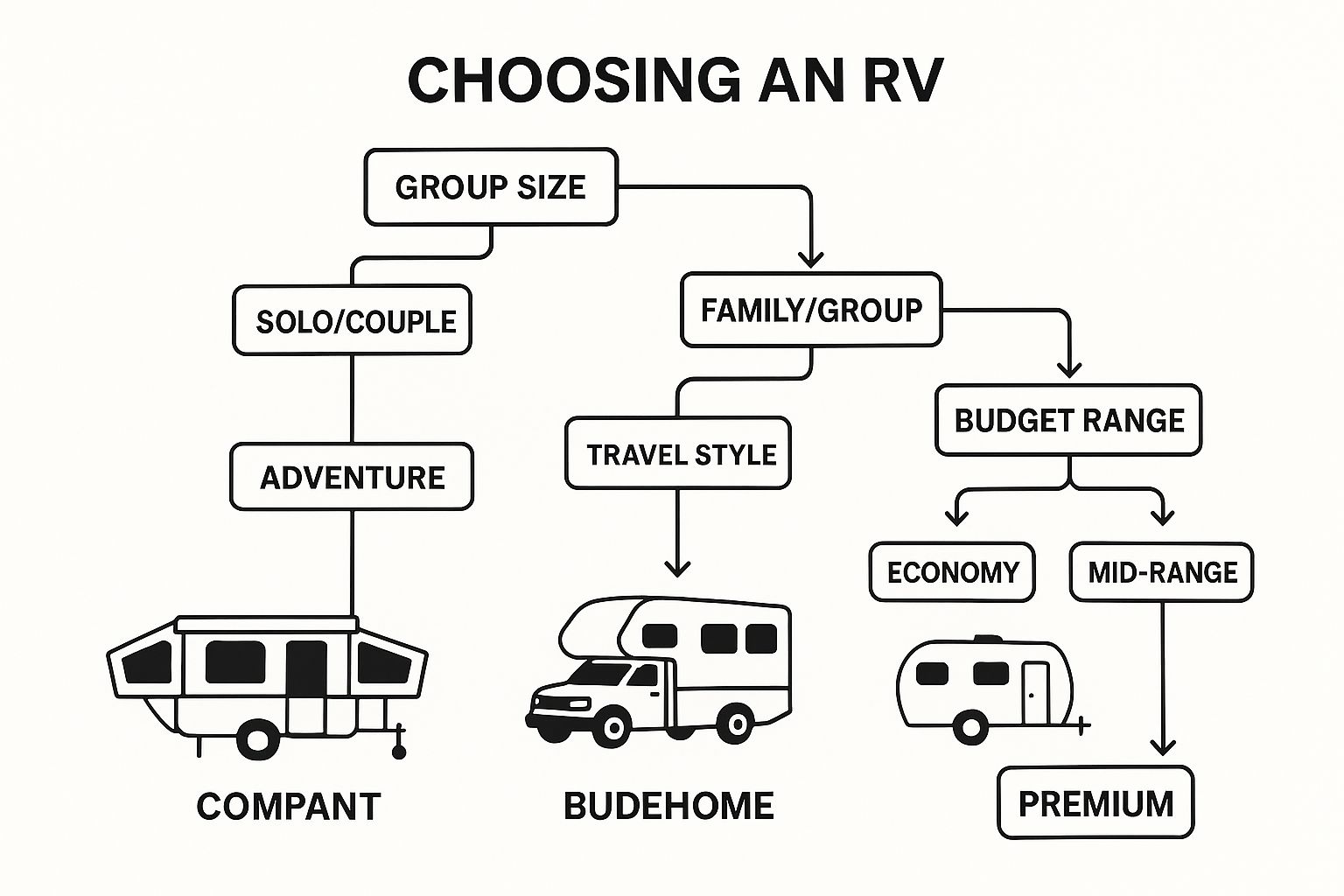
This decision tree gives you a great visual starting point for narrowing down the options based on your crew, your destinations, and your budget.
As you can see, there's no single "best" RV out there. The only thing that matters is finding the best one for you.
To make it even clearer, here's a quick breakdown of how different RV types stack up against common travel styles.
RV Types vs Common Travel Styles
RV Type
Best For
Typical Occupancy
Key Advantage
Class A Motorhome
Long-term travel, full-timing, resort stays
2-6
Unmatched residential comfort and storage
Class B Van
Solo/couple travel, stealth camping, city exploration
Huge variety of layouts and sizes, tow-vehicle freedom
Truck Camper
Off-road adventures, towing boats/trailers
1-4
Ultimate go-anywhere capability and agility
This table is a great starting point, helping you focus your search on the category that makes the most sense before you dive into specific models and floor plans.
Factoring in Market Growth and Options
The great news for anyone jumping into RVing now is that the market is absolutely exploding. The global recreational vehicle market is on track to hit $217.23 billion by 2034, which is a staggering growth rate of about 11.5% annually.
For you, this boom means more choices than ever. Manufacturers are creating innovative, specialized models for every niche imaginable. It also means a healthy used market, giving you a ton of options to find a rig that feels like it was built just for you. You can dig deeper into these trends by checking out the full report on Precedence Research.
Budgeting for the True Cost of RV Ownership
The sticker price on that shiny new RV? That’s just the opening act. If you really want to know if you can afford this lifestyle, you have to look way beyond that initial number and get honest about the total cost of ownership. I’ve seen too many first-time buyers get blindsided by a wave of unexpected expenses that quickly turn their dream into a financial headache.
Building a realistic budget from day one is the single best thing you can do to make sure your RV remains a source of joy, not stress. This means digging into everything from the predictable monthly payments to the surprise repairs that are just part of owning a home on wheels.
Fixed Costs The Dealer Won't Mention
Once you get past the loan payment, a whole set of fixed costs will hit your bank account every month or year, whether you travel a lot or a little. These are the non-negotiable expenses you absolutely have to factor in before you even decide which RV to buy.
RV Insurance: This isn't optional, and the cost can be all over the map. A big new Class A motorhome can easily run $1,500 to $4,000+ per year to insure. On the other hand, a modest travel trailer might only be a few hundred dollars. Your driving record, where you store it, and your coverage choices make a huge difference.
Storage Fees: Unless you have a perfect spot at home (and an HOA that allows it), you're going to be paying for off-season storage. This can be as cheap as $50 per month for a dusty outdoor lot or over $250 per month for a secure, climate-controlled indoor unit. That adds up fast.
Annual Registration and Taxes: Just like your car, your RV needs to be registered. Depending on your state, you might also get hit with property taxes. These fees are usually based on the vehicle's value, so a pricier rig means a higher annual bill.
Think of these costs as the baseline of your RV budget. Ignoring them is a classic rookie mistake that can make ownership feel impossible before you’ve even packed for your first trip.
Planning for Maintenance and Repairs
Let me be clear: every RV, whether it's brand new or gently used, is going to need ongoing maintenance and will eventually need repairs. The smartest owners I know have a dedicated fund just for this. It's a "rainy day" fund specifically for your rig.
A good rule of thumb is to set aside 1-2% of the RV's purchase price annually just for maintenance. So for a $75,000 fifth wheel, you should be putting away $750 to $1,500 a year for things like:
Tire Replacement: RV tires usually age out from sun exposure long before the tread wears down. You should plan on replacing them every 5-7 years, a job that can easily top $1,500.
Roof Sealing and Inspection: Preventing leaks is the most important maintenance you can do. You need to be on that roof inspecting the seals a few times a year and be ready to pay for a professional reseal every few years.
Appliance Upkeep: Your water heater, furnace, and air conditioner all need regular check-ups to work when you need them most.
Your emergency repair fund is your absolute best friend in the RV world. A blown tire, a failed water pump, or a slide-out motor that gives up the ghost can happen anytime, anywhere. Having $1,000 to $2,000 in savings just for these moments isn't just a good idea—it's essential.
The Variable Costs of Hitting the Road
Shop RVs For Sale
Browse current rvs from dealers near you — updated daily.
Finally, we get to the costs that change based on how much you actually use your RV. These can swing wildly from one month to the next, which is why tracking them is so important.
Fuel is the big one. A Class C motorhome that gets 8-10 MPG will have a radically different fuel bill than a half-ton truck pulling a small trailer at 12-14 MPG. On a 2,000-mile road trip, that difference alone could be hundreds of dollars.
Campground fees are the other major variable. You can find free boondocking spots on public land, or you can drop $150+ per night at a luxury RV resort with a pool and pickleball courts. Your travel style is what drives this expense.
The good news is that the North American RV market is booming, which means you have more options than ever. Forecasts show that consumer interest remains strong, which fuels competition among campgrounds, insurance companies, and service centers. This bustling market helps you find options that truly fit your budget. You can dig into more of the data on these trends in this RV marketing statistics report.
Choosing Features That Actually Matter
It’s so easy to get distracted by all the bells and whistles. When you're standing on the dealer's lot, that shiny outdoor kitchen, second bathroom, or massive entertainment center can feel like absolute must-haves.
But here's the reality check I give everyone: the features that truly make or break your RV experience are the ones that support how you actually travel, day in and day out.
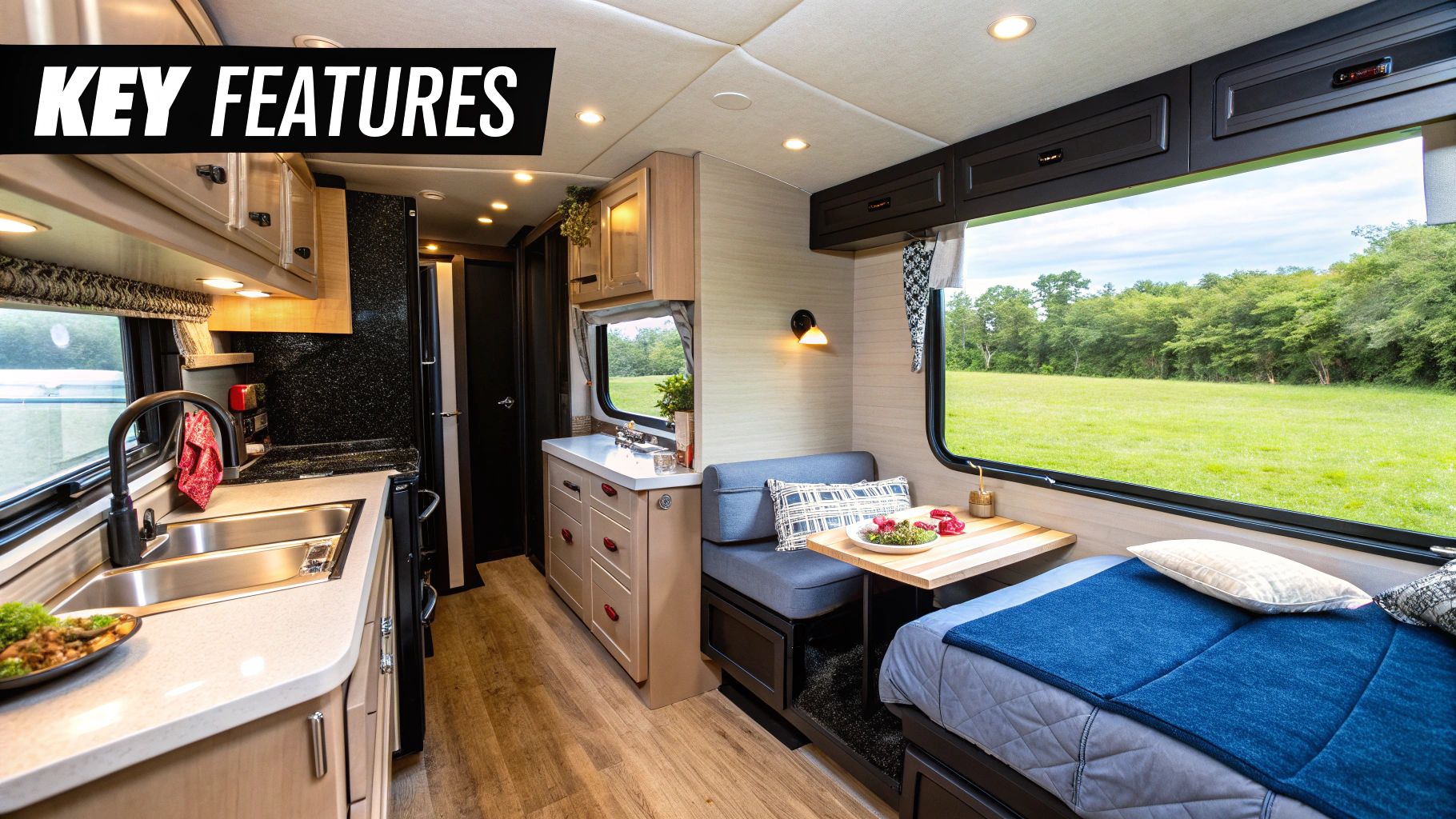
Learning how to pick the right RV is all about separating your genuine "must-haves" from the "nice-to-haves." This simple exercise keeps you from overpaying for flashy gadgets you'll barely touch. Instead, you'll focus on the core components that make your trips comfortable and fun. It's about how you'll live in the space, not just how it looks in a brochure.
Must-Haves for the Off-Grid Boondocker
If you dream of camping far from the nearest electrical outlet, your priorities will be completely different from someone who sticks to RV resorts. For you, self-sufficiency is the whole game.
When you're shopping, zero in on these systems:
Holding Tank Capacity: This is your lifeline, plain and simple. Bigger fresh, gray, and black water tanks mean more time off-grid before you have to hunt down a dump station. I'd recommend looking for fresh water tanks in the 60-100 gallon range as a good starting point.
Solar Prep or a Full Solar Package: A lot of new RVs come "solar prepped," which usually just means the basic wiring is there. What you really want is a full system with panels and an inverter that can actually power your life off the grid.
Ground Clearance: Unpaved forest service roads can be unforgiving. You absolutely need an RV with higher ground clearance and some decent all-terrain tires to reach those amazing, remote spots without tearing up your undercarriage.
Trust me, these things are far more critical than a second TV when you're trying to be self-reliant out in the wild.
Must-Haves for the Campground Family
Now, let's flip the script. Maybe you're the family that loves the community and convenience of full-hookup campgrounds. In that case, comfort and livability are your top priorities.
Your feature list should put space and convenience first:
A Functional Floor Plan: This is everything. A bunkhouse model is a lifesaver, giving the kids their own zone and keeping the main living area from becoming a total disaster zone. A second half-bath? That can be a marriage-saver on a long trip.
Ample Storage: Families don't travel light. Look for models with a generous pantry, plenty of cabinets, and big exterior "basement" storage for all the bikes, grills, and chairs you'll bring along.
Slide-Outs: For campground living, slides are a game-changer. They radically expand your interior space, making the rig feel less like a hallway and more like a small cabin—which is crucial on a rainy day when everyone is stuck inside.
Don’t just glance at a floor plan online. Get inside the RV. Walk through the motions of your daily routine. Try to imagine making breakfast while someone else is trying to squeeze past to get to the bathroom. A layout that looks perfect on paper can feel incredibly awkward in the real world.
Kitchens, Bathrooms, and Layout Logic
No matter what kind of camper you are, there are a few universal features that deserve a very close look. These are the areas that can make or break your daily comfort on the road.
The Kitchen Reality Check Is the kitchen actually designed for cooking? It’s a serious question. Many RV kitchens look great but are totally impractical. Look for usable counter space next to the stove and sink. A tiny strip of counter turns even simple meal prep into a frustrating juggling act. Also, think about the fridge. A mini-fridge might be fine for weekend getaways, but for longer trips, a larger residential-style or 8-10 cubic foot RV fridge is a must.
Bathroom Design: Dry vs. Wet Especially in smaller RVs, you’ll run into two main types of bathrooms.
Bathroom Type
Description
Best For
Dry Bath
The toilet, sink, and shower are separate components, just like in a house.
Most users, especially families and full-timers who value comfort and separation.
Wet Bath
The entire bathroom is a waterproof enclosure; the toilet and sink get wet when you shower.
Smaller Class Bs and truck campers where maximizing every inch of space is the top priority.
For most people, a dry bath is just way more comfortable for daily living. A wet bath is a smart compromise, but only if you need the absolute most compact rig you can get. Thinking through these small but critical details is how you find an RV you'll love for years, not just for the first couple of trips.
Deciding Between a New and Used RV
This is one of the biggest crossroads every RVer faces. Do you go for that shiny, brand-new rig with the intoxicating factory-fresh smell, or do you snag an incredible deal on a pre-owned model? There’s no single right answer here—it all comes down to what makes sense for your budget, your stomach for risk, and how handy you are with a toolkit.
Getting a handle on the real-world trade-offs between new and used will help you make a choice you feel great about long after you’ve hit the road. Let's break down what you're really getting with each option.
The Case for Buying a New RV
The number one reason people buy new is simple: peace of mind. A full manufacturer's warranty is your safety net for that first year or even longer. If the furnace conks out in the middle of a cold night or a slide-out gets stuck, it's on the dealer to make it right, not you.
You also get the latest and greatest. Modern RVs often come packed with better insulation, more efficient appliances, and tech-forward features like USB ports in every corner and pre-wiring for solar panels. For many folks, just knowing they're the first and only owners is a huge selling point.
Of course, buying new has its downsides. The biggest gut punch is depreciation. An RV can lose a massive chunk of its value—often 20% or more—the second it rolls off the lot. You'll also have to navigate the infamous "shake-down" period, where you’ll inevitably discover all the little manufacturing quirks and defects that need to be fixed under that new warranty.
The Smart Shopper's Guide to Used RVs
The most compelling reason to buy used is the incredible cost savings. The first owner already took that massive depreciation hit, which means you can often get a much bigger or higher-quality RV for your money than you could if you were buying new.
Here’s a little secret benefit: the previous owner has probably already endured the frustrating shake-down period. They've found and fixed the initial bugs, maybe even upgraded a few components, and worked out all the kinks. You're often left with a more reliable rig from day one.
The biggest risk with a used RV, naturally, is the potential for hidden problems. With no warranty to fall back on, you're on the hook for any and all repairs. This is exactly why a meticulous, top-to-bottom inspection becomes your most powerful tool.
When you're looking at a used RV, your number one enemy is water damage. Keep an eye out for soft spots on the floor, discoloration on the ceiling, and any musty smells. Water intrusion can absolutely destroy an RV from the inside out and is almost always the most expensive problem to fix.
Your Used RV Inspection Checklist
Never, ever fall in love with a used RV before you give it a thorough inspection. If you don't feel confident doing this yourself, spending a few hundred dollars to hire a certified RV inspector is worth every single penny.
Here are the absolute non-negotiables to check:
Water Damage: Press firmly on walls and floors, paying close attention to the areas around windows, vents, and in corners. Look for any signs of delamination, which looks like bubbles or waves on the exterior fiberglass walls.
Tires: Check the date codes stamped on the tires. RV tires should be replaced every 5-7 years, no matter how much tread is left. They often fail from age and sun exposure long before they go bald.
Roof: Get up on a ladder and inspect the roof seals around every vent, the air conditioner, and all the seams. Look for any cracks or gaps in the sealant, as this is one of the most common sources of leaks.
Appliances: Insist on seeing every single appliance in action. Test the refrigerator on both electric and propane, fire up the furnace and the air conditioner, and make sure the water heater works as it should.
To help you weigh your options, here's a quick comparison of the key differences.
New vs Used RV At a Glance
Consideration
New RV
Used RV
Initial Cost
Highest. You pay a premium for "new."
Significantly lower due to depreciation.
Depreciation
Steepest drop in value, especially in year one (20%+).
Much more gradual; the first owner took the biggest hit.
Warranty
Comes with a manufacturer's warranty for major systems.
Typically sold "as-is" with no warranty.
Condition
Pristine cosmetic condition with the latest features.
May show signs of wear and have older technology.
Shake-Down Period
You'll likely find and fix several factory defects.
Kinks have often been worked out by the previous owner.
Maintenance History
A complete blank slate.
Can be a mystery unless the owner kept meticulous records.
Ultimately, both paths can lead to an amazing RV. The key is to be realistic about your budget and how much work you're willing to put in after the purchase.
The market for both new and used RVs is bigger than ever. In fact, the global recreational vehicle market is projected to hit $115.99 billion by 2032, a trend fueled by new innovations. Today's buyers are looking beyond just size and considering things like energy-efficient tech, lightweight materials, and smart home connectivity. Whether you choose new or used, focusing on these modern features can help future-proof your investment. You can dive deeper into these market trends in this report from Data Bridge Market Research.
The Final Walk-Through and Test Drive
So you've narrowed it down. After comparing floorplans, features, and prices, you’ve found an RV that just feels right. This is the fun part, no doubt, but it's also the moment to be your most critical.
Your final walk-through and test drive are the last line of defense between you and a potential money pit. Don't let the excitement of a new adventure cloud your judgment. Whether you're looking at a shiny new model fresh from the factory or a seasoned pre-owned rig, this detailed inspection is what separates a smart buy from a future headache. It's time to put on your inspector hat.
Conducting a Meticulous Pre-Purchase Inspection
A thorough pre-purchase inspection (PDI) isn't just a suggestion—it's absolutely essential. Plan to spend a solid couple of hours with the RV, and if the seller seems to be rushing you, consider that a major red flag. You need to get your hands on everything.
If at all possible, make sure the RV is hooked up to electricity and water so you can check the core systems under real-world conditions.
Test All Appliances: Fire up the air conditioner and the furnace. Light every single burner on the stove and make sure the oven ignites properly. Run the microwave. You'll also want to test the refrigerator on both electric and propane power. It won't get cold instantly, but you should at least hear it kick on and start humming.
Run the Water Systems: Connect to a city water source or use the onboard pump with water in the fresh tank. Turn on every faucet—hot and cold—and check for good, steady pressure. While they're running, peek under all the sinks for any signs of drips or leaks. And, of course, flush the toilet a few times.
Operate Slides and Awnings: Don't just open them once. Extend and retract every slide-out multiple times. Listen carefully for any straining, grinding, or jerky motions. Do the same for the main awning, and while it's out, give the fabric a good look-over for any tears, mildew, or weak spots.
This hands-on process is your best shot at catching the small things that often hint at bigger, more expensive problems lurking beneath the surface.
What to Look for During the Test Drive
Let's be clear: driving an RV is nothing like driving your car. The test drive is your chance to feel how this specific rig handles out on the open road, whether you're behind the wheel of a motorhome or towing a trailer.
For motorhomes, your focus should be on the engine, steering, and braking. Does it start up easily? Listen for any weird noises when you accelerate. Once you get it on the highway, does the steering feel vague or loose? Does it constantly pull to one side?
When testing a travel trailer or fifth wheel, the game changes. Your attention shifts to how it behaves behind your tow vehicle.
One of the most critical safety checks for any towable RV is the brake system. Find a large, empty parking lot and get a little speed. Then, manually apply the trailer brakes using the brake controller in your truck. You should feel a distinct, firm tug from the trailer. If it feels weak, mushy, or seems to grab unevenly, those brakes need immediate attention.
Try to simulate the conditions you'll actually be driving in. Get it up to highway speed to see how it handles a crosswind or a passing semi-truck. Navigate a few tight turns to get a real sense of its turning radius and maneuverability.
Reviewing Paperwork and Final Negotiations
Once you’ve completed your inspection and test drive and you're still feeling good about the RV, it's time to talk numbers and look at the paperwork.
Don't be shy about using any issues you uncovered as bargaining chips. A set of tires that are more than 5 years old or a water heater that was a little finicky are completely valid reasons to negotiate for a better price or ask the seller to make the repairs before you sign.
Before any money changes hands, go through every document with a fine-tooth comb. Double-check that the vehicle identification number (VIN) on the title and sales agreement perfectly matches the VIN plate on the RV itself. If the seller agreed to fix anything or include accessories like a generator or sewer hoses, make sure that is spelled out clearly in writing.
This final, careful review protects your investment. It’s the last step in making a smart, well-informed decision on how to choose an RV, ensuring you can hit the road for your first trip with total peace of mind.
Still Have a Few Questions? Let's Clear Them Up.
Even after you’ve done hours of research, a few nagging questions can keep you from pulling the trigger. That’s completely normal. Let's tackle the concerns I hear most often from new buyers so you can finally move forward with confidence.
These are the final hurdles, and getting clear, straightforward answers is the key to making a choice you'll be happy with for years to come.
What’s the Biggest Mistake First-Time RV Buyers Make?
Hands down, the single biggest mistake is buying an RV that’s way too big for how you actually plan to travel. It's easy to get swept up in the showroom, looking at massive floor plans with all the bells and whistles. But what you see on the lot and what you experience on the road are two very different things.
The reality of maneuvering, parking, and maintaining a giant rig can be incredibly stressful. I’ve seen it lead to what I call "driveway paralysis"—where owners are so intimidated by their RV that they barely use it, sticking only to the biggest, easiest-to-access campgrounds. Trust me on this one: starting with a smaller, more manageable RV to learn the ropes is almost always the smarter move.
Do I Really Need a Special License to Drive a Big Motorhome?
This is a huge one, and the answer is: it depends entirely on where you live and how much the RV weighs. For most of the U.S. and Canada, your standard driver's license is all you'll need for any motorho
SE
Written by
Searchshop Editorial Team
Vehicle research & buying-guide team
The Searchshop editorial team researches and writes buying guides, model reviews, and category roundups across RVs, boats, motorcycles, ATVs, autos, and snowmobiles. We combine hands-on product research, live dealer inventory data, and manufacturer specifications to help buyers make confident decisions.
Reviewed by Searchshop Review Board — credentialed industry professionals.