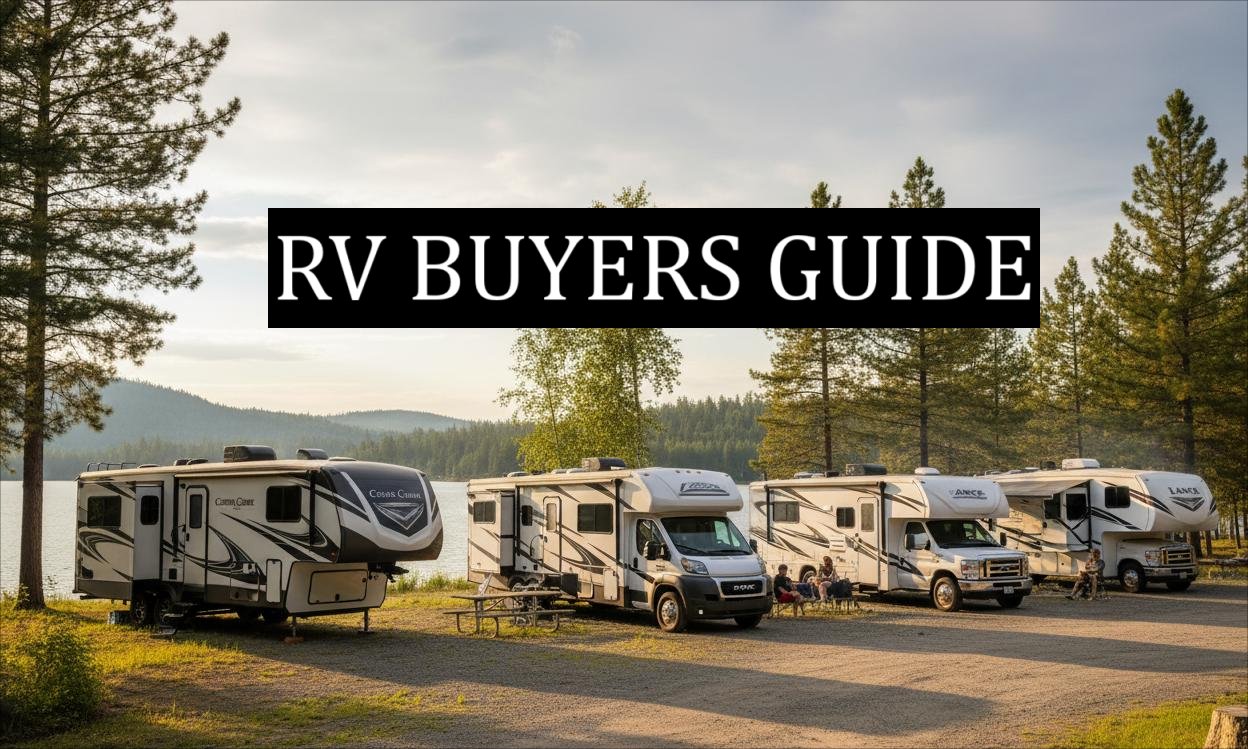
Diving into the world of rv & campers for sale is your first step toward incredible freedom and adventure. But let's be honest, it can also feel like a lot to take in at first. The secret is knowing that every rig, from a massive motorhome to a tiny teardrop trailer, is built with a specific kind of traveler in mind. The most important thing you can do right now is figure out which one is built for you.
Before you start scrolling through listings for RV & campers for sale, you need to get the lingo down. The easiest way to think about the RV universe is to split it into two big families: motorhomes (the kind you drive) and towables (the kind you pull).
Each family has its own unique cast of characters, and they all have different personalities, price tags, and purposes.
Motorhomes are your all-in-one package deal. Your engine and your living space are one and the same. This makes travel days incredibly convenient—need to grab a snack or use the bathroom on the road? Just walk back. No need to even step outside.
Towables, on the other hand, are all about flexibility. You hitch them to your truck or SUV, and once you get to the campground, you can unhook. This frees up your vehicle for running into town, exploring winding local roads, or hitting a trailhead where a big motorhome just couldn't go.
This table gives you a quick, side-by-side look at the main RV and camper classes. Use it to get a feel for the key features, who they're best for, and the typical price points to help focus your search.
| RV Type |
Description & Best For |
Typical Length |
Pros |
Cons |
| Class A |
The largest, bus-style motorhomes. Best for full-timers or those wanting luxury and maximum space. |
29-45 ft |
Spacious, high-end amenities, tons of storage. |
Expensive, lower MPG, challenging to drive and park. |
| Class B |
Also known as camper vans. Ideal for solo travelers, couples, or anyone prioritizing mobility and ease of driving. |
17-23 ft |
Easy to drive/park, best fuel economy, stealthy. |
Limited space and amenities, small tanks. |
| Class C |
The "in-between" motorhome with a distinct cab-over bunk. A popular choice for families and weekend warriors. |
21-35 ft |
Good balance of space and drivability, often has a separate bedroom. |
Less storage than a Class A, moderate fuel economy. |
| Travel Trailer |
A classic bumper-pull camper. Incredibly versatile and comes in countless sizes for every budget. |
12-35 ft |
Huge variety of floorplans, affordable, can be towed by many SUVs/trucks. |
Can be prone to sway, requires setup at camp. |
| Fifth Wheel |
Large, multi-level trailers that connect inside a truck bed. Best for long-term campers seeking a residential feel. |
25-45 ft |
Stable towing, spacious layouts, residential features. |
Requires a heavy-duty truck, taller profile. |
Choosing the right type is the foundation of a good RV experience. Now let's dig a little deeper into what makes each of these categories tick.
Inside the motorhome family, you'll find three main branches. Getting to know them will help you narrow down your search in a big way.
-
Class A Motorhomes: These are the kings of the road. Big, luxurious, and built on a heavy-duty chassis, they look like a tour bus for a reason. They offer massive living areas, high-end finishes, and basement storage you could practically walk into. They're a perfect match for full-time RVers or anyone who refuses to compromise on comfort.
-
Class B Motorhomes: You probably know these as camper vans. They are the smallest and nimblest of the bunch. Built on a standard van chassis, they're a breeze to drive, fit in a normal parking spot, and won't kill you at the gas pump. Great for solo travelers, couples, or adventurers who put mobility first.
-
Class C Motorhomes: This is the Goldilocks option—not too big, not too small. You can always spot a Class C by its signature bunk or storage area that extends over the driver's cab. They give you way more room than a van but are much less intimidating to drive than a giant Class A. It's no wonder they're a huge hit with families.
To help you visualize all of this, here’s a simple breakdown of the main RV and camper types.
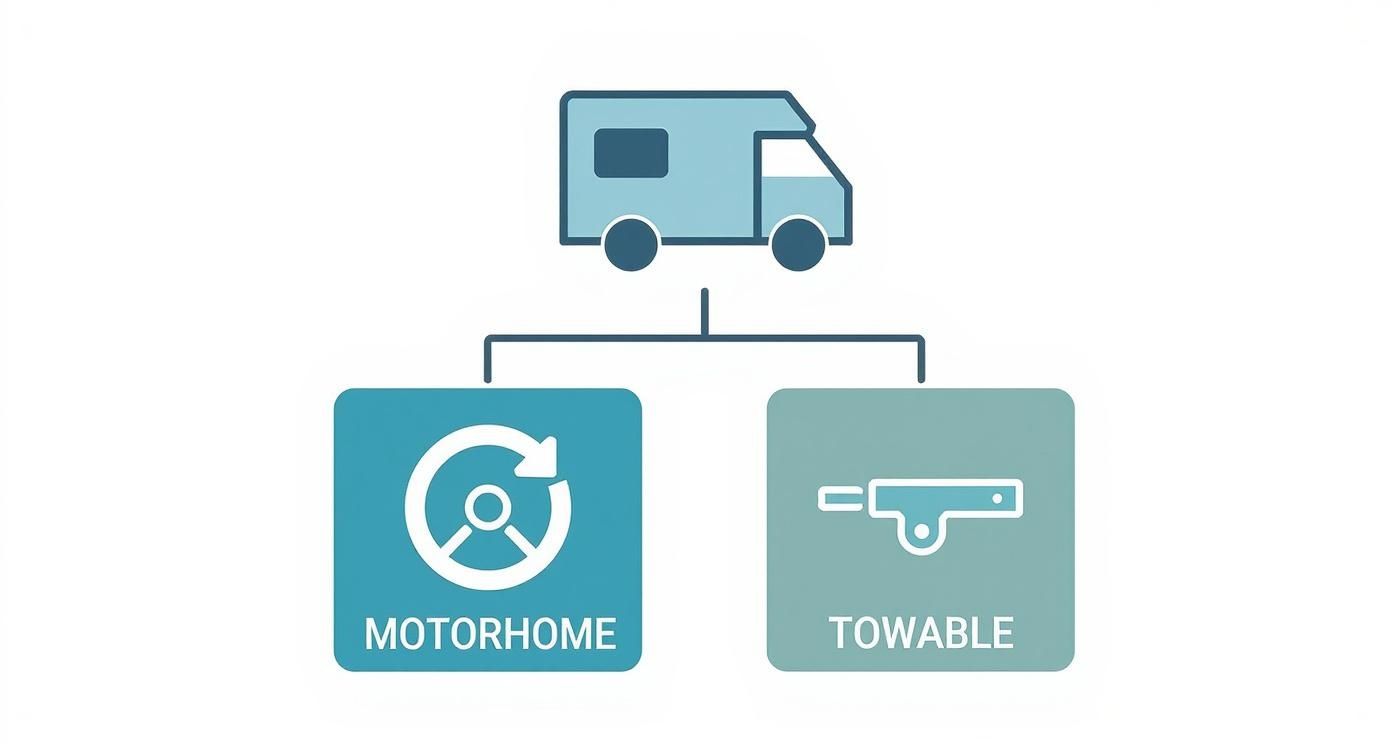
This chart really drives home that first big decision every buyer has to make: Do you want to drive it or pull it?
If the idea of a detachable "basecamp" sounds right, then a towable camper is probably for you. Your final choice will come down to what your vehicle can safely tow and how much space your crew needs.
Choosing a towable means you're investing in a mobile basecamp. It provides a comfortable home-away-from-home that you can leave behind while your truck or SUV becomes your key to local exploration.
The two most common styles you'll see are travel trailers and fifth wheels. Travel trailers are the classic campers that hitch to the bumper of your tow vehicle. They come in a staggering range of sizes—from tiny teardrops under 15 feet to enormous 35-foot bunkhouse models built for a crowd.
Fifth wheels are generally bigger and are known for their multi-level floorplans. They use a special hitch that mounts in the bed of a heavy-duty pickup truck, which makes them incredibly stable to tow. This unique design opens up possibilities for residential-style amenities and a much more "at-home" feeling.
To go even deeper on all the different models out there, check out this fantastic guide to RV types and sizes.
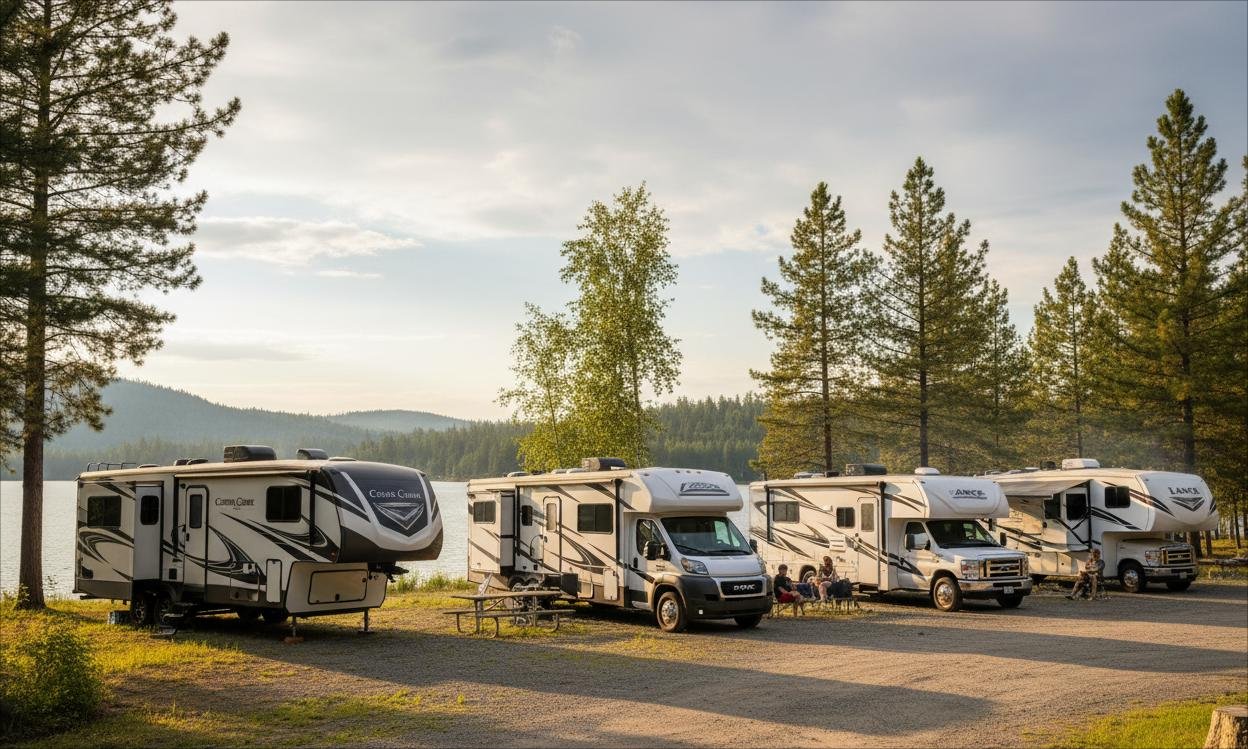
This is one of the first, and biggest, decisions you'll make when you start looking at rv & campers for sale: do you go for a shiny new model or a tried-and-true pre-owned one? It’s about more than just the sticker price. This choice ripples through everything from warranties and maintenance to what your rig will be worth down the road.
Honestly, there’s no single right answer. The best path for you comes down to your budget, how much risk you're comfortable with, and what you’re really looking for in your adventures.
Think of a new RV as a blank canvas. It's pristine, untouched, and packed with the latest gadgets, modern interiors, and, of course, that unforgettable "new rig" smell. There's a real peace of mind that comes from knowing you’re the very first person to call it home on the road.
Every single system, from the plumbing to the slide-outs, is fresh from the factory. Even better, it’s all covered by a full manufacturer's warranty. This is a huge safety net during your first couple of years, ensuring that if something unexpected goes wrong, you have a clear path to getting it fixed without emptying your bank account.
The biggest draw for buying new is certainty. You get to handpick the exact floorplan, colors, and options you want—no compromises necessary. You don't have to wonder about a hidden history of leaks, strange repairs, or questionable DIY mods from a previous owner.
For a lot of buyers, that assurance is worth the higher upfront cost. It takes a ton of guesswork out of the process. The main perks really boil down to:
-
Full Warranty Coverage: This is the big one. Those initial "shakedown" bugs that pop up in the first year are the manufacturer's problem, not yours. That can save you from some seriously expensive headaches.
-
Modern Technology and Features: New models are going to have the latest and greatest, like pre-wired solar systems, better insulation, smart home controls, and more efficient appliances.
-
Pristine Condition: You start with a clean slate. No weird smells, no wear and tear on the furniture, and no surprises left behind by someone else.
On the flip side, the used market is where you can find some absolutely incredible deals. The biggest win here is that the first owner has already absorbed the most painful part of the depreciation.
An RV is a depreciating asset, just like a car. A brand-new unit can lose 20-30% of its value the second it rolls off the dealer's lot. By buying a model that's just a few years old, you let someone else take that massive financial hit.
What does that mean for you? It means you can often afford a higher-end, feature-packed model for the same price as a new, entry-level rig. A well-maintained used RV can be a fantastic value, giving you way more bang for your buck and likely a lower insurance bill, too.
The market for used rv & campers for sale is massive, with tons of floorplans and styles you might not find anymore. Plus, there's another hidden benefit: the previous owner has probably already found and fixed all the little quirks and bugs that are so common in the first year of ownership.
The RV world has seen some big changes lately, which has created some interesting opportunities for buyers who know where to look. Right now, many dealerships are sitting on a surplus of inventory. For you, that can mean better deals, especially on brand-new units from last year's model lineup.
For instance, the industry is dealing with a glut of unsold inventory as the newest models arrive. As of mid-2025, RVtrader had over 91,800 new 2025 campers listed, but there were also more than 10,000 unsold 2024 models and even some leftover 2023 units still on the lots. This puts pressure on dealers to clear out that older stock, giving you some serious negotiating power. You can learn more about these current camper sales market trends to get a leg up.
At the end of the day, the choice is all about your priorities. Are you willing to pay a premium for a full warranty and the latest tech, or would you rather stretch your budget further with a gently used model? Weighing these pros and cons carefully will point you toward the perfect RV for your future adventures.
Choosing where you buy your RV is almost as important as choosing the RV itself. Think of it less like a one-time purchase and more like starting a long-term relationship. A great dealer will be your partner for years of service and support. A bad one? They can turn your dream into a nightmare of shoddy repairs and unreturned phone calls.
Finding a good one takes a little bit of detective work. It’s not about hunting down the absolute lowest price tag. It's about finding a business that values its customers and stands behind its products long after you’ve driven off the lot.
Before you even think about setting foot on a dealership lot, your first stop should be your keyboard. A dealer’s online reputation is a powerful window into how they actually treat people, especially when things don’t go perfectly.
Dive deep into reviews on Google, Yelp, and dedicated RV forums. Don't just glance at the star rating—that's only half the story. Read the actual reviews, both the glowing and the scathing. Look for patterns. Are multiple people raving about how the service department went above and beyond? Or is there a recurring theme of ignored calls and repairs that took months?
Pay close attention to how management responds to negative feedback. A professional, problem-solving reply is a great sign. A defensive, dismissive, or cookie-cutter response is a massive red flag.
Once you have a shortlist, it’s time to visit in person. Treat this like an interview where you're the one doing the hiring. Your goal is to get a feel for their sales culture and, more critically, their commitment to post-sale support.
It's a buyer's market right now. The industry has seen some big dips, with RV shipments dropping by 15.1% in May 2025 compared to the previous year—that's just 28,150 units shipped. Many lots are overflowing with inventory, making some dealers desperate to make a sale. While that can mean great prices, it also means you have to be wary of anyone just trying to move metal. You can learn more about how these RV sales trends are affecting the market.
A good dealer recognizes this and works to build trust. If you feel like you’re in a high-pressure sales tank, walk away. You’re looking for a salesperson who acts more like a consultant, asking smart questions about your travel style and needs instead of just pushing the most expensive rig on the lot.
The shiny showroom is designed to impress you, but the service department is where the real relationship is made or broken. This is the team you’ll be counting on for everything from routine maintenance to frustrating warranty claims. A fantastic service center makes RV ownership a breeze; a bad one will be a source of constant headaches.
When you visit, make a beeline for the service desk and ask some direct questions:
-
What’s your typical wait time for a service appointment? Many dealers prioritize their own customers, but if the backlog is still several weeks or months, that’s a problem.
-
Are your technicians certified? Ask about their training, specifically from programs like the RV Technical Institute.
-
Can I have a quick chat with the service manager? A five-minute conversation can tell you everything you need to know about their attitude toward customer care.
-
How do you handle warranty claims? A great service team will take the lead and manage all the communication with the manufacturer for you.
A dealership's true character isn't revealed on the sales floor; it's proven in the service bay. Prioritize a dealer with a stellar service reputation, even if it means paying slightly more for your RV.
Think of it like creating a mental "dealership scorecard." By looking beyond the sticker price and focusing on these critical areas, you can find a true partner for your RV journey—one who will support your adventures for years to come.

Buying an RV is a massive financial step, and the sticker price you see on the lot is only the opening chapter of the story. To make a smart investment that you'll enjoy for years, you have to look at the entire financial picture. That means building a real-world budget that covers not just the monthly loan payment, but the full cost of actually owning the thing.
Think of the RV's price tag as just the tip of the iceberg. Lurking below the surface are all the ongoing costs that really define your budget: insurance, storage, fuel, maintenance, and maybe even property taxes. Getting a handle on these numbers before you buy is the best way to prevent your new adventure rig from becoming a source of financial stress down the road.
Before you even think about financing, your first move should be to get your financial house in order. A great starting point is learning how to create a budget that works for your specific situation. This simple step will give you the confidence to shop without guesswork.
To avoid any nasty surprises, let’s pull back the curtain on the ongoing and often-hidden expenses you need to plan for. These numbers are just as critical as your loan payment when you're looking at rv & campers for sale.
-
Insurance: RV insurance is a different beast than your standard auto policy and is often more expensive. The cost can swing wildly depending on the rig’s class, its value, and your driving history.
-
Storage: Unless you’ve got a huge driveway or a dedicated spot on your property, you'll need to pay for storage. This can range from a simple outdoor lot to a climate-controlled indoor facility, with monthly fees running from $50 to over $200.
-
Maintenance and Repairs: Here’s a good rule of thumb: plan to set aside 1-2% of the RV's purchase price every year for upkeep. This fund will cover everything from routine roof sealing and oil changes to the inevitable unexpected repairs.
-
Fuel: This is the big one, especially for larger motorhomes. Do some back-of-the-napkin math on your likely travel mileage and the rig's MPG to get a rough idea of your annual fuel bill. It adds up fast.
Understanding these costs from the get-go is the key to creating a budget that actually works.
To help you visualize this, here’s a sample breakdown of what the total cost of ownership might look like. Remember, these are just estimates—your own costs will vary based on your RV, location, and travel style.
Use this sample budget to understand the potential monthly and annual costs of owning an RV, so you can plan your finances beyond the initial purchase.
| Cost Category |
Estimated Monthly Cost |
Estimated Annual Cost |
Notes |
| Loan Payment |
$750 |
$9,000 |
Based on a $100k loan at 8.5% for 15 years |
| Insurance |
$125 |
$1,500 |
Varies widely by RV type, value, and location |
| Storage |
$150 |
$1,800 |
Average cost for a covered, secure spot |
| Maintenance Fund |
$83 |
$1,000 |
1% of the purchase price, set aside annually |
| Fuel |
$250 |
$3,000 |
Based on 5,000 miles/year at 10 MPG and $5/gallon |
| Campsite Fees |
$200 |
$2,400 |
Estimate based on average nightly rates |
| Propane & Supplies |
$40 |
$480 |
For cooking, heating, water heater, etc. |
| Total Estimated Cost |
$1,598 |
$19,180 |
This is the true cost of ownership! |
As you can see, the loan is often less than half of the total monthly outlay. Planning for the full amount is what makes RV ownership sustainable and fun.
Once your budget is nailed down, it's time to figure out how you’ll pay for your new home-on-wheels. Most people finance their purchase, and you’ve got a few different paths you can take. The goal is to find the best fit for your financial situation.
The RV market has been on a bit of a rollercoaster lately. In 2023, manufacturers shipped about 313,000 units, which was a 36.5% dip from the year before, totaling a retail value of $20.27 billion. While that signals a slowdown, experts are still optimistic, projecting the North American market could climb to $29 billion by 2029.
This kind of market shift can sometimes play into a buyer's hands, as lenders might offer more competitive rates to keep sales moving.
Your credit score is the single most important factor in securing a good loan. Lenders see a higher score as lower risk, which translates directly into a lower interest rate and a smaller monthly payment over the life of your loan.
Before you apply for anything, get a copy of your credit report. Check it for errors and work on paying down balances to make yourself the strongest possible candidate. To really get into the weeds, check out our complete guide on how to finance an RV the smart way.
You've found it—the perfect rig. The layout is just right, the price is in the sweet spot, and you're already dreaming of that first scenic campsite. This is the danger zone. When excitement takes over, it's easy to miss the details, but this is the most critical moment in your search for rv & campers for sale. The single best thing you can do right now is a head-to-toe, no-stone-unturned inspection.
Think of yourself as a detective on a mission to uncover any secrets before you sign on the dotted line. This isn't about being pessimistic; it's about being smart. Walking away from a rig with hidden problems isn't a failure—it's a massive win. It saves you from years of headaches and a boatload of unexpected repair bills. This checklist is your blueprint for buying with total confidence.
The outside of an RV tells you a story. It whispers clues about how it's been treated, and a well-kept exterior often hints at a well-maintained interior. Your job is to inspect every inch, paying close attention to the parts that keep the elements out.
Don't just give it a quick once-over. Get up close and personal.
-
The Roof is Ground Zero: This is where water, the ultimate RV killer, usually gets its start. Get on a ladder and carefully check every single seal around the vents, A/C unit, antennas, and the edges of the roof. Look for cracking, gaps, or sealant that looks old and brittle. Soft spots under your feet are a huge red flag—they mean water has already gotten under the roof membrane.
-
Walls and Siding: Stand back and look down the length of the RV. Do you see any bubbles, waves, or ripples in the fiberglass siding? That's called delamination, and it's a classic sign that water has worked its way into the wall structure.
-
Slides and Awnings: You need to extend and retract every single slide-out and awning. They should move smoothly without any jerky motions or loud grinding noises. While they're out, inspect the rubber seals around the slide-outs for any rips or damage. These are another common entry point for water.
-
Tires and Undercarriage: Check the four-digit date code on the tires. RV tires usually age out long before they wear out, and a blowout is the last thing you want on the highway. While you're down there, peek underneath and look for significant rust on the frame and suspension.
A good exterior inspection isn't about looking for dings and scratches. It's a hunt for the early warning signs of water intrusion. Finding a tiny crack in the roof sealant today can save you from a five-figure repair bill down the road.
Once you’re happy with the outside, it’s time to head in and become a professional button-pusher. Your mission is to test every single thing that flips, slides, heats, or cools. Assume nothing works until you've seen it work with your own eyes.
Turn on every single light. Open and close every cabinet and drawer to make sure they latch. Bring a cheap electrical outlet tester and plug it into every outlet. Your goal here is to be relentlessly thorough.
Water is the mortal enemy of every RV. It rots wood framing, fuels mold growth, and can cause serious structural damage. When you're inside, your senses are your most important tools.
Start by looking up. Scan the ceiling for any stains or discoloration, especially in the corners and around any vents or skylights. Now, start pressing. Push firmly on the walls and floor in those same areas. Any sponginess, softness, or give is a bad sign—it means there’s likely rot underneath.
Don't forget to use your nose. A persistent musty or mildewy smell is a dead giveaway that there's a moisture problem hiding somewhere, even if you can't see it.
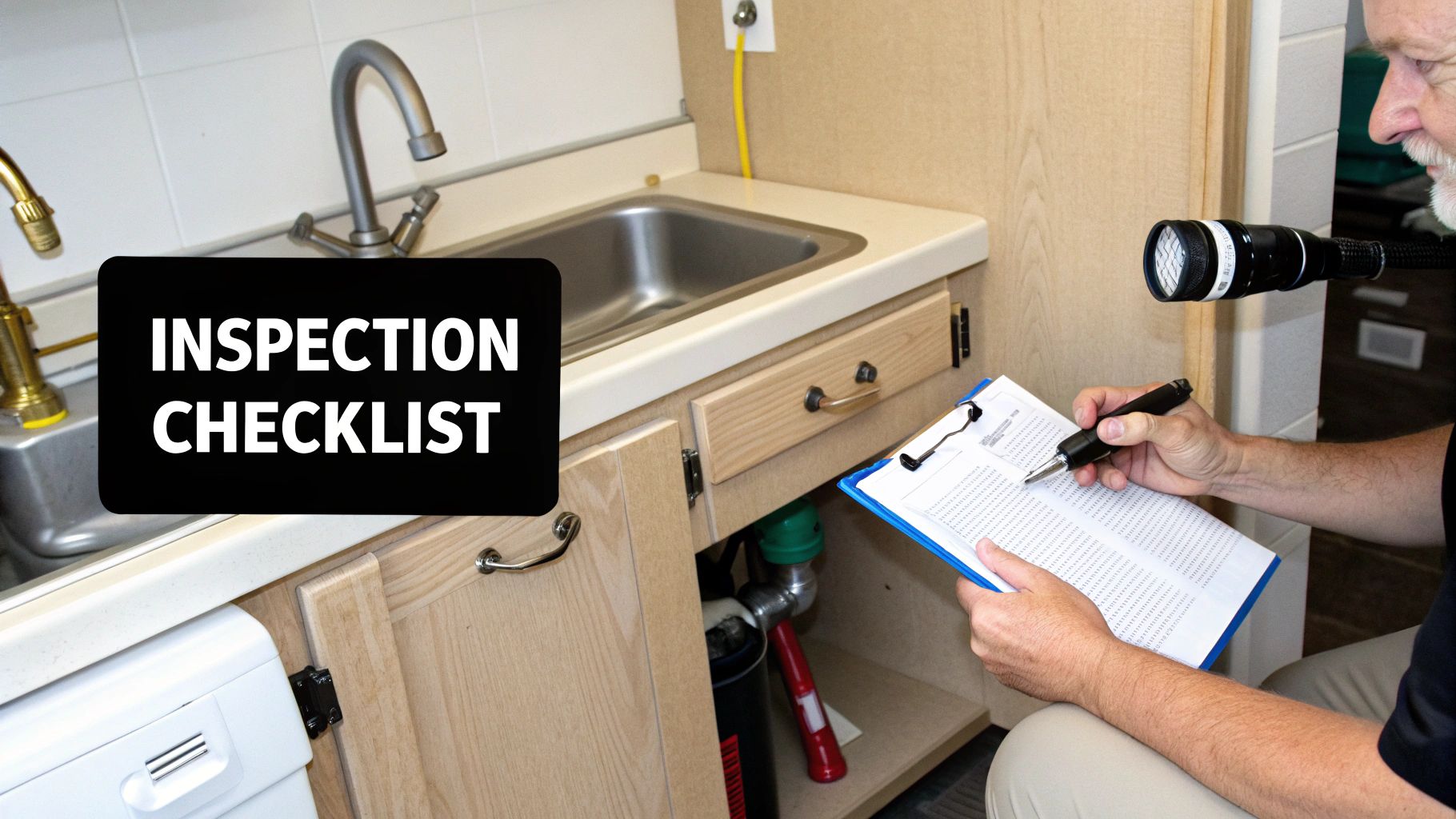
Finally, grab a flashlight and look inside every single cabinet, closet, and storage bay. Pay special attention to the areas under the kitchen sink, bathroom sink, and around the shower. This is where small, slow leaks can go unnoticed for years while they silently destroy the rig from the inside out.
Now for the fun part. It’s time to make sure the "home" part of this motorhome actually works. Don't be shy about asking the owner or dealer to make sure all the systems are ready for you to test.
-
Plumbing System: Have the RV connected to a "city water" source. Turn on every faucet (both hot and cold), flush the toilet a few times, and run the shower. While the water is on, look under the sinks with your flashlight for any drips. Make sure the water heater fires up and actually produces hot water.
-
Electrical Systems: You need to test the RV in two modes: plugged into shore power and running on its own batteries. Make sure the air conditioner, microwave, fridge, and all the lights work in both scenarios.
-
Propane Appliances: Make sure the propane tanks have fuel. Test the stove burners, the oven, and the furnace. They should all ignite quickly and run steadily.
If you're looking at a used RV, the absolute best way to protect yourself is to hire a certified NRVIA (National RV Inspectors Association) inspector. Yes, it's an extra cost upfront, but think of it as the cheapest insurance policy you can buy.
A professional inspector has specialized tools and a trained eye to spot things you would almost certainly miss. They can perform leak tests with pressurized air, use moisture meters to find hidden water damage, and give you a full, unbiased report on the RV's true condition. This report gives you incredible negotiating leverage or, more importantly, the confidence to walk away from a potential money pit.
For any used rig, knowing its history is just as important as its current condition. You can learn how to uncover an RV's accident and repair history to get the full story. Combining a professional inspection with a history check is your ultimate defense against buying someone else's problems.
Alright, you’ve narrowed down the type of rig you want, and you're getting serious. This is usually when a whole new wave of practical questions starts to bubble up. Think of this as your final pre-flight checklist before you commit.
We’re going to tackle some of the most common things people wonder about when they’re looking at rv & campers for sale. Getting these last few details sorted out will give you the confidence to sign on the dotted line without any lingering doubts.
Believe it or not, timing your purchase can save you a serious chunk of change. Most people get the RV bug in the spring, but that’s actually peak season. With everyone rushing to the lots, demand is high, and dealers have little reason to negotiate.
The real sweet spot for a great deal is during the off-season, from late fall through winter (October to February). Dealers are motivated to move last year's models off the lot to make space for the new inventory. With fewer buyers kicking tires, you have way more leverage. Keep an eye out for RV shows,