When you start searching for a Class A motorhome for sale, you're looking for more than just a vehicle; you’re looking for a genuine home on wheels. These are the big players in the RV world, built on a bus-like chassis and known for their massive panoramic windshields and all the residential-style comforts you need for long-term travel.
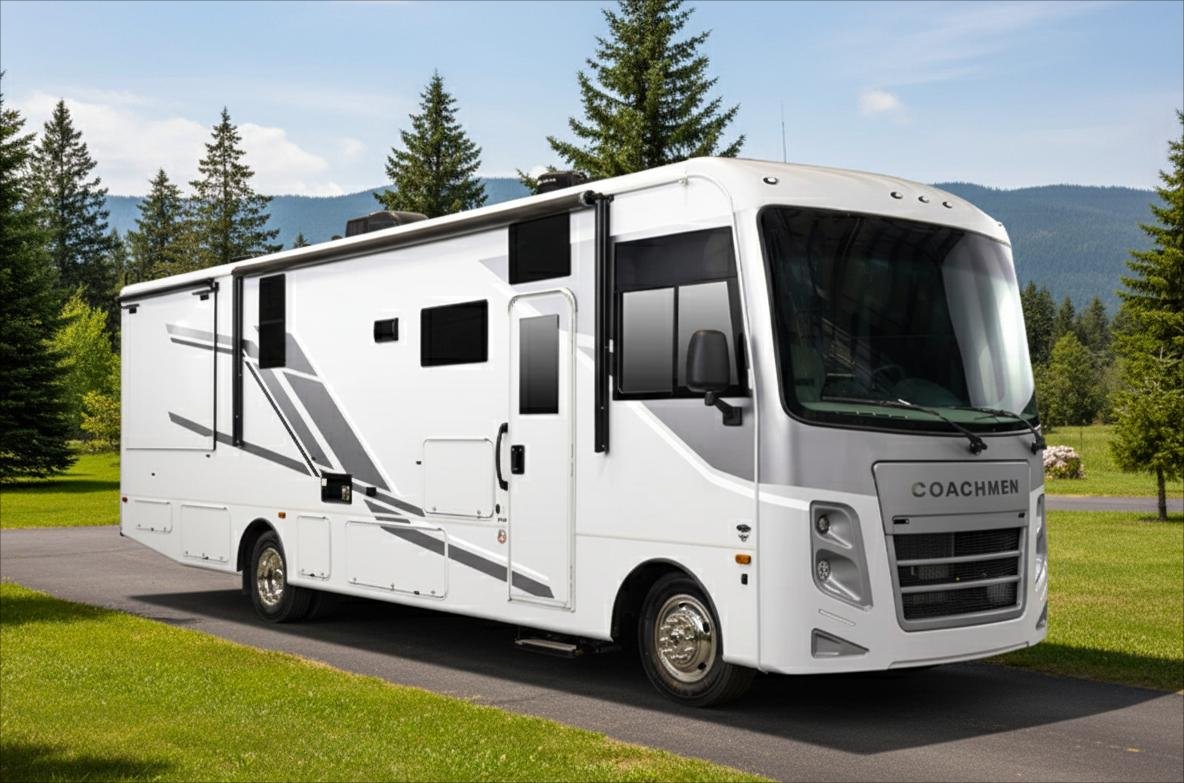
Before you get lost in online listings, it's crucial to get a real feel for what owning a Class A is all about. It’s easy to get wowed by the spacious layouts and high-end finishes, but you have to think about the day-to-day reality of driving, maintaining, and living in something that can be up to 45 feet long.
This lifestyle is all about unparalleled space and comfort. We’re talking full-sized refrigerators, king beds, and multiple slide-outs that transform your living area with the push of a button. But all that luxury comes with some very real, practical considerations every buyer needs to think through.
One of the first big decisions you'll hit is whether to go with a gasoline-powered chassis or a diesel pusher. This one choice ripples through everything—from your upfront cost and long-term maintenance bills to the actual feel of the coach on the road.
The engine choice is a fundamental fork in the road for any prospective Class A owner. Let's break down the key differences to help you figure out which path is right for you.
| Feature |
Gas Chassis |
Diesel Pusher Chassis |
| Engine Location |
Front |
Rear ("Pusher") |
| Purchase Price |
Lower |
Significantly higher |
| Ride Quality |
Good, but can be louder |
Smoother, quieter ride |
| Towing Capacity |
Generally lower |
Superior |
| Maintenance |
More common, less expensive |
Less frequent, but more specialized and costly |
| Best For |
Regional trips, weekend getaways, budget-conscious buyers |
High-mileage travel, cross-country journeys, towing heavy loads |
Ultimately, choosing between gas and diesel isn't just about the fuel. It's about defining how you want to travel. A diesel pusher is built for the long haul—chewing up thousands of highway miles with ease. A gas model, on the other hand, is a fantastic and more accessible way to explore regions and enjoy shorter adventures.
There's no denying their popularity. In 2024, Class A motorhomes captured a market share of over 55%, showing just how much travelers love their premium features. With the entire Class A market projected to top USD 34.6 billion by 2034, it's clear these luxurious rigs are here to stay.
Class A motorhomes generally run from 29 to 45 feet long. While a 45-foot coach feels like a palace inside, it comes with its own set of challenges. Many state and national parks have strict length limits, often capping RVs at 35 or 40 feet. Trying to navigate a beast like that through tight city streets or older gas stations takes some serious skill and forward-thinking.
A shorter Class A, say in the 30-35 foot range, gives you a lot more flexibility and opens up access to more remote and historic campgrounds. The trade-off, of course, is a bit less interior living space and smaller storage bays.
How you plan to travel is the key here. If you see yourself hopping between luxury RV resorts, a big rig is perfect. But if exploring national parks is your goal, a shorter coach is the smarter choice.
For anyone planning to hit the road for months at a time, our guide on the /articles/best-motorhomes-for-full-time-living has some great tips for picking a rig that truly fits your lifestyle.
Finally, a big part of responsible ownership is knowing how to store your vehicle safely when not in use. It’s an often-overlooked detail, but properly protecting your investment during the off-season is a huge part of the Class A lifestyle.

It’s easy to get swept up in the excitement of finding a great price on an rv motorhome class a for sale. But that sticker price? It's just the tip of the iceberg. The real cost of ownership reveals itself long after you’ve driven off the lot.
To make a smart, sustainable investment, you need to look past the initial purchase and build a financial roadmap. This means accounting for all the ongoing expenses that come with the territory. These are the costs that separate happy, long-term RVers from those who find themselves financially overwhelmed.
Let’s pull back the curtain on the true costs so you can create a budget that gives you peace of mind, not sticker shock.
Think of buying a Class A like buying a house and a vehicle at the same time—because that's essentially what it is. Overlooking the recurring expenses can quickly turn your dream into a source of stress.
Here are the big-ticket items you absolutely must factor into your budget:
-
Specialized RV Insurance: This isn't your standard car insurance. You're covering a high-value asset, your personal belongings, and significant liability. Expect to pay anywhere from $1,500 to over $4,000 a year, depending on your rig, coverage, and driving history.
-
Routine Maintenance: A motorhome needs constant love. We’re talking engine and generator servicing (especially for diesels), annual roof sealing, and tire care. A good rule of thumb is to set aside 1-2% of the RV's purchase price each year just for maintenance.
-
Fuel Costs: This is the elephant in the room. A gas-powered Class A might average 6-10 MPG, while a diesel pusher could get you 8-12 MPG. A single cross-country trip can easily run into thousands of dollars for fuel alone.
-
Storage Fees: Unless you have the perfect spot at home, you’ll need to pay for storage. A secure, covered spot can cost $100 to $500+ per month, but it’s a necessary expense to protect your investment from the elements.
This kind of detailed budgeting is more important than ever. The global recreational vehicle market was valued at around USD 50.53 billion in 2024 and is on track to hit USD 74.45 billion by 2033. As more people join the RV life, being financially prepared is what sets you up for success.
Very few people buy a Class A motorhome with a suitcase full of cash. That means you'll need to navigate the world of RV financing, which has its own unique quirks compared to a standard car loan.
Lenders often view a Class A as a second home, and that shapes the loan terms they offer. For starters, be prepared for a down payment requirement of 10-20%. This shows the lender you're a serious buyer and reduces their risk.
A larger down payment is one of the smartest moves you can make. It not only improves your chances of approval but also lowers your monthly payment and saves you a ton of money on interest over the life of the loan.
You'll also find that RV loan terms are much longer—it's common to see loans for 15 or even 20 years. While this makes the monthly payment feel more manageable, remember that a longer term means paying significantly more in total interest.
When it comes to getting that loan, you generally have two main paths: go through the dealership's finance department or secure your own financing from a bank or credit union. Each has its pros and cons.
Dealership Financing
-
Convenience: It's a true one-stop-shop experience.
-
Special Offers: Dealers sometimes have access to promotional rates from manufacturers.
-
Negotiation Point: You can sometimes use financing as a bargaining chip in the overall deal.
Your Bank or Credit Union
-
Often Better Rates: Credit unions, in particular, are famous for offering lower interest rates.
-
Pre-Approval Power: This is a huge advantage. Walking in with a pre-approved loan is like being a cash buyer, which gives you serious negotiating leverage.
-
Personal Relationship: You’re working with people you already know and trust.
Here’s my advice: always get a pre-approval from your own bank or credit union before you even start seriously shopping. It gives you a benchmark. If the dealership can beat your rate, fantastic. If not, you’re already set with a competitive loan.
For a deeper dive into these costs, our guide on how much an RV costs and essential budget tips is a great resource.
So, you're ready to find your coach. The good news is that there are more places to look than ever before, from massive national dealerships to a private listing down the street. The key is understanding that each path offers a completely different buying experience, with its own benefits and drawbacks.
Knowing the unwritten rules of each environment will make all the difference. It helps you ask the right questions, spot the real opportunities, and ultimately find the motorhome that's truly right for you.
Think of these as the big-box stores of the RV world. When you walk onto one of these lots, you're greeted with a sea of new and used models from nearly every manufacturer. This is probably the best place to start your journey, especially if you want to physically walk through a dozen different floorplans to see what you like.
The main draw here is the all-in-one convenience. These places are set up to make buying easy.
-
On-Site Financing: Their finance departments can usually get you approved and on the road quickly.
-
Trade-Ins: Have an old RV or vehicle? They’ll make you an offer and roll it into the deal.
-
Service Bays: Most have full service centers for pre-delivery checks and any future repairs you might need.
-
Warranties: You’ll almost always be offered an extended service plan for extra peace of mind.
Of course, that convenience isn't free. Dealerships have huge overhead, and that's often reflected in the sticker price. You can and should negotiate, but you're less likely to find a steal compared to buying from a private owner. Finding a reputable dealer with a solid service department is everything.
Smaller, often family-run independent lots can offer a much more personal touch. Their inventory is usually smaller and more carefully selected, often focusing on well-maintained used coaches. With lower overhead, you can sometimes find more competitive pricing here.
Consignment lots are another great avenue to explore. This is where you’re technically buying a motorhome from a private owner, but the dealership handles the entire sale. It can be the best of both worlds—you get a price closer to a private-party value but with the security and services of a dealer managing the paperwork and transaction.
No matter the size of the dealership, don't let anyone rush you. A good salesperson will give you the keys and let you explore on your own time. If you feel pressured, that’s your cue to walk away.
This is where the real deals are often found. When you buy an rv motorhome class a for sale directly from an owner, you cut out the middleman and their markup entirely. More often than not, private sellers are meticulous owners who can provide a complete history of the motorhome, right down to the service records and funny little quirks.
The catch? The risk and workload fall squarely on your shoulders. There’s no warranty, no financing department, and no dealership to call if something goes wrong a week later. It’s all on you.
You'll be responsible for:
-
Securing your own loan from a bank or credit union.
-
Performing a deep-dive inspection (or better yet, hiring a certified RV inspector).
-
Navigating all the title transfer and registration paperwork yourself.
This path isn’t for the faint of heart, but the financial payoff can be huge. A well-maintained coach from a transparent owner can save you thousands.
Let's be honest, almost every search starts online these days. Websites like RV Trader, Facebook Marketplace, and even Craigslist are treasure troves of listings from dealers and private sellers all over the country. The trick is to master their search filters.
Don't just browse aimlessly. Set up specific alerts for the makes, models, or floorplans you’re targeting. Filter by year, mileage, and price to weed out the noise. And be a critical consumer of online ads—if the photos are blurry or the description is just a sentence long, proceed with caution. An online listing is just the first step; it must always lead to an in-person viewing and a thorough inspection before a single dollar changes hands.
It’s incredibly easy to fall for a beautiful floorplan and a sparkling clean interior. What's even easier is accidentally buying a rolling money pit. When you’re looking at an rv motorhome class a for sale, the pre-purchase inspection is the single most important moment in the entire buying process. This is your chance to uncover the hidden problems that sellers—whether intentionally or not—often overlook.
Think of yourself as a detective for a few hours. Your mission is to find the clues that point to neglect, damage, or impending system failure. A systematic approach is your best friend here, giving you the confidence to spot red flags and potentially save yourself thousands of dollars down the road.
The inspection begins the moment you step out of your car. Before you even think about going inside, a meticulous exterior check can reveal some of the coach's deepest secrets. I always recommend starting at one corner and working your way around methodically so you don't get distracted and miss something crucial.
Pay close attention to these key areas:
-
The Roof is Everything: Ask for a ladder and get up there. Seriously. You're looking for cracked sealant around vents, skylights, and antennas. Any failure in the roof sealant is a direct invitation for water, which is the number one killer of RVs.
-
Tires Tell a Story: Check the DOT date code on every single tire—and don’t forget the inners on a dually. Tires on a heavy Class A often age out long before they wear out. They typically need replacing every 5-7 years, regardless of tread depth. A full set of new tires can cost $3,000-$5,000, making this a massive potential expense hiding in plain sight.
-
Slide-Out Seals and Operation: Get up close and examine the rubber seals around each slide-out. Are they cracked, brittle, or torn? Then, operate every slide multiple times. Listen for grinding noises or jerky movements that could signal a costly mechanical issue.
Water damage is insidious; it often starts small and hidden. Look for signs of delamination—those ugly bubbles or waves in the fiberglass sidewalls—which can indicate water has gotten between the layers. Also, check the corner seams and around windows for any signs of discoloration or compromised sealant.
Once you move indoors, your job is to touch, test, and operate every single thing you can find. Don't be shy; this is your potential home on wheels. A motivated seller should be more than willing to let you test everything to your heart's content.
A thorough inspection is crucial to uncover potential issues; consider using an essential vehicle inspection checklist as a guide for the automotive components to ensure you don't miss anything critical. Your goal here is to confirm that all systems work as they should, especially under their different power sources.
Run the Triple Power Gauntlet:
-
Shore Power: First, have the RV plugged into an electrical outlet. Turn on all the lights, run the microwave, and test every AC outlet. Cycle the air conditioning units to make sure they blow cold.
-
Battery Power: Next, unplug the shore power. Do the 12-volt lights work? Does the water pump pressurize the system? Test the ceiling fans and any other 12V appliances.
-
Generator Power: Finally, fire up the onboard generator. After it runs for a minute, re-test the AC units and microwave. A generator that struggles to start or run smoothly is a significant red flag.
From there, move on to the plumbing. Fill the fresh water tank partway, turn on the water pump, and run every faucet (hot and cold), checking for leaks under every sink as you go. Flush the toilet and make sure the whole system seems to operate correctly.
Don't just glance at the appliances—make them work. Ask the seller to turn on the refrigerator well before your arrival so you can confirm it's cold. Light every burner on the stove and test the oven if it has one.
Feeling overwhelmed? That's completely normal. A Class A motorhome is a complex machine with dozens of interconnected systems. While your own hands-on inspection is vital, it absolutely cannot replace the expertise of a certified professional.
Hiring a certified inspector from an organization like the National RV Inspectors Association (NRVIA) isn't an expense; it's an investment in your peace of mind. These pros spend hours going over a rig with a fine-toothed comb, following a detailed protocol that covers hundreds of checkpoints you'd never even think of.
This table breaks down why a pro can see things you might miss:
DIY vs Professional RV Inspection
| Inspection Area |
DIY Checkpoints |
Professional Inspector Focus |
| Roof and Seals |
Visual check for cracks in sealant, obvious damage. |
Moisture meter testing, detailed examination of membrane integrity and all penetrations. |
| Electrical Systems |
Testing outlets, lights, and appliances on all power sources. |
Hot skin testing, converter/inverter load tests, detailed analysis of battery health. |
| Plumbing |
Running faucets, checking for visible leaks, testing the water pump. |
Pressure testing the entire system for hidden leaks, checking holding tank sensors and valves. |
| Propane System |
Turning on stove burners, checking for obvious smells. |
Timed pressure drop test to detect microscopic leaks in the propane lines. |
| Appliances |
Confirming basic operation (e.g., fridge is cold, A/C blows cool). |
Verifying proper temperature ranges, amp draws, and diagnostic codes for all major appliances. |
An inspector provides a comprehensive, multi-page report complete with photos and detailed notes. This document is your single most powerful negotiation tool. If it uncovers $5,000 worth of needed repairs, you now have the leverage to ask for that amount off the asking price or request the seller fix the issues before the sale. This turns a potential deal-breaker into a well-informed business decision.
For more hands-on advice, you can deepen your knowledge with our detailed guide covering RV inspection steps for spotting hidden issues, which offers even more specific checks you can perform yourself.
You’ve done all the hard work. The inspections are done, the test drive felt solid, and you’re pretty sure this is the one. Now comes the moment that decides whether you get a good deal or a truly great one.
Let's be clear: negotiation isn't about being confrontational. It’s a calm, fact-based conversation where your research and that detailed inspection report do most of the talking for you. Your real power here comes from being prepared.
Before you even think about making an offer, you need a firm grip on the motorhome's actual market value. I always check sources like NADAguides and look at recent, comparable sales in the area. Combine that knowledge with your professional inspection report—that document is your single best piece of leverage.
Your first offer really sets the tone. It needs to be fair and respectful, but also firm and backed by evidence. Never just throw a lowball number out there without explaining why. That’s a quick way to shut down the conversation.
Instead, frame your offer as the logical conclusion of your research.
For instance, you could say something like, "The market value for this model is hovering around $120,000. However, the inspection flagged that the tires are six years old and will need to be replaced immediately, which is a $4,000 job. The report also noted a failing AC unit, which is another $1,500 to fix. Based on these necessary, immediate repairs, our opening offer is $114,500." See how that shifts the discussion from opinion to objective facts?
Pro Tip: Always be willing to walk away. Seriously. If you've done your homework and made a fair offer, your strongest position is being financially and emotionally ready to find another RV if the seller won't meet you at a reasonable price.
It also helps to have a feel for the current market when you're looking for an rv motorhome class a for sale. The RV industry is notoriously sensitive to economic swings. For example, in early 2024, total RV registrations in the U.S. were down 6.9% from the year before. Class A motorhomes saw an even sharper drop of 15.9%. This kind of data suggests it might be a buyer's market, where sellers are more motivated to make a deal. You can dig into the numbers in the full analysis of recent RV sales reports.
Once you've shaken hands on a price, the focus shifts to making sure the transfer of ownership is clean and completely legal. This part can feel a little intimidating, especially in a private sale, but it's pretty straightforward if you just take it one step at a time.
Do not hand over a dime until you have the correct, signed documents in your possession.
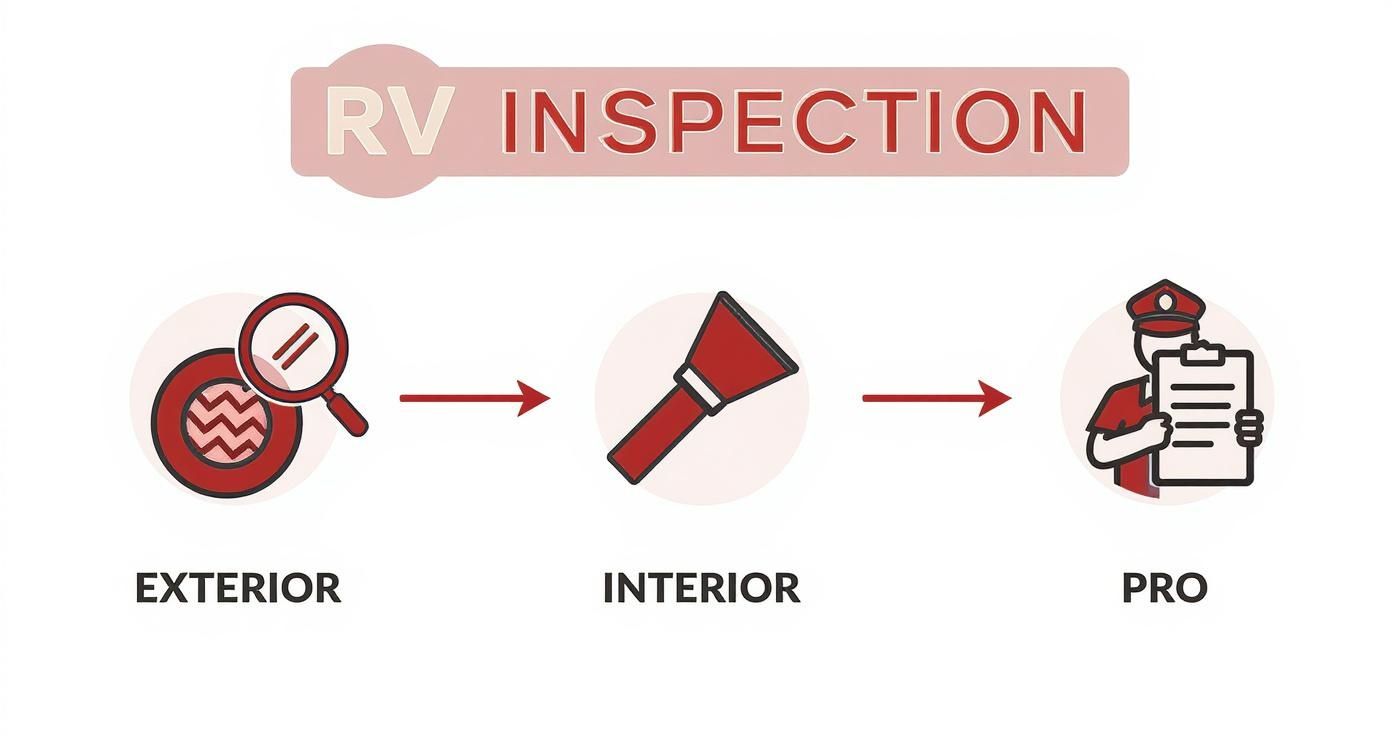
The infographic below outlines the key stages of a thorough inspection, which is the very foundation of your negotiation and final paperwork review.
Whether you're buying from a dealer or a private seller, there are two documents you absolutely must have:
-
A Bill of Sale: This is your official receipt. It has to include the date, sale price, the Vehicle Identification Number (VIN), and the full names and signatures of both you and the seller.
-
The Certificate of Title: This is the legal proof of ownership. Scrutinize it. Make sure the VIN on the title perfectly matches the VIN on the RV. Double-check that the seller's name is listed as the owner and that there are no liens. If a bank holds a lien, it must be officially released before that title can be transferred into your name.
With a clear title and a signed bill of sale, you're officially the new owner. The last thing to do is head to your local DMV to register the motorhome, pay any sales tax, and get your plates. Nailing this final stage means you drive away confident, with a great deal and zero headaches down the road.
Jumping into the world of Class A motorhomes can feel a bit overwhelming, and it's natural to have a lot of questions. Honestly, it's one of the biggest purchases you'll ever make.
Let's cut through the noise and tackle some of the most common questions I hear from people who are just starting their search. Getting these answers sorted out will help you move forward with a lot more confidence.
This is easily the number one question on everyone's mind, and for most people, the answer is a welcome surprise: no, you probably don't.
In the majority of states, your standard driver's license is all you need, provided the motorhome's Gross Vehicle Weight Rating (GVWR) is 26,000 pounds or less. Think of the GVWR as the maximum weight the RV can be when fully loaded with all your gear, water, and passengers.
Now, where it gets tricky is with the big rigs. Many of the larger diesel pushers, especially those stretching over 40 feet, can tip the scales well beyond that 26,000-pound limit. If that's the case, you'll likely need to get a non-commercial special license, often a Class B.
The takeaway? Always check the specific laws in your state of residence. Before you get too attached to a specific rv motorhome class a for sale, find the GVWR sticker—it's usually inside, near the driver's door—and make sure you know what you'll need to drive it legally.
Let's be upfront: Class A motorhomes are not known for being fuel-efficient. It’s important to set your expectations correctly from the start to avoid any sticker shock at the pump.
Real-world mileage depends on a ton of factors—the terrain you're driving on, wind conditions, your speed, and how heavily you've packed. But after years of experience and talking to countless owners, a few general rules of thumb have emerged:
-
Gas-Powered Class A: You can typically expect to see somewhere between 6 to 10 miles per gallon.
-
Diesel Pusher Class A: These are a bit more efficient, usually getting in the range of 8 to 12 miles per gallon.
While the diesel might seem like the clear winner, remember that diesel fuel itself is often more expensive, which can eat into those savings. The best advice for any Class A owner is to drive smart. Keep a steady foot, aim for a cruising speed of 60-65 mph, and always make sure your tires are properly inflated. Those simple habits can make a real difference.
Ah, the classic debate. There’s no single right answer here—it really comes down to your budget, your personality, and how comfortable you are with potential repairs. Both new and used have some serious pros and cons.
Going brand-new is incredible. You get the latest gadgets, a full