Dipping your toes into the world of used toy hauler fifth wheels for sale is the first real step toward getting that perfect mix of rugged adventure and home-like comfort—without paying that new-rig premium. It's a savvy move that lets you get more bang for your buck, sidestep that initial steep depreciation, and land a hauler that’s already proven it can handle the open road.
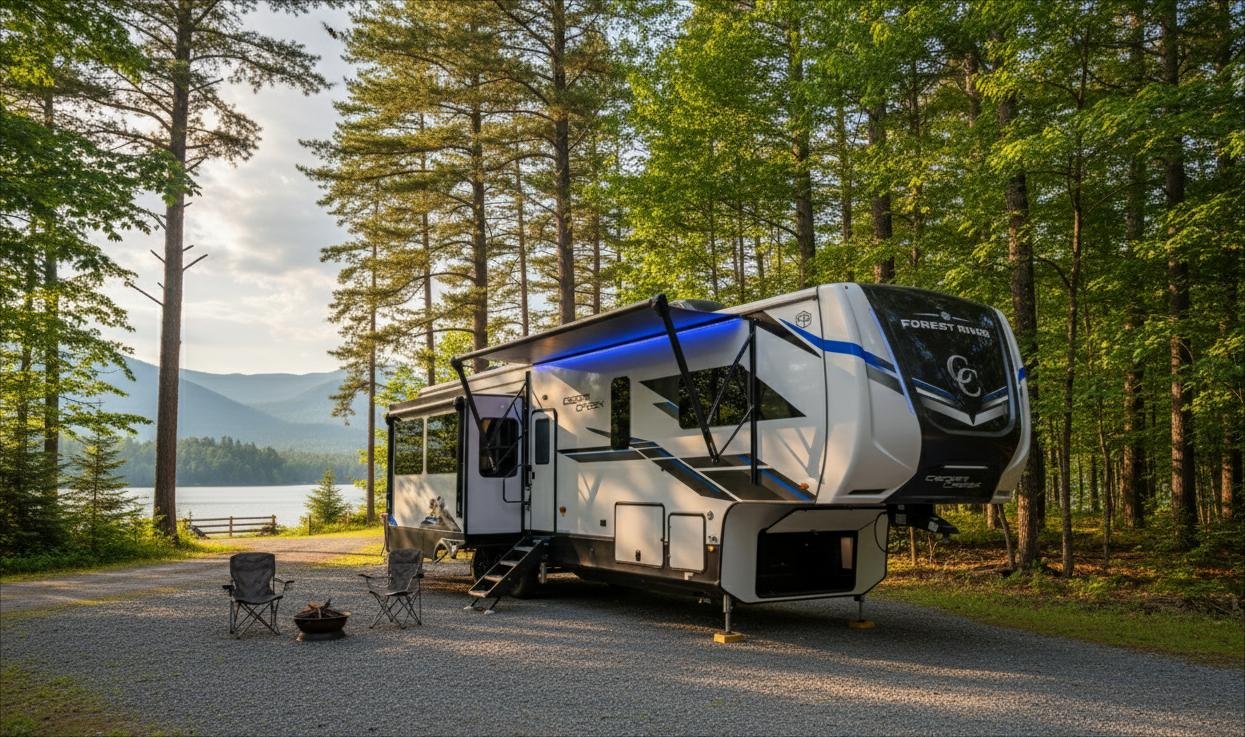
Going with a used toy hauler fifth wheel isn't just a smart financial play; it's a massive lifestyle upgrade. Unlike a typical RV, that dedicated garage space completely changes how you travel. And it’s not just for your side-by-side or dirt bikes. I’ve seen people turn that space into a mobile office, a woodworking shop, or even a breezy, screened-in porch.
Picture this: you roll into a beautiful spot, drop the rear ramp to create a patio, and suddenly you have an elevated deck with an incredible view. After a long day of hitting muddy trails, you can keep all your dirty gear contained in the garage instead of dragging it through your clean living space. That unique blend of pure utility and genuine comfort is what makes them so special. We dive even deeper into this in our guide on how to amp up your outdoor adventures with a toy hauler.
Let's talk money, because this is where buying used really shines. The biggest win is dodging that huge, immediate depreciation hit. A brand-new RV can lose a staggering 20-30% of its value the second it’s driven off the lot. When you buy a rig that’s a few years old, you let someone else take that financial hit for you.
What does that mean for you? It means your budget suddenly goes a lot further. You might be able to afford a higher-tier model or one loaded with features that were completely out of reach on a new unit. We're talking about game-changing amenities like:
-
Onboard Generators: A must-have for anyone serious about boondocking.
-
Fuel Stations: So you can refuel your toys right at your campsite.
-
Upgraded Suspension: For a noticeably smoother and safer tow.
-
Larger Water Tanks: Giving you more time off-grid before you need to find water.
It's clear this way of life is catching on. The global fifth-wheel market, which these haulers are a big part of, was valued at USD 15.8 billion in 2023 and is only expected to keep growing. This whole trend is being pushed by more and more people wanting to get outdoors and have the flexibility to work and live wherever they want.
Picking a used toy hauler isn't about settling for less. It's about making a smart, calculated investment in your freedom. You end up with a feature-packed, adventure-ready rig that holds its value better, so you can explore with confidence and without emptying your savings.
This growing market is great news for buyers. It means there's a steady stream of quality pre-owned toy haulers hitting the market, giving you a ton of options to find the exact layout and features that fit your kind of adventure.
Alright, you've decided a used toy hauler is the right move. Now for the fun part: the hunt. Finding the right used toy hauler fifth wheel for sale isn't about getting lucky; it's about being strategic. The best deals and the cleanest rigs are out there, but you need to know where to look and how to sift through the noise.
You're generally looking at two main avenues: buying from a private seller or going through an RV dealership. There are big differences between the two. Private sales often have the best prices and you get to talk directly to the person who used and (hopefully) maintained it. The downside? These are almost always "as-is" sales, meaning once you hand over the cash, it's yours, problems and all.
Dealerships offer a more buttoned-up experience. They handle the paperwork, often provide financing options, and sometimes even include a short-term warranty. Of course, you'll usually pay a bit more for that convenience.
Before you ever burn a gallon of gas driving to see an RV, the online listing will tell you a ton. A good listing paints a picture of a well-loved camper. A bad one often screams "hidden issues." You need to learn how to spot the difference.
Keep an eye out for these warning signs:
-
Crappy photos: If the pictures are blurry, dark, or there are only a couple of them, be suspicious. A seller who can't be bothered to take good photos probably wasn't bothered to do routine maintenance, either. No shots of the roof or underbelly? That's a huge red flag.
-
Vague descriptions: Watch out for phrases like "needs a little TLC" or "just normal wear." This can be code for anything from a leaky faucet to major water damage. You want listings with specific details about what's been fixed, what's been upgraded, and any known problems.
-
Stock photos: If you see perfect, glossy manufacturer photos instead of pictures of the actual unit for sale, just click away. You're buying that specific RV, not the one from the brochure.
Think of your online search as the first round of inspections. It's where you weed out the obvious duds so you can focus your energy on the real contenders.
|
Platform
|
Pros
|
Cons
|
Best For
|
|
RV Dealerships
|
Financing, trade-ins, some offer warranties, handle all paperwork.
|
Less room for negotiation, sales pressure.
|
Buyers who want a one-stop-shop experience and value convenience.
|
|
Private Sellers (e.g., Facebook Marketplace, Craigslist)
|
Lower prices, direct access to owner/history, more room to negotiate.
|
"As-is" sales, risk of scams, no financing or warranty.
|
Savvy buyers comfortable with inspecting a rig themselves and handling the transaction.
|
|
Online Marketplaces (e.g., RV Trader)
|
Huge selection, advanced search filters, mix of dealer & private listings.
|
Can be overwhelming, listings may be outdated.
|
Shoppers who want to cast a wide net and compare many options at once.
|
|
RV Consignment Lots
|
A middle ground—often cleaner than private sales but cheaper than dealers.
|
Inventory can be limited, consignment fees can inflate prices.
|
Buyers looking for a curated selection of private-party rigs with some oversight.
|
Each channel has its place. Your best bet is to keep an eye on all of them to see what's available and get a feel for the market.
A smart buyer looks beyond the individual RV and pays attention to the bigger picture. The RV market is always shifting, and knowing the trends can give you a serious edge.
For instance, as of summer 2025, dealers were sitting on a massive inventory of over 10,000 brand new 2024 campers. When they have to move new units, they get aggressive with pricing, which in turn puts downward pressure on used prices. That's a great time to be a buyer. While the average selling price for towables recently saw a 6.2% increase to $18,770, these pockets of opportunity are always popping up. Diving into current RV market trends can help you time your purchase perfectly.
A savvy buyer doesn't just look at the individual listing; they understand the market context. Dealer overstock, seasonal downturns, and even high fuel prices can create amazing buying opportunities for those who are paying attention.
To stay on top of things, set up alerts on sites like RV Trader and Searchshop. Plug in your must-have models and price range, and let the technology do the work. You'll get a notification the second a promising used toy hauler fifth wheel for sale hits the market, putting you one step ahead of the competition.
https://www.youtube.com/embed/DdXS14hDk3U
This is it. This is the moment that separates a great deal from a catastrophic mistake. An online listing can look absolutely perfect, but the physical inspection is where the truth comes out. Whatever you do, don't rush this process. A thorough, methodical check can literally save you thousands in future repairs.
Think of yourself as a detective on a mission. You're not just looking for obvious flaws; you're hunting for the subtle clues that tell the real story of how this used toy hauler fifth wheel for sale was treated. I always bring a powerful flashlight, a notepad for jotting down issues, and even a creeper if I have one to make getting underneath less of a chore.
Your inspection starts the second you lay eyes on the rig, long before you step inside. The exterior is its first and only line of defense against the elements, and any weakness here can lead to devastating problems down the road. Pay extra close attention to the roof—it's the most critical area, bar none.
If you can get on the roof safely, do it. What you're looking for are cracks in the sealant around every vent, the skylights, and all the seams. Sealant that looks dried out, cracked, or is peeling away is a direct invitation for water to get in. While you're up there, feel around for any soft spots or what look like "bubbles" in the roof membrane itself. That's a classic sign of delamination, which means water has already gotten underneath.
The number one killer of any RV is water damage. It can rot the structure from the inside out, often going completely unnoticed until the damage is severe and incredibly expensive to fix. Your roof inspection is the single most important part of this entire process.
Once you’re back on the ground, move to the sidewalls. Squat down and look down the entire length of the rig. Do you see any waves or bubbles in the fiberglass? That's another tell-tale sign of delamination. Check out the decals, too. Are they cracked and faded? This isn't just cosmetic; it can give you a pretty good idea of how much sun exposure the unit has had and how much it's been stored outdoors.
Alright, time to get a little dirty. Slide underneath the fifth wheel and get that flashlight aimed at the frame. I focus first on the pin box area and then where the suspension components mount. You're searching for any rust that goes beyond a light surface dusting and, more importantly, any visible cracks in the welds. Stress fractures in the frame are a major red flag and, for me, a potential deal-breaker.
While you're under there, give the tires a good look. Don't just glance at the tread depth. You need to find the DOT date code stamped right on the sidewall. RV tires almost always age out before they wear out. Any tire older than 5-7 years should be replaced, no matter how good it looks. That’s a significant expense—often over a thousand dollars—that you need to factor into your offer.
A toy hauler isn't just a regular fifth wheel. It has unique, heavy-duty components that need their own focused inspection. These are the parts that do the hard work, so their condition is crucial.
Start with the most obvious feature: the ramp door.
-
Operate it several times. Does it open and close smoothly, or does it fight you?
-
Inspect the seals. Are they still soft and pliable, or are they cracked and permanently compressed? A bad seal here lets in both water and exhaust fumes.
-
Walk all over it. Stomp around a bit. You’re checking for any soft spots or flexing that could signal internal water damage or a structural failure.
-
Examine the hinges and cables. Look closely for rust, any fraying on the cables, or other signs of excessive stress.
Inside the garage itself, inspect the floor for deep gouges from equipment, oil stains, and especially any soft spots, which tend to show up in the corners first. If the model has a built-in fuel station, insist that the owner demonstrate that it works. Check the fuel lines for cracks and make sure the nozzle and pump are in good shape.
With the exterior and structural checks done, head inside and prepare to test every single system. Don't take the seller's word for anything—verify it all with your own eyes and ears. A comprehensive look at these systems is one of the most important RV inspection steps for spotting hidden issues and is your best defense against major headaches later.
Flick on every light. Test every single outlet—a simple outlet tester from a hardware store is a fantastic tool to bring along. Crank up the air conditioner and then the furnace to make sure they both cycle on and off correctly.
Next, it's time to tackle the plumbing. If you can, have the seller connect the RV to a city water source.
-
Run all the faucets, both hot and cold, and check for good, steady pressure.
-
Look under every sink with your flashlight for any drips or signs of past leaks, like water stains or warped cabinet floors.
-
Flush the toilet a few times. Make sure the valve holds water in the bowl.
-
Switch to the onboard tank and turn on the water pump. It should prime quickly and then shut off. If you hear it cycle on and off every so often when no water is running, you've got a leak somewhere in the system.
Finally, give a good sniff for any propane smells, then ask the seller to fire up the stove, the oven, and the water heater to prove they all work as they should. Run all the slide-outs and listen carefully for any grinding, popping, or struggling noises from the motors. This systematic approach ensures you don't miss a critical flaw, giving you the confidence to either walk away or make a solid, well-informed offer.
Finding the perfect used toy hauler really boils down to solving a two-part puzzle. First, the rig has to perfectly fit your adventure style. Second, and this is the non-negotiable part, it has to be a safe match for your tow vehicle. Get both of these right, and you're on your way to a great buy.
The floor plan is where you’ll live, eat, and relax, so it needs to feel right for you. The biggest choice you'll make here is how the garage is configured. Are you looking for a completely separate garage, or one that’s part of the main living space?
A dedicated garage is a dream for serious off-roaders. It’s a totally separate room at the back of the trailer, sealed off from your living area with a solid door and often a vapor barrier. This is huge because it keeps all the mud, fuel fumes, and gear smells from your toys contained.
Many of these dedicated setups even include a half-bath in the garage, which is incredibly convenient after a long day on the trails.
A convertible garage, on the other hand, is all about flexibility. The garage space doubles as your primary living room or dining area. Once the toys are rolled out, you'll often find fold-down couches, a removable dinette table, or even a queen-sized bed that lowers from the ceiling. This style is fantastic if you want a massive, open living area once you've set up camp.
As you compare layouts, it helps to visualize their footprint on the road. Getting a sense of general trailer dimensions and specifications can provide some useful context for how these large rigs are measured.
Now we get to the most critical part of this equation: weight. I can't stress this enough—getting this wrong isn't just a simple mistake; it's a serious safety hazard.
Every used toy hauler fifth wheel for sale has a mandatory sticker, usually on the driver’s side near the front, covered in acronyms and numbers. You must understand what they mean before you even think about buying.
To tow safely, you have to speak the language of RV weights. These terms aren't just suggestions; they are the absolute limits set by the manufacturer. Here's a quick breakdown of what you need to know.
|
Term
|
Abbreviation
|
What It Means for You
|
|
Unloaded Vehicle Weight
|
UVW
|
The weight of the RV as it rolled off the factory line. It's your starting point, with no water, propane, or any of your gear.
|
|
Cargo Carrying Capacity
|
CCC
|
The maximum weight you can add. This includes water (at 8.3 lbs/gallon), propane, food, clothes, gear, and of course, your toys.
|
|
Gross Vehicle Weight Rating
|
GVWR
|
The absolute max weight the fully loaded RV can be. It's UVW + CCC = GVWR. You must never exceed this number.
|
Knowing these ratings inside and out is non-negotiable. They directly determine not just what you can pack, but what size truck you need to pull your rig without putting yourself and others at risk.
Your truck’s tow rating is a good starting point, but the real number to watch is its payload capacity—how much weight it can handle in the bed. A fifth wheel’s pin weight can easily be 20-25% of the trailer’s total weight, and that heavy load comes directly out of your truck’s payload.
Let's make this tangible. Say you're looking at a rig with a Cargo Carrying Capacity of 4,000 pounds. That sounds massive, right? You'd be surprised how fast it gets used up.
-
A full 100-gallon fresh water tank: 830 pounds
-
Two full 30-pound propane tanks: 60 pounds
-
A popular side-by-side (like a Polaris RZR): 1,500 pounds
-
Generator, fuel, tools, and riding gear: 400 pounds
-
Food, clothes, and camping supplies: 500 pounds
Just like that, you've loaded 3,290 pounds into your hauler. You're still within your limit, but you can see how quickly it adds up. Forgetting to factor in the weight of a full water tank is probably the most common oversight I see new owners make.
You’ve found it. The one. The toy hauler is perfect, the inspection checked out, and you’re already mentally packing for your first trip. This is the moment where a little prep work can save you thousands of dollars. It's time to make the deal.
Getting the best price comes down to two things: lining up your financing before you ever make an offer and then calmly negotiating based on hard facts. Think of it less as a confrontation and more as a business discussion. When it's done right, both you and the seller should feel like you got a fair shake.
This is the single most powerful card you can play. Walking into a negotiation with a pre-approval letter in your pocket changes the entire dynamic. You’re no longer just looking; you're a serious buyer with the cash ready to go. It gives you instant credibility and leverage, whether you're at a dealership or in a private seller's driveway.
Don't just default to the dealership's financing department. While it's convenient, their rates are often not the most competitive. You owe it to yourself to shop around.
-
Local Credit Unions: These are often my first recommendation. They tend to have fantastic rates on RV loans and are generally great to work with.
-
National Banks: If you have a solid history with your bank, give them a call. They might offer you a preferred rate as a loyal customer.
-
Specialized RV Lenders: These companies live and breathe RVs. They understand the market and are often more willing to finance slightly older models that a traditional bank might pass on.
Getting pre-approved is pretty straightforward. You'll need the usual documents—proof of income, your credit information, and the details of the toy hauler you're looking at. Taking care of this upfront not only gives you a rock-solid budget but also proves to the seller you’re not just a tire-kicker. For a much more detailed breakdown, you can review some of the top RV financing options for your dream RV and find the best fit for you.
With your financing secured, it's time to put together your offer. The goal here is to present a number that's both fair and backed by solid evidence. This isn't about throwing out a lowball offer to see what sticks; it’s about justifying your price with objective data.
Your best friend in this process is the NADAguides for RVs. This is the industry-standard resource for valuing used RVs, and it takes into account the model, age, and all its options. Go online, run the numbers for the exact unit you're looking at, and print out the report. This document is the foundation of your negotiation.
The second piece of your arsenal is that detailed inspection list you made. Every single issue you uncovered, from tires that are nearing their expiration date to a water-stained ceiling panel, has a real cost associated with it. Itemize these repair costs. This gives you a clear, logical reason for the offer you’re about to make.
A successful negotiation isn't about being aggressive or emotional. It's won with good research, clear documentation, and respectful communication. Your offer should tell a story backed by market data and the unit's actual condition.
Let’s say the NADA guide puts the toy hauler's value at $45,000. But your inspection revealed it needs a new set of tires (around $1,500) and the water heater isn't working ($500). A starting offer of $43,000 is now completely defensible and grounded in reality.
How you present your offer is just as important as the number itself. The core principles of being calm, prepared, and respectful apply whether you’re dealing with a private party or a professional salesperson.
With a Private Seller
Keep it friendly and transparent. I always start by telling them what I genuinely like about their rig and acknowledging the care they've taken. When you present your offer, walk them through your thought process. Show them the NADA printout and your inspection notes. You can frame it like this: "I love the RV. According to the market data, it's valued here. Based on my inspection, these are the immediate things it needs. Taking that into account, here is the number I can offer."
With a Dealership
The vibe is a little different, but your strategy shouldn't be. You’re talking with a pro, so be polite but firm. They might try to add on extra charges like "dealer prep" fees or push extended warranties. Your focus should always be on the final, "out-the-door" price. Let them know what your pre-approved loan amount is and that this is your hard-line budget. A good salesperson will recognize you're a qualified buyer and will work to make a deal happen.
No matter who you're talking to, your ultimate power is the ability to walk away. If you can't agree on a price that fits your research and your budget, don't get emotional. Thank them for their time and move on. There will always be another used toy hauler fifth wheel for sale, and being patient is the best way to ensure you get the right one at the right price.
It's totally normal to have a few questions rattling around in your head before pulling the trigger on a purchase this big. Even with all the research, some things just need a straight answer. Let's walk through some of the most common concerns I hear from folks looking at a used toy hauler fifth wheel for sale. Getting these sorted out can be the final piece of the puzzle.
People always ask me, "What's most likely to be broken?" From years of looking at these rigs, I can tell you there are three big ones you need to hunt for relentlessly: water damage, frame problems, and old tires.
Water is the number one killer of RVs. It’s sneaky, starting as a soft spot in the floor you might dismiss or a tiny bubble in the wallpaper. Be obsessive about checking the roof sealant, every window, and every seam.
Frame issues are a close second. Look for stress cracks, especially around the pin box where all that force is concentrated. This isn't just a repair; it's a massive safety hazard and, for me, an instant deal-breaker.
And please, don't just kick the tires. Find the DOT date code on the sidewall. Even if they look brand new with deep tread, tires that are more than five to seven years old are a blowout waiting to happen. That’s a dangerous and expensive replacement you don't want to be surprised with.
This is the classic debate, and honestly, there’s no single right answer. It really boils down to your comfort level and what you prioritize.
-
Private Sellers: You can often get a better price and hear the rig’s entire life story straight from the owner. The downside? It's a completely "as-is" sale. Once you hand over the cash, it's your problem.
-
Dealerships: You'll likely pay a bit more, but they handle the title, tax, and licensing paperwork, which is a huge relief. They can also offer financing and sometimes even a limited warranty, giving you a bit of a safety net.
If you’re a savvy inspector and feel good about handling the paperwork, a private sale can be a home run. If you'd rather have a guided process with some backup, a reputable dealer is the way to go.
Here’s so

